Author Archives: John Keller

Unknown's avatar

About John Keller

I am a retired Lutheran pastor whose intention is to consent to God's gracious presence and actions within.

Baptism ABC: A is for Adoption

Last evening my grandson, Jack Keller, was baptized. My son and daughter-in-law come from different faith traditions regarding baptism and my son wrote about this on their blog. I plan this week to write on the various perspectives of baptism and how it can be a vital touchstone of faith.  Baptism is a beautiful collage of images and promises that revolve around this gift of God. Each image has value, worthy of reflection.

In baptism, therefore, every Christian has enough to study and practice all his or her life. Christians always have enough to do to believe firmly what baptism promises and brings – victory over death and the devil, forgiveness of sin, God’s grace, the entire Christ, and the Holy Spirit with his gifts. In short, the blessings of baptism are so boundless that if our timid nature considers them, it may well doubt whether they could all be true.” (Martin Luther’s Large Catechism, BOC 461)

In the Lutheran tradition, the focus is on God’s promise and God’s initiative in creating the covenant relationship. I cannot come to God on my own, but the Holy Spirit calls me through the Gospel. Baptism is a tangible expression of the gospel, the good news of Jesus Christ. One baptismal image that expresses God’s initiative is adoption with the gift of the Holy Spirit.

Jesus was baptized by John prior to beginning his ministry.

And when Jesus had been baptized, just as he came up from the water, suddenly the heavens were opened to him and he saw the Spirit of God descending like a dove and alighting on him. And a voice from heaven said, “This is my Son, the Beloved, with whom I am well pleased” (Matthew 3:16-17).

Though Jesus was God incarnate, God the Father sent the Holy Spirit as a sign affirming Jesus’ authority as God’s Son. God did this prior to Jesus starting his ministry, before he preached or healed.  The same Holy Spirit is given in our baptism and we are “adopted” as God’s children.

For all who are led by the Spirit of God are children of God. For you did not receive a spirit of slavery to fall back into fear, but you have received a spirit of adoption. When we cry, “Abba! Father!” it is that very Spirit bearing witness with our spirit that we are children of God (Romans 8:14-16).

One of the ways this is enacted with an infant baptism is that the infant is normally held by the Christian sponsors or the pastor during the baptism. The pastor or sponsor represents God’s claim and blessing upon the child. After the baptism the child is given back to the parents as a gift from God with the understanding that the child will be raised in faith.

Baptism is a powerful reminder of who I am: I am a child of God. I am God’s child, not because of my actions or inactions, but because of God’s tangible grace given to me in baptism.

Next post: B is for Belonging.

Lord Jesus, Thank you for claiming me as your child.

Running Lessons

One key aspect of running is its simplicity. All I need are a pair of running shoes and workout clothes to go for a run. I don’t need any other equipment, gym or teammates to have a quality run. I simply need to get myself dressed and out the door.

Of course that simplicity can turn running into a stale routine, even a rut. I can run the same route at the same pace at the same time everyday. (One reason I avoid treadmills is that I find them to be so boring.)

To break up the routine, I enjoy running with a group on Saturday morning. For years the St. Andrew’s Running Club has blessed me with great running companions. Most of the runners are not members of the congregation and even though I have moved on to a new and wonderful congregation at Resurrection Lutheran, the Running Club welcomes me back on occasion to run with them. What I appreciate during these run are the lessons I frequently learn. This morning’s run was especially rich.

Lesson #1 dress properly: The weather has turned colder in Minnesota this week and overall I had the proper gloves, hat and running tights for the chilly morning. However as we started out, I noticed that my neck and chin were almost numb. I also notice nearly everyone else wearing either a turtleneck or neck gaiter to stay warm. Over the years my running mates have taught me several lessons about shoes, socks, tights, shorts, shirts, jackets and hats.

Lesson #2 change of pace: One of the reasons I like to run with others is that it is a change of pace. Sometimes slower, but often faster as it was this morning. Our six-mile run challenged my aerobic system, even as we chatted about films, marathons, books, children and life.

Lesson #3 companions: In recent months I have discovered that I have occasional episodes of tachycardia where my heart rate suddenly jumps 40+ beats during exercise.  I have discussed it with my doctor and together we developed a plan so I could continue running. Today I had two episodes; I immediately did my standard treatment of lying down and the heart rate dropped to normal exercise parameters in less than a minute. Each time my friends stopped to see if I was all right and even when I told them to go on (they know about my tachycardia), someone waited. I was never left alone.

Lesson #4 expert advice: This morning Shannon Maixner joined the group. She is the physical therapist who greatly aided my injury recovery over a year ago. After the run, I was showing her some of the exercises I continue to do to stabilize my hip and she graciously shared with me some expert advise on how to do the exercises more effective. Her encouragement and wisdom was one of the highlights of the morning.

Blessed are those who find wisdom, those who gain understanding (Proverbs 3:13).

Lord Jesus, teach me your ways.

Thanksgiving Practice

Tomorrow our nation stops for Thanksgiving. It is good and right to do so but among all the feasting, family, football, and frivolity, how much time will be given to thanks? May I recommend a simple spiritual exercise that you do early in the morning, prior to the feasting, family, football and frivolity.

  • Take a simple sheet of paper and pen.
  • Number it  1-12

1)
2)
3)
. . .
12)

  • Beside each number write the name of someone for whom you are thankful.
  • Pause for a moment to thank God for that person and to ask God to bless him or her.

Carry the sheet through the day and during the short pauses in the feasting, family, football and frivolity, remember the people and thank God again.

Let us actually practice Thanksgiving this year.

I thank my God every time I remember you. (Phil 1:3)

Lord Jesus, thank you for remembering me.

Thankful Lips

Lips will be active this week. Smiles will break out as distant families reunite for Thanksgiving.  A big part of the day is the feast that we enjoy with our lips, tongues, mouth and stomachs. Yet it is also a time for us to speak words of thanks to God and others using our lips as the means for such expressions.

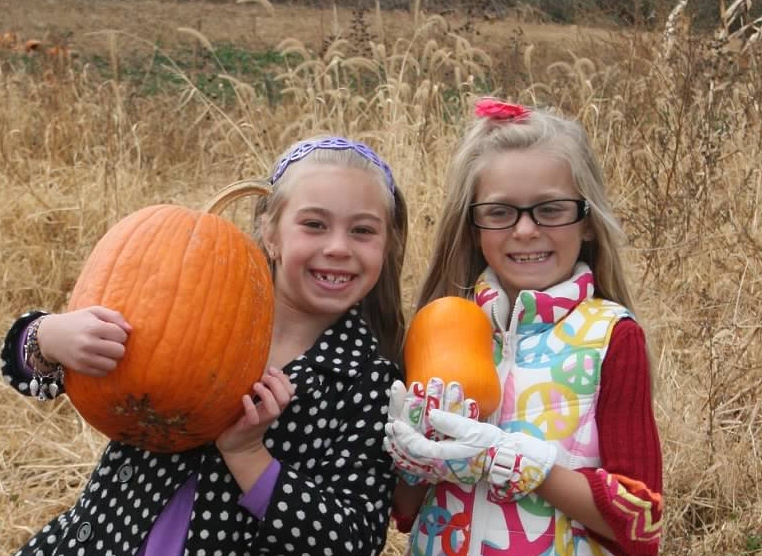
All Smiling Lips at the Harvest Festival

The reason “Lips” are my focus is the scripture text that we had in worship yesterday. In Isaiah six, the prophet Isaiah had a vision of God, gloriously enthroned in the heavens. The prophets heard angelic beings rock the temple with their thunderous song, “Holy, Holy, Holy is the Lord of hosts; the whole earth is full of his glory.” As the prophet experienced this vision, he realized his own sinfulness and cried, “Woe is me! I am lost, for I am a man of unclean lips, and I live among a people of unclean lips” (Isaiah 6:5).

I am struck that Isaiah focused on his “unclean lips.” He might have said “unclean heart,” if his will and emotions were sinful. Or he might have said “unclean hands,” if his actions were the center of his sin. But he centers on the lips and thus the words he and his people have used to betray and deny God. I think of my own “unclean lips” when I profess my utter trust in God in worship but then walk into the world and deny him by the words I use at home or the office. Like Isaiah, I am guilty of “unclean lips” that do not express God’s love and faithfulness on a consistent, daily basis.

Yet the good news in Isaiah six is that our lips can be cleansed. An angelic seraph used a live coal from the altar to touch Isaiah’s lips, cleansing him of sin and guilt. The coal symbolizes the burning love of God that cleans, forgives and restores us. With God’s forgiveness, our lips can become trumpets to declare God’s faithfulness and love.

Yesterday at worship, I showed a short humourous video from Igniter Media that captured how our lips can be changed this Thanksgiving. A preview of the video is here.  As we gather for thanksgiving, may we truly give thanks to God and listen to each other.

How will you use your lips this week?

Lord Jesus, may my lips declare your praise.

Grandpa Value

In my last post, I reflected on a visit by my four siblings and the value of family. The day I posted my reflections, a new family value entered my life: my first grandchild was born.

I grew up without any grandfather in my life. My mother’s father died when she was a child and my grandmother never remarried. My father’s father lived in a distant state and for various reasons had little contact with our family. There is one old picture of me stiffly standing next to my grandfather, but I have no memory of the visit. So I no direct experience of grandfathering.

Jonathan and FarFar

But I did see how my father loved his grandchildren. Even though he and my mother were in distant Washington state, they made frequent trips to Minnesota to see their three grandchildren. My son, Jonathan, got the special attention since he was bit older and they shared a definite love of baseball and any outdoor activity. They camped and hiked together, enjoying the wonder of God’s creation.  Jonathan loved his FarFar (Norwegian for “Father’s Father).

When my father entered hospice care for cancer, it was Jonathan, age eight, who wanted to travel with me for his final days. As he sat by his grandfather’s bed, Jonathan told him about how the baseball season was progressing and especially how Ken Griffey, Jr. was playing. His deep abiding love for his FarFar survives to this day.

As I held my new grandson Tuesday, waves of emotions and thoughts rolled over me. Jack Keller is Jonathan’s son. I marveled at the wonder and beauty of a new-born child. I thought about the years to come: taking Jack camping and hiking, perhaps even running in a road race with Jack and Jonathan someday. At a deep level I felt my Dad’s memory and his joy in holding Jonathan some 26 years ago.

David, Robert, Jack, Jonathan, and John KellerMy brothers and sisters were able to see and hold Jack before scattering. As my brother Robert held Jack he expressed what many of us felt. “I feel like crying; this is so special and unique.” Family continues to hold value, from generation to generation. After all, God created us to be connected through the generations.

The Lord, the Lord, a God merciful and gracious, slow to anger, and abounding in steadfast love and faithfulness, keeping steadfast love for the thousandth generation, forgiving iniquity and transgression and sin. (Exodus 34:6-7)

Lord Jesus, thank you, thank you, thank you, for each new generation.

Family Value

The word “family” can evoke a spectrum of emotions. For many, family means intimacy and love, hugs and kisses. For others it means consistency and routine, the “same old , same old.” For others, family means animosity and detachment, arguments and conflict. Though we live in a society that declares the intrinsic value of family, we are not always sure how that is lived in our own lives.

I am the second of five children. My parents moved from Minnesota to Washington State when I was a year old. Our family had no close relatives within five hundred miles for the first ten years of my life. Our family holidays were simply mom, dad and my four siblings. We had some good neighbors and church friends but they were not true “family.”

Mom, David, Kathleen, Rob, me, Kris

My childhood memories are a mixed bag. I remember many wonderful meals at holidays and camping trips to the ocean. Dad coached my soft-ball team and mom came to my grade school basketball games and school plays.  We attended church together and prepared for Christmas with family advent candle devotions.

I also remember “running away” from home because I did not get my way. Mom even helped me pack a snack for my small bicycle. I pedaled down the street, only to return by 4PM so I could watch my favorite childhood TV show. I probably caused more trouble at home than any of my siblings, creating fights and arguments over trivial matters. After college, I married and moved back to Minnesota to attend seminary. Like my parent before me, I was a thousand miles from any “family” except for my wife and three children.

Kathleen, David, Kris, Mom, and Rob

This week my childhood “family” is reunited. My brother from Atlanta, my sister and brother from the Seattle area and my sister from Kodiak Island, Alaska are visiting Minnesota to celebrate my mother’s 87th birthday. She moved back to Minnesota a couple of years ago due to her increasing dementia; her recent falls now means she is in a skilled nursing care facility near my church. Prior to their coming, I wondered how my siblings and I would interact without the “social lubricant” of children or vacation activities that normally fill our brief times together. What would we do when mom was napping or asleep?

I have been pleasantly surprised at how we quickly we have become “family” again. We listen as we talk around the dinner table, laugh as we play a board game together, cheer for the Seattle Seahawks football team, and enjoy the latest James Bond movie. We are discussing how best to handle mom’s future and preparing to enter new stages of life as grandparents or retirees. I have not felt any need to “run away” during their visit. After all we are family.

What does family mean for you?

Lord Jesus, continue to teach me how to love those closest to me.

Strong Peace

A favorite scripture verse of mine is Philippians 4:7 “The peace of God, which surpasses all human understanding, will guard your hearts and minds in Christ Jesus.” Like many in this crazy, stressed-out, constantly-running-to-catch-up world, I long for peace. Peace that will last not just for a moment, but for days, months, years. Peace that will calm my stormy seas.

Paul describes God’s peace in some unique ways. First, he states that God’s peace will surpass human knowledge or understanding. This means that God’s peaces comes even when I have not figured everything out or have everything under my control. The future may seem very fuzzy and relationships may be very rocky, still God’s peace can rule. After all it is God’s peace, not mine.

Second he testifies that God’s peace is strong, because it guards us. Paul recognizes that there will be many struggles and conflicts in our daily life. The evil one will harass us. Yet God’s peace is a rock or fortress that guards our hearts and minds from the assaults

Third, God’s peace guards both our hearts and our minds. The heart is the seat of our emotions and the mind is the home of our thoughts. God’s peace is to rule in our emotional and intellectual lives, our feelings and our thoughts.

Finally God’s peace directs us to Jesus Christ. Jesus was a model of peace to his disciples, sleeping in the boat when the stormy sea threatened (Mark 4:35-41). God’s peace is not found in the absence of problems, but with the presence of Jesus.

Right now, as you read this, take a moment to close your eyes and visualize God’s loving, peaceful arms surrounding you. Perhaps you can visualize yourself floating in the peaceful river above. Take a deep breath and say, “God’s Peace surrounds me.” Take another deep breath and say it again, “God’s peace surrounds me.” Practice that breath prayer and discover God’s abiding peace is always near.

Lord Jesus, breathe into me your peace.

Where Do You Find God?

Door of the Duomo (cathedral) in Siena, Italy

A recent post by Opreach asked the question, “Where do you find God?” Many of us might first think of churches and cathedrals, places dedicated to God and utilized as gathering spaces to worship God. Over years these buildings can grow in holy significance as we baptize, confirm, marry and bury members of our family and community inside these structures. Candlelight Christmas Eve worship, Easter celebrations and numerous Sunday gatherings add to their spiritual aura.

But the danger of such concentrated focus on a building is that the building can become a box in which to contain or limit God. One must go to church to meet God. Sure, we may believe that God is not limited to the building, but our behavior and practice seems to limit our interaction with God to such spaces. How many of us have other places and practices for prayer, scripture reading or meditation? Do we behave as if God is with us wherever we go?

Tomorrow I will be preaching on King David’s desire to build God a temple.

The king said to the prophet Nathan, “See now, I am living in a house of cedar, but the ark of God stays in a tent” (2 Samuel 7:2).

Prior to David, God’s presence had been linked to the tent of meeting, first used by Moses and the Israelites when they wandered in the desert for 40 years.  Now at David’s request Nathan gives him his blessing to build God a house, but that night the Lord God redirects Nathan,

Go and tell my servant David: Thus says the Lord: Are you the one to build me a house to live in? I have not lived in a house since the day I brought up the people of Israel from Egypt to this day, but I have been moving about in a tent and a tabernacle. Wherever I have moved about among all the people of Israel, did I ever speak a word with any of the tribal leaders of Israel, whom I commanded to shepherd my people Israel, saying, “Why have you not built me a house of cedar?” (2 Samuel 7:4-7)

Friend Dave celebrating as he ran Twin Cities Marathon

The key phrase in the text is “whenever I have moved about among all the people of Israel.” God tells Nathan, David and us that God will not be restricted. God is on the move among us, whether we are running a marathon, buying groceries, finishing a spreadsheet or washing dishes. Is it possible to create behaviors and practices that help us recognize God’s presence in our daily lives?

Lord Jesus, thank you for the safe harbor of my church, but be my pilot as I sail out to sea each day.

Lobby Love

In our men’s Bible Study this morning we were discussing 2 Peter 1:5-7 and the characteristics that support our faith. Peter strings together a long list:

For this very reason, you must make every effort to support your faith with goodness, and goodness with knowledge, and knowledge with self-control, and self-control with endurance, and endurance with godliness, and godliness with mutual affection, and mutual affection with love.

The list moves from faith to love.  The Greek language of the New Testament had several different words for love: phileo, eros, storge, agape. In this list the last two characteristics both center on love: phileo and agape.

Phileo was a more common word for mutual affection.(Philadelphia, city of brotherly love, is named for this virtue). I imagine two friends working side-by-side to accomplish a task. An example might be offensive linemen on a football team, striving together in protect their quarterback. A strong team has a sense of phileo.

Agape was not a word used as much in Greek, prior to the New Testament. When 1 John 4:7 states “God is love,” the Greek word used is agape. C. S. Lewis in his book, The Four Loves, describes agape as Gift-love and is the unique domain of God. For God so loved that he gave, (John 3:16). The other loves (phileo, eros, storge) are Need-loves which are expressions of our human need for affection, friendship and intimacy. Lewis puts priority on agape, but sees the value in all the other loves as well.

After Bible Study I had a brief discussion with one of the men in the church lobby. He shared how he missed being at church last Sunday. I responded, “I bet you missed both what happened in there (pointing to the worship space) as well as what happen here (indicating the church lobby).” He nodded his head.

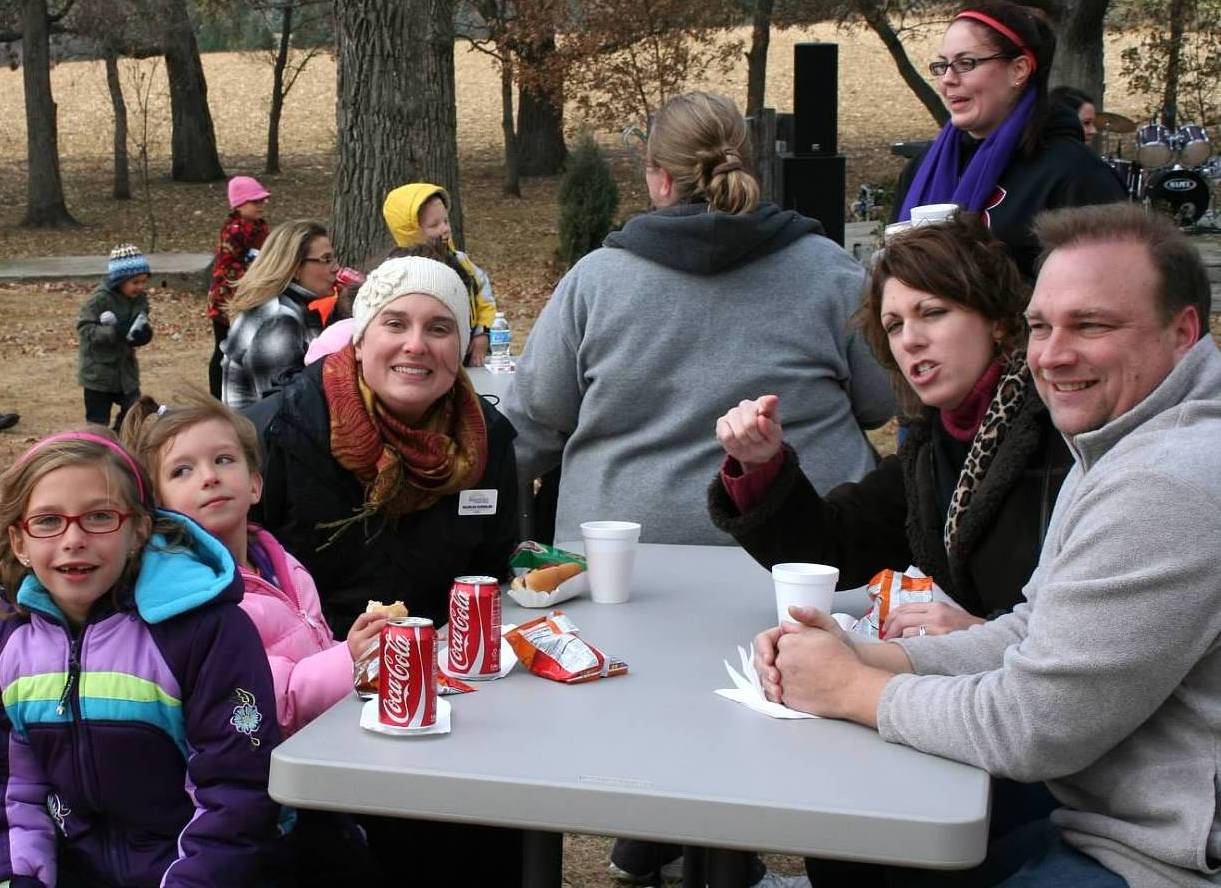
Lobby Love is not restricted to the church lobby but was a key part of our Harvest Festival

I have discovered (somewhat begrudgingly) that what draws many people into the congregation is not simply “great worship,” but also “great fellowship.” The opportunity to visit, talk, converse with friends and family after worship is as significant to them as what happens in the worship service itself. The mutual affection (phileo) is a critical part of Christian faith today. In other words, Lobby Love (phileo) can support Worship Love (agape).

This does not mean that Lobby Love can stand on its own. People would not come for the coffee fellowship alone. Church coffee is not as good as Starbucks. Good worship is a key component to good fellowship. It reminds us once again that we are God’s children, cherished by God and that reminder flows into the lobby after worship. We may not speak directly about the Bible text we read that morning, but our kindness towards one another can be a reflection of the loving kindness experienced in worship.

How vital is mutual affection to your faith and love?

Lord Jesus, guide me into deeper fellowship with my brothers and sisters

Praying the Lord’s Prayer (Part Two)

Whichever version of the Lord’s Prayer we pray (the topic of my last post), the words can become a string of sounds without meaning. One helpful way to truly pray the prayer is to slow it down, to breathe each phrase or petition and pause to reflect upon it for a moment. For example: God is our Father, our Papa, our Dad, and like a good father God wants to spend time with us, to be in relationship. May this time of prayer be such a time of holy conversation.  Slowing down the Lord’s Prayer allows it to become a form of meditation rather than recitation. To quickly rattle off the words of the prayer rarely becomes true prayer.

Another way to pray the prayer is to use other biblical translations of the prayer. With the plethora of Bible translations one can find unique wordings that can reawaken Jesus’ prayer for us. For example, Eugene Peterson’s The Message translates Matthew 6:9-13 as following:

With a God like this loving you, you can pray very simply. Like this:
Our Father in heaven, Reveal who you are.
Set the world right; Do what’s best – as above, so below.
Keep us alive with three square meals.
Keep us forgiven with you and forgiving others.
Keep us safe from ourselves and the Devil.
You’re in charge! You can do anything you want!
You’re ablaze in beauty! Yes. Yes. Yes.

Or you might try writing your own version of the Lord’s Prayer. A thoughtful personal translation can help you rediscover the beauty and wonder of Jesus’ simple prayer. Here is my recent attempt.

Papa who rules the cosmos,
let Your honor be our vision.
Bring Your desires and justice to our world,
So that heaven can be seen here.
Provides us with sufficient food for today.
Teach us to forgive with the same passion that You forgive us.
Protect us from the evil within and without.
And let us never forget that You are our Glorious King.

Lord Jesus, continue to imprint your words on our hearts and lives