Author Archives: John Keller

Unknown's avatar

About John Keller

I am a retired Lutheran pastor whose intention is to consent to God's gracious presence and actions within.

Praying the Lord’s Prayer (Part One)

Jesus instructed his disciples to pray. He modeled a life of prayer, taking time to pray early in the morning (Mark 1:35). After a time of prayer, his disciples asked him to teach them to pray and he taught them the familiar words of the Lord’s Prayer, “Our Father who art in heaven. . .”

I grew up in a traditional Lutheran home and memorized the familiar words of the prayer at a young age. My confirmation instructor, Pastor Crawford, unpacked the meaning of each petition. I learned about God’s kingdom, daily bread, forgiving trespasses and deliverance from evil. Every Sunday during worship, the congregation would recite the familiar words that seemed to become stronger as we finished, “For thine is the kingdom, and the power, and the glory forever and ever. AMEN!”

The traditional words and phrases stayed with me into adulthood. I found great comfort with it, but I also noticed that I often recited the prayer rather than consciously praying it. I would catch my mind starting to drift and realized that though my lips were saying the sacred words, my heart was not in synch. Partly it was the speed at which we “prayed” it, partly it was my own inattentiveness.

In seminary I was introduced to some of the newer translations of the prayer. The replacement of “thy” and “thine” with “your,” made perfect sense to me. Prayer need not be some formal exercise of old language. Prayer is conversation with God.  At the same time I knew that switching to the new language/translation would be very difficult. The Lord’s Prayer was deeply imprinted in our minds and souls, a kind of rock in the chaotic sea of spirituality.

My first twenty-five years of ministry was in a congregation whose worship stripped away several liturgical practices of traditional Lutheran worship: the Kyrie, the Great Thanksgiving, but we continued to use the traditional wording of the Lord’s Prayer. Intellectually I believed that someday the words would need to change, but emotionally I liked being able to guide a family at a graveside service in praying the familiar words, “Our Father who art in heaven. . .”

When I came to Resurrection I immediately discovered that in worship, the congregation had embraced the new translation, “Our Father in heaven, hallowed be your name.”  I embraced the change intellectually, but found myself stumbling over the new wording as my heart and soul tried to catch up. The deep imprint of memorization would not quickly adapt.

Now two years later, I can recite the words without too much difficulty, but I also discovered something else. I sense that I am more often “praying” the prayer, truly connecting with the words. I am more conscious that I am asking God to save me from the time of trial and to protect me from the evil one. The bumpy transition and the new translation has pushed me out of my rut into a deeper appreciation of what Jesus is teaching us.

Lord Jesus, teach us to pray.

Marathon “Heroes”

After running in the Medtronic Twin Cities Marathon on Sunday, my running buddies were throwing around the word “heroes” for those who finished.  Today I read a blog  from someone who was identified as a true Global Hero and her reflections are worth reading whether you run or not.  Thanks, Celine.

Running on carbs: The Making of a Hero

Marathon Challenge Completed (for now)

Sunday I finished my eleventh marathon, my first in over two years. As forecasted, the weather was cold at the start. Many runners were shivering in the starting chutes. Fortunately for me my son Jonathan came to support me and took my warm-ups a few minutes prior to the start. I even took one shirt back after tossing it to him. Cold muscles do not function well. Later at mile five I handed him my gloves, ear band and warm-up shirt, finally warm enough to run comfortably in shorts and t-shirt.

The marathon has sometimes been described as a twenty-mile warm-up and a six-mile race. By mile twenty the leg muscles are often depleted of glycogen and overall fatigue sets in. The description is especially appropriate for the Twin Cities Marathon, since after mile twenty the race course climbs out of the Mississippi River Valley towards the hills by Macalester College and St. Paul Cathedral.

Through mile twenty my race had gone well with no big surprises. I did discover that I did not need to drink as much Powerade as I had during hot summer runs. Fortunately there were plenty of porta-potties along the way. I also discovered that I had not practiced enough specific pace workouts, in which I practice running the specific pace I planned for the marathon. I wanted to run 8:46 mile pace, but as I checked my watch at each mile I learned that I did some miles in 8:20 and some at 9:15 (stops at porta-potties did not help). As I have written before, each marathon has something new to teach me.

At mile twenty, the real challenge began. My legs, especially my hamstrings and quadriceps became heavy and sore. My run became more like a fast shuffle.  As I approached the hill at Summit Avenue my pace slowed. My lofty goal of 3:50 had already slipped away and my secondary goal of 3:55 (my Boston Qualifier) was in doubt.

Jonathan supported me in 2003 TCM

But that is when helped arrived. My son Jonathan met me at mile 21 to run the last 5.2 miles with me. He has done this in my past two marathons when I had really struggled at the end and had to walk a lot. This time his strong words of encouragement and support kept me moving forward at a 9:20 pace. He reminded me that “This is the day the Lord has made, let us rejoice and be glad in it” (Psalm 118:25) and “The joy of the Lord is our strength” (Nehemiah 8:10). Though I felt this overwhelming urge to walk I knew that my goal of 3:55 was in doubt and any walking breaks would kill it. We powered on.

At mile 22 I heard above the many cheering spectators the loud strong voice of Tim Torgerson as he bicycled the course, shouting encouragement to me and others. “Relax your jaw, keep your arms pumping, stay strong.” He would not let me stop, but pushed me to do my best.

I am reminded of Hebrews 12:1-2 where the writer reminds us of “we are surrounded by so great a cloud of witnesses and let us run with perseverance the race that is set before us.” In the preceding chapter the writers highlighted the heroes of faith in the Old Testament that now cheer for us in our race to Jesus. I felt like Jonathan and Tim were my own unique witnesses who gave me the specific words I needed to accomplish my task.

As I pushed the final mile to the finish line, I knew it would be close to 3:55. As I stopped my watch, it read 3:53:53. I had finished with 1:07 to spare.* I had my BQ!  A decade-old dream of running the oldest, perhaps most prestigious marathon is now possible.

My next challenge will be to prepare well and to stay injury free for the Boston Marathon in April, 2014. I just hope I have a similar cloud of witnesses that day.

Lord Jesus, thank you for being with me in the challenges of life.

*My official chip-time was 3:53:54.  I must have been a little fast with my watch.

The Marathon Challenge

My first marathon was Twin Cities in 1999. Like this year, the forecast was for a cold start, around 35-40 degrees. Having run mostly in warm weather, I panicked and rushed out to buy my first pair of running tights a couple of days before the race. I used them and never felt very comfortable the whole race. I also made other rookie mistakes, like surging ahead at mile 15 when I was feeling great, only to hit the wall at mile 22. I finished in just over four hours, thinking “that was TOUGH.”

 
What if the Marathon was in January?

Many runners finish their first marathon and think, “Okay, I’ve done that. Don’t need to go through the pain, struggle and adversity again. Once is enough.” For me, the race had the opposite effect. I saw it as a great puzzle or challenge that I still have not figured out. Not that I think I will ever “solve” the marathon puzzle, but the combination of physical, mental and spiritual challenges continues to intrigue me. The challenge pushed me to run year round, even in Minnesota winters.  Plus I still have that elusive goal of qualifying to run the Boston Marathon.

This Sunday, I may be a bit cold when I approach the start line in Minneapolis, wearing shorts and t-shirt, hat and gloves. I will also have an old long-sleeve t-shirt that I will toss aside after warming up during the first couple of miles. After finishing ten marathons, I will know not to surge at mile 15, but wait for the real challenge at mile 21 and beyond. My marathon mantra, “The joy of the Lord is my strength” (Neh. 8:10) will be on my lips and the encouraging words of my friends and family will be in my ears. The chill of marathon morning will quickly pass as my body, mind and spirit rise to the challenge.  The finish is only 26.2 miles away.

Lord Jesus, let me meet the challenges of this day with your strength and joy.

Watching the Dawn Arise

Lately my morning runs have been around sunrise.  Watching the light break over the horizon is both beautiful and awe-inspiring.  It reminds me that each day is created new in God.  Sister Pat Farrel captures that mystery and joy in her post today.

Watching the Dawn Arise.

Fuel the Flame

My blogging here has slowed the past week due to a new adventure: video blogging. Resurrection has started its fall stewardship emphasis called Fuel the Flame. Our stewardship team has made some video interviews of our members, asking them the question, “How has Resurrection Fueled Your Flame?” Another form of the question might be, “What do you appreciate about Resurrection?”

I have the joyful task of making simple edits and posting the video to our special blog: FuelFlame.blogspot.com I am discovering there is certainly an art and skill to video editing, and like anything, it takes practice and time. As I posted a month ago, doing something new has an awkward phase to it. Yet I am confident that I can learn to do video editing better. My hope is to add video posts to my trustliveserve blog soon.

I am thankful for how the stewardship team is working together to make Fuel the Flame a significant part of our congregation’s ministry. Our theme is based on 2 Timothy 1:6, “I remind you to fan into flame the gift of God” (NIV). Part of that flame is becoming a generous people, contributing financially to our shared mission. God has ignited a flame within the hearts of Resurrection and I am excited to see it grow and spread.

Lord Jesus, help me fan the flame of your Spirit in my life and others.

Jacob’s Ladder

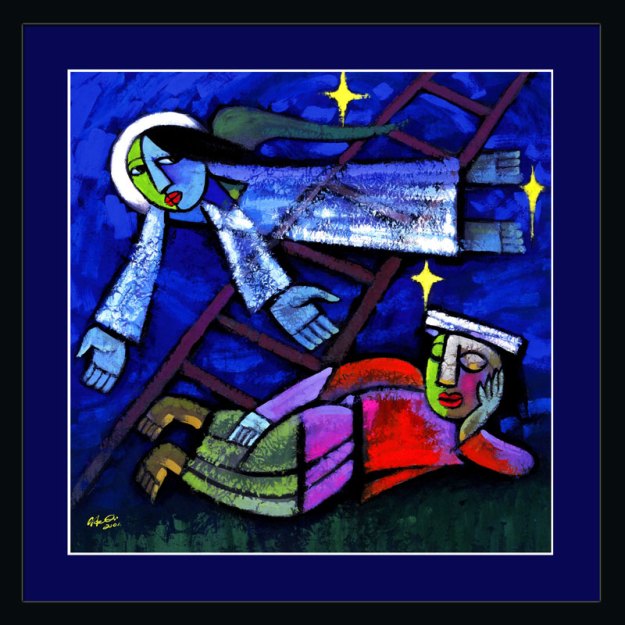
The Dream of Jacob by artist He Qi

One of my favorite stories in Genesis is Jacob’s dream at Bethel in chapter 28.  Jacob, the grandson of Abraham, is running away from his brother Esau.  Twice he had tricked his elder twin.  First Jacob had taken Esau’s birthright for a hot lunch.  Then with the help of his mother, Rebekah, he stole his father’s blessing from Esau.   Esau had reason to threaten Jacob’s life and so Jacob fled.

When he stopped for the night, Jacob dreamed of a ladder reaching up to the heaven with angels ascending and descending on it.  The Lord God stood at the top and speaks to Jacob.  One might expect God to chastise Jacob, to demand his repentance.  After all, Jacob has tricked not only his brother, but his father, Isaac, as well.   Surely God would demand justice.

Instead, God speaks only of the promise and blessing.  God promises Jacob shall return to the promise land and will become the father of a great nation, a blessing to all nations.

Know that I am with you and will keep you wherever you go, and will bring you back to this land (Genesis 28:15).

Some Christians think that the God of the Old Testament is a wrathful, angry God and that grace and love only appears in the New.   Yet the story of Abraham, Isaac and Jacob is filled with moments of grace and blessing.  God has always been a God of grace and love who will always keep His promises.  Jacob had to taste some of his own medicine when he reached his Uncle Laban’s home in Haran, but eventually he returned.  God kept the covenant.

The other strong image from the dream is that God’s angelic hosts go up and down the ladder.  God comes to humanity, not humanity climbing up to God.  God initiates the dream and the covenant.  Jacob can only respond in faith.

After Jacob awoke from the dream, he recognized that he was on sacred ground.  He named it “Bethel” or House (Beth) of God (El).   Later in Israel’s history Bethel would become one of the holy places for worship. (Judges 20).

Lord Jesus, make me ever mindful of your promise and grace.

A Tale of Two NFL Players

I occasionally check the USA Today’s sport’s page for amusement. Today I was struck by two contrasting stories regarding NFL players. The first is on Vince Young, the third player taken in the draft six years ago. He made millions of dollars as a pro-bowl quarterback with the Tennessee Titans but was cut by the Buffalo Bills last month. He is now out of job and seems to have squandered his wealth in either out-of-control spending or bad business partnerships. His story is not so unique among sport’s stars, though the speed of his decline is remarkable.

Even in pro sports, where tales of squandered wealth abound, Young’s plight is “pretty dramatic,” said Kenneth Shropshire, a professor at the University of Pennsylvania’s Wharton School of Business who has written and lectured extensively on the business of sports. “You’d think it would be hard to blow that much money,” Shropshire said.

Contrast Young with a story about NFL rookie running back, Alfred Morris. The article focused on his surprising success with the Washington Redskins and the fact that he still drives a 1991 Mazda, worth less than $1300.

“It has some sentimental value to it now,” Morris told The Redskins Blog. “It just keeps me grounded, where I came from and all the hard work for me to get to this point. So that’s what helps me.”

As I read the two articles, I was reminded of Jesus’ words from the Sermon on the Mount.

“Do not store up for yourselves treasures on earth, where moth and rust consume and where thieves break in and steal;  but store up for yourselves treasures in heaven, where neither moth nor rust consumes and where thieves do not break in and steal.  For where your treasure is, there your heart will be also.” (Matt 6:19-21)

Lord Jesus, keep me grounded in you, so I can store my treasure in heaven.

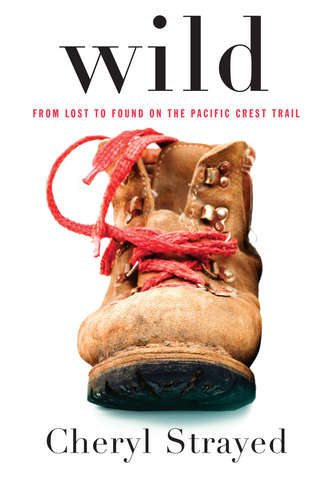
Wild: Lost to Found on the Pacific Crest Trail

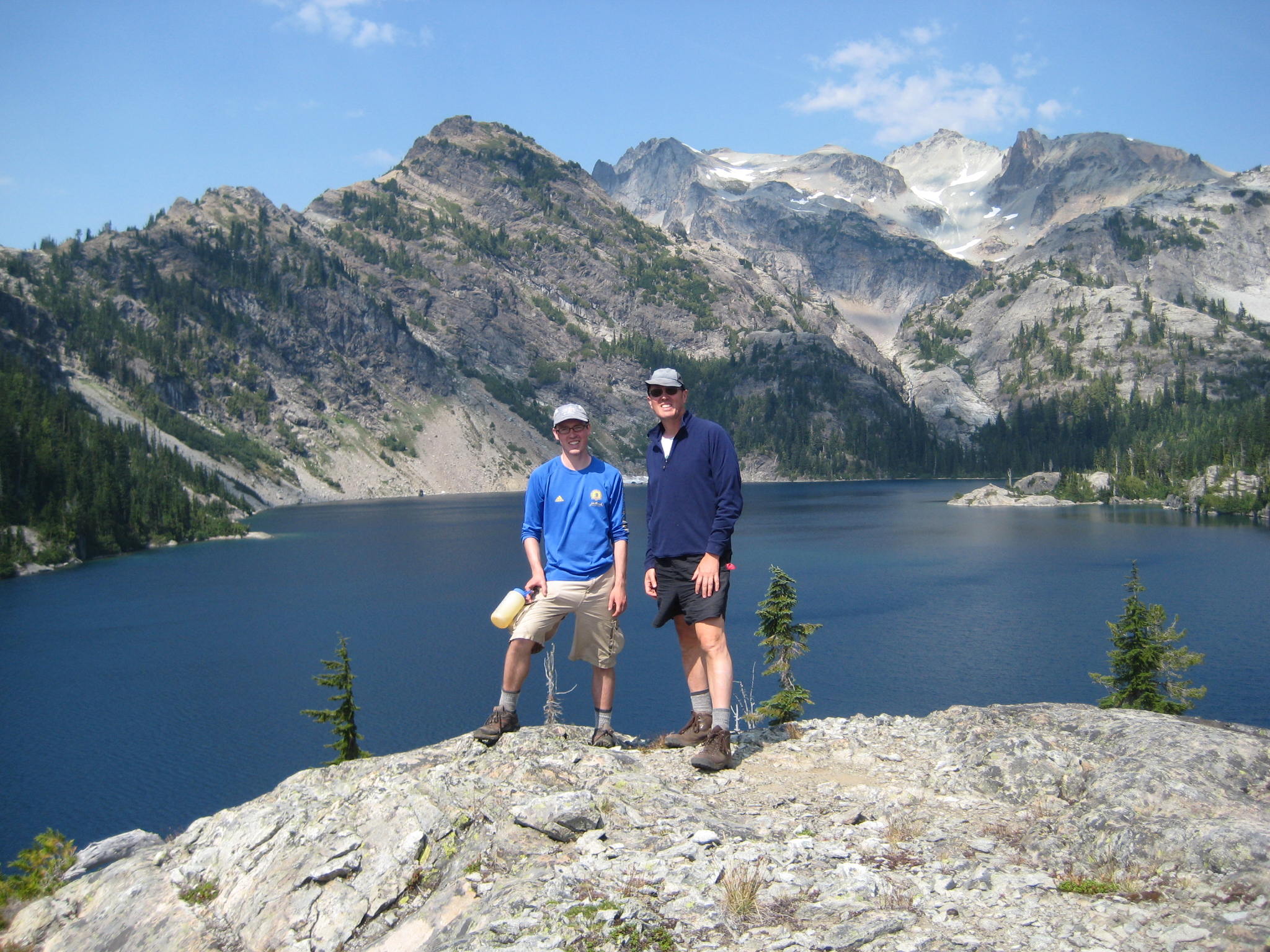
Spade Lake along the PCT

After my solo backpacking trip this summer, I am already planning for a longer trip next summer. I would like to do a 100+ mile segment of the Pacific Crest Trail (PCT) in Washington State. The PCT is a 2600 mile trail that runs from the Mexican border into Canada through California, Oregon, and Washington. I completed a segment of the PCT with my son Jonathan in 2009 that was both challenging and spectacular.

So when some friends told me about Cheryl Strayed’s book Wild: From Lost to Found on the Pacific Crest Trail, I quickly found an audio copy to listen on my daily commute.  I later discovered that it had received plenty of positive reviews from various book critics.

The book is a memoir that describes both Cheryl’s hike on a long segment of the PCT in 1995 and her grief journey after the death of her mother in 1991. Both pieces fascinated me. The hike was primary but her grief reflections were poignant for me because, as a pastor, I often accompany people on their grief journey. And to top it off, Cheryl was from Minnesota when she decided to hike the PCT. The inspirational trail book that sparked her hike was purchase at the same REI store that I have shopped.

First off I must write that Cheryl is very frank and explicit in her language and dismissal of any traditional faith. She does not believe in God or a faith community. Without such faith, her grief became even more devastating and potentially destructive. Her mother had been the center of her life so her death left such a vacant hole. The epitaph on her mother’s tombstone,“I am with you always,” is almost a direct quote of Jesus’ last words in Matthew 28.  Cheryl’s hike on the PCT became a literal grief journey as she tried to make sense of her life without her mother’s physical presence. As a Christian, I am thankful for the assurance that God keeps his children safe, even after their death. Because I trust in Jesus, I trust in the resurrection of the dead.

Second, Cheryl is a very funny writer. She admits that she was totally naïve as she started the hike, having never backpacked prior to the trip. She packed way too much gear, waaaay too much. Her description of how she packed her pack the first morning and then tried to lift it from the floor of her motel room is priceless. Over time she learns to lighten her load and to acknowledge her limitations. As I read the book, I was won over by her perseverance and humor. I did not learn anything new regarding the PCT or backpacking, but I did learn to laugh with Cheryl and hopefully at myself as well.

Lord Jesus, give me the grace to be persevere in difficult situations while laughing at myself.

“I am” and Green Algae

Last week-end I participated in our ninth grade confirmation retreat at Camp Wapo.  The sixteen youth will be confirmed in October, affirming their baptismal covenant. This group had a few “energetic” boys who could be distracting at times so we had to find creative ways to teach.

The retreat focused on the “I am” statements in John’s Gospel. At Friday’s campfire we introduced God’s name “I AM WHO I AM;” God gave this name to Moses at the burning bush (Exodus 3:14). The name in Hebrew became so sacred that later generations of Jews would not pronounce it. Yet Jesus utilized the “I am” name to describe himself. For example in John 9 when he healed a man born blind, he said, “I am the light of the world.”

The next morning we explored the other “I am” statements of Jesus. To keep their attention, we walked about the camp as we discussed, thinking about “I am the way” (John 14:6). We walked through the gate of the “Gaga Pit,” for a discussion of “I am the gate for the sheep” (John 10:7).

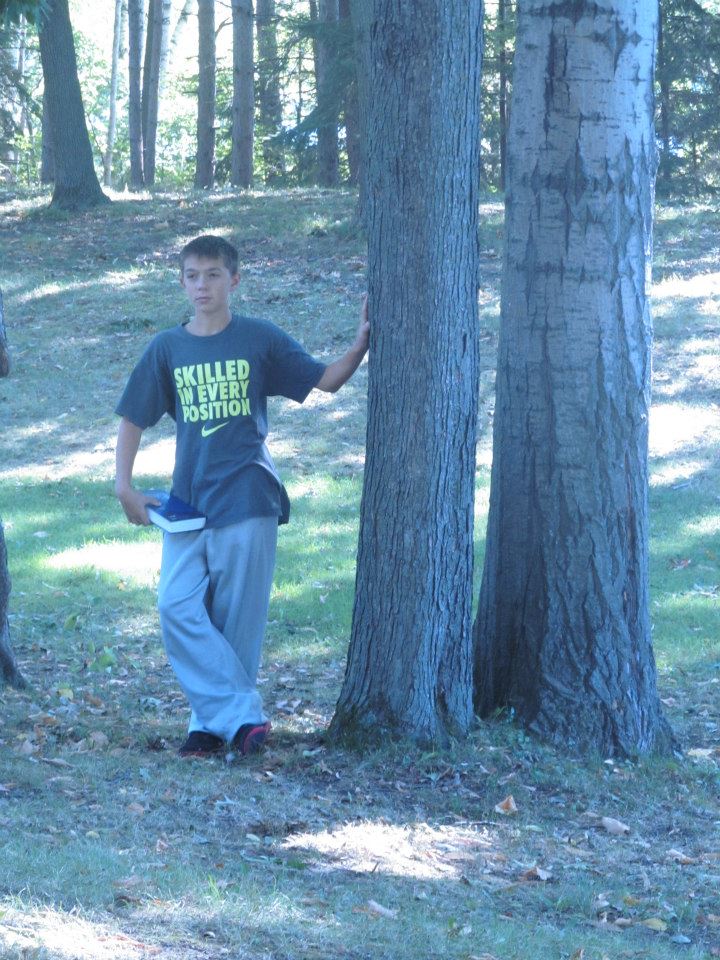
I am the vine, you are the branches.

As we stopped in a grove of trees, we listen to Jesus’ words, “I am the vine; you are the branches” (John 15:1) and prayed as we grasped the trunk/vine in our hands. For the most part, the students seem to be connecting to Jesus’ words.

As we approached the swimming beach, I had planned to have the student remember their baptism and Jesus’ words, “I am the resurrection and the life” (John 11:25-26). We were to walk down to the lake shore, dip our hands in the water and make the sign of the cross on our forehead. We would say the words, “I am alive in Christ.” The water would connect us to our baptism and our life in Christ.

However I had neglected to scout the beach prior to our approach. It had not been used for a few weeks, since summer camp ended. As I walked to the shore, I discovered that there was at least a half-foot of thick mud at the water’s edge and that the water had become a sickly green. Instead of life, the water reminded me of death. Uncertain what to do, I looked up to see one of the “energetic” boys walking out onto the dock. It stretched beyond the mud and green algae.

So there on the dock, we reached over into the lake water and renewed our baptism, water dripping from our heads and hands.

I hope someday that I can incorporate an actual immersion under the water as a way of remembering our baptism. I am still Lutheran in my embrace of infant baptism as God’s means of grace. God starts the covenant relationship. But I think many of us need experiential rites along the way to affirm and remember this covenant. Being dunked in a lake could help us remember that we are buried with Christ and raised with Christ in the waters of our baptism (Roman 6:3-4).

I will first need to find a lake without green algae.

Lord Jesus, I am alive in you. Thank you