Author Archives: John Keller

Unknown's avatar

About John Keller

I am a retired Lutheran pastor whose intention is to consent to God's gracious presence and actions within.

Lost and Found at World’s Fair

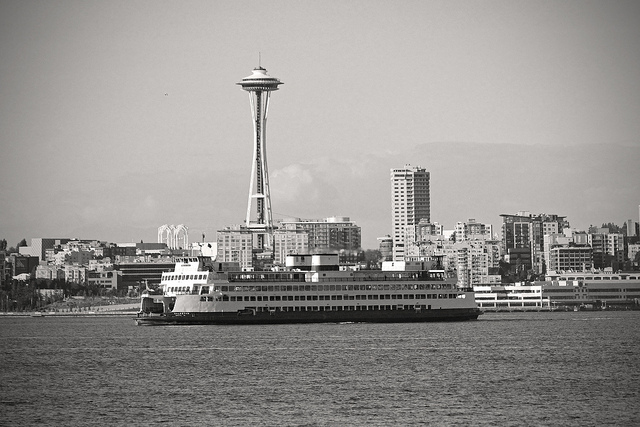
Fifty years ago this summer my family visited the World’s Fair in Seattle. We camped on Bainbridge Island and took the ferry to Seattle.  The Space Needle was brand new and there were many world exhibits. The crowds were large so my father had cautioned my brothers and sisters to stay close as we walked the fair grounds. If they did get separated, our rendezvous place was a magnificent fountain in the center of the fair.

I knew that I would not get lost. I prided myself on being able to read the fair map and to direct our family to each stop along the way. Everything went smoothly until one afternoon. As our family walked toward the Science Pavilion, I looked to my left to see may family walking along beside me. “Yep, still where they should be.”

Then it happened. I looked up to my left and my parents were gone! My brothers were gone.  Even my sisters were gone. They all were not where they should be. My family was LOST! Before I had a chance to rescue them, a vendor saw my confusion and whisked me away. How was I going to find my family with a big security guard taking me to some hidden place?

As he pulled me along, I came to the stark realization that I would never see my family again. Among the millions of people at the World’s Fair, how could we find each other? I was now an orphan. My family was probably already on the ferry to Bainbridge Island. The security guard took me to a room for “lost children.” I gave up all hope and began to wail. I was certain that I would never see my family again.

I don’t know how long I remained in the room, but I was both surprised and relieved when my father walked into the room. I was found.  I later learned that my father had first gone to the fountain, but then discovered that the fair had a video feed into the “lost children” room.  He spot his wayward son and quickly came to my rescue.

Jesus said, “Which one of you, having a hundred sheep and losing one of them, does not leave the ninety-nine in the wilderness and go after the one that is lost until he finds it? When he has found it, he lays it on his shoulders and rejoices. And when he comes home, he calls together his friends and neighbors, saying to them, “Rejoice with me, for I have found my sheep that was lost.” Luke 15.

Lord Jesus, seek and save me once again.

After the Fire

Yesterday I returned from a wonderful trip into the Boundary Water’s Canoe Area of Northern Minnesota. Pictures and a complete trip review will be forthcoming. Overall it was a wonderful trip — great fellowship with the men of Resurrection, great wilderness solitude and great exercise.

One strong impression came on the first day. After loading our canoes at the Kawishiwi Lodge at Lake One near Ely, MN we enjoyed an early morning paddle along a shoreline covered with green pine trees. After we crossed the first set of two short portages to Lake Two, we immediately we encountered a different sight. The shoreline had been heavily impacted by the Pagami Creek Fire last year. Large sections of the forest were burned to the ground, with only small patches of green trees still standing. It was a stark reminder of how fragile a wilderness environment can be.

But it also was an example of how resilient the forest can. Even as we paddled past acres of dead trees, we saw thousands of small shoots of green shrubs, flowers, and trees pushing up through the charred soil. In time the forest will restore itself. Fire is part of its life cycle.

When tragedy hits, we human often have a short-sighted vision of its consequences. We see only the pain and sorrow and rarely have the ability to see how good can arise from it. This is natural. Yet we have God’s promise that all things work together for good for those who love God and are called according to His purpose (Romans 8:28). Even when a forest is crushed by a fire, new life can begin. Even when God’s own Son is executed on a cross, resurrection becomes reality.

Lord Jesus, continue to remind us that all will be well with you.

Canoe Journey Begins

This morning I start a four-day canoe trip in the Boundary Water Canoe Area Wilderness with my son and nine other men from Resurrection Lutheran Church. It will be journey not only through the beautiful wilderness of northern Minnesota, but also a spiritual journey into the wonder of God’s grace.

The image of journey or pilgrimage has deep roots in the Christian tradition. A person starts in one place, travels to another, and then returns to the starting point. The person make look the same, but the journey has transformed him or her.

The Biblical narrative is filled with journey stories from Abraham and Sarah to the Exile in Babylon. The life of Jesus is primarily a journey. Each Gospel records how Jesus’ ministry begins in northern Galilee but eventually he heads south to Jerusalem to the cross and empty tomb.

The Gospel of Luke perhaps takes this image most seriously. Mary travels through the hill country to visit her cousin Elizabeth after the angel Gabriel’s visit (Luke 1:39). Mary and Joseph go to Bethlehem for Jesus’ birth and then to the temple in Jerusalem for his dedication (Luke 2). As a boy Jesus makes the pilgrimage to the Passover Festival in Jerusalem where he is lost for three days. (An excellent post on this story here).

As an adult Jesus’ ministry is a journey from town to town and across the Sea of Galilee. Two of my favorite parables from Luke focus on people who travel—the Good Samaritan (Luke 10) and the Prodigal Son (Luke 15). Jesus sends his disciples on not one, but two training missions (Luke 9, 10). After his resurrection Jesus meets two disciples on the road to Emmaus (Luke 24). The final scene in Luke is Jesus leading his disciples out as far as Bethany for his ascension. (I will only mention that the Book of Acts, written also by Luke, contains more journey stories.)

I do not know how or where God will encounter our two canoe groups, but I am confident that through the journey, the Spirit of God will be working to transform us into his glorious image. I’ll let you know when we return.

Lord Jesus, may we walk, canoe, run, move, dance, play, work, serve with you today.

Citizens with the Saints

Eight youth and two adults from Resurrection Lutheran Church are on their way to the Evangelical Lutheran Church in America (ELCA) National Youth Gathering in New Orleans. They will join more than 36,000 participants from across the country for five days of service, study, and worship. They will gather under the theme of Citizens with the Saints, based on Ephesians 2:14-20:

Jesus is our peace. In his life and death on the cross, Jesus broke down the dividing walls so that we are no longer strangers and outsiders, but we are citizens with the saints and also members of the household of God. The foundation of God’s house was built of apostles and prophets, and Jesus, the cornerstone, holds it all together.

Like many of the participants, this will be a mile-stone for our youth. Growing up in a congregation like Resurrection, where their confirmation class is from 15-20 classmates, our youth often perceive the church as a small intimate group. Gathering with several thousand other youth will expand their vision of what the church is and can become. The Holy Spirit power of 36,000 youth singing and rocking the Superdome will energize and renew the faith of many who attend.

A couple of years ago, I attended a similar Christian gathering called Catalyst. About 10,000 young adults gathered from across the nation in a small arena in suburban Atlanta. The packed arena of singing, cheering, stomping, passionate followers of Jesus Christ made my heart sing.

I am so proud of how Hannah Koehler, our first-year youth director, has worked to make this mission trip become reality for our youth. She attended a National Youth Gathering several years ago and the experience transformed her life. She and others on the trip are writing their own blog to keep our congregation informed.

I invited you to join me in praying for all the youth in New Orleans this week as they discover their place as Citizens with the Saints.

Lord Jesus, bless, encourage and nurture all the youth who have gathered in New Orleans this week.

Today’s Wedding Anniversary

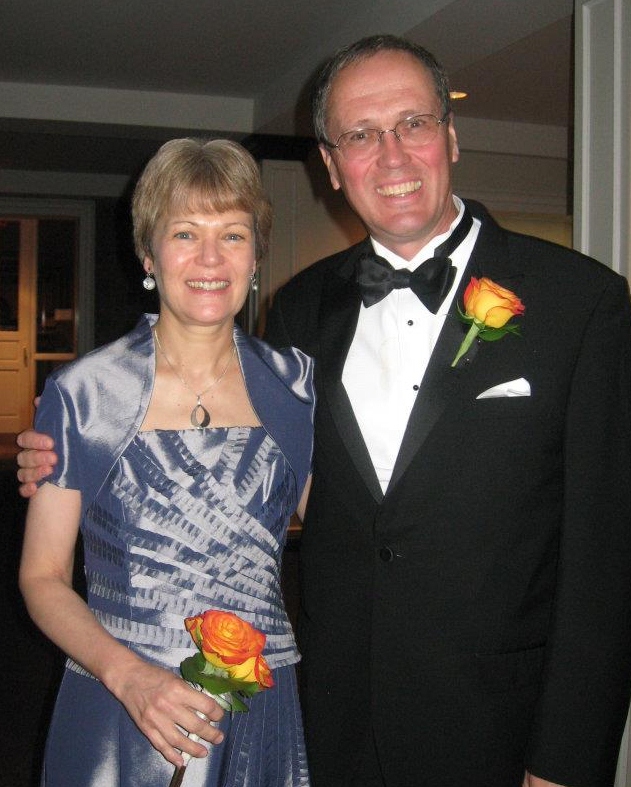
Carolyn and I at our son’s wedding in 2011.

Today is the 35th anniversary of my marriage to Carolyn McCrary Keller. We met in college, at the Haverford-Bryn Mawr Christian Fellowship, near Philadelphia. I always joked that she came from “Tea” with the President of Bryn Mawr, dressed to the nines, and I showed up in overalls and a backwards baseball cap. I was a senior bouncing around in my manic way greeting all the newcomers. Carolyn was with four or five other first year women from Bryn Mawr.

When Carolyn said that she was from Kansas City, MO, I told her a story about a prayer experience I had traveling through Kansas City. The story was short and not particularly profound, but Carolyn later wrote about it in her journal. The story had given her spiritual comfort as she was missing her Bible study group in Kansas City and wrote that my way of praying was similar to hers. The friendship and then the romance grew from there.

We were married by Carolyn’s father, a Presbyterian minister. His only premarital advice to us was, “You can walk down the aisle on your wedding day, fall flat on your face, and still pick yourself up and have a good marriage.” However he made sure Carolyn did not fall by proudly walking his oldest daughter doing the aisle of his Kansas City church and then turning around to preformed the wedding. It was all a blur to me, except for gazing at his beautiful daughter.

Robert C. Roberts thinks the best example of the spiritual virtue called perseverance or steadfastness is marriage:

When two people marry, they make an extraordinary commitment, a promise not just to stick together until death do them part (that in itself would be bold enough) but to love one another than long.

The marriage service warns that some of the bumps this love may encounter along the way: for richer, for poorer, in sickness and in health, forsaking all others . . . . But these words are only slender indicatory beams of light pricking the darkness of the future. When we commit ourselves to married love, we have only the dimmest intimations of what will threaten to break commitment down—boredom, disappointment, inattention, work, sick children, changes in personality and interests of one or both parties—and the list could go on.

Like every married couple, Carolyn and I have our list. I have never embraced her love of opera; she has never backpacked in the mountains with me. We disagree on where to live in our metropolitan area. Still we remain steadfast in our love for one another, trusting in God’s grace and power to keep us together.

Last night we celebrated by going to the Guthrie Theater for the production of Roman Holiday. It is a romantic story of a princess who escapes her royal confines for 24 hours to experience Rome as a private citizen. She meets an American reporter who first tries to turn their budding friendship into an exclusive news story. As the day progresses the friendship turns towards romance, but the duties and obligations of the princess pulls them apart. It is a bitter-sweet ending.

What a contrast to decades of marriage. Yes, there can be many moments of Holiday bliss, but marriages persevere because husbands and wives stick to the duties and obligations of marriage even when bliss is hard to find. I am thankful that Carolyn has persevered in her love for me and pray that together we will experience many more years of marital joy.  I still like holding her hand when we pray together in our own way.

Lord Jesus, thank you for the gift of marriage and for your steadfast love.

Marathon Dreams and Christian Hope

This summer I am training for the Twin Cities Marathon. After taking a couple of years off from such focused training due to injuries and my new call to Resurrection Lutheran Church, I will attempt to complete my eleventh marathon on October 7. Finishing is not some vague wish that I am hoping to accomplish. It is an honest assessment of my fitness, training and experience.

Like almost any physical endeavor, patient, persistent training leads to success. From past experience I know that if I am able to run consistently 35-45 miles per week, complete several long runs of 16+ miles and stay injury free, I have a better than 90% chance of finishing the 26.2 mile course. Factors that may contribute to not finishing are an unforeseen injury or illness. I have had some poor race performances (Des Moines Marathon in 2009 and Grandmas in 2007) but even in my poor races I finished.

In recent years my marathon goal has been more ambitious than simply finishing the race. I  aspire to qualify and run the historic Boston Marathon. To qualify for Boston, a runner needs to run a marathon under a certain time based on their age and gender. I qualified once in 2005, but a running injury kept me from running Boston in 2006 and the qualifying time is only valid for about eighteen months. This fall I am hoping to run under 3:55 so that I can qualify for the 2014 Boston.

Now that hope is not outrageous, but it will be a true test of my abilities. It will require proper training and rest. (Overtraining can be as detrimental in marathon preparation as under-training.) It will require focused nutrition and stress management. It will also require some good luck on factors I cannot control (like race day weather).

Still I have the hope and dream of qualifying.

What distinguishes this aspiration from my Christian hope is that my marathon dreams primarily rests in myself and my abilities. My Christian hope rests totally in Jesus Christ and what he has accomplished through his death and resurrection. To quote a famous hymn, my hope is built on nothing less than Jesus’ blood and righteousness. I am a fallible human being who may twist an ankle tomorrow, ending my marathon dreams. But my hope in Jesus remains steadfast because of the promise of God’s Word.

We have our hope set on the living God, who is the Savior of all people, especially of those who believe. I Timothy 4:10.

Lord Jesus, thank you for being my rock and my hope.

American Optimism And Christian Hope

ImageAs I mentioned in my sermon yesterday, title Abounding in Hope, our American culture promotes optimism for a better future. To use an old proverb, we tend to promote the idea that the glass is half-full, not half-empty. To quote President Ronald Reagan, “Well I’ve said it before and I’ll say it again — America’s best days are yet to come. Our proudest moments are yet to be. Our most glorious achievements are just ahead.”

Part of our American optimism comes from our predominant Christian heritage. Hope is a central virtue of our faith in Jesus Christ. But there is at least one key distinction between American optimism and Christian hope. American optimism places our basic trust in ourselves and our ability to solve our common problems. We see a challenge, roll up our sleeves and get to work, whether it is placing a man on the moon, fighting terrorism or recovering from natural disasters. As Americans we believe in the possibility of creating a “better life” for ourselves, by overcoming obstacles and challenges.

Christian hope has a different focus. Our Christian hope is not in ourselves, but in our God who loves us and saves us from ourselves. We believe God is at work in the world, calling all people to God’s rule of justice and peace. We know that there will be struggles and difficulties. Jesus calls us to take up our cross and follow him (Mark 8:34). The cross is hardly a symbol of optimism.   Paul goes so far as to say that he boasts in his struggles.

we also boast in our sufferings, knowing that suffering produces endurance, and endurance produces character, and character produces hope, and hope does not disappoint us, because God’s love has been poured into our hearts through the Holy Spirit that has been given to us (Romans 5:3-5).

As an American Christian I do not reject an optimistic glass-half-full attitude. There are many problems in our world that need a positive can-do attitude — poverty, hunger, and racism to name a few. However I also know that as follower of Jesus Christ, there will be times and situations that I cannot overcome. The primary ones are my sin and my death. No amount of optimism and self-encouragement will help me here. My only hope is Jesus Christ; his death and resurrection are my source of hope today and forever.

How do you connect or distinguish American Optimism and Christian Hope?

Lord Jesus, continue to fill my heart with hope in you.

Learning From Others

I read a great blog post from the longest-running Lutheran blog.  Pastor Clint Schnekloth (who serve in Arkansas) wrote Mid-life Lesson #20: Accepting help is a spiritual gift.  I encourage you to check it out.  I think many Americans have a hard time receiving assistance from others because we place such a strong emphasis on self-reliance.   The reality is that we are all interdependent and we need one another.  God created us to love our neighbor, and sometime loving the neighbor means receiving love from our neighbor.

Lord Jesus, help me to be able to accept help from others.

Beat the Heat

Like much of the country, Minnesota is going through an extended heat wave. Our temperature is regularly topping out at over 95 degrees with plenty of humidity. It would be easy to complain, but complaining about the weather rarely helps. Rather I recommend some other coping strategies.

  1. 1.  Remember last winter when it was sub-zero and the cold seemed relentless. This heat is refreshing as I look back.
  2. 2. Read “cold” books. I remember listening to Jon Krakauer’s book, Into Thin Air, which describes the 1996 group climbing disaster on Mount Everest. Krakauer’s descriptions of the cold and ice were extremely realistic. Our family was traveling through Kentucky in the heat of summer, but as we listened to the book we had to take breaks at rest stops so that we could warm-up from the “cold.” Other possible “cold” books are Roland Huntford’s The Last Place on Earth and Caroline Alexander’s The Endurance: Shackleton’s legendary Antarctic expedition.

    Mo Farah Enjoying an Ice Bath
    Photo Credit: Simon Freeman

  3. Exercise in the cool of the morning. Most of my runs now start before 6:30 am.  And after my weekly long run, an ice bath for my legs feels oh so good.
  4. At the Spirituality and Practice website I found inspiration on their posts: Spiritual Practices for Hot Weather. One story in particular struck me.

The Catholic priest Anthony De Mello tells a story that sums up the best way to live with scorchers:

“Traveler: ‘What kind of weather are we going to have today?’

Shepherd: ‘The kind of weather I like.’

“Traveler: ‘How do you know it will be the kind of weather you like?’

“Shepherd: ‘Having found out, sir, I cannot always get what I like, I have learned always to like what I get. So I am quite sure we will have the kind of weather I like.’ “

5.    Pray for those who are truly struggling with the heat: the poor and powerless, those
whose work requires them to be outdoors, and those who have breathing difficulties.

Rejoice always, pray without ceasing, give thanks in all circumstances; for this is the will of God in Christ Jesus for you (I Thess. 5:16-18).

Lord Jesus, comfort and aid those who are struggling with the heat.

American Dreams

Wednesday, July 4th, the American flag my father gave me will be hung outside my home. He gave it to me many years ago when he noticed we didn’t have one. My father was a quiet man who served our nation during the Second World War, building airfields in Sicily and Italy. He celebrated every 4th with a family picnic and local fireworks. He was patriotic American in steady calm way that resonates well with me even today.

I am proud to be an American, yet I recognize our flaws as a nation and culture. I have had the opportunities to travel to other nations, but I do not see myself living long-term in any of them. I think American can be too materialistic and proud (including myself). Our nation’s history has some very dark chapters with racism and jingoism, but also some marvelous chapters of humanitarian care and sacrifice. We are sinners; we are saints.

In few weeks, I will be cheering for many American athletes in the London Olympics, but I will also be cheering for athletes from other nations. I will be a bit embarrassed if the television networks make some ostentatious show of how many medals Americans have or have not won. I will rejoice in moments when athletes from any nation congratulate others who have done their best. The shared competition will hopefully bring forth the best effort from all the athletes, whatever flag they carry.

There are a couple of songs that I plan to sing this Wednesday as part of my devotions. One will be “God Bless America” by Irving Berlin. The other is a less familiar hymn, “This Is My Song.” The hymn’s text was written by Lloyd Stone (1912-1993). The first stanza states,

This is my song, O God of all the nations,
a song of peace for lands afar and mine.
This is my home, the country where my heart is;
here are my hopes, my dreams, my holy shrine;
but other hearts in other lands are beating
with hopes and dreams as true and high as mine.

May the dreams of all nations work for peace, joy and prosperity of all people.

Lord Jesus, be Lord of the nations, beginning with my heart.