A wonderful and wise thought about prayer. Thanks Sister Pat.
Where Does Prayer Begin?
1 Reply


A wonderful and wise thought about prayer. Thanks Sister Pat.
This post is the fourth in a series focusing on my path to Christian Mindfulness. The series starts here.
At the second class of Mindfulness Based Stress Reduction (MBSR) we were introduced to a simple form of meditation. We sat on a yoga pillow or chair in an upright position, keeping our body in a relaxed but vertical position. The instructor gently directed us to close our eyes and to focus on our breathing. We kept a non-judgmental focus as we breathed in and out, simply observing how each breath felt and where we experienced it. I noticed my attention focusing on my nostrils as each breath passed in and out of my body. (Afterwards I observed that this kept my observation safely near my “head” since this is my place of security.)


With the instructor’s gentle guidance I was able to stay focused. However, as her vocal instructions became fewer and fewer, my mind tended to drift away on wandering thoughts, “Am I doing this correctly?” “I did this once before in CPE, and it was different.” “Will this work when I go home?”
I was instructed that each time I noticed my mind wandering away to return my attention with gentle compassion to my breath. This was a frequent occurrence since I found my mind wandering off on some tangent ever few breathes. The instructor had warned us that no matter how many times our mind wanders, simple let go of the thought, idea or feeling and bring our attention back to our breath. I remembered the struggle I had had on the PCT, where my mind kept shifting to various thought streams. The solution was to consistently and gently return to the moment. Patience and perseverance were critical components.
Our homework each week was to practice this meditation every day, slowly expanding the amount of time we invested in meditation. By the end of the 10 week class, I was able to meditate for 30 minutes, though I continue to have wandering thoughts that distract me. I continue to patiently bring my attention back to my breath (or my sacred word.)
I thought of my mediation practice as a new form of prayer. Later that summer I would discover centering prayer that closely resembles this form of breath meditation.
Jon Kabat Zin, the principle founder of the Mindfulness Based Stress Reduction Class, offers a guided meditation exercise at this link
Next post: The Key Ingredients for Meditation
This post is the third in a series focusing on my path to Christian Mindfulness. The series starts here.
Our homework for the first week of MBSR was to do a daily “body scan.” This was a guided meditation exercise in which I laid on the floor on my back. I listened to a thirty minute audio recording during which my instructor systematically guided me through my body, focusing my attention on different parts. She started with my feet and with a gently voice helped me observe any tension and/or sensation occurring there. She gave me visualization cues to help my feet relax. Then she moved on to my legs and through the rest of my body.
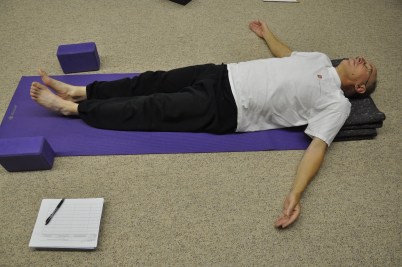
The corpse pose in yoga is useful for the body scan
The process was relaxing and peaceful. I remember having a similar experience in my Clinical Pastoral Education (CPE) class in seminary decades ago. My CPE supervisor was active in meditation and he led us in a similar exercise each Friday afternoon. That pleasant memory reassured me that scanning my body was a healthy and life-giving form of prayer.
As a Christian I have experienced a love/hate relationship with my body. My Christian belief sees the goodness of God’s creating human bodies, including my own. I was taught and still believe that God chose to become a human being in Jesus Christ (John 1:14) and that my body is the temple of the Holy Spirit (I Corinthians 3:16). Yet my Christian heritage also has elements that negate or de-emphasize the body, seeing it as corrupt and evil. My sinful appetites (the lust of the flesh, I John 2:16) are centered in my body. I was taught that my body was not to be trusted, since it was weak and prone to sin.
Growing up, I learned to live mostly in my head. I was a bright child intellectually and grasp new ideas and concepts quickly. I received most of my affirmation from being a good student, which also focused my attention on the thoughts and ideas revolving in my head and less on my body. I was not much of an athlete, so my body did not receive much consideration growing up. I was a gangling naïve nerd that basically ignored my body.
 That began to change when I began to train for my first marathon in 1999. As I ran I learned a lot about my body (what ached, what thrived) and became more familiar with it. Yet even my running seemed to be in my head. Running friends shared how running helped them calm their minds and relieved their stress. My running rarely did that.
As I continued to practice the body scan meditation, I discovered tension that rested in my shoulders, as if I were carrying the load of the world’s troubles. I often fell asleep, showing me how tired I was. I explored the knot or ache that sat in the bottom of my stomach and how often I ate for emotional reasons. My body was trying to tell me something, but I was so busy living in my thoughts that I rarely listen. Now I was learning to listen. My home work was starting to lead me home.
In what ways do you listen to your body?
This is the second in a series of posts on my path to Christian mindfulness practices. The series started here.
Mountaintops were not the only places I recognized my run-away mind. I remember getting trapped in catastrophe-thinking-patterns after some criticism at church. My sermon hadn’t gone well, I made some flub leading worship, or too few people showed up for new member class. My thought pattern would devolve into a revolving rant that “I was worthless” or “I am a terrible pastor.” Occasionally I recognized the untruth in these thoughts, yet I struggled to let them go. I would pray asking for God’s help, but at times prayer only added power to the whole destructive thought pattern.
In 2013 my life hit bottom. For a variety of reasons, I separated from my wife. I moved into the farmhouse owned by the church where I was serving at the time. My wife and I started marriage counseling shortly afterwards and I started visiting with another pastoral counselor for myself. Though we both wanted the marriage to work, we each had our turf to protect. I was lost and uncertain what path to take.
Then one day, after describing my mini-tantrum over a broken mailbox, our marriage counselor mentioned that I might benefit from a Mindful Based Stress Reduction Class. By God’s grace that suggestion stuck with me as my answer to prayer. I went on-line, found where a class was being offered locally and registered. What did I have to lose? Like a driver hopeless lost without a phone or map, I figured I needed to stop and ask for directions.

The text book of MBSR
The Mindfulness Based Stress Reduction (MBSR) class started on a Monday morning in March of 2014. I entered the storefront yoga studio to discover I was the only male in the class of fourteen. The instructor welcomed us and led us through a meditative body scan. What I immediately appreciated was that the class was not a series of lectures, but actual practices that engaged our body, mind and spirit. The piece of wisdom that stood out that morning was the instructor’s insistence to practice the various exercises and meditation daily, whether one felt like it or not. The benefits would not be instantaneous, but if we practiced over the ten weeks we would see benefits in our lives. I made the decision to practice daily and trust that the Spirit of God would work. I was not disappointed.
Happy are those who find wisdom, and those who get understanding.Proverbs 3:13
Next time: some of the lessons I learned through the MBSR class.
Nearly three years ago I started a path that eventually lead to my own Christian mindfulness practice. Over the next weeks I will describe my journey.
The vista was spectacular, what I had dreamed it would be. But my mind kept jumping to internal perspectives.

Beauty surround me but I had trouble seeing it.
I was hiking the Pacific Crest Trail (PCT) near Glacier Peak in Washington State. I was in the middle of an eight day hike that I had been planning for months. That day the trail followed a high ridge whose side dropped a thousand feet into a deep green river valley. Beyond the valley were several snow capped peaks. The sky was clear, the alpine flowers brilliant and the view stretched for miles. Still my mind could not stay centered.
 As I walked I noticed that my mind kept jumping back to Minnesota, to worries about work or family. Who could I find to help with the church stewardship drive next fall? What sermon series would be helpful to the congregation? How were my children doing, each starting new work adventures? These were not “bad” thoughts, but they certainly distracted me from being centered on the present path.
I remember stepping back (inside my head) and noticing how these different trains of thought were jumping around. Who exactly was this observer inside my head noticing the jumps? I prayed, asking God to care for these different concerns, but my prayers seemed only to add to the confusing cacophony of thoughts and ideas rolling around in my head.
 As the trail began to descend from the ridge, I was surprised to be passed by a fellow solo backpacker. He was moving at a fast clip with a light pack. He had the harden look of a PCT thru-hiker, but he was southbound. May a yo-yo hiker, I speculated. I watched him quickly disappear around a corner. My mind thought, “Moving that fast he must be missing out on truly seeing the spectacular view.” But another thought followed, “But are you any different, with your mind jumping around? Are you present to this moment?”
I knew that I wanted to change my busy mind but unsure how to go about it. So I asked Jesus for help.
Ask, and it will be given you; search, and you will find; knock, and the door will be opened for you. For everyone who asks receives, and everyone who searches finds, and for everyone who knocks, the door will be opened. (Matthew 7:7-8)
Next post: Introduction to MBSR
This post (longer than most) is based on a sermon I gave last Sunday at Trinity Lutheran in Lindstrom, MN based on Luke and Mark’s Gospels. I dressed in a “Biblical” costume and told the Palm Sunday story from the perspective of Levi, a priest in the temple of Jerusalem. Inspired by C. S. Lewis’s Screwtape Letters, I seek to move the congregation beyond mere observation.
Levi enters from side door, speaking to unseen persons behind him.
Just a minute. I agree something must be done and I will help, but first I have to meet with the visitors. Maybe I can get their support.
(Turning to the congregation to greet them) Good Morning.
My name is Levi and I am one of the priests who serves here in the Temple of Jerusalem. On behalf of High Priest Caiaphas, I want to welcome you to the Passover festival here in Jerusalem.
I know that some of you have come a long way to be here in Jerusalem and this is your first time in this magnificent Temple. I hope you are impressed with the huge stones and craftsmanship.
I must apologize for being a bit late. You see we have a problem. A big problem and it is growing. You might think it is just a problem for the priest and servants of the temple. But it is a problem for each of you as well.

Model of the Second Temple in Jerusalem. By Berthold Werner – Own work, Public Domain,
First just a bit of background. This temple has been here for more than 50 years, built by the great King Herod. It reminds us of the great temple built by King Solomon, a thousand years ago, but Solomon’s temple was destroyed centuries ago and the second was built over its foundation.
As you know temples are important. They give us a sense of calm and peace in an age of great uncertainty. I am guessing most of you came here today to find some peace and calm, some rest for your soul. Here in the rituals and music of the temple we can feel safe; we are able to block out the terrible evils of the world. Like the dread Roman army that occupies our land. Or for you it might be the problems in your families or work or at school or with friends. We can escape for a time.
We need places like this temple to find rest for our weary soul. In a sense, to find oil to replenish our lamps. The temple can be a safe haven, a safe harbor, in a dangerous world.
But that is our problem. Danger has come here, into the temple itself.
The danger is a man named Jesus of Nazareth. A troublemaker first class, that we need to take care of.
I heard of Jesus several months ago. There were reports coming from Galilee, that province up north, about a man doing miracles and teaching. A prophet like John the Baptist. Stories and rumors of his deeds came to our attention, but we, the priests, ignored them. We have sufficient problems keeping a great institution like the Temple running to worry about some crackpot prophet in distant Galilee.
Oh a few scribes were sent to observe him, to test him. And I am sure he is a crackpot. For example, this Jesus claimed the power to forgive sins. Just who does he think he is? Only God can do that, and only when we have a sacrifice here in the temple. Jesus seems to think he could speak for God. How could he be a prophet, nothing good can come from Nazareth, that tiny insignificant town.
The stories kept growing. 5,000 people fed, a lake storm quieted. But you know how people like to embellish the truth. I am sure none of you would fall for such preposterous rumors.
I and the other priests tried to ignore these stories and Jesus. To talk about him only seem to inflame the crowds. But then last Sunday, our hands were forced. We have to deal with him, because he came here to Jerusalem.

Jesus rides into Jerusalem
And in no quiet way either. He came like a king, riding a donkey. I bet some of you saw it. As you well know, there are always huge crowds coming to Jerusalem for the Passover festival. And the crowd, like foolish children, cut down palm branches and took off their robes and laid them in the street. They shout Hosanna, Hosanna, blessed is he who comes in the name of the Lord. Hosanna means “save us.” How could Jesus possibly save us?
I certainly hope none of you were shouting his name or cutting down palm branches. I hope none of you were drawn into his promises and claims.
Jesus is dangerous and to be avoided at all cost.
Then after the parade, Jesus came into our temple and cleaned out all the money changers and sellers of turtle-dove and lambs. He threw over table and pushed people out of the courtyard. He made some speech about how this is to be a house of prayer. Well certainly we can pray here, but how are we to do our business without the money changers to take the filthy Roman coins and exchange them for proper Jewish coins? Or how are people to make a sacrifice for Passover without sheep or turtle-dove. I see that none you are carrying a turtle-dove with you. There is a practical side to running a temple after all.

“Christ Driving the Money Changers from the Temple” by New Zealand artist Michael Smither, 1972 (Victoria University of Wellington Art Collection, New Zealand)
Jesus is dangerous and he has stirred up the crowds. Some think he is the Messiah, the anointed one of God. Last night I was a supper with Simon, my cousin. Jesus was there as well. I told Simon not to invite him, but Simon went ahead in spite of my advice. I looked Jesus over carefully. He was a simple ordinary man. He ate with two hands, he drank wine, he even laughed at Simon’s bad jokes. Nothing unusual there.
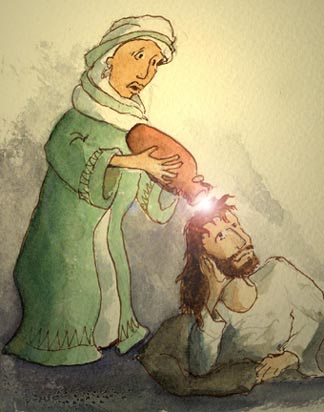 Nothing unusual until a woman from the street came into the room. She is not the proper woman I would allow into my home. She carried an alabaster jar of perfume. I could tell this was not some cheap perfume, but the very expensive kind. She walked right up to Jesus, broke open the bottle and poured the whole bottle on his head, just like he were a king. I immediately object to this waste of money. I said, “This ointment is a waste. It could have sold for several thousands of dollars and the money given to the poor.” I thought for sure Jesus would join in my rebuttal. He would see the waste.
But no, He rebukes me and gives praise to the woman. That she has done a very good deed.
Good deed, my eye.
Jesus should not be anointed. He should be locked away in prison.
You know what he said about the temple. One of his disciples told me that he said, “This temple will be destroyed.” This beautiful, magnificent temple destroyed. God forbid.
How can we worship God without a temple, without the institution?
Where are you to go to offer sacrifice for God’s forgiveness if the temple is destroyed? How will you know you are forgiven unless blood is shed?
For Jesus to talk about the temple being destroyed, he should die!
That is what we were discussing back there before I greeted you.
How to stop Jesus! Stop him from making more trouble.
And most of us agreed, he must die.
Oh we could execute him by stoning him to death for blaspheme against God, as Jewish law permits. But the crowd may interfere.
So someone had the idea, “Let’s take him to Pontius Pilate. (Pilate is the Roman Governor), “We can use Jesus’ claim as King as the reason to execute him.” After all the Roman form of execution, crucifixion, is such a horrible way to die. But it will show all his followers that Jesus is a fake King.
 Don’t you think it would be fitting for King Jesus to have the cross as his throne?
And after he is dead, we can go after all his disciples.
All his disciples, except for one. One who was smart enough to come to us and help us. I met him at Simon’s dinner last night. The disciple agreed to find an opportune time to turn on Jesus, when the crowd is not around. A smart man, that Judas Iscariot. You can learn from him.
Which leads me back to you. What role will you play in this unfolding story?
I am sure most of you see the danger in Jesus.
Do you really want a King who tears down temples and says that God is free to go anywhere, be anywhere?
Don’t you feel safe with God here in this box, where you can come for comfort and support?
Do you really want God out there in your everyday world, in every nook and cranny of your life, who can surprise and disrupt your lives? Won’t you prefer to run your own life?
One thing I will guarantee.
 By the end of this week, Jesus will be dead and buried in a cold dark tomb.
And that will be the end of his story and his mission.
And within a few months his name will be forgotten.
I see some skeptical looks on your faces.
Do some of you actually believe Jesus’ talk about rising from the dead?
Don’t be so foolish? How many resurrected people have you met?
The resurrection of Jesus is as likely as this magnificent temple being destroyed. It will not happen. Trust me.
I must go. I need to meet that very smart man Judas and pay him for his help.
Remember, I have warned you. Jesus is dangerous. He could turn your life upside down and inside out.
Are you sure you want him as your king?
Four bikes were outside when I arrived for our Saturday morning run.
“No one told me that they were riding this morning?” I thought as I walked inside.
I noted the four who wore cycling gear as they greeted me, though several others were dressed to run.
“Hey, no one told me about a ride this morning.” I said, a bit miffed at being left out of the loop. As I said this, I felt this surge of anger bubble up inside me, not sure where it was coming from. My voice and actions became more dramatic, nearly shouting, half in jest, half in anger, “Why didn’t you include me in the text message. Don’t I count!”
The others laughed at my outburst (as I had wanted), but I also realized that I had overstated my case and began to apologize. Tim, one of the cyclists, said, “You need to take some time to center yourself.” He was right.

Preparing to race, Shannon is in pink vest
Shannon, also a cyclist, apologized that she had sent out the text invite and used an old thread that did not include me and several others. I calmed down and said it was okay, especially since I knew Shannon would not do it intentionally. Shannon is a gracious and generous child of God who gives of her time and energy to help others. She is a physical therapist who opens her workplace early on Sunday mornings so that our group of runners can do strength training as way to avoid injuries. She regularly travels to Haiti on mission trips and feels comfortable praying for our group. I consider her a friend.
 As the runners and cyclist prepared to leave, Shannon approached me to see if I had a spare shirt. It was cooler than expected outside and she needed another layer. I looked in my running bag and pulled out the only long sleeve shirt I had: my finisher’s shirt from my last marathon. I teased Shannon that she needed to return it freshly laundered.
After a short prayer, the group headed out the door, cyclists and runners. I had a great run that morning and headed home prior to the cyclists’ return. It had been a gorgeous Saturday morning and, after my initial outburst, I was grateful for having a great group of runners to challenge and encourage me.
Later that afternoon, Tim called me to tell me some bad news. During the ride, Shannon had taken a fall. Fortunately she had a good bike helmet that had protected her head. Still she had to go the ER where she discovered that she had broken her collarbone.
I texted Shannon that I would be praying for her quick and full recovery. She texted back that she appreciated the prayers, she was doing all right but that she owed me a shirt, since they had to cut off her jersey and my shirt in the ER.
When I read the text, two thoughts in quick succession flashed into my mind.
The first thought was: “That was the finisher’s shirt from my last marathon. That can’t be replaced!”
The second deeper thought was, “John, which is more important, a shirt or a friendship?”
Truly I tell you, just as you did it to one of the least of these who are members of my family, you did it to me. Matthew 25:40
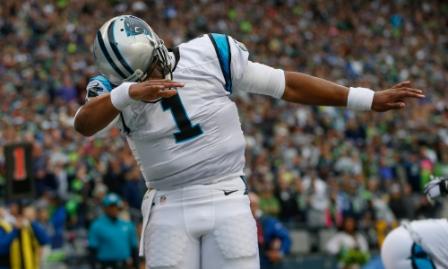
SEATTLE, WA – OCTOBER 18: Quarterback Cam Newton #1 of the Carolina Panthers celebrates. (Photo by Otto Greule Jr/Getty Images)
One of the story lines leading up to the Super Bowl was the enthusiastic play of Carolina’s quarterback Cam Newton. Every time he scored a touchdown he had a special dance that he enjoyed performing. Some people took offense at his display of exuberant emotions, but others saw it as a part his passionate personality.

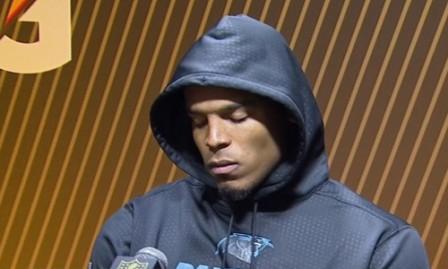
Sunday showed a different side to Cam. He barely responded to questions from the media after the loss. He was clearly in a lot of emotional pain and he walked out of the news conference early. He was not the model of what many would call a “good loser.”
I am writing about this not to drawn any moral judgment to Cam Newton, but rather to how emotions can rule our lives. Cam Newton strikes me as a person who rides the roller coaster of emotions to the fullest extent. When he is happy and excited, he revels in the emotion. When he is disappointed or crushed, he let it all hang out.
This is such a sharp contrast to what I learned growing up. I was taught (in both overt and in subtle ways) that to show any emotions was not appropriate. I came out of a stoic Norwegian culture that emphasized staying in-control. It was not appropriate to ride the roller coaster of emotions; keep an even keel and a pleasant smile. Don’t let my highs get too high, nor my lows too low.
What I have come to discover is that neither path works very well. I have at time chosen to ride the emotional roller coaster, but the ride can overwhelm my inner being and good judgment. I have done and said some rash, harsh things to friends and family in “the heat of the moment.” I have allowed self-pity to rule my days in destructive ways.
But to ignore my emotions can be just as destructive. To bury my anger or ignore my disappointments can be just as destructive. They tend to cause internal stress that calls for attention.
More recently I have practiced a middle way. I acknowledge whatever emotion I may be feeling: anger, disappointment, hope, joy, fear, sadness, but I do not let it rule my judgment. I observe how the emotion may be affecting my body, my breathing, my outlook, but I hold it at a distance. The emotion is certainly real, but it is not in control and it will dissipate over time. I step back and observe what my “reactive behavior” might be and discern whether that behavior would be helpful in the long run. It usually will not be. I don’t bite my tongue, but I certainly hold my words for a moment.
This is a practice of mindfulness. I imagine it as part of my dressing myself in Christ.
Therefore, as God’s chosen people, holy and dearly loved, clothe yourselves with compassion, kindness, humility, gentleness and patience. (Col 3:12)
How do you handle your emotions?
As a child, I experienced Lent as an extra-long prelude to Good Friday. It had a dark, somber feeling to it. The themes all seem to center around the suffering of Jesus and the cross. Confession of sin was the central act of worship. The dark sanctuary was a contrast to the bright morning light of Sunday worship. The hymns we sang felt heavy and ponderous. We did not walk to the cross – we crawled with scrapped knees and heavy hearts.
Is Lent meant to be so dark? Does our Papa in heaven delight in the ways we berate ourselves?
One of the early purposes of Lent was to prepare new Christian believers for their baptism on Easter. It was a time of instruction, and even fasting, but it had a joyous destination: to be joined to Jesus in both his death and resurrection.
Or don’t you know that all of us who were baptized into Christ Jesus were baptized into his death? We were therefore buried with him through baptism into death in order that, just as Christ was raised from the dead through the glory of the Father, we too may live a new life. (Romans 6:3-4).
The new life in Christ was the destination of celebration which colored the time of preparation with joy and light.

Jesus prays in the Garden of Gethsemane
The word Lent comes from an old English word that means “spring.” This year at Trinity Lutheran (where I am serving as interim senior pastor), our Lenten theme will have a spring like quality: The Garden of Prayer. Inspired by the stain glass window above Trinity’s pipe organ, we will join Jesus in prayer.
The theme verse will be “Be still, and know that I am God” (Psalm 46:10). Each Wednesday evening together we will embrace a specific Christian form of prayer. We will celebrate the rich ancient spiritual practices of Gratitude, Confession, Intercession and Meditation. Like a loving father or mother, God delights in spending time with God’s children. Let us join in that delight this coming Lent.
Lent begins next Wednesday, February 10. Encourage you to find a way to center in with God’s Love during this holy season.
I will also be using this blog to highlight these different forms of prayer. If you want to follow along sign-up for the weekly e-mail using the form in right hand column.
How has Lent impacted your life in Christ?
As 2015 nears the finish line, I am ever grateful for the blessings the year has held. My extended family gathered to celebrate the life of my mom and the many gifts she bestowed on us before her death. I completed five wonderful, challenging years of pastoral ministry at Resurrection Lutheran Church. My practice of mindfulness meditation and prayer deepened as I focused on Paul’s prayer in Ephesians, “as you are being rooted and grounded in love” (Eph 3:17)
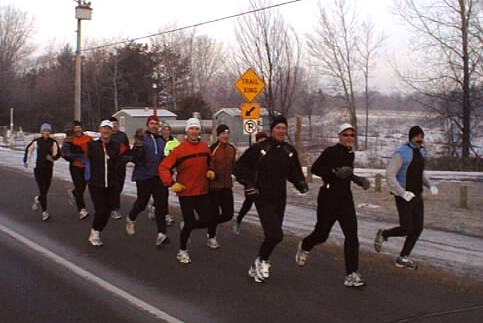
A weekly blessing that I too often take for granted is a group of runners who, as the miles roll on, have become friends. We gather most Saturday morning at St. Andrew’s Lutheran Church at 7:30, in summer and winter. Some are always early, a couple are always late. We greet one another, teasing whoever has new shoes or jacket. Some stretch. Others debate what to wear or what route to run. Eventually we are out the door and the run begins. We always start the run together and kibitz about the past week. We joke that we are “running away from our problems.” Occasionally there is big news to share, a daughter’s graduation or the loss of a job. After a mile or two the group begins to break apart as the faster runners pull ahead. Over the years our runs seem to be shorter. The group started as a marathon training group, providing weekly long runs of 12+ miles. Now we rarely run more than six to eight. Last Saturday it was five.
Participation has ebbed and flowed. We have had more than a dozen runners show up, but more often it is four to eight. In years past we had weekly e-mails, but now it seems to be texts and Facebook.
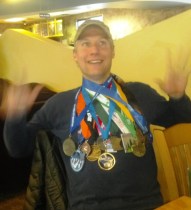
The blessings come in the friendships. Not only do we hold each other accountable for our physical exercise, but we genuinely care about each other. We celebrated when Mike Johnson completed twelve marathons in twelve months. In mid-December we gather for our White Elephant Gift Exchange where our zany personalities are in stiff competition to be creative.

McDonnell’s Medal Monument
Jim McDonnell always wins the prize.
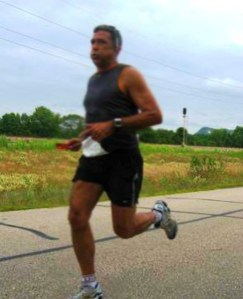 The camaraderie came into clear focus this past year when one of our runners, Steve Libby, was diagnosed with pancreatic cancer in February and died in May. During his illness, we visited him or huddled up to pray before our morning run. We organized a prayer service for him and shared Libby stories. We grieved at his memorial service and we continue to remember the way Libby touched our lives.
As we approach the start of 2016, I wonder what the year will hold. I will be starting my first interim ministry at Trinity in Lindstrom. I am contemplating hikes on the Superior Hiking Trail and the PCT. I hope to make a trip south to visit my daughter in Texas. And most Saturday morning, I plan to lace up my running shoes and join friends for a run. Upon reflection, I realize that we run not away from our problems, but towards love and peace.
Go in peace.

 Pastor John Keller