Category Archives: Bible

The Fiery Furnace and Christmas

The book of Daniel challenges the “normal” perspective of the Old Testament. Throughout the Old Testament, God addressed the people or culture of Israel as a whole. From the exodus, through the wilderness wanderings  up to the divided Kingdoms of Israel and Judah, God interacted with a unified culture: kings and prophets, merchants and farmers. “You shall have no other god before Me.”

In the book of Daniel this changed. The Jews who are in exile in Babylon are not the dominant culture, but rather a small minority. A king like Nebuchadnezzar might come to recognize the God of Shadrach, Meshach and Abednego when God delivers them from the fiery furnace, but he does not force the whole of his society to conform to Jewish culture. Instead the stories of Daniel show how the Jews resisted the religious rules of the dominant culture, even when it might cost them their lives. The Jews in exile had entered a multicultural world.

I wonder if this has a lesson for Christians in the season of Christmas. I know that some Christians are upset that the dominant culture gives only token acknowledgment to the religious basis for Christmas, replacing the manager and baby Jesus with the Christmas tree and Santa Claus.  There are some Christians who long for a more “pure” holiday, when school concerts could sing “Silent Night”” and public prayers could refer to Jesus Christ as Lord. But our current reality is more like the Jews in exile in Babylon than as citizens in the Kingdom of Judah. We might long to live in a monolithic culture in which society promotes our spiritual vision, but we do not.  We live in a multicultural world, with competing worldviews and behaviors.

What this means is that Christians need to do an even better job of telling the great true story of God and Christmas. The book of Daniel was written for the discouraged, scattered Jews to encourage them in the exile and beyond.  The story stated that God still ruled in Babylon, even when kings and other officials denied Him.  The story continues to proclaim that God still rules in America, even if our officials remain silent. And like Meshach, Shadrach and Abednego, we can serve in government, schools, or media, knowing that they are not “god,” and that we may have moments to bear witness to the God who can deliver, Jesus the Christ.

Jesus, let me bear witness to you as my deliverer.
Recognizing Our Foolishness

As Resurrection Lutheran nears the end of the Old Testament portion of the Narrative Lectionary, I look forward to Christmas and the birth of Jesus. Though I have enjoyed our survey of the Old Testament, I now long for the familiar story of promise held in the life, death and resurrection of Jesus of Nazareth. The stage is being set for Jesus entrance into God’s drama. Two more Sundays of Advent remain.

This Sunday we will embrace one of the last written books of Old Testament: Daniel. The stories and visions of Daniel are from the time of the Exile when the leaders and skilled labor of Jerusalem were taken to Babylon as captives. The Babylonians wanted to re-indoctrinate the Jews to forget their Jewish heritage and God so as to become productive participants in the empire. Daniel and others resisted such practices.

Daniel chapter three is familiar to many from their childhood. Shadrach, Meshach and Abednego are to be thrown into the fiery furnace but God delivers them. But our childhood version often misses the humor or farcical nature of the story. As you read the text, consider how the repetition and exaggeration  demonstrate how crazy King Nebuchadnezzar is.

King Nebuchadnezzar made a golden statue whose height was sixty cubits and whose width was six cubits; he set it up on the plain of Dura in the province of Babylon. Then King Nebuchadnezzar sent for the satraps, the prefects, and the governors, the counselors, the treasurers, the justices, the magistrates, and all the officials of the provinces, to assemble and come to the dedication of the statue that King Nebuchadnezzar had set up. So the satraps, the prefects, and the governors, the counselors, the treasurers, the justices, the magistrates, and all the officials of the provinces, assembled for the dedication of the statue that King Nebuchadnezzar had set up. When they were standing before the statue that Nebuchadnezzar had set up, the herald proclaimed aloud, “You are commanded, O peoples, nations, and languages, that when you hear the sound of the horn, pipe, lyre, trigon, harp, drum, and entire musical ensemble, you are to fall down and worship the golden statue that King Nebuchadnezzar has set up.” (Daniel 3:1-6)

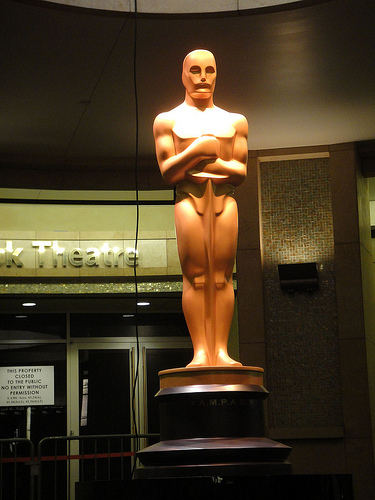
Is it not comical to read that a human being could “set up” a god? Yet that is how ridiculous King Nebuchadnezzar has become with his power. But are we not as ridiculous when we “set up” something as having ultimate importance? Whether it be our sports teams (think how “over-the-top” the Super Bowl has become), or our careers, or our expectations for Christmas celebrations or our greed. Such humor can disarm our defensiveness and open us to God’s healing. We need to laugh at ourselves when we try to “set up” our mini-gods and see our foolishness.

Lord Jesus, come quickly and deliver me from my foolishness.

Gloom, Doom and Light

My nephew, Andy Young, an avid photographer, snapped this gripping photo of Seattle on a gloomy afternoon. I immediately thought of both the prophet Jeremiah and the season of Advent.

First, Jeremiah spoke to the people of Jerusalem of the impending disaster that was coming. The people had forsaken their covenant with God and so God gave them a real wake-up call.

But my people have forgotten me, they burn offerings to a delusion; they have stumbled in their ways, in the ancient roads, and have gone into bypaths, not the highway, making their land a horror, a thing to be hissed at forever. Like the wind from the east, I will scatter them before the enemy. I will show them my back, not my face, in the day of their calamity. (Jeremiah 18:15-17)

In 587 BC Jeremiah’s “Word of the Lord” became reality. The Babylonian army march into Judah and conquered Jerusalem. The temple of God was destroyed. The leadership and skilled laborers were taken as prisoners into Exile in Babylon. It was a day of calamity.

But Jeremiah continued to speak God’s Word and so streaks of light and hope came to the people. Jeremiah promised a new covenant, a new relationship between God and God’s people.

But this is the covenant that I will make with the house of Israel after those days, says the Lord: I will put my law within them, and I will write it on their hearts; and I will be their God, and they shall be my people.  No longer shall they teach one another, or say to each other, “Know the Lord,” for they shall all know me, from the least of them to the greatest, says the Lord; for I will forgive their iniquity, and remember their sin no more. (Jeremiah 31:33-34)

This promise is one reason Jeremiah fits so well in the season of Advent. Though we may wait in the dark gloom of winter, praying for spiritual light, we lean towards the coming light of Christmas. A new covenant that will be born in Bethlehem. Alleluia!

Lord Jesus, let your light shine bright through me.

Rock of Ages

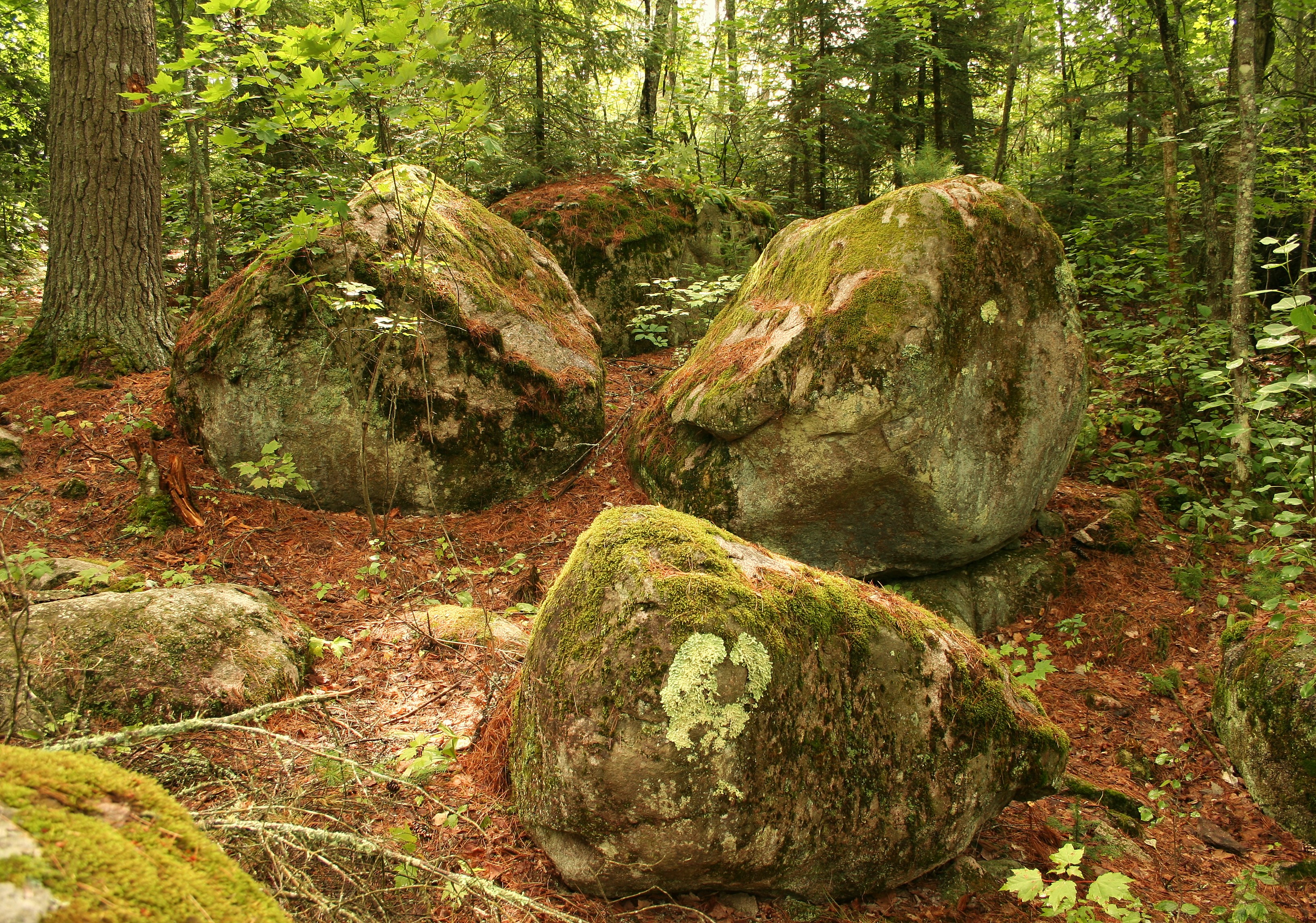
Friend and parishioner, Glenn Jorenby, has been an avid photographer most of his life.  His recent picture of boulders in the BWCA caught my eye as I enjoyed his new website, travelinglightimages.  I have posted on rocks before, but they are such a rich image that I had to return.

Rocks get a bad rap. We often describe a difficult transition as a “rocky road” and an impossible task or person as an “immovable rock.” Yet for the psalmist, the rock became a powerful symbol of God’s strength and faithfulness.

God alone is my rock and my salvation.  (Psalm 62:2)

The LORD is my rock, my fortress, and my deliverer. (Psalm 18:2)

During the exodus from Egypt when the Israelites complained about thirst, God commanded Moses to strike a rock and water flowed out (Numbers 20:8).  In the book of Acts, Peter (the ROCK) preached, “Jesus is  “‘the stone you builders rejected, which has become the cornerstone.'” (Acts 4:11).   Rocks and stones are symbols of God’s trustworthiness.

As a kid, I was fascinated by rocks. The ocean beach at Port Angeles, my childhood home, was lined with rocks of all sizes. I had a habit of picking out a special stone and carrying it home as a reminder of my trip to the beach. Now when I back pack in the mountains, I often pick out a stone by which to remember the trip.  My rock collection continues to grow, as does my trust in God’s strength and mercy.

What image of God gives you strength and hope?

Jesus, be the rock of strength in my life. Amen.

Done Enough?

Yesterday our e-mail and website went down. Our domain name, resurrection-woodbury.org, was dropped as our congregation transitions to a new webhosting site. I am so thankful for people like our office administrator, Sue Guck, and our web volunteer, Matthew Mayer, who immediately saw the problem and are now working hard to correct it.  We should be back up by tomorrow. Technology is a great tool, but it has its glitches.

Though frustrated by this event, it caused me to reflect on my overreliance on such technology tools and the constant “buzz” it produces. I have this feeling that I NEED to be connected. Such feelings can become unhealthy. Sort of like overtraining in running, or becoming a workaholic, it is too much of one thing. God gave us work, exercise and community as gifts, but they are not to become “gods.”

The Sabbath is also a gift from God. Wayne Muller has written about sabbath rest for the Lutheran magazine. He asks the question, “When have we done enough?” Since many of us think we cannot rest until we have finished everything, we never rest.

I remember being on a retreat with a large number of pastors and doing a devotion on resting in God. The one response that stood out was a pastor who said he could never rest, since there is still one more person to visit, one more couple to counsel, one more family to help. God “expected” him to bring care to the entire congregation. I wondered silently, “are you trying to be God, rather than God’s agent?”

So many of us just keep plowing along. Sabbath is the promise of God that we have done enough, worked enough, served enough. It is the promise that we can rest in God’s promise that we are God’s children in spite of our inadequacies and unfinished business. It is a gift of grace that needs to be practiced weekly, whether we are finished or not.

Jesus said, “Come to me, all who are weary and are carrying heavy burdens, and I will give you rest.” (Matthew 11:28)

Lord Jesus, let me rest in you today.

Zeal Gone Too Far?

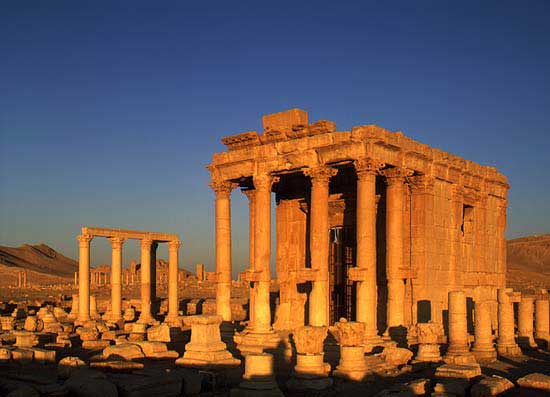
Temple of Baal in Shamin Syria

Having preached Sunday on King Josiah’s renewal of God’s covenant in 2 Kings 22, I am fascinated with his reforms afterwards. According to the book of 2 Kings, Josiah was one of the few kings who followed in the path of God. Despite being raised in a palace where the fertility idols of Asherah and Baal were preferred, Josiah placed his trust in the God of Abraham, Isaac, Jacob and David. And when he heard the Book of the Law for the first time, he became zealous to reform the religion of Jerusalem and surrounding Judah.

First he cleaned out the temple of Solomon, the house of the Lord, removing all the foreign idols (2 Kings 23:4). He burned them outside of Jerusalem and scattered their ashes on public graves, which desecrated these ancient cultic objects. He marched out into the countryside to destroy the “high places” or non-Temple worship sites. He also expelled any foreign priests.

Such “zealous” action may sound excessive to our tolerant ears. Living in our pluralistic culture, we may read such harsh actions as bigotry and intolerance. Yet Josiah and the people of Judah had been given a very specific mission from God: to trust in the Lord God alone. Without this radical obedience their mission could easily be diluted into cultural irrelevance by the neighboring nations. No one would be following God’s covenant. Still, I doubt that we are called to burn or destroy the temples of other religions today. Such a brutal attack would not be honoring Jesus command to love our neighbor (Matt 22:39).

There is a second part to Josiah’s reforms that speaks more directly to our day and culture. It was a revitalization of worship towards the Lord God. He reintroduced the celebration of Passover in Jerusalem, a celebration of God’s victory in releasing the Hebrew slaves in Egypt. (2 Kings 23:21-23). The same holds true today. As Christians we need to more completely understand and celebrate our heritage as God’s people. The narrative lectionary has helped our congregation rediscover some of the Vibrant Life of Faith that can be found in the Old Testament. We don’t need to burn “high places,” but we can certainly burn with the light of faith in God. Our light can beckon our neighbor to a Vibrant Life of Faith in Christ.

How do you bear witness to faith in God in our pluralistic society?

Lord Jesus, may I be faithful as you are faithful.

Stir-up Sunday

This week is filled with colorful adjectives: Thanksgiving Thursday, Black Friday, Small Business Saturday, and Cyber Monday.   Somehow Sunday was skipped.  Perhaps we could name it Stir-up Sunday (from Bishop Larry Wohlrabe).  He is remembering the prayer for the first Sunday in Advent:

Stir up your power, O Lord, and come. Protect us by your strength and save us from the threatening danger of our sins, for you live and reign with the Father and the Holy Spirit, one God, now and forever.  (Lutheran Book of Worship, p.13)

The prayer is based on Psalm 80:1 -2.

Give ear, O Shepherd of Israel, you who lead  Joseph like a flock!  Stir up your might and come to save us.

I certainly could use some of that stir-up power.

Climb the Highest Mountain

Mount Everest

In the first chapter the prophet Isaiah attacked Temple worship in Jerusalem as a burden and abomination to God (see last post). Yet a chapter later Isaiah made a completely different declaration about temple worship.

In days to come, the mountain of the Lord’s house shall be established as the highest of the mountain and shall be raised above the hills; all the nations shall stream to it. Many people shall come and say, “Come, let us go up to the mountain of the Lord, to the house of the God of Jacob; that he may teach us his way. (Isaiah 2:2-3)

Isaiah is not saying that Mount Zion (where the temple sat) would suddenly become a volcano and literally become a new Mt. Everest for mountain climbers.  Rather, using metaphor, Isaiah declared that the Temple would become a magnate drawing all people into relationship with God and the esteem given to Mount Zion in Jerusalem would be sky-high. The temple would be a great blessing to all nations, just as Abraham had been promised in Genesis 12.

The shift from attack to blessing and promise may seem abrupt to our ears, but Isaiah believed the people’s hearts would be changed. No longer would they go through the empty motions of sacrifice and prayer, but rather their worship would be the avenue by which they renewed their covenant relationship with God. Worship would become real and heart-felt. Prayer would be honest and transforming.

Perhaps too often we approach worship as a kind of therapy session to fix our life problems. We want to consult God like Google: to type in our worries and have him list out possible solutions. Thomas Kelly proposed a deeper, more intensive view of worship similar to Isaiah.

Swiss Valley

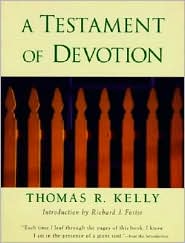
It begins first of all in a mass revision of our total reaction to the world. Worshipping in the light we become new creatures, making wholly new and astonishing responses to the entire outer setting of life. These responses are not reasoned out. They are, in large measure, spontaneous reactions of felt incompatibility between the world’s judgment of value and the Supreme Value we adore deep in the Center. (A Testament of Devotion, p. 47)

Lord Jesus, you are the true temple which draws all people to yourself.

Dead Worship or Vibrant Life?

Worship created a controversy for the prophets of the Old Testament. The Lord God had instituted temple worship during the reign of King Solomon. The temple in Jerusalem had various rituals like animal sacrifices and pray incense which had roots from the time of Moses and the Exodus. The Israelites were expected to worship God in the temple on a regular basis and many did.

However the prophets spotted a major problem in worship. It had become empty rituals that did not transform the lives of the worshippers. The prophet Isaiah spoke against such abuses,

What to me is the multitude of your sacrifices? says the Lord;
I have had enough of burnt offerings of rams
and the fat of fed beasts.
Trample my courts no more; bringing offerings is futile;
your appointed festivals my soul hates;
they have become a burden to me,
even though you make many prayers, I will not listen;
your hands are full of blood. (Isaiah 1:11-15 abridged)

Worship had not transformed God’s people into agents of God’s peace and healing for the world. The prophet’s words can be a critique of us today. Has our worship service turned us into servants of God? Do we expect to encounter the living God at worship and be changed?

I have been using Thomas Kelly’s book, A Testament of Devotion, in my personal devotions. He speaks to the transforming power of prayer, but sees it as not our work, but God’s great work within us.

We may suppose these depths of prayer are our achievement. But this humanistic account misses the autonomy of the life of prayer. This inner life has a life of its own, invigorated not by us but by a divine Source. . . . Our prayers are mingled with a vaster Word, a Word that at one time was made flesh. We pray, and yet it not we who pray, but a Greater who prays in us. In a holy hush we bow in Eternity, and know the Divine Concern tenderly enwrapping us and all things within His persuading love. Here all human initiative has passed into acquiescence, and He works and prayer and seeks His own through us in exquisite, energizing life. (p. 45, abridged)

Now that is a description of the Vibrant Life of Faith in Christ.

Lord Jesus, turn my tired, routine prayers and worship into a joyous dance with your Spirit.

Words of Death and Life

The Old Testament prophets were poets and strong words were their tools. The prophet Hosea used offensive language to stir up the people and to call them back to God. The graphic words were to be a shock to the community in hope that they would repent.

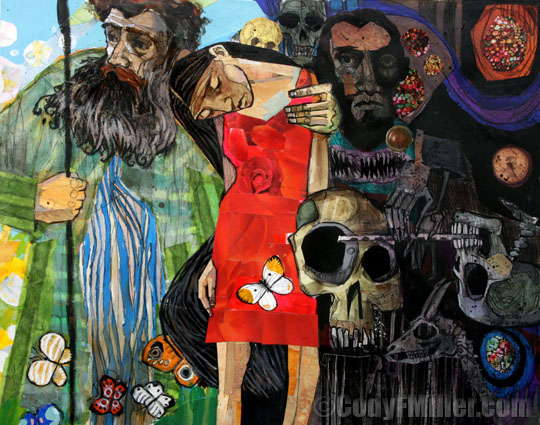
Hosea and Gomer by Artist Cody F. Miller

In the first chapter, Hosea was directed by God to marry an unconventional wife.

The Lord said to Hosea, “Go, take for yourself a wife of whoredom and have children of whoredom, for the land commits great whoredom by forsaking the Lord.” (Hosea 1:2)

His chosen wife, Gomer, may have been a temple prostitute from one of the fertility cults or a simple street prostitute of the city. She bore children to Hosea to whom Hosea gave symbolic names, No-Pity and Not-My-Children, demonstrating God’s strong disfavor with the fickle people of Israel. Afterwards Hosea spoke an extremely harsh word to the people.

Plead with your mother, plead— for she is not my wife, and I am not her husband— that she put away her whoring from her face, and her adultery from between her breasts, or I will strip her naked and expose her as in the day she was born, and make her like a wilderness, and turn her into a parched land, and kill her with thirst. Upon her children also I will have no pity, because they are children of whoredom.

God was angry with Israel’s infatuation with other religions. Instead of being a shining beacon of the Lord God for other nations, they had embraced the gods of other nations, forsaking their unique covenant with God. They had become like a spouse caught in adultery.

The harsh violent language of Hosea can be a shock to our spiritual sensibilities. How can God speak in such cruel severe words?

Perhaps the words are so harsh, because the people’s hearts were so hard. Or perhaps they are so cruel because our hearts are so hard. The words of the prophet “killed” the people (including us the reader), so that God can create a new heart, a new life: a kind of resurrection.

Therefore I will now allure her and speak tenderly to her, . . . I will take you for my wife forever; I will take you for my wife in righteousness and in justice, in steadfast love and in mercy. (Hosea 2:14,19)

Finally the Lord declared, “I will have pity on No-Pity, and I will say to Not-My-Children, ‘You are my people’” (Hosea 2:23). I cling to these words of hope and restoration.

Lord Jesus, the Word of God, you absorbed our sin in your death on the cross. Speak to us again the Word of Life.