Category Archives: Bible

Cry Out!

Out of the depths I cry to you, oh Lord (Psalm 130).

Yelling!I try not to be a complainer. My preference is to simmer on the inside, while smiling on the outside. However there are times when things don’t go my way and I get frustrated and complain. No, more accurately, I yell.

Last week as I prepared for confirmation, I had three you-tube videos I wanted to show the students. I tested my laptop and projector in our class room the afternoon prior to the class. The set-up needed some minor adjustments but I thought I had all the tech “gremlins” worked out so that I could easily show the video clips that evening. I was psyched to teach.

I came back early to reset the laptop and projector for the actual class and two tech gremlins attacked my system. First my laptop kept “freezing” during the video and the projector refused to power up. Neither of these happened during the afternoon test run. The students were restless, ready to start, and my whole lesson plan had gone out the window. I could feel the frustration and anger rising up within me and I confess it came out sideways. I “yelled” at the students to be quiet. It actually was my “crying out to the Lord,” since I thought he had abandoned me. After the outburst I attempted to teach my first lesson on the Apostle’s Creed from scratch.

Yet as I stumbled along, God heard my cry. Or at least two of God’s servants did. Two adults who are tech savvy, started working on the laptop and projector. Within ten minutes they had the projector and laptop working and the video clips cued. Our confirmation class could continue.  (And later I apologized to the students for my outburst.)

Not every cry of the heart is heard so quickly. Some cries come from much deeper within us.  In hospital rooms,  I have joined others in crying out to the Lord, asking for healing from Almighty God.  After worship, I have cried out to the Lord with members who need real guidance and strength.  After a counseling appointment, we cry to the Lord for mercy and grace.  At times our cries seem to be lost in the heavens. Yet like the Psalmist, we continue to cry out. God does not promise how or when he will answer our prayers. He simply commands us to pray. Or to cry out!

We know that the whole creation has been groaning in labor pains until now; and not only the creation, but we ourselves who have the first fruits of the Spirit, groan inwardly while we wait for adoption, the redemption of our bodies (Roman 8:22-23).

How do you cry out to the Lord?

Lord Jesus, hear my cry and rescue me.
Prayer Basic Practices

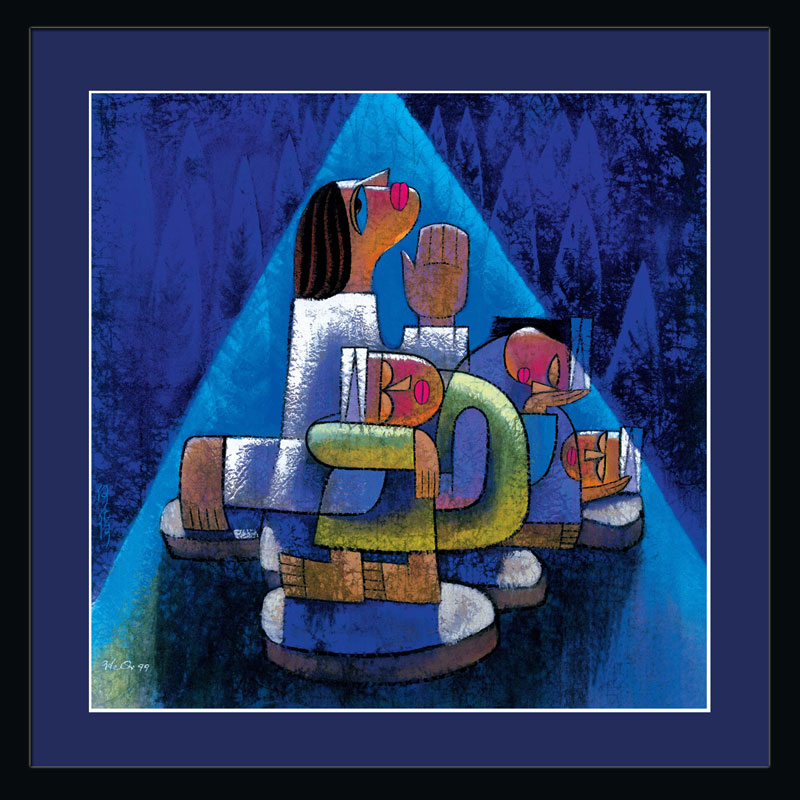
Jesus Praying at Gethsemane by Artist He Qi

Jesus Praying at Gethsemane by Artist He Qi

Last week I posted about starting an intentional prayer streak of daily prayer. Yesterday I challenged members of Resurrection to become more intentional in praying for our congregation and the world. (You can listen to the sermon here until January 14).  Today I want to provide some basic prayer practices that can enhance your prayer life.

Intentional: most habits are formed when we make it a priority and intentionally schedule time and energy for it. If we want our prayer life to deepen we need to  schedule an intentional time and place to pray. Many people find the first thing in the morning best; others prefer the evening. I know one person who made sure to leave for work early so he could have fifteen minutes to pray in his office parking lot. I  pray just after my morning run. I have my Bible and prayers placed near my prayer chair so I am ready when I return.

Written versus Spontaneous. Most of my prayers for Sunday morning worship are spontaneous with a basic mental framework to guide me. However my daily prayers are now a mixture of written prayers and silence for more spontaneous prayers. Having both allows me to stay focused and keeps my mind from wandering as much. I also plan to change some of the written prayers on monthly basis so as to give it some variety and freshness. This month I am using Psalm 130 and the refrain, I wait for the Lord, my soul waits, and in his word I hope.  I wrote more about using written prayers here.

Relaxed: My goal in prayer is not to finish the liturgy as quickly as possible but rather to spend time with God. Be still and know that I am God! Psalm 46:10. During the moments of silence, I simply imagine God being close to me, His breath matching mine own. If my mind wanders I acknowledge the wandering thought and bring it back to prayer and being with God.

Consistent: We certainly can pray at any time. Paul calls us to pray without ceasing (I Thess. 5:17). People often practice” bullet prayers”, asking for God’s guidance, strength, or intervention in quick snippets of prayer throughout the day. Such prayers are not wrong, but should not be confused with developing a deeper intentional prayer life. As an analogy, bullet prayers are like calling yourself a runner, when the only running you do is to sprint from the parking lot to the office door during rain storm. To become an honest runner you need to consistently take time to lace up your running shoes and run. To become a disciple of prayer you consistently need to take time to step off the daily treadmill and be in prayer. Fifteen minutes on a daily basis will do wonders for your soul.

What other prayer practices have worked for you?

What time or place have you found most helpful?

Lord Jesus, teach me to pray.

A Child’s Christmas

Christmas is often associated with children. Santa Claus, flying reindeer and elves combine to make it a child’s fantasy. Like many children I grew up with many deep memories and traditions surrounding the holidays, from staring at the Sear’s toy catalogs to rushing down the hall to open presents. Even as an adult, I catch myself trying to recapture some of the magic of my childhood Christmas’ memories.

ChristmasPageant2011Of course the Biblical story of Christmas adds to that child focus. Though most of the characters are adults (Joseph, shepherds, wise men) the two central characters are Mary, a young adolescent peasant girl, and Jesus, her new born infant. And the unique setting of his birth, a cowshed, provides a wonderful setting for a pageant.

I grew up participating in many Christmas church pageants. I read the lines of Gabriel, the angel, and in my father’s bathrobe I walked with Mary to the manger. In later years, as a pastor, I wrote and preformed Christmas plays that incorporated my own children in the story.  A favorite Christmas memory of mine was when my three children dressed up on Christmas morning to retell the story in their own words.

My daughter this morning shared a link of YouTube Video that retells the Christmas story from a child’s perspective. It has plenty of Biblical inaccuracies, but it captures the joy and wonder of Christmas.

You can watch the video here:  http://youtu.be/zduwusyip8M

Remember, it was Jesus who told his disciples, “Let the little children come to me; do not stop them; for it is to such as these that the kingdom of God belongs.” Mark 10:14.

Lord Jesus, restore within me a child-like trust in you.

Is This Good News?

Many years ago, I was upstairs, when I heard the voice of my four-year old daughter begin to shout, “I have great news, great news.” She ran up the stairs as fast as she could, continuing this refrain, ” I have great news, great news!” When she got reached the top of the stairs, she was nearly out of breath, but continued to say, “It’s great news.” Finally, I asked her, “Suzanne, What is the great news?” Her eyes were wild with excitement as she said “Oh, daddy. Pizza Hut is giving away free Beauty and the Beast characters!”

Now for my four-year old, that was great news; but for me it was not so great. I mean, if Pizza Hut was giving a car with every pizza, that would be great news. Great news often depends on the ears of the hearer.

I think of that when I read the Advent story of the angel Gabriel’s visit to Mary.

Annunciation by He Qi

Annunciation by He Qi

The angel said to her, “Do not be afraid, Mary, for you have found favor with God. And now, you will conceive in your womb and bear a son, and you will name him Jesus. He will be great, and will be called the Son of the Most High, and the Lord God will give to him the throne of his ancestor David. He will reign over the house of Jacob forever, and of his kingdom there will be no end” (Luke 1:30-33).

After a brief conversation, Gabriel announces to Mary that the child will be conceived by the Holy Spirit. When I hear this story many questions race into my mind.

Did Mary hear this as “good news?” What kind of favor is God giving to her? How can a pregnancy be great news when she is still a virgin and is not married? What will her family and friends say? What will Joseph, her fiancé, think?  Does she fully understand what this pregnancy will mean?

The scriptures do not record Mary’s thoughts or feelings. But they do record her words, “Let it be with me according to your word.”  Words of trust and hope.

Sometime we may feel overwhelmed with doubts and fears, questions and stress. Our world can seem so untrustworthy.  Yet we, like Mary, need to hear the good news of God’s favor. God has promised to come to us in Jesus and his kingdom will not end. Like Mary, let us respond in trust, “Let it be with me according to your word.”

Lord Jesus, by the power of the Holy Spirit, renew my trust in you.

Hope in the midst of Horror

When I wrote my last post on Advent Storms, I had no idea that our nation would be rocked by the storm of the mass killing at Sandy Hook Elementary School in Newtown, Connecticut. Like so many, I am grief-stricken and shocked at the senseless violence. That small children could be murdered is heart wrenching.

Yet the reality of violence is part of our broken, sinful world. In 2010 there were 1.2 million acts of violent crime in the United States, 14,000 acts of homicides. The fifth commandment is as necessary today as it was 3500 years ago.

(Yet before I become too self-righteous, I am reminded of Jesus’ words “You have heard that it was said to those of ancient times, “You shall not murder’; and “whoever murders shall be liable to judgment. But I say to you that if you are angry with a brother or sister,  you will be liable to judgment; and if you insult  a brother or sister,  you will be liable to the council; and if you say, “You fool,’ you will be liable to the hell  of fire(Matthew 5:21-22).)

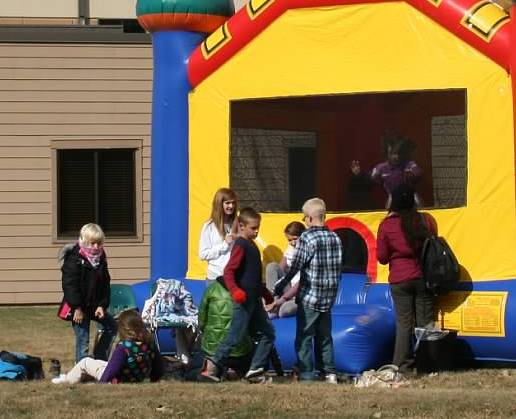
Children at Play at Resurrection

Children at Play at Resurrection

Still the shock and outrage we experience upon hearing of the tragedy in Newtown demonstrates something else. It is a testimony to our God-created sense of justice and righteousness. We yearn for a world made whole and right. We yearn for a world where violence will not shorten the life of one single child. As the prophet Isaiah wrote 2700 years ago, “The wolf shall live with the lamb, the leopard shall lie down with the kid, the calf and the lion and the fatling together, and a little child shall lead them” (Isaiah 11:6).

This Sunday I will be preaching on Isaiah 61:1-7. A section of the text offers hope on such a dark day as today.

The Spirit of the Lord is upon me, he has sent me to bring good news to the oppressed, . . . to comfort all who mourn; to provide for those who mourn in Zion— to give them a garland instead of ashes, the oil of gladness instead of mourning.

God continues to promise hope to our broken world. We need a savior today more than ever. We need to pray that God brings comfort and hope to all the families affected in Newtown. Though this day is dark, the bright light of Christ will come soon.  Our savior comes for every child, and yes, even for you.

Xmas SH Photo 12

Lord Jesus, wrap your strong arms around all those who are grieving the death of loved one. Pour out on them the healing oil of your Spirit and the great promise of your resurrection.  May your light shine in our darkness.  Amen

Baptism ABC: C is for Cleansing

Baptism cleanses us from sin. The Greek word for baptism means “washed or cleansed.” The promise of baptism is that all my sins are washed away by God.

But when God, our kind and loving Savior God, stepped in, he saved us from all that. It was all his doing; we had nothing to do with it. He gave us a good bath, and we came out of it new people, washed inside and out by the Holy Spirit. Our Savior Jesus poured out new life so generously. God’s gift has restored our relationship with him and given us back our lives. And there’s more life to come – an eternity of life! (Titus 3:4-6, The Message)

And with infant baptism (like my grandson Jack’s baptism) that includes Original Sin.

The concept of Original Sin has been a troubling one for me. How can such an innocent baby be labeled as a sinner? It troubled me until I looked at this picture from Jack’s baptism.Jack Baptism Fam
Jack was born into a sinful world where sin has entrapped and ensnare him. Jack lives in a family system of sin. (For all have sinned and fallen short of the glory of God, Romans 3:23.) I will not speak for my daughter-in-law Maggie’s family, but I know my own family is tainted and trapped by sin. And the most notable offender being the grandpa who holds baby Jack. Our sin, our brokenness, our wayward fickle hearts will hurt and pull Jack away from God. Or to be perfectly honest, my sin, my brokenness, my wayward fickle heart will hurt and pull Jack away from God. And for that I need God’s grace and forgiveness as much as Jack.

As Frederick Buechner writes,

Original Sin means we all originate out of a sinful world, which taints us from the word go. We all tend to make ourselves the center of the universe, pushing away centrifugally from that center everything that seems to impede its freewheeling. More even than hunger, poverty or disease, it what Jesus said he came to save the world from. (Beyond Words, p. 369)

Jack’s baptism was a powerful reminder to me to once again claim the promise of my own baptism, to be washed clean of my sinful inclination to make it all about me. To remember that God, our kind and loving Savior God, stepped in and saved me. I need to walk “wet and clean,” especially when I am entrusted to love and hold Jack.

The great and glorious news is that Jesus Christ has cleansed Jack and me and given us newness of life.

Next post: D is for dying.

Lord Jesus, cleanse my heart again.

Baptism ABC: B is for Belonging

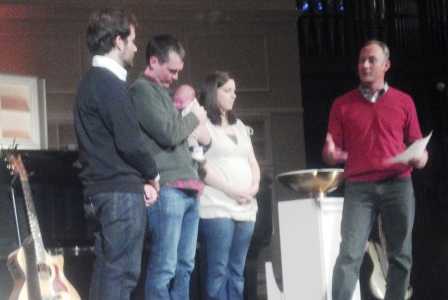
When my grandson was baptized on Sunday it was a family celebration. His parents, aunts, grandparents and friends were present to publicly welcome the tiny newborn into God’s kingdom. Though Jack slept the entire time, his baptism was filled with praise and promises.

Occasionally as a pastor I am asked to do a baptism outside of Sunday worship. I generally decline because one of the central themes of baptism is that the baptized person becomes part of the Christian community. Baptism is not an isolated event between God and the baptized.  Baptism is a community event in which the family of God, the church, welcomes and receives the newest member of the family.

In the book of Acts we see a clear expression of this. After Peter preached his first sermon about the death and resurrection of Jesus Christ in Acts 2, the people who heard it were cut to the heart and said to Peter, ‘Brothers, what should we do?’ Peter responded,

“Repent and be baptized every one of you in the name of Jesus Christ so that your sins may be forgiven and you will receive the Holy Spirit (see last post). For the promise is for you, for your children and for all who are far away”. . . . Those who welcomed his message were baptized, and that day about three thousand persons were added (Acts 2:38-40).

(Side note: I often wonder how they did 3000 baptisms that day. Did they use a fire hose, a supersoaker or the Jerusalem municipal swimming pool?)

The key verse comes next. The newly baptized did not wander back to their old communities and ways. Instead they formed a worshipping community. They devoted themselves to the apostle’s teaching and fellowship, to the breaking of bread and the prayers (Acts 2:42). The apostle teaching became what we know as the New Testament of the Bible. The fellowship they shared involved more that drinking coffee, but actually sharing their possessions with one another. The breaking of bread is a reference to the bread of Holy Communion or Eucharist. And prayer is prayer.  All are elements of a worshipping community.

The expectation is that the newly baptized needs the community to grow in his or her understanding of God’s grace and love. We do not live our faith in isolation; the community brings us strength, support, correction and comfort.   Jesus modeled this by living in a community of at least twelve disciples.

A wonderful moment for me at Jack’s baptism was when the pastor asked the entire congregation if they promised to support and encourage Jack as he grew in faith. The congregation joyously responded, “Yes, we do!” Jack’s home and family has just grown by a factor of ten.

How does baptism help you stay connected to God’s people?


Lord Jesus, Thank you for providing me with your fantastic family.

Grandpa Value

In my last post, I reflected on a visit by my four siblings and the value of family. The day I posted my reflections, a new family value entered my life: my first grandchild was born.

I grew up without any grandfather in my life. My mother’s father died when she was a child and my grandmother never remarried. My father’s father lived in a distant state and for various reasons had little contact with our family. There is one old picture of me stiffly standing next to my grandfather, but I have no memory of the visit. So I no direct experience of grandfathering.

Jonathan and FarFar

But I did see how my father loved his grandchildren. Even though he and my mother were in distant Washington state, they made frequent trips to Minnesota to see their three grandchildren. My son, Jonathan, got the special attention since he was bit older and they shared a definite love of baseball and any outdoor activity. They camped and hiked together, enjoying the wonder of God’s creation.  Jonathan loved his FarFar (Norwegian for “Father’s Father).

When my father entered hospice care for cancer, it was Jonathan, age eight, who wanted to travel with me for his final days. As he sat by his grandfather’s bed, Jonathan told him about how the baseball season was progressing and especially how Ken Griffey, Jr. was playing. His deep abiding love for his FarFar survives to this day.

As I held my new grandson Tuesday, waves of emotions and thoughts rolled over me. Jack Keller is Jonathan’s son. I marveled at the wonder and beauty of a new-born child. I thought about the years to come: taking Jack camping and hiking, perhaps even running in a road race with Jack and Jonathan someday. At a deep level I felt my Dad’s memory and his joy in holding Jonathan some 26 years ago.

David, Robert, Jack, Jonathan, and John KellerMy brothers and sisters were able to see and hold Jack before scattering. As my brother Robert held Jack he expressed what many of us felt. “I feel like crying; this is so special and unique.” Family continues to hold value, from generation to generation. After all, God created us to be connected through the generations.

The Lord, the Lord, a God merciful and gracious, slow to anger, and abounding in steadfast love and faithfulness, keeping steadfast love for the thousandth generation, forgiving iniquity and transgression and sin. (Exodus 34:6-7)

Lord Jesus, thank you, thank you, thank you, for each new generation.

Where Do You Find God?

Door of the Duomo (cathedral) in Siena, Italy

A recent post by Opreach asked the question, “Where do you find God?” Many of us might first think of churches and cathedrals, places dedicated to God and utilized as gathering spaces to worship God. Over years these buildings can grow in holy significance as we baptize, confirm, marry and bury members of our family and community inside these structures. Candlelight Christmas Eve worship, Easter celebrations and numerous Sunday gatherings add to their spiritual aura.

But the danger of such concentrated focus on a building is that the building can become a box in which to contain or limit God. One must go to church to meet God. Sure, we may believe that God is not limited to the building, but our behavior and practice seems to limit our interaction with God to such spaces. How many of us have other places and practices for prayer, scripture reading or meditation? Do we behave as if God is with us wherever we go?

Tomorrow I will be preaching on King David’s desire to build God a temple.

The king said to the prophet Nathan, “See now, I am living in a house of cedar, but the ark of God stays in a tent” (2 Samuel 7:2).

Prior to David, God’s presence had been linked to the tent of meeting, first used by Moses and the Israelites when they wandered in the desert for 40 years.  Now at David’s request Nathan gives him his blessing to build God a house, but that night the Lord God redirects Nathan,

Go and tell my servant David: Thus says the Lord: Are you the one to build me a house to live in? I have not lived in a house since the day I brought up the people of Israel from Egypt to this day, but I have been moving about in a tent and a tabernacle. Wherever I have moved about among all the people of Israel, did I ever speak a word with any of the tribal leaders of Israel, whom I commanded to shepherd my people Israel, saying, “Why have you not built me a house of cedar?” (2 Samuel 7:4-7)

Friend Dave celebrating as he ran Twin Cities Marathon

The key phrase in the text is “whenever I have moved about among all the people of Israel.” God tells Nathan, David and us that God will not be restricted. God is on the move among us, whether we are running a marathon, buying groceries, finishing a spreadsheet or washing dishes. Is it possible to create behaviors and practices that help us recognize God’s presence in our daily lives?

Lord Jesus, thank you for the safe harbor of my church, but be my pilot as I sail out to sea each day.

Lobby Love

In our men’s Bible Study this morning we were discussing 2 Peter 1:5-7 and the characteristics that support our faith. Peter strings together a long list:

For this very reason, you must make every effort to support your faith with goodness, and goodness with knowledge, and knowledge with self-control, and self-control with endurance, and endurance with godliness, and godliness with mutual affection, and mutual affection with love.

The list moves from faith to love.  The Greek language of the New Testament had several different words for love: phileo, eros, storge, agape. In this list the last two characteristics both center on love: phileo and agape.

Phileo was a more common word for mutual affection.(Philadelphia, city of brotherly love, is named for this virtue). I imagine two friends working side-by-side to accomplish a task. An example might be offensive linemen on a football team, striving together in protect their quarterback. A strong team has a sense of phileo.

Agape was not a word used as much in Greek, prior to the New Testament. When 1 John 4:7 states “God is love,” the Greek word used is agape. C. S. Lewis in his book, The Four Loves, describes agape as Gift-love and is the unique domain of God. For God so loved that he gave, (John 3:16). The other loves (phileo, eros, storge) are Need-loves which are expressions of our human need for affection, friendship and intimacy. Lewis puts priority on agape, but sees the value in all the other loves as well.

After Bible Study I had a brief discussion with one of the men in the church lobby. He shared how he missed being at church last Sunday. I responded, “I bet you missed both what happened in there (pointing to the worship space) as well as what happen here (indicating the church lobby).” He nodded his head.

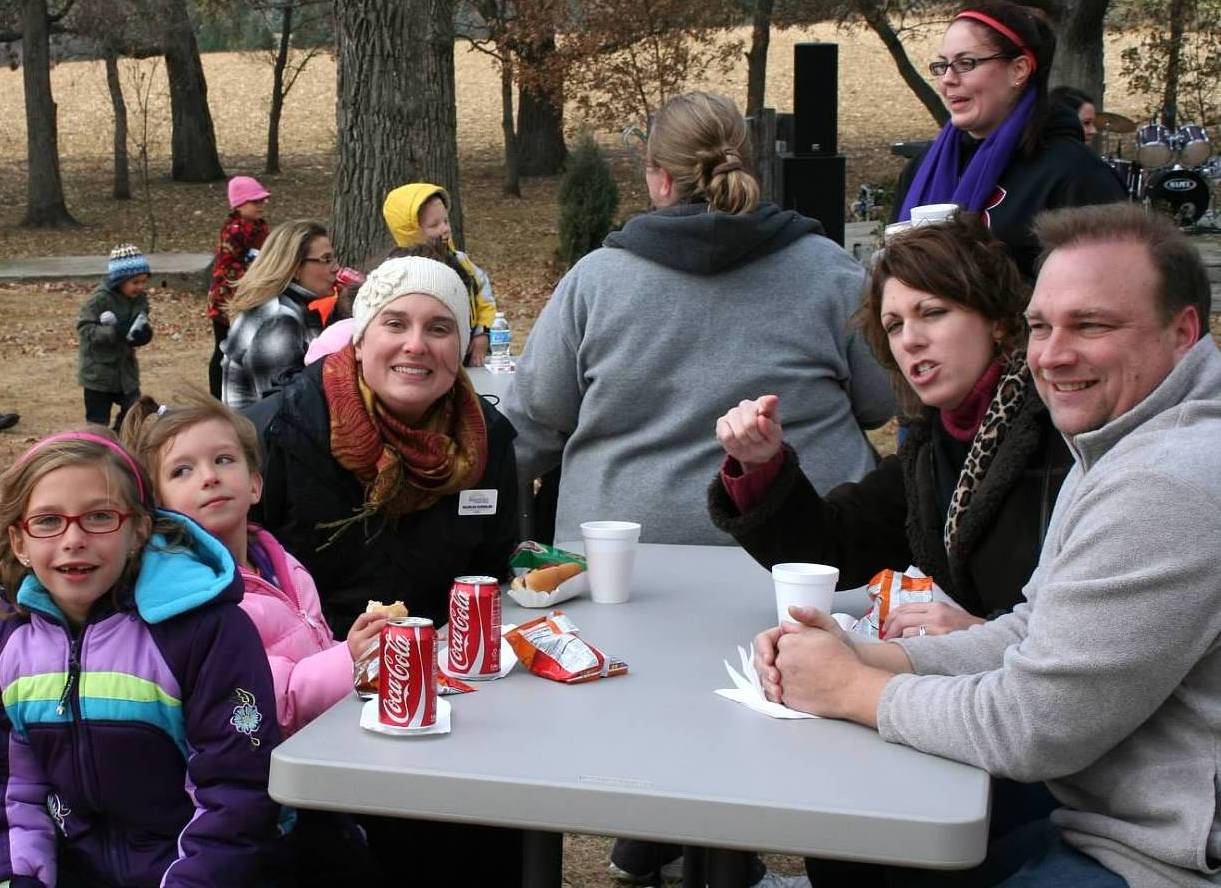
Lobby Love is not restricted to the church lobby but was a key part of our Harvest Festival

I have discovered (somewhat begrudgingly) that what draws many people into the congregation is not simply “great worship,” but also “great fellowship.” The opportunity to visit, talk, converse with friends and family after worship is as significant to them as what happens in the worship service itself. The mutual affection (phileo) is a critical part of Christian faith today. In other words, Lobby Love (phileo) can support Worship Love (agape).

This does not mean that Lobby Love can stand on its own. People would not come for the coffee fellowship alone. Church coffee is not as good as Starbucks. Good worship is a key component to good fellowship. It reminds us once again that we are God’s children, cherished by God and that reminder flows into the lobby after worship. We may not speak directly about the Bible text we read that morning, but our kindness towards one another can be a reflection of the loving kindness experienced in worship.

How vital is mutual affection to your faith and love?

Lord Jesus, guide me into deeper fellowship with my brothers and sisters