Category Archives: Body Mind Spirit

Story “Time”

Running With Joy?

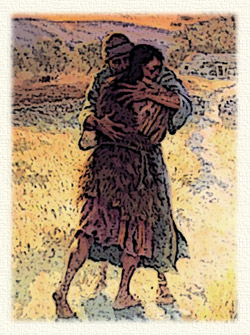
When we tell stories, we usually leave out the boring, repetitive stuff.   Yesterday I mentioned my story about running or lack of running.  After finishing Grandma’s Marathon last June, I have not been able to run without pain.  I’ve mentioned this before, but have tried not to dwell on it, since my whining will not help me nor edify you.  

In mid February that I mentioned a new physical therapy called Muscle Activation Therapy (MAT).  MAT involved reactivating little used muscles to help stabilize my left hip.  Every morning I go down into the basement to do my series of MAT exercises, which are boring, tedious, aggravating, and humbling.  Each time I remember Shannon’s promise that they will work overtime.  That is the hard part – over time. If my story were a movie, these exercises would be the parts you would fast-forward through.   

But also, if this were a movie, I would yearn for the dramatic crisis point.  I would say something about giving up, packing it in, throwing my running shoes into the garbage can and slamming the lid.  Then I would talk to Shannon and she would tell me to give it one more try . . .  and, after some stiff coaching, I would meekly pull my shoes out of the garbage, tie them on and (drum roll ) begin to run with joy!

My life is not a movie.  I still have my shoes, I still have hope, and I will continue my exercises.  I have noticed that my left IT band is much better and I can walk without pain.  In time, I am hopeful that I will run again.  But right now, I am simply in the boring part of the story.

One caveat.   In my February 11 blog I compared MAT to PAT (Prayer Activated Therapy).   Part of my Lenten therapy is to learn the contemporary wording of the Lord’s Prayer.  Though I still stumble a bit, the stumbling has pushed me to deeper pondering on Jesus’ prayer.  “Lead us not into temptation” versus “Save us from the time of trial.”   Yes, Jesus, save me from my whining, complaining self.  Teach me to be patient in all things and to seek your kingdom.  Amen.

Is your story speeding up, slowing down, stopped or on track?
I can’t lose.

Yesterday I posted on hell; not fun to write.  Today I promised heaven and wonder if it will be as difficult to create.   I certainly can write about “longing” for heaven. 

Life Wins!

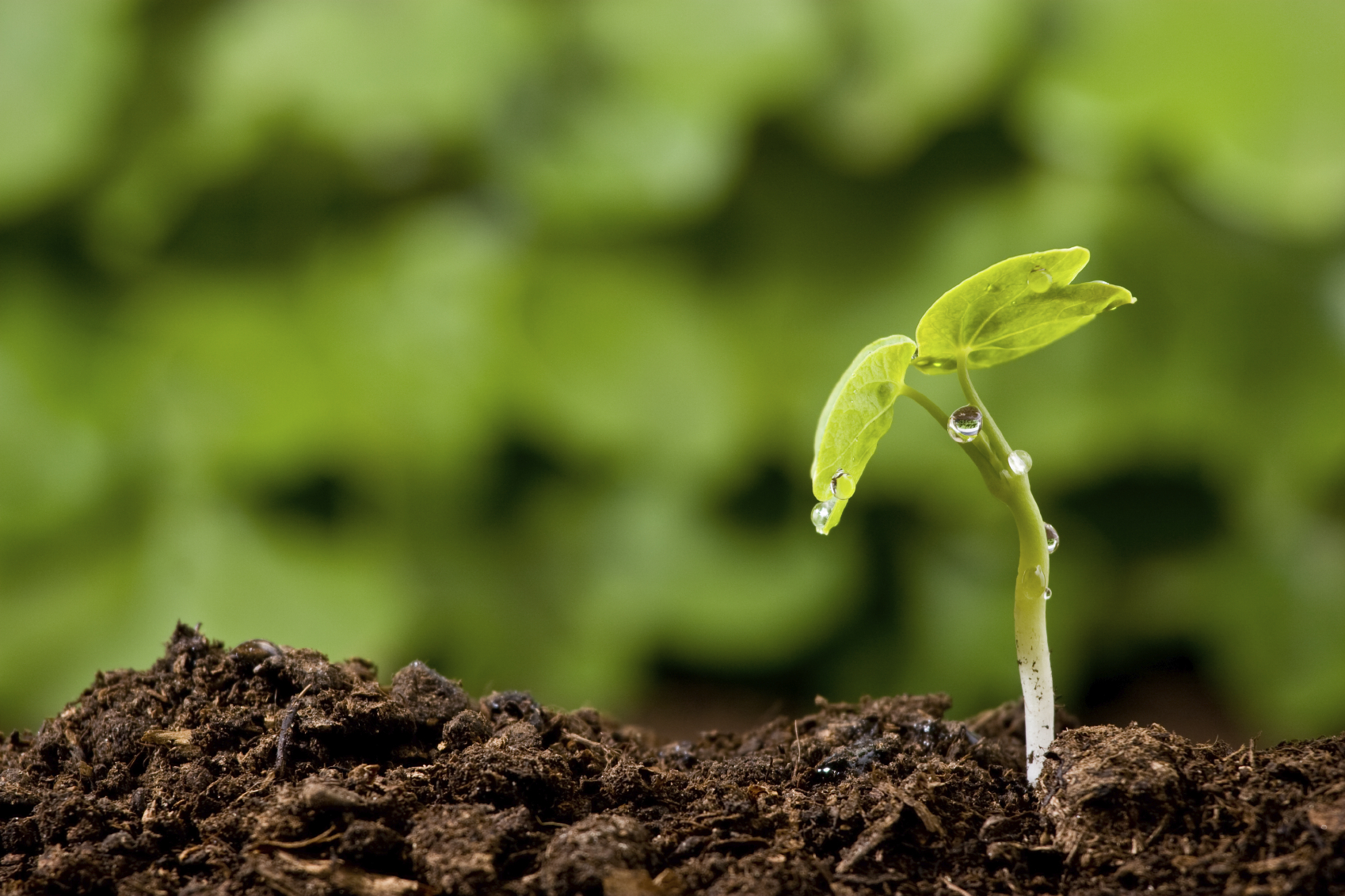
Today a cold rain continues to fall with the promise of snow tomorrow.  The calendar says spring, yet my physical  surrounding says “not yet.”  I long for the green and warmth of spring, for the hope of life renewed.

I think yearning for heaven is an appetite within us.  C. S. Lewis wrote extensively about this yearning or desire in his autobiography, Surprised by Joy.   Lewis argued that just like a man in a desert longs for water, so we, as creatures made for heaven, yearn for God’s joyful presence.  This yearning is an indication that we are not just material creatures, but have a spiritual dimension.   How could this spiritual yearning have developed out of only material longings?  We are spiritual beings seeking our spiritual home.

 Rob Bell argues in Love Wins that Jesus came to reconnect heaven and earth.

What Jesus taught, what the prophets taught, what all of Jewish tradition pointed to and what Jesus lived in anticipation of, was the day when earth and heaven would be one. The day when God’s will would be done on earth as it is now done in heaven.  The day when earth and heaven will be the same place.  As it’s written at the end of the Bible in Revelation 21: “God’s dwelling place is now among people.”

Lewis and Bell both believe that Jesus accomplished the reconnection in his life, death and resurrection.  Though we do not fully experience heaven on earth, we do have a taste of the heavenly joy while living in this life.  We begin to become what God created us to be.   And in death we become even more alive in God.  Paul writes about this letter of joy, Philippians 2:21. “To live is Christ, and to die is to gain” or as Eugene Peterson translates it in the Message “Alive, I’m Christ’s messenger; dead, I’m his bounty. Life versus even more life! I can’t lose.”  

In what ways have you tasted heaven here on earth?

Tsunami of Grace

How will you respond?

Like so many, I have been overwhelmed by the pictures, video and stories coming out of Japan.   Last week’s earthquake and tsunami were horrific.  Prayers for mercy, compassion and strength are lifted up to God on behalf of the survivors and victims.  Two thoughts rise in my heart and mind.

First, I realize that some people may be asking, “Why God allow this tragedy to happen?  Could He not stop it? Or is it some kind of punishment from God?”  Jesus faced such a question once when asked about eighteen people who were killed when a tower fell on them.  “Do you think that they were worse offenders than all the others living in Jerusalem?  No, I tell you; but unless you repent, you will all perish just as they did.” Luke 13:5.   The people of Japan are no worse sinners than you or I.  We are not entitled to prosperity and safety.  Each day of life is a gift from God that easily be lost.

Part of our repentance, transformation, is to recognized the potential folly of our human enterprise.  I took basic geology in college.  The professor stressed two points for all the non-geology majors: don’t build your home near a geological fault-line nor on a flood plain.  Japan is located near a major fault: earthquakes and tsunamis have and will happen there.   Even with the best technological structures, humanity continues to build where such destruction can/will happen.  We can not blame God for our folly.

But a second thought rises as well.   This is again our opportunity to love our neighbor and to show grace and compassion.   We each can participate in some way in the restoration of Japan and other devastated lands.  I am a citizen of a nation that is already sending support; I can inform my elected representatives that I support such aide.  I am also a member of the Evangelical Lutheran Church in America and I have given financial support to its Disaster Response fund. We are called now to act with the compassion of Jesus so that a tsunami of grace can touch Japan.

There are many agency by which you can help the victims of Japan.  If you want to use the ELCA disaster relief fund or learn more about it, go to https://community.elca.org/NetCommunity/SSLPage.aspx?pid=631

How has the earthquake shaken your life?

“As we forgive others”

Forgiveness

Thursday it was a challenge.   I attended a meeting outside of church.  Prior to going, I had decided that I would practice my Lenten discipline of listening, more than speaking.   I thought that should be easy. Usually I am a good listener.  I was doing well until we broke into small groups and one person began to dominate the conversation.  I would have appreciated the one-way conversation if I had heard clear, wise, helpful  ideas.  But the whole time I listened, I kept thinking, “this is not valuable to me. This person is too self-absorbed to help me.” As I listened,  I began to realize the hardness of my own heart towards another’s life journey.

Since that conversation, I have been wondering if that might not be how God hears many of my prayers, as self-absorbed drivel.  There are times when I pour out the deepest parts of my heart to God, but too often it is the superficial complaints of a spoiled child.  Still God promises to be gracious to me, to listen and uphold me, to seek my presence.  Can I not do that with another?   Can I simply be gracious and attentive to God’s children around me?

The heart of the Lord’s Prayer speaks volumes for my relationship with others.  Forgive me my sins as I forgive those who sin against me.    Yesterday I discovered once again how challenging it is to love my neighbor as God has loved me.  Yet I am forgiven and can start fresh today.

What does forgiving others mean for you?

Daily Multigrain

Daily Bread

Okay, yesterday was Ash Wednesday, the beginning of Lent.  Yesterday many of us went to church, confessed our sins, received the promise of forgiveness and went home.  Now what?  How are you going to allow God to work in your life today?

It does not have to be some big spiritual feat or sacrifice.   A simple prayer asking God to start your day with grace and gratitude.  For example, take one petition from the Lord’s Prayer, such as “Give us today our daily bread.”   Reflect on that as you eat your breakfast, drink your morning cup of tea, as you start your car or turn on your computer. All that we have, all that we use each day is a gift from our Creator. 

Martin Luther answered the question, “What does ‘daily bread’ mean?”  in the Small Catechism. 

Everything included in the necessity and nourishment for our bodies, such as food, drink, clothing, shoes, house, farm, fields, livestock, money, property, an upright spouse, upright children, upright members of the household, upright and faithful rulers, good government, good weather, peace, health, decency, honor, good friends, faithful neighbors and the like.

Slow down and see the amazing grace all around us.  Our daily bread is truly multi-grain and nourishing.

 Where was God for you in the second day of Lent?

The Folly of Ashes

"From dust you come, to dust you shall return"

Ash Wednesday brings the strange custom of placing ashes on the forehead of  Christians.  This custom was not so strange in ancient cultures.  People would sit in ashes as a public confession that they had done wrong, that they deserved to be punished and that they seek God’s mercy.  Jesus noted this custom when he cursed two cities that did not receive him, For if the deeds of power were done in you had been done in Tyre and Sidon, they would have repented long ago, sitting in sackcloth and ashes (Luke 10:13).

Ashes are a symbol of our sinful, broken, self-serving character and our desperate need for God’s mercy.  Unless we acknowledge and confess our sin, God’s grace has no power, Christ’s death has no purpose.  But with such confession comes the brilliant healing light of God’s love.

The most powerful (even ridiculous?) image for the use of ashes comes in the book of Jonah.   The King of Nineveh heard of Jonah’s preaching on Nineveh’s impending destruction.  He rose from his throne, removed his rob, covered himself with sackcloth, and sat in ashes.  He even declared all men and animals to be covered in sackcloth, with the hope that God would be merciful.  The king showed his wisdom in this foolish behavior.

 This morning I read something on a blog that took God’s mercy deeper.

With that in mind, I’ve been wrestling the last few days: Isn’t it ironic how casually we are willing to talk about God’s mercy, as if we deserve it? As if it’s owed to us? At the same time, we cringe at the idea that God might be calling us to live on less; to give some stuff up. We pile on excuse after excuse about why God would want us to live cushy, comfortable, safe lives… Yet, the God we follow wasn’t willing to cling to the glory he deserved, because he was so moved by his love for us. We, on the other hand, don’t even deserve the breath in our lungs. It’s a gift. How, then, could we ever justify our security?

via Perfect Choreographed Dance. « The Trees Will Clap.

How does God’s mercy impact you?

Colorful Vegetables for the Spiritual Life

Whats more colorful or spiritual than VeggieTales?

Every week I receive an e-mail from Mayo Clinic on how to live a healthier life.  Recently it recommended that my dinner plate become more “colorful” with a variety of vegetables and fruit.   Yesterday when I visited my mom, she and the other residents were served a plate bright with red pepper, yellow squash, green beans and orange carrots.  Mom was eating healthy.

Afterwards I made the connection to yesterday’s post and my disparaging comments about zucchini.  As I thought more, zucchini grows into what God created it to be: zucchini.    It adds color and nutrition,  if not taste, to many meals.   It can be part of a healthy diet.

So I want to stretch the vegetable analogy.  Perhaps, as Christians, we need variety in our spiritual disciplines to live healthy lives with God.  We need to add color or spice (even zucchini?) to the ways we open our lives to God.  

Certainly, if one has no discipline, no method of reading scripture, saying prayers, or attending worship, then the simple acts of reading Matthew or John, saying the Lord’s Prayer and participating in Sunday worship are a great beginning.  But if such a pattern is already established, then variety may be needed.  Here are just a few suggestions:

  • Instead of praying a list of prayers,  light a candle and sit in silence, listening for God
  • Instead of reading a Bible chapter, do research on a favorite word in the Bible: love, joy
  • Instead of praying at your desk or table, go for a walk outside and converse with God.
  • Instead of attending your normal church, worship in a church of a different tradition: charismatic, Quaker, Roman Catholic (this is very hard to write as a pastor, but I do it when I am on vacation, so why shouldn’t you?)

In other words, change your pattern of spiritual discipline, with the intention of opening your life in a new way to God’s presence.   You may discover that the old ways are still the best, but you may return with a fresh perspective.  Or you may discover a new spiritual practice that you can embrace fully.

Lent starts tomorrow; what new spiritual disciplines might you embrace for the journey?

Integrity of Patience

As I reread Robert Roberts’ The Strength of a Christian, I notice my own impatience rising to the surface.  I want to glean some quick insight into the practice of patience, so that I can immediately apply it to my life.  I want patience NOW.  Roberts provides instruction on the practice of patience (that I will post tomorrow, be patient), but first Roberts makes a wise observation on the necessity of patience for becoming a whole person.

Patience is also a condition for the integration of the person. Like other strengths, patience gives our lives continuity and autonomy, enabling us to live not by impulse, or at the beck and call of environmental stimulus, but by some design.  The Christian design is of course the love of God and neighbor.  It is one thing to have noble sentiments, such as compassion and concern for one’s neighbor and gratitude to God, but quite another to be in the appropriate sense the author of these, the kind of person who through “interior strength” has etched this design upon life.  Only someone self-present in the way a patient person is can practice Christian life as a spirit does. (p. 56)

The strength of an oak tree

When I was in my twenties, I remember reading a Christian article about how God is more interested in growing mighty oak trees than in zucchini.   Zucchini are rather amazing plants in that they grow from seed to fruit rapidly. Yet they will not survive a hard frost.  Oaks take considerable more time.  Yet it is the oak that survives the winter and summer storms and bears witness to God’s glory, year after year, by being the oak it was created to be.    In the same way, as Christian, we are called to serve God faithfully, becoming fully what God created us to be.   Growth in Godly character is often seasonal, with long stretches where one wonders if God has forgotten you. This is where the integrity of patience comes to bear, trusting God is at work, even in the times of waiting and hoping.  I continue to pray and seek patience as God works on my character of becoming a strong oak (see Psalm 1).

Who has been a model of patience for you?

The Happiness of Patience

Happiness needs Patience

Robert C. Roberts gives me food for thought in his chapter on patience in The Strength of a Christian.  I had never really connected happiness and patience before.

Patience is a condition for happiness.  Some vices are enjoyable, or at least seem so at the moment you practice them.  For example, most people get a delicious pleasure out of invidious gossip.  But other vices are just thoroughly unpleasant.  Envy, for example, is evil through and through.  Someone would have to crazy to go looking for an opportunity to be envious.

Impatience is an unpleasant vice.  It is a state of more or less intense frustration: you want to be somewhere other, or doing something other or accomplishing something other, or in the company of someone other, than you are.  Some people’s impatience is limited to certain moment, but other people are beset with impatience about large segments and pervasive situations of their life: for example the mother of small children who just can’t wait until they grow up enough to go to school and get out of her hair. These are the ones whose impatience has made them unhappy people, rather than just people with unhappy moments.

By contrast, people who can dwell gladly in the present moment despite some desire, or what would normally be a reason to desire, to depart from it–are not frustrated.  Because they exercise patience, this present moment of life is something in which to rejoice and be glad.  The impulses to flee are under control, and they experience peace and self-acceptance.

This week at lunch my host said he had a choice when he got up that morning: whether to choose to have a great day or not.  I think part of that choice is to decide to be patient, to live in this day, hour, moment with these people and circumstances.  God will be in this day; will I be attentive, patient to discover and rejoice in his presence?

How has patience and happiness overlapped for you?

The Stength of Patience

One book that I reread is Robert C. Roberts, The Strength of a Christian.  In chapter three he gives an excellent definition and helpful wisdom on the virtue of patience.  He starts by quoting Paul’s famous chapter on love: Love is patient.  Patience gives strength to love so that we can truly love God, our neighbor and ourselves.

Patience is the ability to dwell gladly in the present moment when we have some desire  . . . to depart from it.  It takes patience to be a good duck hunter or scholar or even a good thief.  Waiting for the ducks to come near the blind may get boring, just as reading some theologians may be.  Patience is not only a Christian virtue but a virtue in the book of anybody who understands human life. 

Our life is full of beckonings from the future: The future says, “Come away from where you are; you are not moving fast enough, not accomplishing enough, not getting what you set out to get.  And is it not a bit boring where you are, and unpleasant and annoying in other ways? Come away, come away.”  And so a craftsman rushes his job, or the scholar lays aside the volume of Moltmann’s theology.  Some people are so deficient in patience that they flit from task to task or from entertainment to entertainment, never doing anything well or enjoying anything deeply.

Patience is a form of self-mastery that enables us to dwell in the present moment, to stay at the present task, to narrow our focus of vision so that our mind is not sundered by every passing impulse to quit the present and fly away.

Patience leads to strength and strength to patience

Roberts goes on to examine how we can achieve such self-mastery in our Christian lives.  I confess that I am struggling with patience as I work my physical therapy exercises.  I hope to run again and perhaps train for a marathon.  But all I can do is repeat over and over and over and over the exercises that my PT has given me.   I also need patience as I pastor in a new congregation, learning God’s story and culture within this great congregation.   So I am rereading and reflecting on Robert’s book.   I will share more in the coming week.

How and when have you learned patience and what role did God play in the learning?