Category Archives: Body Mind Spirit

Work, Play and Worship

This week starts a new ministry at Resurrection called Four Square, named after the popular playground game. The four squares of the ministry are explore, play, serve and grow. The children will explore the Bible, serve various needs in the community, play games like four square, and grow in their faith and relationship. Today they actually painted a Nine-Square court in the church parking lot for all to use.
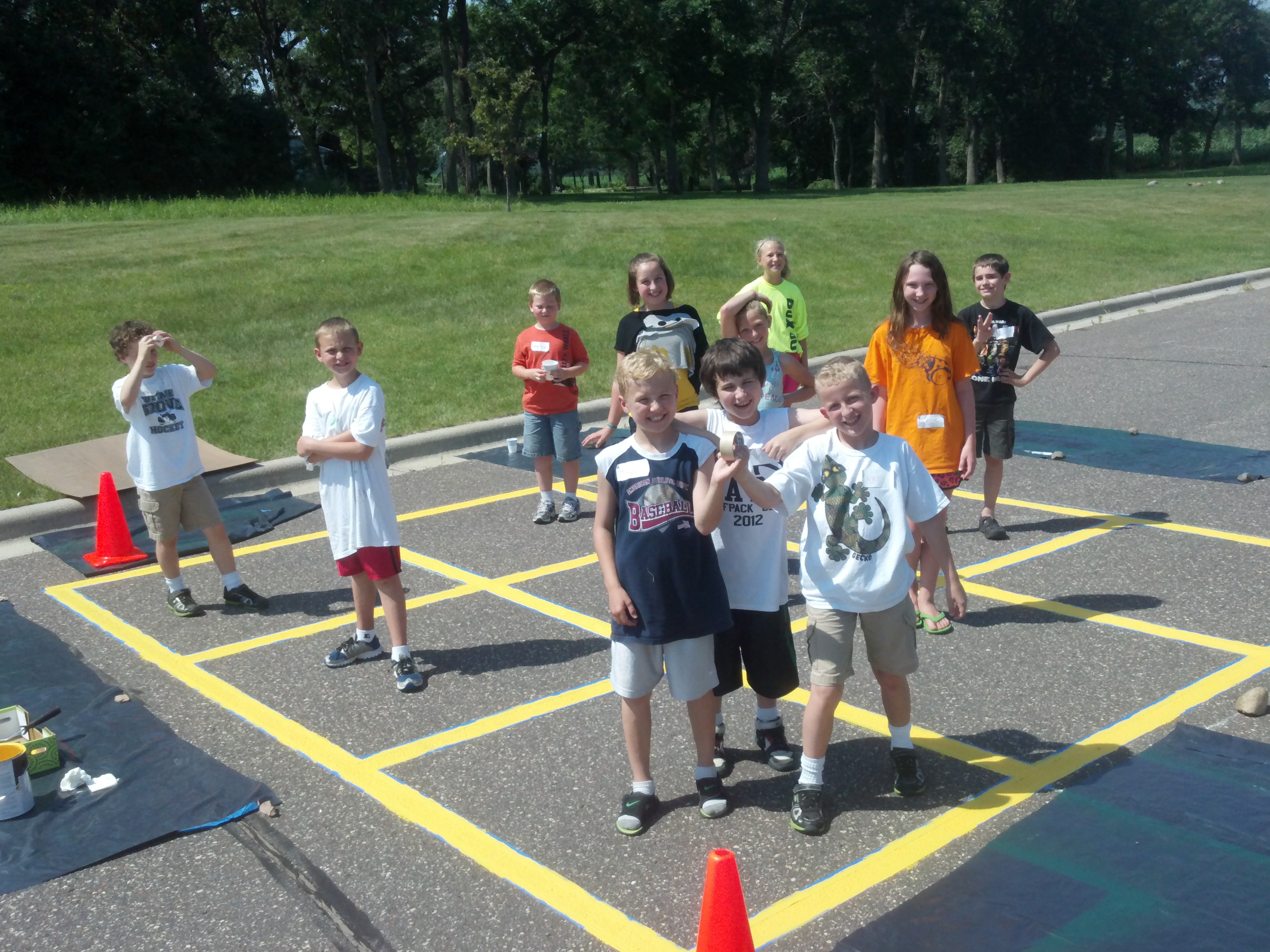
The “play” part of Four Square made me think of a comment that I explored somewhat last year. The idea is that in our American culture we confuse worship, work and play. We worship our work, work at play and play at worship. I know that I can be guilt of each attribute at times.

First we tend to worship our work. Especially men in our society can make their careers the center of their lives. Our whole identity can revolve around our careers and how successful we are within it. Careers often have a clear hierarchy of who is moving up the ladder and who is not. Though God calls us to work in God’s creation, God does not call us to place our career success at the center of our lives. I confess that I can place MY pastoral status ahead of my faithfulness to God’s mission and calling. “Seek first the Kingdom of God and his righteousness and all these things shall be yours as well” (Matthew 6:33).

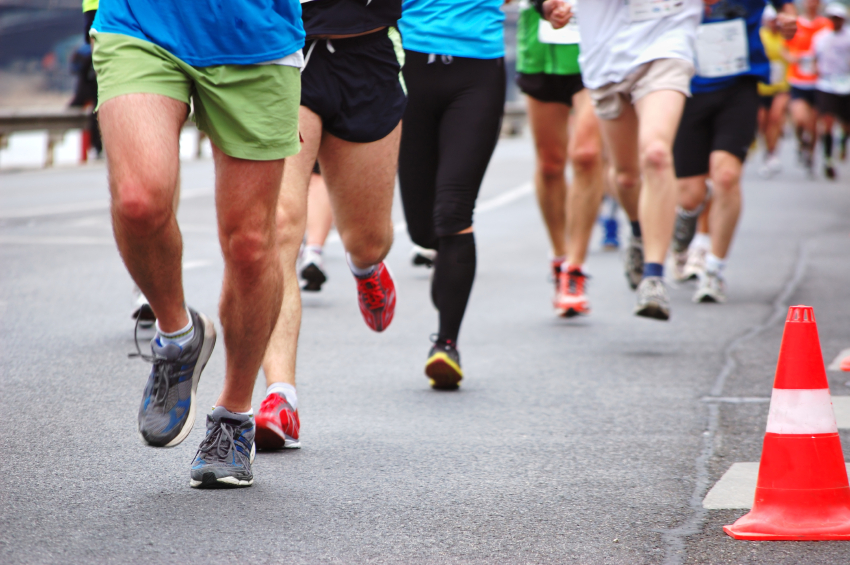
Second we can work at our play. In our American culture, we can turn our leisure into a new work obsession. Whether it is fishing, hunting, golf, running, tennis, gardening, woodworking or biking, we can turn what is meant to be restful and renewing into competitive, stressful work. I know that I have at times turned my love of running into an obsession when I am training for a marathon and my whole life begins to revolved around a rigorous training schedule. I have this elusive goal of qualifying to run in the Boston Marathon someday, but my fixation can rob me of the joy of simple running. My recent use of the Phil Maffetone training method has helped me slow down and to enjoy the playful act of running.

Finally we can play at worship, or, in other words, turn worship into entertainment. We measure how effective worship is by how popular the worship service is or how people felt during the service. We get confused about the focus of worship. Worship is not about the worshippers, but about God being central to our lives.

God is not my “cosmic therapist” who makes me feel good about myself, but rather my Creator, Savior and Guide before whom I bow in wonder and adoration. God is God, ruler of the universe. True worship helps me remember and live with God at the center. “God is spirit and those who worship him must worship him in spirit and in truth” (John 4:24).

So today, let us live with God at the center, in our work, play and worship.

Lord Jesus, remain Lord of my life in my work, play and worship.
Cultivating Gratitude

I have a grateful heart this morning. Yesterday retired Pastor Ken Rouf, a member of Resurrection, preached. He preached on gratitude and he gave me the gift of a Sunday free so that I could spend time with the family campers at Camp Wapogasset.

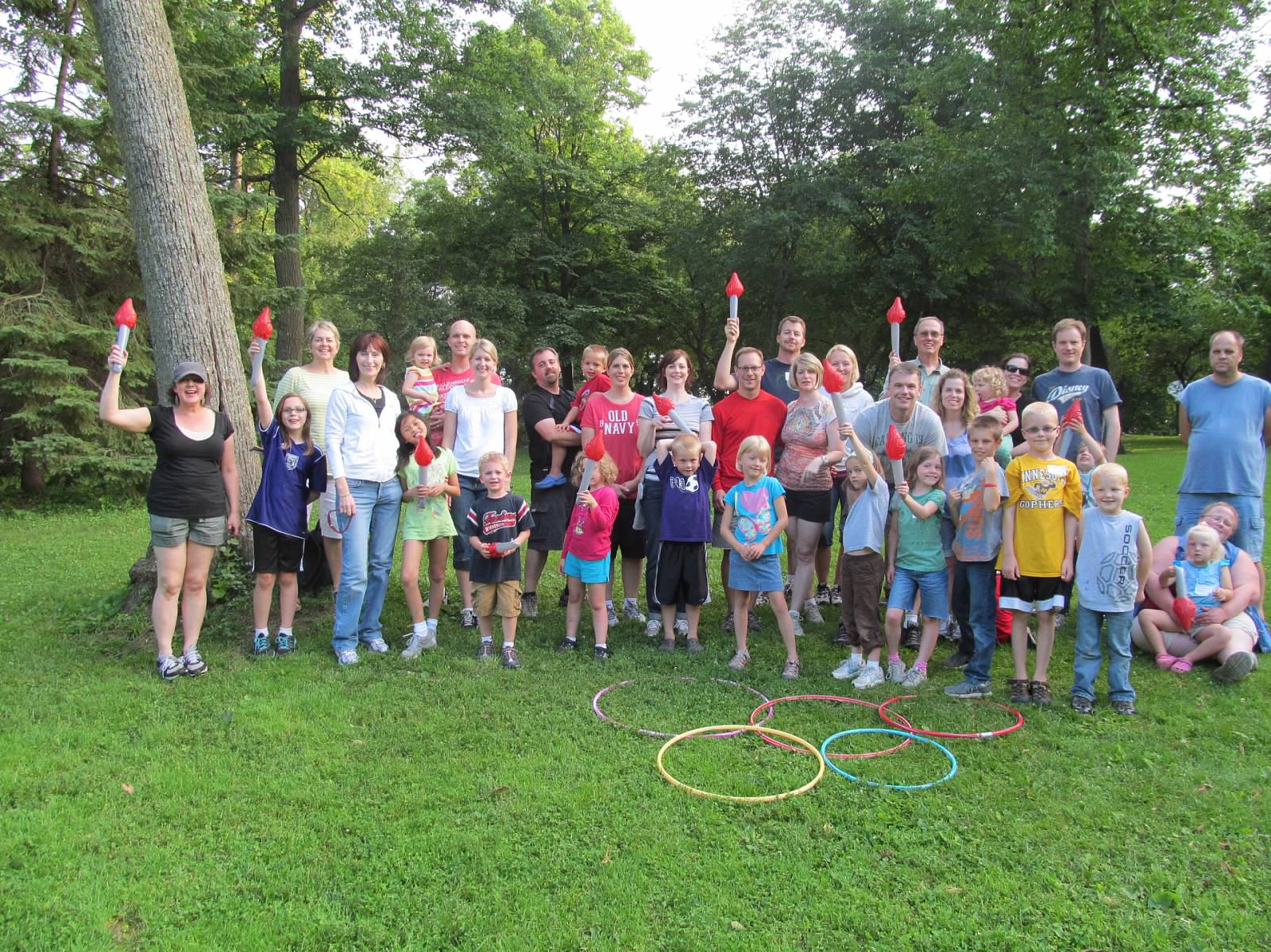
I am so grateful for the families who attended; their children gave me and others a workout during our evening “Olympic” games. We laughed as we tried to play field hockey with foam float tubes and as we raced to find our shoes. Each night at campfire, we sang with thankful hearts and joyful memories.

I am also grateful for the staff of Camp Wapo and for Sarah and Jon Storvick who helped to make this such a special week-end. Jon attended Camp Wapo as a camper a few decades ago and lead us in song each night. Sarah guided us in making family prayer boxes and in keeping the program fun and meaningful.

Gratitude is a Christian spiritual emotion that we can cultivate within our lives. An important aspect of such gratitude is not simply to be thankful for when things are going well, but also to be grateful during the challenging times as well. I confess that I struggle to be thankful when things are not going the way I want. I too easily see God as my “provider” and not as ALMIGHTY KING. Robert C. Roberts describe my problem this way,

A more suburbanite version of this resistance to Christian thanksgiving is the pattern of appreciating our prosperity, health, talents, and successes without being grateful to God for them. Perhaps we call them our “blessings,” but God remains to us a vague principle of their origin, rather than a Giver clear and present to our awareness. Or if God does seem to the individual a vivid personal presence, he is a sort of Super-Size Sugar-Daddy whose function in life is to provide the goodies in sufficient abundance. This kind of person may be a churchgoer, but the telltale mark of ingratitude is that when the “blessings” are reversed, when the hard times come, she tends to get angry at God and feel he has let her down. We might call this the Savage* syndrome, since the individual treats God as a convenient source of blessings, rather than as God. It is as though God owes her the blessings. If God fails to serve his essential purpose, he is guilty of the injustice of not doing his job. (Robert C. Roberts. Spiritual Emotions: A Psychology of Christian Virtues (Kindle Locations 1956-1962). Kindle Edition.)

God is the source of all joy and life. Perhaps our greatest thanksgiving each day could focus on the simple truth that God creates, redeems, and empowers us. Thanks be to God, Father, Son and Holy Spirit.

How do you practice gratitude?

For what are you grateful today?

*Richard Savage, an eighteenth-century English poet of whom Samuel Johnson wrote a short biography in which he described Savage as a man who always expected people to assist and lend to him.

Club Moss And The Male Mask

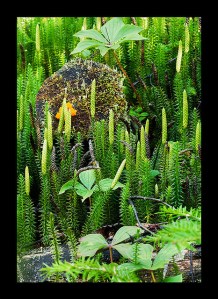
Club Moss in BWCA

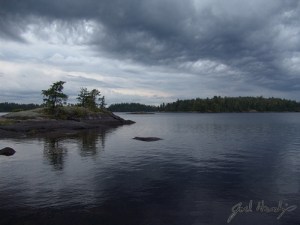
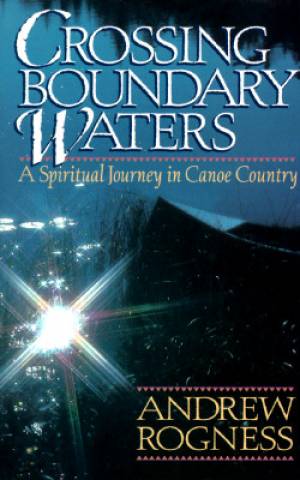
My trip to northern Minnesota’s Boundary Water Canoe Area with the men of Resurrection Lutheran Church is only a few weeks away. As posted earlier, we have been reading Andrew Rogness’ Crossing Boundary Waters. I wrote about his early encounter with a outlet stream and later on his thunderstorm adventure. Today it is his simple encounter with a small green plant.

Near the end of his four-day solo canoe trip, Rogness stops to pick blueberries and then lays down to observe a small patch of forest floor. His attention is captivated by a club moss, which has an asexual reproduction.  The spores of the club moss contains both the female egg and male sperm.  As he holds a small piece of moss in his hand his mind contemplates deeper issues.

I stretch forward and put my face close to the granite, then roll over into the midst of the club moss.

I came to the Boundary Waters because I felt disjointed and out of control. Was this not a dilemma brought on, in part, by an unhealthy assumptions on my part—that I, as a male, must always be in control and have things together, that I must always achieve, compete, and conquer? Yet this is no more possible for males than for females. As a matter of fact, what’s wrong with having moments of life that are a bit out of control and disjointed, assuming they do not damage anyone? And nothing is wrong with having moments of achievement, competition, and success.

My illusion has been that I, as a male, should at all times have a clear understanding of my purpose, a disciplined strategy for accomplishing that purpose and tangible success stories that establish my worth. Trapped in a game I did not consciously choose, I look at the scoreboard. It is halftime. Soon the game will be over, and my score is not high enough.

I came here to start a new game plan, to regain control of a game that was getting out of hand. The rules—in fact, the whole game—were blown away by a connection with creation, by crossing boundary waters (p. 106).

Rogness had a journey of acceptance and redemption. He rediscovered his value as child of the Creator. Sometimes we need to leave the familiar in order to discover the profound reality of God. In a way, Rogness describes a spiritual pilgrimage. He has made the journey to a holy land other than Jerusalem or Rome. In a small piece of club moss he has discovered the infinite wonder of God’s grace.

I am praying that our men’s trip to the BWCA might have a similar spiritual impact on each of us.

Have you had moments of grace, when God has grabbed hold of your life in a fresh way?

Lord Jesus, be Lord today in my life.

Baptized in the BWCA

Earlier this spring I wrote about  Andrew Rogness’ book, Crossing Boundary Waters: A Spiritual Journey in Canoe Country. You can read that post here.  I am rereading it in preparation for a canoe trip in the Boundary Water Canoe Area (BWCA) later this summer with men from Resurrection.

Through out the book Rogness is wrestling with his own restless soul, seeking to restore a sense of emotional and spiritual balance in his life.  He describes a dream in which he see himself as a broken Superman who needs repair.  His self-mage has become twisted and distorted, trying to stay in control.  As he canoes alone through the wilderness, he senses a storm brewing inside himself.

In one dramatic scene, a thunderstorm rushes towards his campsite and he decides to keep his clothing and gear dry by stripping everything off and meeting the storm naked.

Now where to stand?  Near the trees isn’t a good spot, with lightning searing the sky. I walk down to the water’s edge, face west, and greet the oncoming rain with arms outstretched.

The rain pelts my skin and streams down my face.  I am surprised not to feel cold.  It is as though the water is cleansing, purifying more than the outer me, and drawing me away from the center of what is happening.  I am in this storm, not just watching it. I am in the world, not apart from it.

Across the bay, I see mist rising from the forest. Even while the rain descends, it also rises to renew itself.   I am whipped by the storm, brought to the ground of my being, and I sense this same kind of transformation rising from within.  I think of what has happened to me in three days, what has been poured out of myself to be cleansed by the wilderness and like the mist now rises to new birth (p. 92).

Rogness takes time to reflect and describe how a wilderness journey can be a spiritual experience in the Christian tradition.  He senses the power of God in storm and within himself.  His canoe trip give him the opportunity to reorient himself as a child of God.  The rainstorm is a kind of baptism in which death and new life become possible.

Do you not know that all of us who have been baptized into Christ Jesus were baptized into his death?  Therefore we have been buried with Jesus by baptism into death, so that just as Christ was raised from the dead by the glory of the Father, so we too might walk in newness of life. (Romans 6:3-4)

Have you ever experience a moment of new birth?

Has time in the wilderness helped you reorient your self-image?

Lord Jesus, create a new center within me.

Emotional Service

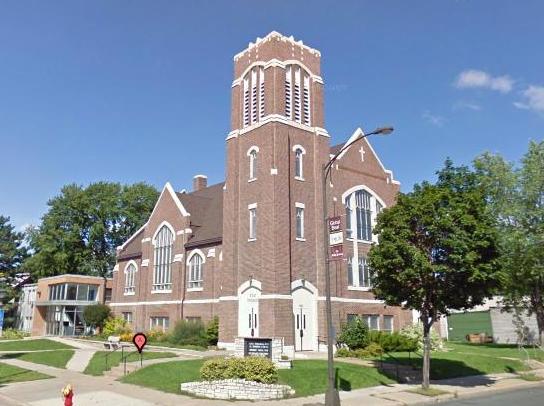
Last Monday afternoon, I joined others from Resurrection Lutheran Church to serve a meal at East Immanuel Lutheran Church on the east side of St. Paul. The meal is hosted by CURE Ministries and they provide a meal, clothing and groceries to families and individuals in need. Volunteers from Resurrection has been assisting at the meal once a month for the past year.

As I worked alongside the other volunteers, I experienced a mixture of emotions. Since I am preaching on spiritual emotions, I took time to reflect on the mixture of  emotions I experienced during this brief time of service.

The first emotion was a sense of awkwardness. This was only my second time serving at East Immanuel and I did not know all the leaders or duties. The leaders (Mike, Scott, Terrell, Doc) worked hard to welcome, orient and direct us. Still I was outside my normal comfort zone. I am usually the leader and to be the follower is sometimes challenging for me.  Yet as I reflected on the awkward sensation, I remembered one of my favorite quotes from business guru and Christian, Ken Blanchard, “Unless you feel awkward doing something new, you are not doing something new.”

I also felt a sense of pride and joy as I recognized the many volunteers from Resurrection. As a pastor, there is joy in seeing others participate in meaningful service. I was especially proud of Terri Dokken who has taken a strong role of leadership in this partnership. As we prayed prior to serving the guests, I was thankful that God had called so many to participate.

After the prayer, Scott asked for volunteers who were able to help move some canned goods. The post office had collected food in a recent drive, but it was all located in an outside garage. Several of us, both guests and volunteers, began the task of moving the piles of canned goods upstairs. After the first feeling of confusion, I participated moving the food to an upstairs Sunday School room. The task was not particularly challenging or exciting; in time it became rather tedious, trying to sort the food into meaningful categories.

As I reflected on the tedious nature of our service, I realized that service is not always exciting or a “Feel-Good” experience. Often, service is repetitive, mind-numbing work. Sometime I wonder if pastors over-sell service as joyous and fun, when in actuality there will often be elements of toilsome labor.

I also have had some modest feelings of regret. I mentioned that there were some guests who were also helping with moving the food. I now regret that I did not make the effort or time to converse with them, to hear a bit of their story. Part of our partnership is to make such connections.

Finally as I finished up my tasks for the evening, I felt both satisfaction and fatigued. Doc commented on this when I came downstairs, “You look tired.” I was tired, but I also felt a deeper sense of satisfaction of having served in God’s kingdom.

Service involves our body, mind and spirit. People often make judgments about a service by the initial feelings they have. Taking time to reflect on those feelings can help us better understand what God is doing not only with our hands, but also with our hearts.

Lord Jesus, give me energy and passion to serve wherever you call me to go.

“No Win in Comparison”

Yesterday I preached on the spiritual emotion/virtue of humility. I borrowed a phrase from Andy Stanley, senior pastor of North Point Community Church, who preached “There is no win in comparison.” The real enemy of humility is not just pride, but envy; we have a constant need to compare ourselves to others to see if we measure up. If our self-worth is based on a comparison model, we never win.  There is always someone who is richer, smarter, faster, fitter, holier than we are.

Then yesterday, Seth Godin wrote in his blog about the danger of comparison in one’s business model.

Compared to magical

The easiest way to sell yourself short is to compare your work to the competition. To say that you are 5% cheaper or have one or two features that stand out–this is a formula for slightly better mediocrity.

The goal ought to be to compare yourself not to the best your peers or the competition has managed to get through a committee or down on paper, but to an unattainable, magical unicorn.

Compared to that, how are you doing?

I don’t know much about magical unicorns (I will need to check with my daughter Suzanne regarding that), but the one place I go for comparison is Jesus Christ. Not that I live a “What-Would-Jesus-Do” life, but rather a life based solely on “What-has-Jesus-created-and-called-me-to-be-and-do?” As a child of God, my value and worth rests totally in God’s Son. When my heart, mind, and soul focus on Jesus, then the comparison model does not have a chance.

I have been crucified with Christ; it is no longer I who live, but Christ who lives within me (Galatians 2:20)

Lord Jesus, keep my focus on you and your call in my life.

Riding My Emotions

I have been writing recently about spiritual emotions. Today I rode my bike to church and with the ride came a variety of feelings.

First came the excitement of doing something new. I had talked about making the 28 mile trek from home to Resurrection all last summer, but never did it. This year I felt this internal drive to make it happen. So as I prepared my water bottles and look over the route, I had a mixture of joy, anticipation and excitement.

The joy and excitement stayed with me during the first twelve miles of the ride. It was a beautiful morning, cool with a slight overcast. Part of my journey was along a paved state trail, a converted railroad bed, that was sheltered and tree-lined. I felt like a kid set free.

Then at twelve miles, a new feeling rose up within me. I could feel my back tire going soft and disappointment crept into my heart. “No, Not a flat tire.  Not today! Not on the way to work,” I thought. And I simply panicked. Even though I had changed my bike tire, it had always been with more experienced riders who could assist me. Thinking I could not do it on my own, I phoned my wife and asked her to rescue me.

While I waited, I decided to work on changing the tire. And within fifteen minutes, I had the flat fixed. Now my emotions shifted again, from disappointment to that of satisfaction. “I can fix a flat!” But my wife was still on her way and she was not answering her cell phone. So I waited, impatient and also apologetic. When she arrived, I was feeling a bit embarrassed that I had called for her assistance. When she arrived she responded graciously and I felt some relief and peace that I could complete my ride.

The rest of the ride went smoothly except for one instance. As I entered Woodbury proper, the traffic increased and I had to be quite mindful of various cars and trucks at intersections. Approaching one traffic light, a male passenger yelled something at me through an open car window. I felt this immediate irritation at being accosted. I believed that I had every right to be there. The car had stopped at the intersection and I bicycled by it. As I passed, with irritation I said to the passenger, “I have every right to bike here.” He just gave me a strange, disgruntled look and I rode on.

I then reflected on my feelings of irritation. Was I going to let this one momentary event color the rest of my ride? Would I allow this irritation to grow to full anger? Emotions can be ridden just like a bike. We can brood on some feeling, deepening its intensity, or we can let it go, seeking new emotions to ride.

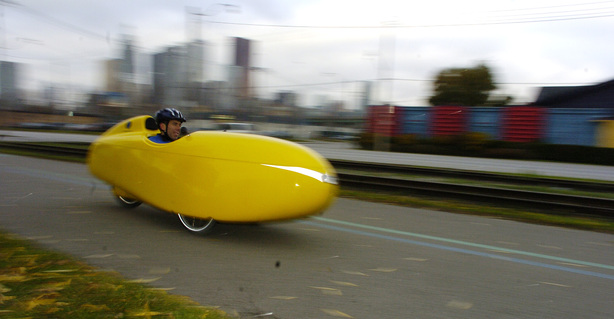
Fortunately, I caught sight of a unique vehicle, a recumbent bike with a full bright-yellow wind frame around it. With that flash of novelty, I happily finished my ride to church, feeling a new sense of accomplishment.

Now I am wondering, “What emotions and feeling will I have on the ride home this evening?”

Lord Jesus, take the rough edges of my heart and mold them to your desires.

National Running Day

Today is National Running Day.

Running is one of my passions.  I was introduced to marathon running in 1998 and have finished ten since then. I continue to find the training and mental preparation for a marathon stimulating. Though all marathons are a challenge, some are more than others.

Six years ago I ran Grandma’s Marathon in Duluth, MN. It was not a “pretty” marathon for me. Not only did the high humidity and warm temperatures zap the strength of most runners, it also shrouded scenic Lake Superior in fog. The clouds kept it bearable for the first hour, but then the sun broke out and turned the race into a steam bath. I finished in 3:47 but I was not a pretty picture coming across the finish line.

What gave me strength was the community around me. I started off with my friends Steve Libby, Gary Van Cleve, and Bill Treiber near the 3:30 pace group. Steve and I stayed together with the pace group through mile 13; Steve was running strong and hoping to BQ (Boston Marathon Qualifier). I had to drop back at that point due to a four minute port-a- potty break. (I said it wasn’t a “pretty” marathon!) I struggled alone from mile 13 to 22. Then on Lemon Drop Hill, my son Jonathan showed up and ran with me to the finish. His words of encouragement kept my feet moving forward.

In Hebrews 12, the people of God are reminded that we are surrounded by a cloud of invisible witnesses, those faithful people of God who have died and rest with God. They are cheering for us in our life marathon as we race, walk, struggle, waddle, crawl towards Jesus Christ, the race director and pace setter. But I don’t think “cloud of witnesses” is restricted to the dead. Some of those who witness to me are my fellow runners who continue to give words of encouragement and inspiration as I struggle to run life’s course. Many have given me courage and strength. Thank you.

Hebrews 12:1-2
Therefore, since we are surrounded by so great a cloud of witnesses, let us also lay aside every weight and the sin that clings so closely, and let us run with perseverance the race that is set before us, looking to Jesus the pioneer and perfecter of our faith, who for the sake of the joy that was set before him endured the cross, disregarding its shame, and has taken his seat at the right hand of the throne of God.

Thank you Jesus for the ability to encourage others.

What is NOT Humility

Mac Davis had a country western hit called “Lord, its hard to be humble when you are perfect in every way.” The song was Davis’ tongue-in-cheek reflection on reaching the top of the ladder in the music business and being all alone. Humility is not a virtue embraced by most people who are climbing their social ladder, whether in school, sports, business or society. Yet humility is something the Christian faith advocates, “Humble yourself in the sight of the Lord” (James 4:10).

Robert C. Roberts in his book, Spiritual Emotions: A Psychology of Christian Virtue, writes that in our culture we often confuse humility with humiliation. We think that a humble person must lack confidence in his abilities and judgments.

He does not initiate projects and human relationships. He would rather follow orders than give them, would rather have others make the decisions in his life. His failures (or his genes) have rendered him a psychologically passive personality, a Mr. Milquetoast who does not object to being told where to sit and wait, or even to being utilized as a convenient wiping-place for muddy feet. Anyone who undertook to cultivate this disposition in his children would be doing them a momentous disservice. This is not humility, but rather a deeply engrained and ramified humiliation. (Kindle Locations 1092-1094).

Roberts goes on to demonstrate that the opposite of humility is not self-confidence, initiative, or assertiveness, but rather always comparing one’s self to the people around you, to make sure you are further up the social ladder or pecking order than someone else. Attitudes such as:

pushiness, scorn of “inferiors,” rejoicing in the downfall of others, envy, resentment and grudge-bearing, ruthless ambition, haughtiness, shame at failure or disadvantageous comparison, and the need to excel others so as to think well of oneself.

We are taught by our culture to rank how well we are doing by the clothes we wear, the cars we drive, the schools our children attend or the jobs we do. To be top-ranked means I must be “better” than those who are lower in rank. Or I “scorn”  or “envy” those of higher rank because I am “beneath” them.

Roberts goes to describe what humility is and its significance for true spiritual fellowship.

Humility is the ability, without prejudice to one’s self-comfort, to admit one’s inferiority, in this or that respect, to another. And it is the ability, without increment to one’s self-comfort or prejudice to the quality of one’s relationship with another, to remark one’s superiority, in this or that respect, to another. As such, humility is a psychological principle of independence from others and a necessary ground of genuine fellowship with them, an emotional independence of one’s judgments concerning how one ranks vis-a-vis other human beings. (Kindle Locations 1118-1122).

Humility is the ability to see all people as equal in some fundamental way.

Next, I will post on the Christian source of humility.

What are some other ways that you believe humility has been misunderstood?

Lord Jesus, thank you for your humility that saves me.

Crossing Boundary Waters

I am looking forward to a canoe trip to the Boundary Waters Canoe Area (BWCA) of northern Minnesota this July with men from Resurrection Lutheran Church. Part of our preparation is to read Andrew Rogness’ Crossing Boundary Waters: A Spiritual Journey in Canoe Country. Andrew was a Lutheran pastor who wrote about his four-day solo canoe trip in the BWCA and his personal discoveries.

Early in his trip he encountered a small narrow opening to a lake that had a swift current to it.

Enough water moves through it to form a clear “V” shape with swirling eddies and small whirlpools. If I try to paddle through it, I will be going against the current. This can be hard enough for two paddlers, but manageable. I have never tried it alone. Now with a “nothing ventured, nothing gained” attitude, I decide to try. (p. 26).

Over the next several paragraphs, Andrew described his three attempts to conquer this small rapids at the entrance to the lake. It becomes almost comical in his description of different positions and approaches. After his final approach, he paddled to the smoothly rounded granite bed on the east side of the narrows. As he sat on the rock, his feet dangling in the water, he reflected on his attempt to conquer this small section of the river.

I realize that I had entered the water to manipulate, dominate, and objectify it as though it were there so serve me. This image explodes into a maze of thoughts and insight, leaving my body on the edge of the rapids. . . . What I thought were the reasons for my coming here, I now see as symptoms of a deeper issue. I had intended to search for myself, unsure if my problems were with me or with others and my relationships with them. Maybe the problem is how I relate to myself. I hear words reverberating in some forgotten sanctuary, “Whoever would find their life will lose it. And whoever would lose their life will find it.” Words that were an utter mystery to me. Why do I remember them? Why do they make perfect sense now? (p. 28-29)

Canoe trips, summer hikes, or long car drives can be time for self-reflection and renewal. Leaving the familiar routines of daily life can sometime open cracks that allow the Holy Spirit to break into our lives in a fresh and powerful way. Times of reflections can help us understand our spiritual emotions and cultivate a healthier perspective on them.

I look forward to such encounters and contemplations during my travels. May God give you time for such spiritual reflection.

Lord Jesus, grant me your perspective of my life.