Category Archives: spiritual exercise

Strong Peace

A favorite scripture verse of mine is Philippians 4:7 “The peace of God, which surpasses all human understanding, will guard your hearts and minds in Christ Jesus.” Like many in this crazy, stressed-out, constantly-running-to-catch-up world, I long for peace. Peace that will last not just for a moment, but for days, months, years. Peace that will calm my stormy seas.

Paul describes God’s peace in some unique ways. First, he states that God’s peace will surpass human knowledge or understanding. This means that God’s peaces comes even when I have not figured everything out or have everything under my control. The future may seem very fuzzy and relationships may be very rocky, still God’s peace can rule. After all it is God’s peace, not mine.

Second he testifies that God’s peace is strong, because it guards us. Paul recognizes that there will be many struggles and conflicts in our daily life. The evil one will harass us. Yet God’s peace is a rock or fortress that guards our hearts and minds from the assaults

Third, God’s peace guards both our hearts and our minds. The heart is the seat of our emotions and the mind is the home of our thoughts. God’s peace is to rule in our emotional and intellectual lives, our feelings and our thoughts.

Finally God’s peace directs us to Jesus Christ. Jesus was a model of peace to his disciples, sleeping in the boat when the stormy sea threatened (Mark 4:35-41). God’s peace is not found in the absence of problems, but with the presence of Jesus.

Right now, as you read this, take a moment to close your eyes and visualize God’s loving, peaceful arms surrounding you. Perhaps you can visualize yourself floating in the peaceful river above. Take a deep breath and say, “God’s Peace surrounds me.” Take another deep breath and say it again, “God’s peace surrounds me.” Practice that breath prayer and discover God’s abiding peace is always near.

Lord Jesus, breathe into me your peace.

Praying the Lord’s Prayer (Part Two)

Whichever version of the Lord’s Prayer we pray (the topic of my last post), the words can become a string of sounds without meaning. One helpful way to truly pray the prayer is to slow it down, to breathe each phrase or petition and pause to reflect upon it for a moment. For example: God is our Father, our Papa, our Dad, and like a good father God wants to spend time with us, to be in relationship. May this time of prayer be such a time of holy conversation.  Slowing down the Lord’s Prayer allows it to become a form of meditation rather than recitation. To quickly rattle off the words of the prayer rarely becomes true prayer.

Another way to pray the prayer is to use other biblical translations of the prayer. With the plethora of Bible translations one can find unique wordings that can reawaken Jesus’ prayer for us. For example, Eugene Peterson’s The Message translates Matthew 6:9-13 as following:

With a God like this loving you, you can pray very simply. Like this:
Our Father in heaven, Reveal who you are.
Set the world right; Do what’s best – as above, so below.
Keep us alive with three square meals.
Keep us forgiven with you and forgiving others.
Keep us safe from ourselves and the Devil.
You’re in charge! You can do anything you want!
You’re ablaze in beauty! Yes. Yes. Yes.

Or you might try writing your own version of the Lord’s Prayer. A thoughtful personal translation can help you rediscover the beauty and wonder of Jesus’ simple prayer. Here is my recent attempt.

Papa who rules the cosmos,
let Your honor be our vision.
Bring Your desires and justice to our world,
So that heaven can be seen here.
Provides us with sufficient food for today.
Teach us to forgive with the same passion that You forgive us.
Protect us from the evil within and without.
And let us never forget that You are our Glorious King.

Lord Jesus, continue to imprint your words on our hearts and lives

Praying the Lord’s Prayer (Part One)

Jesus instructed his disciples to pray. He modeled a life of prayer, taking time to pray early in the morning (Mark 1:35). After a time of prayer, his disciples asked him to teach them to pray and he taught them the familiar words of the Lord’s Prayer, “Our Father who art in heaven. . .”

I grew up in a traditional Lutheran home and memorized the familiar words of the prayer at a young age. My confirmation instructor, Pastor Crawford, unpacked the meaning of each petition. I learned about God’s kingdom, daily bread, forgiving trespasses and deliverance from evil. Every Sunday during worship, the congregation would recite the familiar words that seemed to become stronger as we finished, “For thine is the kingdom, and the power, and the glory forever and ever. AMEN!”

The traditional words and phrases stayed with me into adulthood. I found great comfort with it, but I also noticed that I often recited the prayer rather than consciously praying it. I would catch my mind starting to drift and realized that though my lips were saying the sacred words, my heart was not in synch. Partly it was the speed at which we “prayed” it, partly it was my own inattentiveness.

In seminary I was introduced to some of the newer translations of the prayer. The replacement of “thy” and “thine” with “your,” made perfect sense to me. Prayer need not be some formal exercise of old language. Prayer is conversation with God.  At the same time I knew that switching to the new language/translation would be very difficult. The Lord’s Prayer was deeply imprinted in our minds and souls, a kind of rock in the chaotic sea of spirituality.

My first twenty-five years of ministry was in a congregation whose worship stripped away several liturgical practices of traditional Lutheran worship: the Kyrie, the Great Thanksgiving, but we continued to use the traditional wording of the Lord’s Prayer. Intellectually I believed that someday the words would need to change, but emotionally I liked being able to guide a family at a graveside service in praying the familiar words, “Our Father who art in heaven. . .”
When I came to Resurrection I immediately discovered that in worship, the congregation had embraced the new translation, “Our Father in heaven, hallowed be your name.”  I embraced the change intellectually, but found myself stumbling over the new wording as my heart and soul tried to catch up. The deep imprint of memorization would not quickly adapt.

Now two years later, I can recite the words without too much difficulty, but I also discovered something else. I sense that I am more often “praying” the prayer, truly connecting with the words. I am more conscious that I am asking God to save me from the time of trial and to protect me from the evil one. The bumpy transition and the new translation has pushed me out of my rut into a deeper appreciation of what Jesus is teaching us.

Lord Jesus, teach us to pray.

Marathon Challenge Completed (for now)

Sunday I finished my eleventh marathon, my first in over two years. As forecasted, the weather was cold at the start. Many runners were shivering in the starting chutes. Fortunately for me my son Jonathan came to support me and took my warm-ups a few minutes prior to the start. I even took one shirt back after tossing it to him. Cold muscles do not function well. Later at mile five I handed him my gloves, ear band and warm-up shirt, finally warm enough to run comfortably in shorts and t-shirt.

The marathon has sometimes been described as a twenty-mile warm-up and a six-mile race. By mile twenty the leg muscles are often depleted of glycogen and overall fatigue sets in. The description is especially appropriate for the Twin Cities Marathon, since after mile twenty the race course climbs out of the Mississippi River Valley towards the hills by Macalester College and St. Paul Cathedral.

Through mile twenty my race had gone well with no big surprises. I did discover that I did not need to drink as much Powerade as I had during hot summer runs. Fortunately there were plenty of porta-potties along the way. I also discovered that I had not practiced enough specific pace workouts, in which I practice running the specific pace I planned for the marathon. I wanted to run 8:46 mile pace, but as I checked my watch at each mile I learned that I did some miles in 8:20 and some at 9:15 (stops at porta-potties did not help). As I have written before, each marathon has something new to teach me.

At mile twenty, the real challenge began. My legs, especially my hamstrings and quadriceps became heavy and sore. My run became more like a fast shuffle.  As I approached the hill at Summit Avenue my pace slowed. My lofty goal of 3:50 had already slipped away and my secondary goal of 3:55 (my Boston Qualifier) was in doubt.

Jonathan supported me in 2003 TCM

But that is when helped arrived. My son Jonathan met me at mile 21 to run the last 5.2 miles with me. He has done this in my past two marathons when I had really struggled at the end and had to walk a lot. This time his strong words of encouragement and support kept me moving forward at a 9:20 pace. He reminded me that “This is the day the Lord has made, let us rejoice and be glad in it” (Psalm 118:25) and “The joy of the Lord is our strength” (Nehemiah 8:10). Though I felt this overwhelming urge to walk I knew that my goal of 3:55 was in doubt and any walking breaks would kill it. We powered on.

At mile 22 I heard above the many cheering spectators the loud strong voice of Tim Torgerson as he bicycled the course, shouting encouragement to me and others. “Relax your jaw, keep your arms pumping, stay strong.” He would not let me stop, but pushed me to do my best.

I am reminded of Hebrews 12:1-2 where the writer reminds us of “we are surrounded by so great a cloud of witnesses and let us run with perseverance the race that is set before us.” In the preceding chapter the writers highlighted the heroes of faith in the Old Testament that now cheer for us in our race to Jesus. I felt like Jonathan and Tim were my own unique witnesses who gave me the specific words I needed to accomplish my task.

As I pushed the final mile to the finish line, I knew it would be close to 3:55. As I stopped my watch, it read 3:53:53. I had finished with 1:07 to spare.* I had my BQ!  A decade-old dream of running the oldest, perhaps most prestigious marathon is now possible.

My next challenge will be to prepare well and to stay injury free for the Boston Marathon in April, 2014. I just hope I have a similar cloud of witnesses that day.

Lord Jesus, thank you for being with me in the challenges of life.

*My official chip-time was 3:53:54.  I must have been a little fast with my watch.

The Marathon Challenge

My first marathon was Twin Cities in 1999. Like this year, the forecast was for a cold start, around 35-40 degrees. Having run mostly in warm weather, I panicked and rushed out to buy my first pair of running tights a couple of days before the race. I used them and never felt very comfortable the whole race. I also made other rookie mistakes, like surging ahead at mile 15 when I was feeling great, only to hit the wall at mile 22. I finished in just over four hours, thinking “that was TOUGH.”

 
What if the Marathon was in January?

Many runners finish their first marathon and think, “Okay, I’ve done that. Don’t need to go through the pain, struggle and adversity again. Once is enough.” For me, the race had the opposite effect. I saw it as a great puzzle or challenge that I still have not figured out. Not that I think I will ever “solve” the marathon puzzle, but the combination of physical, mental and spiritual challenges continues to intrigue me. The challenge pushed me to run year round, even in Minnesota winters.  Plus I still have that elusive goal of qualifying to run the Boston Marathon.

This Sunday, I may be a bit cold when I approach the start line in Minneapolis, wearing shorts and t-shirt, hat and gloves. I will also have an old long-sleeve t-shirt that I will toss aside after warming up during the first couple of miles. After finishing ten marathons, I will know not to surge at mile 15, but wait for the real challenge at mile 21 and beyond. My marathon mantra, “The joy of the Lord is my strength” (Neh. 8:10) will be on my lips and the encouraging words of my friends and family will be in my ears. The chill of marathon morning will quickly pass as my body, mind and spirit rise to the challenge.  The finish is only 26.2 miles away.

Lord Jesus, let me meet the challenges of this day with your strength and joy.

Crossing Boundary Waters

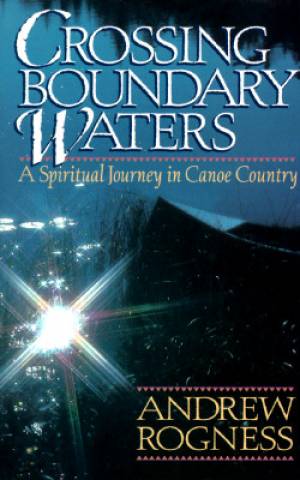
I am looking forward to a canoe trip to the Boundary Waters Canoe Area (BWCA) of northern Minnesota this July with men from Resurrection Lutheran Church. Part of our preparation is to read Andrew Rogness’ Crossing Boundary Waters: A Spiritual Journey in Canoe Country. Andrew was a Lutheran pastor who wrote about his four-day solo canoe trip in the BWCA and his personal discoveries.

Early in his trip he encountered a small narrow opening to a lake that had a swift current to it.

Enough water moves through it to form a clear “V” shape with swirling eddies and small whirlpools. If I try to paddle through it, I will be going against the current. This can be hard enough for two paddlers, but manageable. I have never tried it alone. Now with a “nothing ventured, nothing gained” attitude, I decide to try. (p. 26).

Over the next several paragraphs, Andrew described his three attempts to conquer this small rapids at the entrance to the lake. It becomes almost comical in his description of different positions and approaches. After his final approach, he paddled to the smoothly rounded granite bed on the east side of the narrows. As he sat on the rock, his feet dangling in the water, he reflected on his attempt to conquer this small section of the river.

I realize that I had entered the water to manipulate, dominate, and objectify it as though it were there so serve me. This image explodes into a maze of thoughts and insight, leaving my body on the edge of the rapids. . . . What I thought were the reasons for my coming here, I now see as symptoms of a deeper issue. I had intended to search for myself, unsure if my problems were with me or with others and my relationships with them. Maybe the problem is how I relate to myself. I hear words reverberating in some forgotten sanctuary, “Whoever would find their life will lose it. And whoever would lose their life will find it.” Words that were an utter mystery to me. Why do I remember them? Why do they make perfect sense now? (p. 28-29)

Canoe trips, summer hikes, or long car drives can be time for self-reflection and renewal. Leaving the familiar routines of daily life can sometime open cracks that allow the Holy Spirit to break into our lives in a fresh and powerful way. Times of reflections can help us understand our spiritual emotions and cultivate a healthier perspective on them.

I look forward to such encounters and contemplations during my travels. May God give you time for such spiritual reflection.

Lord Jesus, grant me your perspective of my life.

Myths About Emotions Part Two

There is a  myth that emotions are irrational and uncontrollable. Certainly emotions are powerful and can be corrosive, but they are not uncontrollable. Grief, anger,  fear, love,  or gratitude can be cultivated and directed in a variety of ways and for distinct purposes. Today I will explore the myth that emotions are good or bad, positive or negative.

Our culture tends to see emotions in black and white terms. We think of joy, love, hope, peace as good or positive emotions while we categorize anger, guilt, resentment, envy, jealousy, grief and fear as negative or bad emotions. We think that to be angry is wrong and to be in love is right. But such strict categories does not reflect the reality of emotions as expressed in scripture.

In my last post I wrote about anger and an experience I had in a parking lot. I now see my angry reaction in that circumstance as a misuse of my passionate energy. However I don’t see all anger as wrong.

Years earlier I had a different kind of experience of anger in a parking lot. My wife and I had stopped at an A&W drive-in where root beer floats were served in large frosty glass mugs. The delicious drinks were brought to cars by the hard-working wait staff and then the mugs were picked up afterwards. As my wife and I enjoyed our floats, I noticed that a neighboring car was preparing to leave. As they finished their root beer, they placed the mugs on the floor of their car and the driver then quickly set the empty tray on the ground beside the car.

I felt a surge of anger swell within me. I thought, “They are trying to steal the glass mugs!” I yelled for a wait staff person, “Hey, that car is trying to steal your mugs.” I was upset that my neighbor was stealing and I wanted to prevent it. The waitress quickly returned and retrieved the mugs and I received some very dirty looks from the exiting driver.

Now in this situation I believe my anger was justified and my actions purposeful. I could have simply ignored the situation, “not my business,” but my sense of justice motivated me to act. The anger served as an energizing motivator to seek justice in this small situation. I think peaceful passivity would have been wrong in this situation while properly directed anger was more helpful.

There is a time and place for what I call “righteous anger,” when some injustice or unfair system needs to be confronted. Confrontation does not require violence, but rather the purpose of making things right. Dr. Martin Luther King and the Civil Rights movement in our nation was an expression of such righteous anger towards the injustice of racism.

Jesus demonstrated such anger when he confronted the merchants in the temple (Mark 11:15-17). The temple’s purpose had been subverted by this interchange and Jesus worked to make things right. The temple was to be a house of prayer for all nations, not a marketplace of exchanged good.

Emotions are God-given gifts that need to be cultivated and directed towards God’s purposes.

Lord Jesus, harness the energy of my anger for your purposes.

Mystery of Trust

Paul at the Areopagus by artist Kennedy Paizs

One of the great mysteries of faith is why some people believe in Jesus and others do not.  One trusts completely while another turns away.  In Acts 17, Paul comes to Thessalonica and preaches in the Jewish synagogue.

And Paul went in, as was his custom, and on three sabbath days argued with them from the scriptures,  explaining and proving that it was necessary for the Messiah to suffer and to rise from the dead, and saying, “This is the Messiah, Jesus whom I am proclaiming to you.”  Some of them were persuaded and joined Paul and Silas, as did a great many of the devout Greeks and not a few of the leading women. (Act 17:2-4)

Paul was persuasive and some came to trust in Jesus, yet many did not believe. I recognize that the Holy Spirit, prayer, and human temperament all play a role, yet I am amazed that within one family, exposed to the same environment and influences, some members place their trust in Jesus and other members do not. The parents and church community express the gospel in word and deed, but not everyone hears and responds. It is like the seed in Jesus’ parable of the sower in Mark 4. Some seed falls on rocky soil, some among the weeds, some on the trodden path, and some on the good soil. Only the see in the good soil takes root and bears fruit.

Occasionally what seems to be the random nature of faith can be disheartening. My intellectual curiosity can twist me into knots. At those times, I “fold the wings of my intellect” and simply rest in  Jesus. I trust in his mercy and grace. Jesus has touched and changed my life through the gift of the Holy Spirit. The Word of God has impacted my life. And I have seen other lives changed as well. With hope I continue to fling the seed of God’s Word, trusting in God and not myself.

So faith comes from what is heard, and what is heard comes through the word of Christ, Romans 10:17

Lord Jesus, create in each of us a faith that bears fruit for your kingdom.

The Fun in Run For Others

Last Saturday, I joined other runners from Resurrection LC to run in the Cemstone Run for Others 5K/10K race. We had a blast benefiting Habitat for Humanity. Though I ran most of the 10K race by myself, the challenge and the course volunteers kept me motivated. I even got a prize for taking second in my age group!

Running is often thought of as a solitary sport. You don’t need any teammates to have a good run. Like many other runners, I enjoy the solitude of a run as a time of reflection and prayer.

Yet the camaraderie of a race is special. In a race setting, one feels the urge to do one’s best. I think the competition pushes me to test my limits, to learn how to persevere in a difficult task. I don’t have to win or even set a personal best to benefit from being part of a race.  Running in a race gives me the affirmation, “I am a runner.”

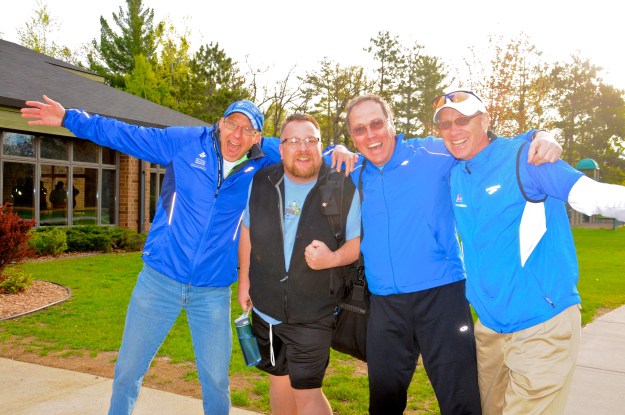
The joy and excitement of Saturday was contagious. I stand next to my friend and pastoral colleague, Mike Carlson, who was running his first race in several years. We are flanked by two great race directors, Scott Folgelson and Tim Torgerson. It was a wonderful morning for run and fun fellowship.

Also, I am so thankful for all the volunteers who gave of their time and energy to make the day special and safe. They worked hard so that the runners could focus on the race. I have volunteered at road races and the tasks can be tedious or boring. Yet without the volunteers, the race could not happen. Tim Torgerson has directed the Cemstone Run For Others race for over a decade and his efforts are to lifted up.

St. Paul writes that the church is one body, but made up of many members (I Cor. 12). Each person and part is needed for the Body of Christ to function well. We all have a part to play in our church, community and world. God has gifted each of us to participate. So whether you race, volunteer or cheer, get involved and have some fun.

Lord Jesus, continue to call me into active service in your name.

Backpacking For a Weary Soul

Last Monday I attended a class on light-weight backpacking at my local REI store. The class re-energized my long-term goal to hike the Washington state portion of the Pacific Crest Trail. The Pacific Crest Trail (PCT) is a 2,650-mile national scenic trail that runs from Mexico to Canada through California, Oregon and Washington.

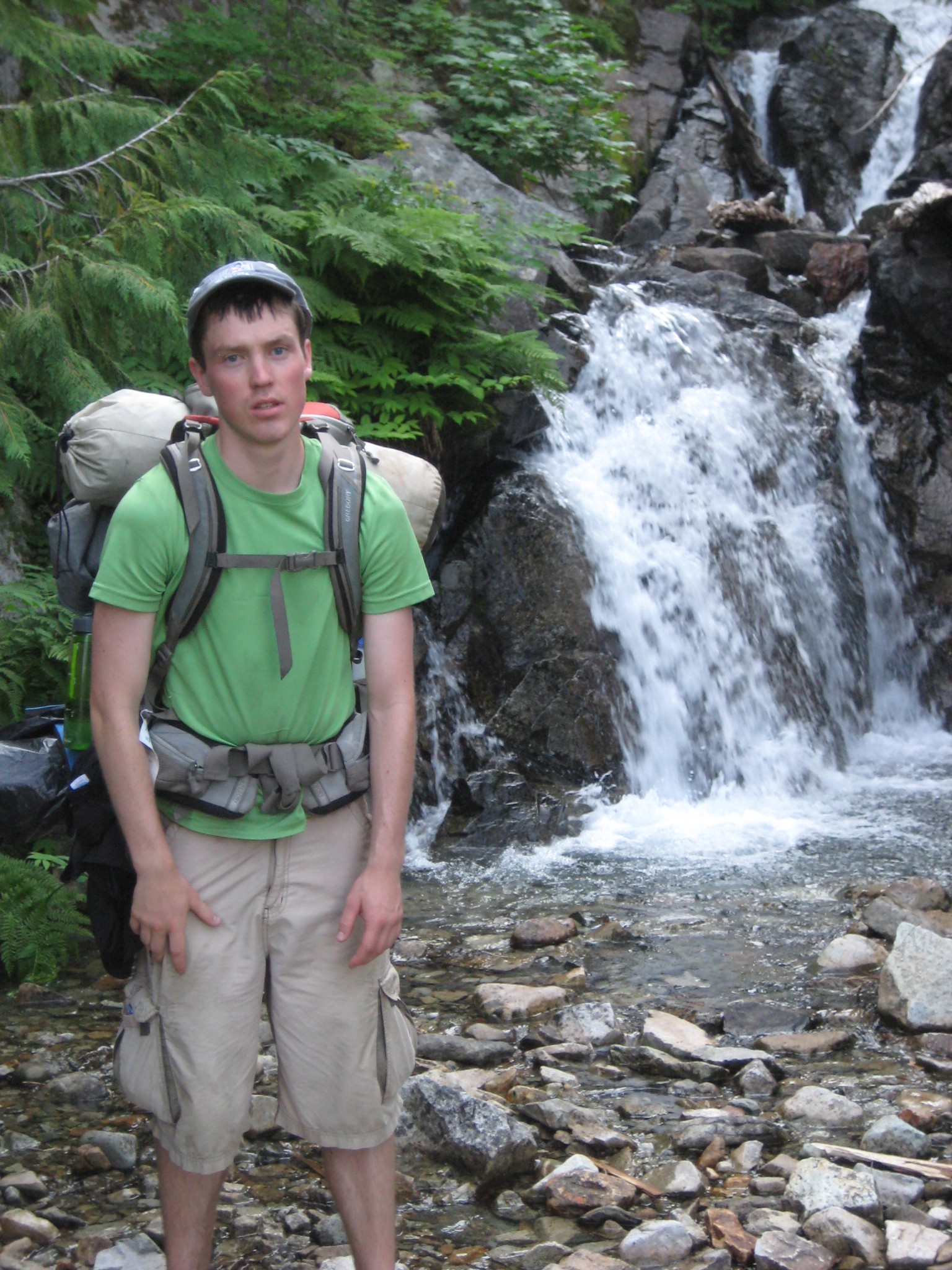
In the summer of 2009 my son and I hiked 90 miles of it in seven days. We started at Stevens Pass and ended at Snoqualmie Pass east of Seattle. We had great weather except for the last 24 hours, where we hiked through a cold, wet fog and heavy drizzle. It was a trip that whetted my appetite for more. I am planning to hike another section in 2013.

A key component to long-distance hiking is to keep your backpacking basics to a minimum, ideally under twenty pounds. This include the pack, sleep system, shelter, clothes and cooking gear. This does not include food, which is usually about two and half pounds per day. My pack for a week-long trip should start at 35-40 pounds, not including water, but in 2009 it was over 50 pounds.  I need to lose pack weight.

As a child, I first saw people with strange monstrous packs when our family went on a short nature hike near Lake Crescent in Olympic National Park. As we meanders and strolled towards Marymere Falls, a group of backpackers marched by us as they headed down out of the mountains. I asked my dad about the packs and people. He told me about backpacking and how hikers could travel far into the mountains. My thirst for the high alpine adventure started that day.

One thing backpacking has taught me is how little we truly NEED to survive. I can carry it all on my back if I choose. When I return, I do appreciate a dry house, warm bed, running water, flush toilets, fresh vegetables and electrical appliances (like my laptop). Still backpacking is a way of cleansing my soul and mind of my perceived need for more stuff. (Except perhaps my need for more light-weight backpacking stuff.)

Backpacking gives me a deep appreciation for Jesus’ words from Matthew 11:28-30.

Come to me, all you that are weary and are carrying heavy burdens, and I will give you rest. Take my yoke upon you, and learn from me; for I am gentle and humble in heart, and you will find rest for your souls. For my yoke is easy, and my burden is light.

How do you keep your soul light when you are weary?

Lord Jesus, let us find rest for our weary souls in you.