Category Archives: Prayer

The Light of Lent

As a child, I experienced Lent as an extra-long prelude to Good Friday. It had a dark, somber feeling to it. The themes all seem to center around the suffering of Jesus and the cross. Confession of sin was the central act of worship.  The dark sanctuary was a contrast to the bright morning light of Sunday worship.  The hymns we sang felt heavy and ponderous.   We did not walk to the cross – we crawled with scrapped knees and heavy hearts.

Is Lent meant to be so dark?  Does our Papa in heaven delight in the ways we berate ourselves?

One of the early purposes of Lent was to prepare new Christian believers for their baptism on Easter.  It was a time of instruction, and even fasting, but it had a joyous destination:  to be joined to Jesus in both his death and resurrection.

Or don’t you know that all of us who were baptized into Christ Jesus were baptized into his death?  We were therefore buried with him through baptism into death in order that, just as Christ was raised from the dead through the glory of the Father, we too may live a new life. (Romans 6:3-4).

The new life in Christ was the destination of celebration which colored the time of preparation with joy and light.

Gethsemane window background removed

Jesus prays in the Garden of Gethsemane

The word Lent comes from an old English word that means “spring.” This year at Trinity Lutheran (where I am serving as interim senior pastor), our Lenten theme will have a spring like quality: The Garden of Prayer.  Inspired by the stain glass window above Trinity’s pipe organ, we will join Jesus in prayer.

The theme verse will be “Be still, and know that I am God” (Psalm 46:10). Each Wednesday evening together we will embrace a specific Christian form of prayer.  We will celebrate the rich ancient spiritual practices of Gratitude, Confession, Intercession and Meditation.  Like a loving father or mother, God delights in spending time with God’s children.  Let us join in that delight this coming Lent.

Lent begins next Wednesday, February 10.  Encourage you to find a way to center in with God’s Love during this holy season.

I will also be using this blog to highlight these different forms of prayer.  If you want to follow along sign-up for the weekly e-mail using the form in right hand column.

How has Lent impacted your life in Christ? 
Resigning from Resurrection

Monday I resigned as Lead Pastor of Resurrection Lutheran Church.  My last Sunday will be October 25, 2015.  You can see my letter of resignation here.

The path to the decision was a long and winding one.  (The twisting path was also a partial reason I have not posted on this blog for six months.)  It was not made suddenly or without prayer and conversation.    Though there have been many contributing factors,  three key events shaped my decision.

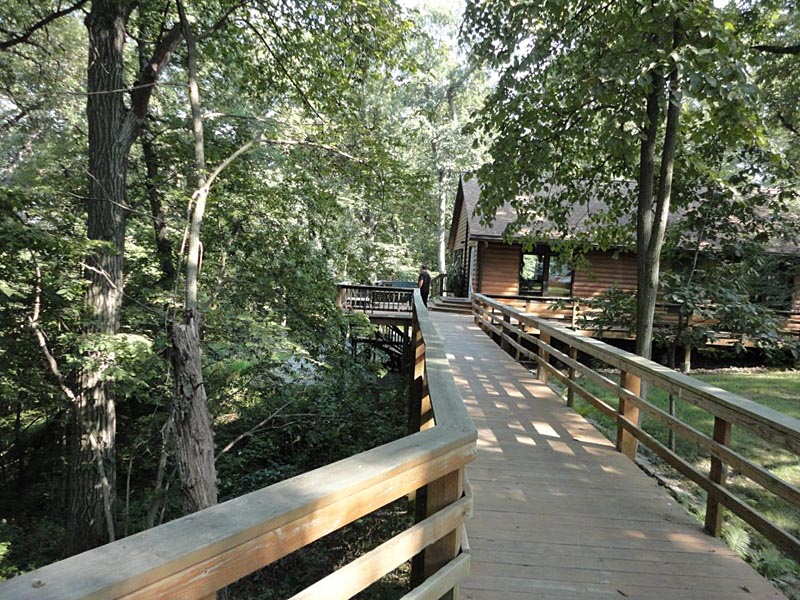
Retreat CenterThe first was an eight-day silent centering prayer retreat in June.   Though it was held at a non-descript  wooded camp, the experience was life transforming.  The silence time of prayer and reflection helped solidify my longing for contemplation and deep prayer.   I had a couple of profound experiences that I need to write about in future posts.  I want to go back.

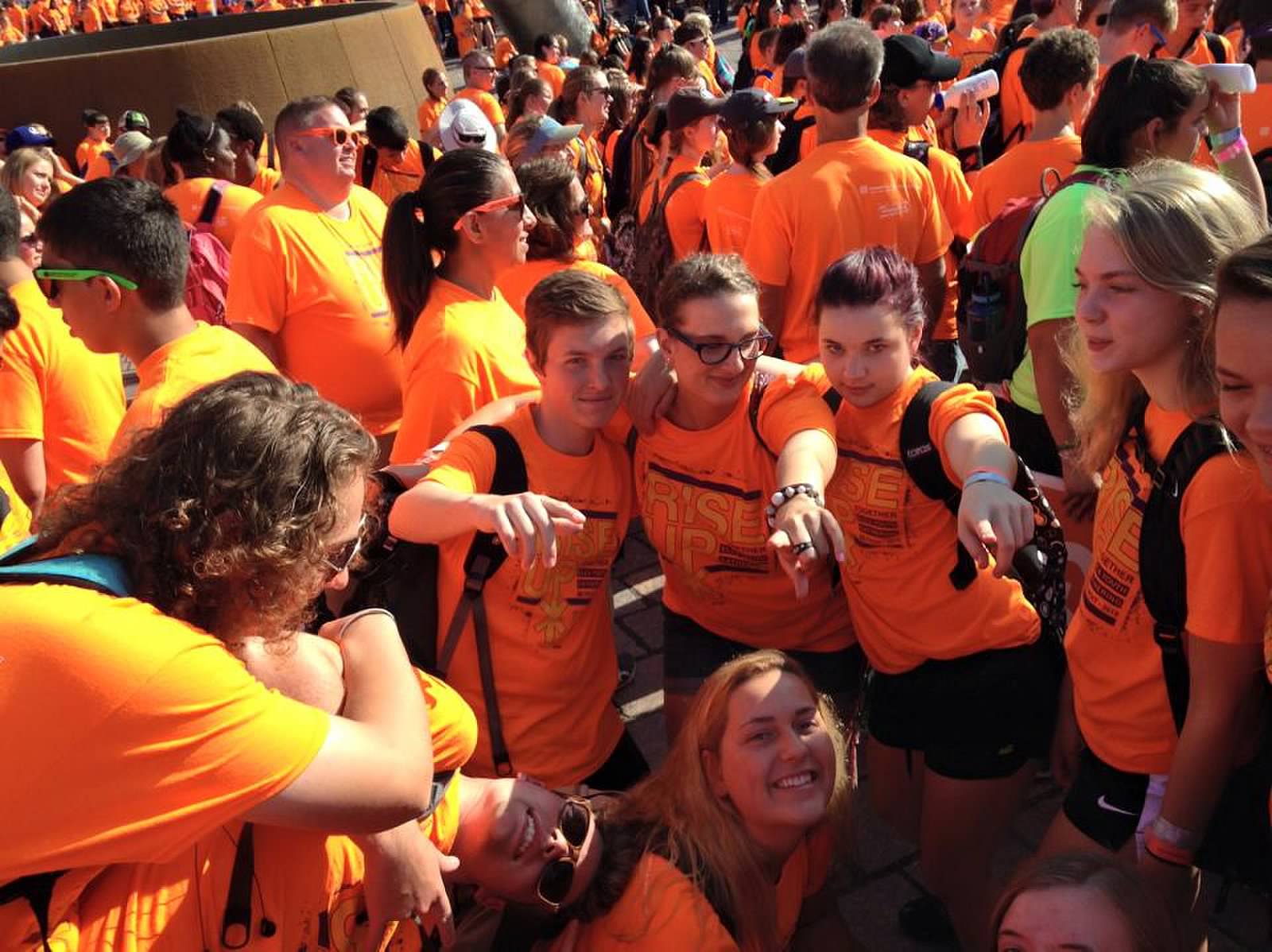
18395_10153362640945266_2272565119671433986_nThe second was the five-day ELCA youth gathering in Detroit in July.   Thirty thousand youth packed into Ford Field, praising, dancing, singing in the joyous, raucous Spirit of Christ.  There were times when I felt like I was 17 years old again, swept up in the celebration.   It was a powerful trip for me, the three adults, and ten youth from Resurrection.

Taken together, the silent prayer retreat and the youth gathering, could be seen as two ends of a spiritual spectrum.  One end  is the quiet, contemplative Spirit of God, “Be still before the Lord and wait patiently for him.” (Psalm 37:7) The other is the joyous noisy  Spirit of God, “You will take up your tambourines and go out to dance with the joyful.” (Jeremiah 31:4)

Both are good and healthy, but they rarely live together in the same tent.

Still Dance SpectrumThe two are significant in that I see my own spirituality moving towards the quiet, contemplative end of the spectrum, while I see the needs of Resurrection’s spirituality is for the joyful dance.  Neither is better than the other, but they were not working together within me, especially since I am called to be the leader.   Thus for months my own spirit has been restless.

The third event was a private conversation with two trusted leaders of the congregation.  They initiated the conversation in a caring environment.  During the conversation they asked me was a simple, yet profound question, “Do you feel like you still fit at Resurrection?”

praatgroepenLike a skillful politician I hemmed and hawed and dodged the question that evening.  But as I drove home from the conversation, I realized in my heart-of-hearts that I no longer fit.   It was a blow to my ego.  I wanted to be in control, yet I was not.  I wrestled with the question all through that night and several afterwards.  Yet I woke up each morning realizing that the answer was the same.  It is time for me to leave Resurrection.

In the next couple of days, I will post on what my plans are for the future.   For now it is sufficient to say that I am both sad to leave a fantastic congregation like Resurrection and at peace with listening to the call of God’s Spirit.

I have been reflecting on these words from Parker Palmer’s Let Your Life Speak.

Before you tell your life what you intend to do with it, listen for what it intends to do with you.  Before you tell your life what truths and values you have decided to live up to, let your life tell you what truths you embody, what values you represent. (page 3)

One Day at a Time

Just past the familiar opening phrases of serenity, courage and wisdom in Niebuhr’s Serenity Prayer comes this statement:

Living one day at a time, enjoying one moment at a time,

The prayer invites us to stay focus on the present , not to be trapped by  past regrets or future anxieties.  To live fully alive today, not drifting off to yesterday or tomorrow.

This is the day the Lord has made, let us rejoice and be glad in it. (Psalm 118:24)

“So do not worry about tomorrow, for tomorrow will bring worries of its own. Today’s trouble is enough for today.” (Matt 6:34)

boarding-a-plane-11282012-113858_horiz-largeI have struggled with this.  I remember preparing for a wonderful vacation trip with my family, but even as I boarded the airplane, my mind raced ahead.  In my mind’s eye I could see myself boarding the plane to return, the vacation over and done.  I felt this wave of regret that the vacation would end, and it had barely begun!  I was not living one day at a time, enjoying one moment at time. I had become anxious about tomorrow, not heeding Jesus’ warning.   I was letting my mental thoughts race ahead to the completion, focused on how transient my week of vacation would be.

Yes, there is value in recognizing that all things in life, including vacation trips, are transient and impermanent.   The old proverb, “all good things must come to an end” holds truth.  But I was pushing away the enjoyment of the good with my future focus, unable to savor the gift of one day, one moment.

The practice of centering prayer (a form of mindfulness practice)  has helped me recognize when my thoughts are running away from the present.  The practice has taught me to simply see such wandering thoughts and feelings as “thoughts and feeling” that are not necessarily reality.  In my vacation example, I could not predetermine how I would feel when I returned.  Today if I were to encounter a similar thought/feeling as I boarded, I might respond, “Oh that is an interesting thought.  I will be curious to see how I feel when I board to come home.  But for now, I am here at the beginning of my vacation.  I will find my seat and enjoy the novel I brought along to read.”

How do you find ways to live one day at a time, enjoying one moment at a time?

Lord Jesus, help us to live in this moment with you.

The Courage to Change

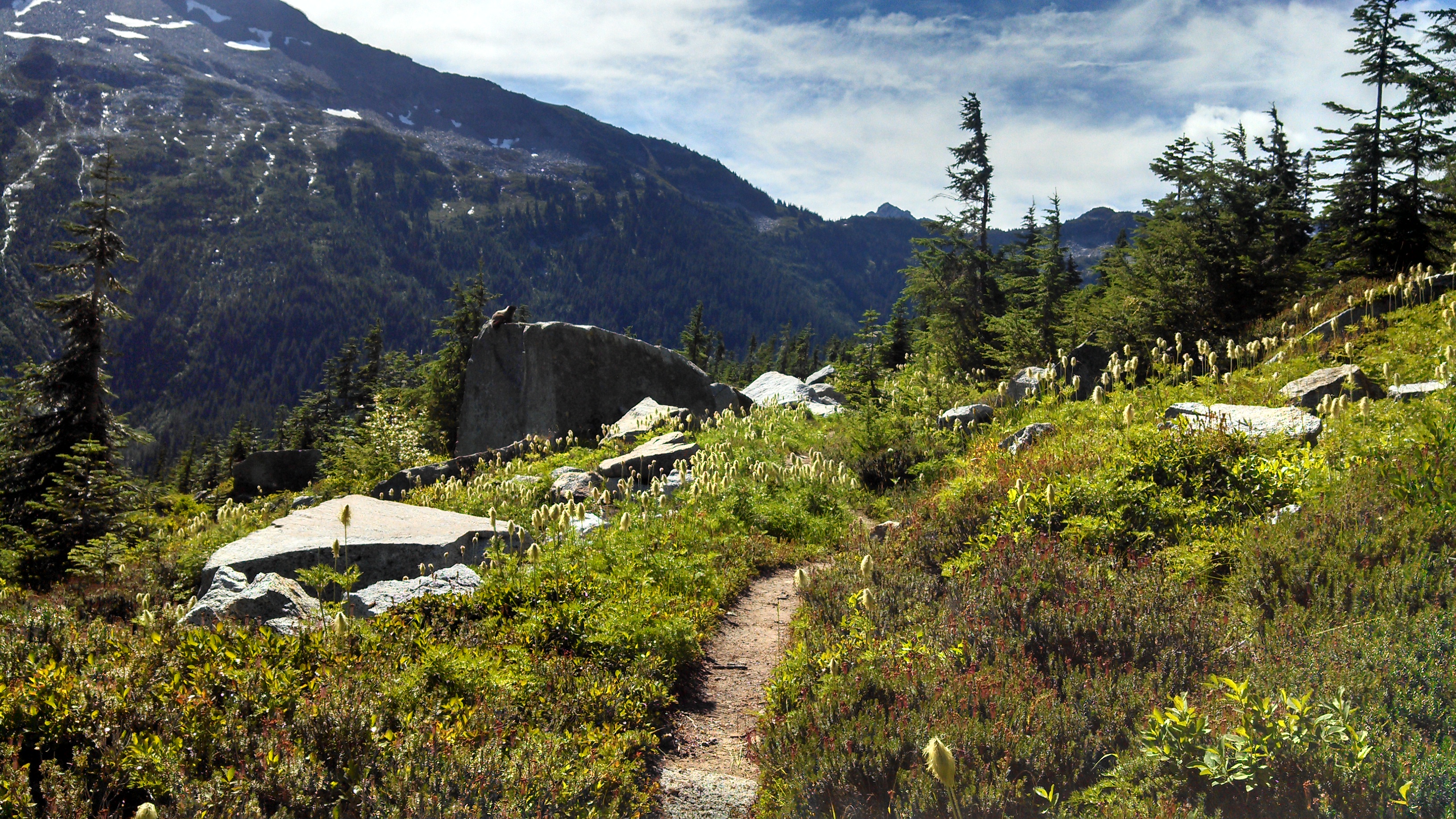
I knew something needed to change as I hiked one summer along the Pacific Crest Trail.  I had looked forward to the seven-day backpack for several months.    I had entertained frequent day dreams in which I visualized myself hiking across open alpine meadows, surrounded by the snow-laced  peaks of the Cascades and swimming in cold sky-blue lakes. But as my fantasy became reality I notice something troubling.   My mind had trouble staying on the trail.

IMG_20130816_105142_210Instead I would discover that my thoughts were ruminating about some worry or concern back home in Minnesota.    For a moment I might be able to enjoy a colorful alpine flower or a striking mountain peak, but all too quickly my mind jumped to some pestering concern at my church or my family.   My intention was to be on the PCT in Washington; my mind seemed to be at dozens of other locations.  And I wanted that to change.

bowl-with-spoonWhen I came back to Minnesota, I began to hear about “mindfulness” – the ability to be in the present moment.    My health plan offered a simple six-week exercise that focused on mindful eating.   I thought it would be easy to simply focus on my meal as I ate.   I discovered that it was incredibly hard for me.  My eyes continually looked for something to read; my ears sought the noise of the radio.  The challenge was to simply be present to my bowl of cereal, to see the color and texture of the granola, to taste each bite, and to give  thanks to God for the meal.

Emotional LifeI began to read more about mindfulness and my emotional impulsiveness.  A key book  was The Emotional Life of Your Brain by Richard J. Davidson.   I remember reading about how our brains have plasticity, that they can be rewired or remolded with certain practice.  The author discussed how people who have participated in Mindfulness Based Stress Reduction classes have been able to deal with their chaotic, impulsive mental thought patterns.   After reading the book, I signed up for a MBSR class.

“Courage to change the things I can” is the second part of the Serenity prayer.  I once thought courage was reserved for the “big” things like racism or sexism.  I admire Dr. Martin Luther King’s courage to challenge the racial injustice of his time. We need such models of courage in every age.

Yet there is also the daily kind of courage to face our own flaws.  Through the MBSR class I learned the practice of daily meditation.  The practice has begun to calm my busy mind and to live in the present.   I am thankful that God gave me the courage to change the ways I look at the world and to be fully alive in each moment.

How do you stay living in the present moment?

Lord Jesus, thank you for your promise to be always with us.

The Serenity of the Serenity Prayer

The Serenity Prayer begins with three requests:  the serenity to accept the things I cannot change,  the courage to change the things I can and the wisdom to know the difference.

When I first prayed this prayer, I wondered if the order should not be changed.  I wanted the courage to act, to move, to change things.  I sought the power to DO God’s will and to ACT in God’s name.  Should not courage come first?

Serenity in Winter

Serenity in Winter

Instead the prayer starts with the serenity to accept things that cannot be change, to be at peace with the way things are before any changes come.  Four years ago I wrote about the Serenity Prayer and the challenges of accepting Minnesota winters.  The weather is definitely something I cannot change (though I can change where I live).

The weather is not the only thing I cannot change.  On a more profound level – and where I think AA and Al-Anon see the prayers connection to their program – I cannot change other people’s behavior or attitudes.  Oh, I can love and care for, cajole and advise other people.  But I cannot change them.   A spouse or parent is unable to change the addictive behavior of a loved one.  A family intervention might help a spouse or child seek rehab but ultimately the alcoholic or addict must seek healing for themselves.

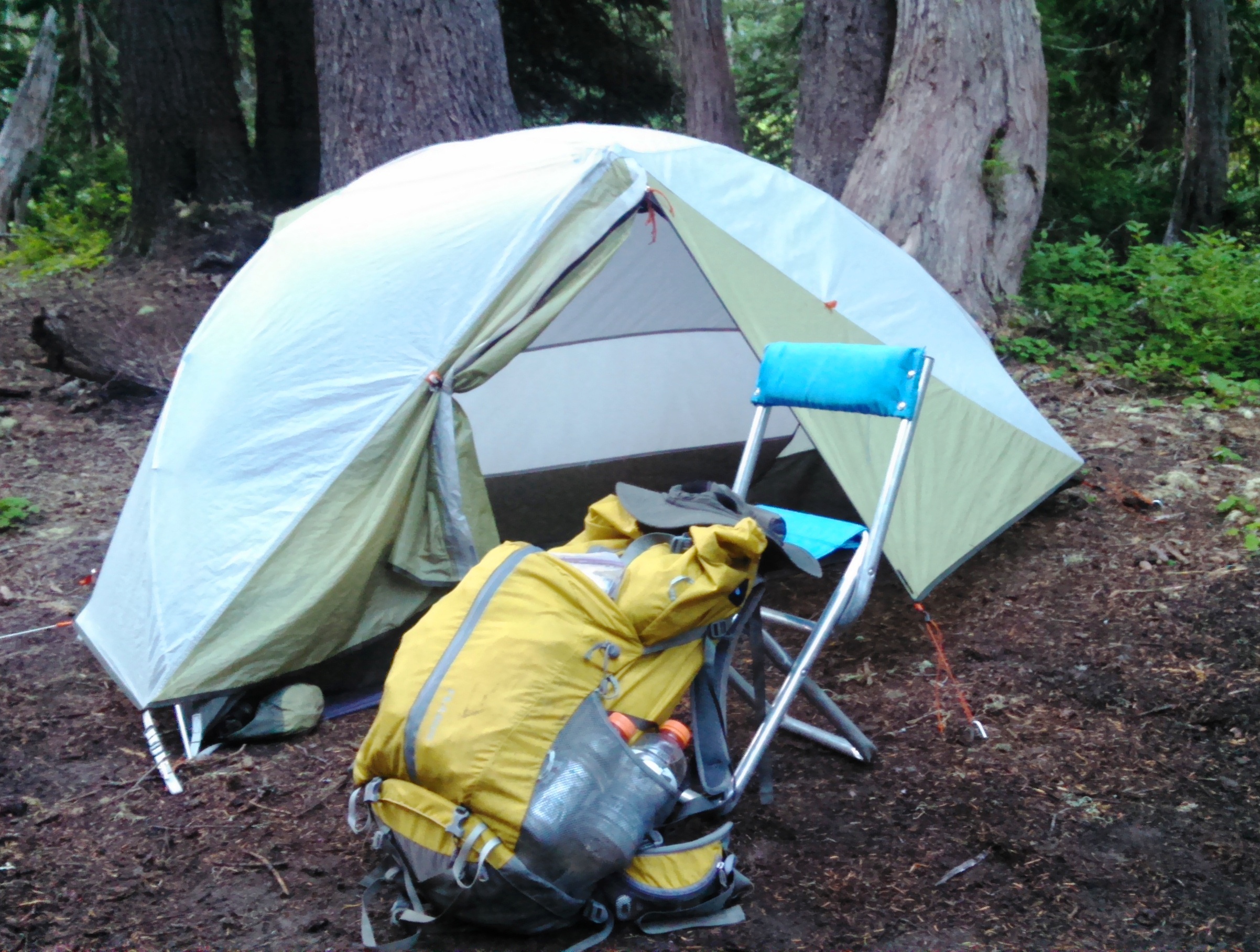
Backpack Tent 2014

I carry a one man tent when backpacking

But it does not need to be as dramatic as alcoholism.  In marriage, husbands and wives need to able to love, accept and support each other as they are.  When I first married Carolyn, I thought I could change her to share my love of backpacking.  I thought that I simply had to get her in the right setting and she would see the light.  I was wrong.  Though we both enjoy day hikes and the beauty of God’s creation, she does not share my fascination with sleeping on the ground in sweaty clothes after eating dehydrated gruel.   At the same time, she has come to accept that she will not expunge my fascination with carrying a forty pound pack up and down trails for days on end. Instead we accept each other as we are while enjoying the passions we share.

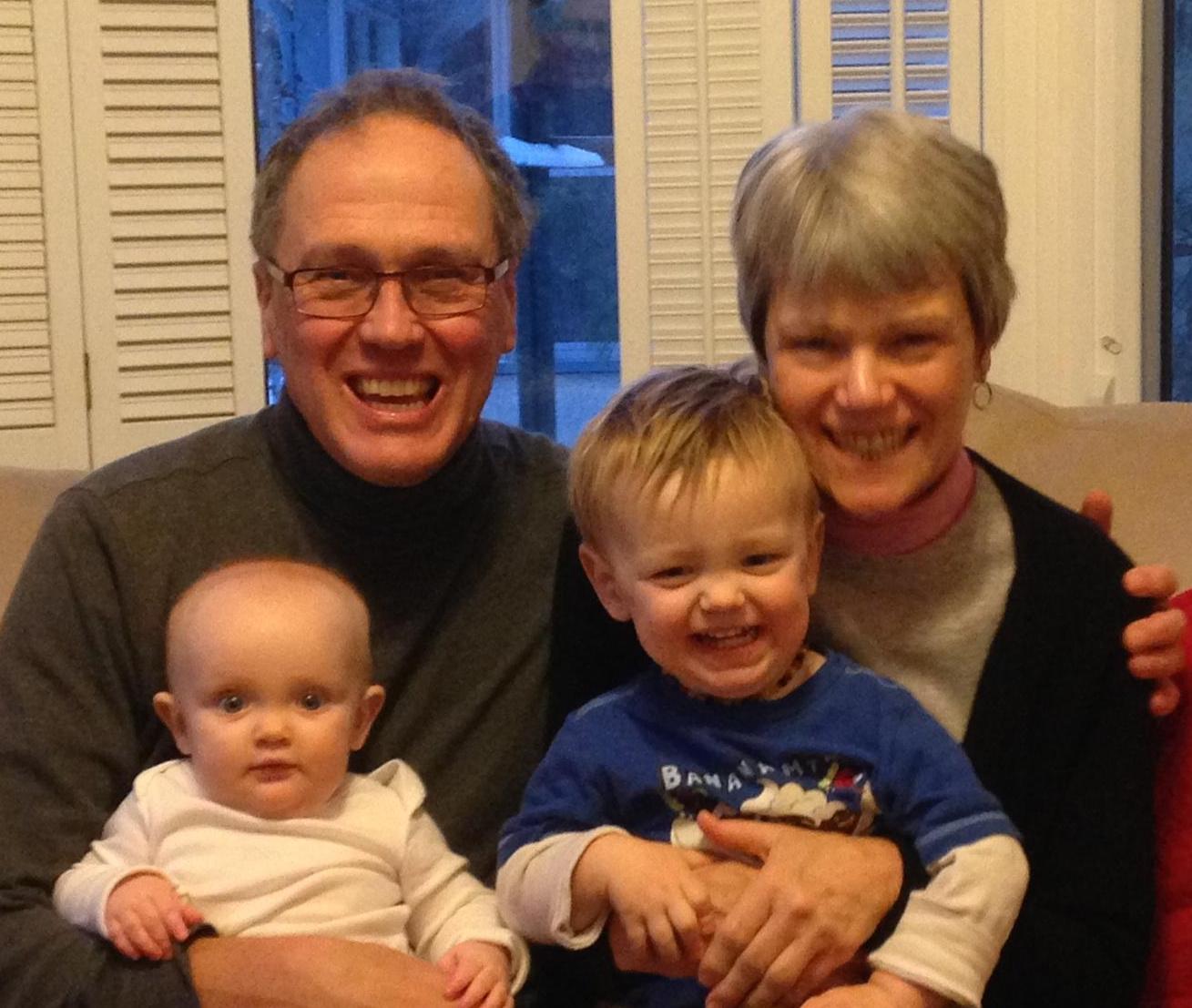
One passion that Carolyn and I share is our love for our grandchildren.

One passion that Carolyn and I share is our love for our grandchildren.

The prayer uses the word serenity as the heart of this acceptance.  Serenity is NOT the grit-your-teeth-and-bear-it attitude, but rather the calm, internal state of mind that sees reality for what it is: reality.  I remember experiencing such serenity when my father died twenty years ago.  He had contracted pancreatic cancer and then had a debilitating stroke.  When I sat by his bedside during his final hours, I felt sadness that the father I loved was dying, but also serenity that this was his reality. I could not change it.

To develop such serenity takes practice.   We may have moments of instant serenity, but to have consistent serenity takes the practice of prayer and meditation. Saint Paul connected prayer and peace.

Do not worry about anything, but in everything by prayer and supplication with thanksgiving let your requests be made known to God.  And the peace of God, which surpasses all understanding, will guard your hearts and your minds in Christ Jesus. (Phil. 4:6-7)

How have you experience serenity?

Lord Jesus, grant me the serenity to accept the things I cannot change.

Serenity Prayer: Intro

For the past two and half years I have participated in a clergy spirituality group.  The six of us meet each Thursday morning for conversation and prayer.  We started out with an adaptation of the The Twelve Steps used by Alcoholic Anonymous and other recovery groups.

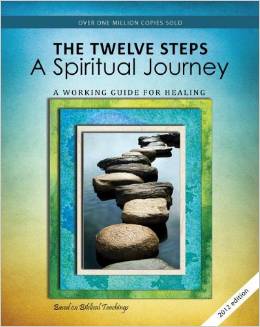
downloadOur first book was a kind of spiritual workbook titled: The Twelve Steps: A Spiritual Journey,  A Working Guide for Healing Based on Biblical Teachings by RPI Publishing, 2012.  Though we have moved on  in our reading to other books (that I might highlight in other blogs), we continue to use some parts of the The Twelve Steps.  The book included questions for personal reflection based on the 12 steps and a format to guide our group conversation.  It was a helpful book to start our group.  What I appreciated was that we ended each meeting praying together the full Serenity Prayer:

Serenity Prayer

God grant me the serenity to accept the things I cannot change,
the courage to change the things I can,
and the wisdom to know the different.
Living one day at a time
enjoying one moment at a time,
accepting hardship as the pathway to peace;
taking as Jesus did, this sinful world as it is,
not as I would have it;
Trusting that You will make all things right if I surrender to your will;
so that I may be reasonably happy in this life
and supremely happy with you forever in the next.  Amen

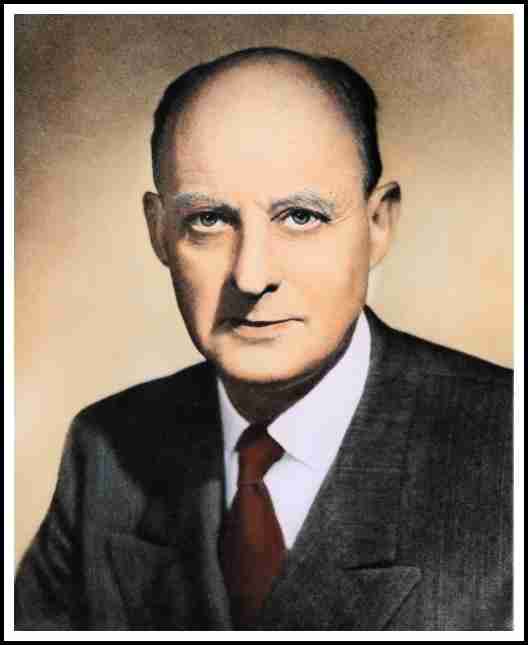
Reinhold Niebuhr

Reinhold Niebuhr

This prayer is attributed to the American theologian Reinhold Niebuhr, though he was taping into older Christian and other wisdom traditions that shaped this prayer.  As the above Wikipedia link shows, the prayer had oral roots back to the early 1930’s, but was not formally published until that 1940’s.

The prayer strikes a deep resonates in me, especially as we use it in our group.   We pray the Lord’s Prayer to open the meeting (often with a few minutes of silent meditation) to bring focus.  The Serenity Prayer has become a kind of ritual and blessing that brings closure and hope as our group concludes its meeting.   I find great comfort in such simple rituals.

Lately I have been feeling tugged to explore the spiritual depth of this prayer.  I plan to write reflections on the Prayer and what certain words or phrases mean for me.  I admit that this will be highly individualistic; not everyone will agree with my insights.  Yet hopefully it will spark your desire to pray this prayer or other prayer as part of your life in Christ.

What written prayers are shaping your spiritual life?

Christ Jesus, grant me the courage to pray with hope and utter trust in you.

PCT Reflection – Playing Hide and Seek with Mt. Rainier

States have notable geographical landmarks.  New York has Niagara Falls.  Minnesota has 10,000 lakes.  Arizona has the Grand Canyon.  Florida has the Everglades.  And Washington has Mt. Rainier.

https://www.flickr.com/photos/erinkohlenbergphoto/5464033068/

When my father bought a lot outside of Bremerton, Washington, he made sure that our house took full advantage of our view.   The house sat on a hill overlooking an inlet of the Puget Sound.  On a clear day, Mt. Rainier rose on the horizon like the top of giant ice cream cone.  Granted, clear weather comes at premium in Western Washington with the weeks of grey, low clouds obscuring all mountain vision.  Yet when the clouds cleared, the mountain was always there, sunlight gleaming off the multiple glaciers.   In high school and college, I remember sitting on our deck, transfixed by the magenta alpine glow on Mt. Rainier at sunset.

When I decided to do the southern section of the PCT this summer, I deliberately chose to hike from south to north for the explicit reason of hiking towards Mt. Rainier.   Though I would be hiking near Mt. Hood and Mt. St. Helens, and directly beneath Mt. Adams,  my heart and eyes were focused on Mt. Rainier.   And I was not disappointed.

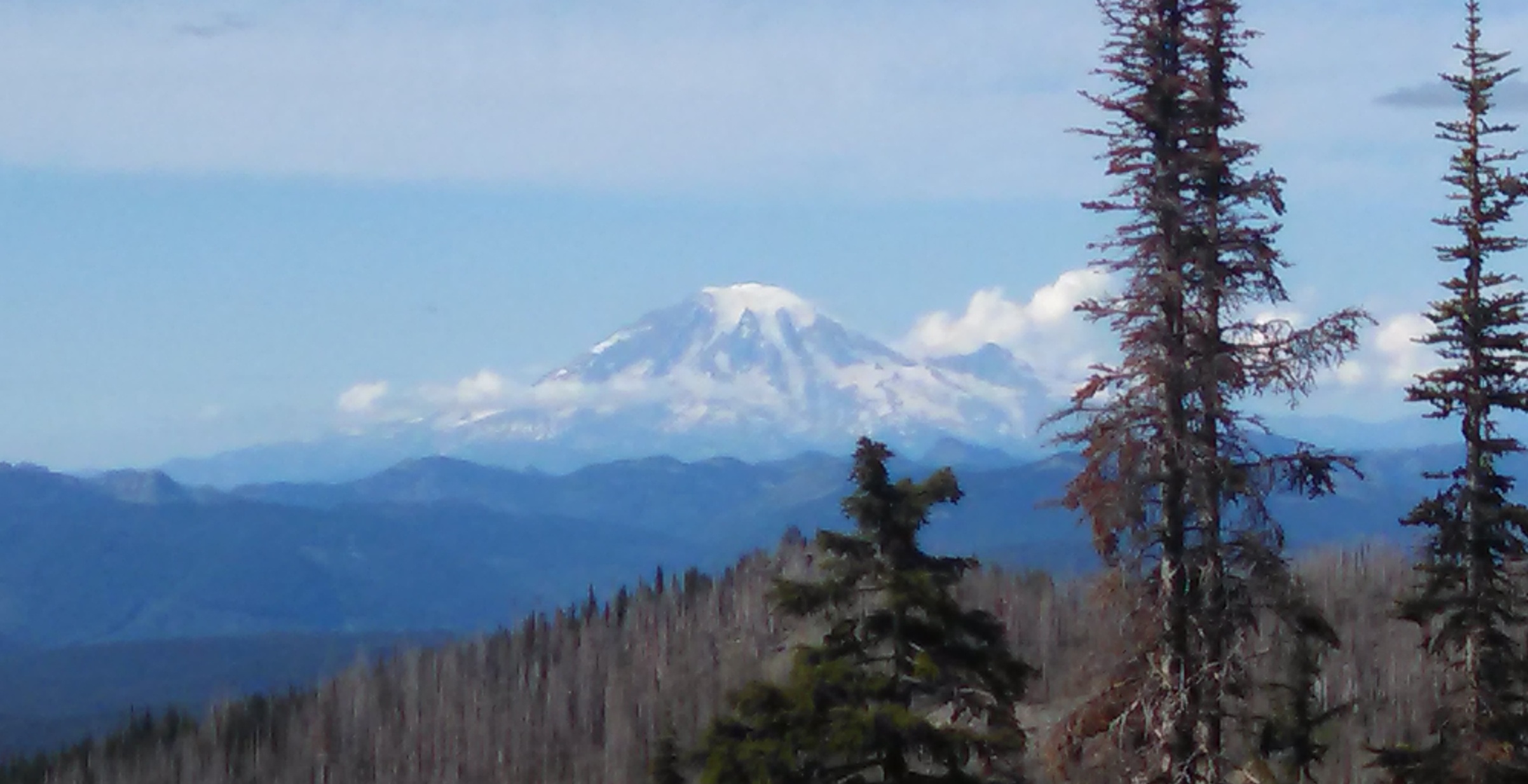
First Glimpse of Mt. Rainier from Mt. Adams on the PCT

First Glimpse of Mt. Rainier from Mt. Adams on the PCT

As mentioned in my previous post, my first two and half days were mostly in the forest.  But on my third day, as I climbed the ridges surrounding Mt. Adams, I caught my first glimpse of Mt. Rainier.   For the next four days I played a game of hide and seek, wondering where the next view would come. There were several from Mt. Adams, but the best view of Rainier came when I entered the Goat Rocks Wilderness Area.  Though the haze and midday sun made photography difficult, I made sure my final  lunch stop included a Rainier view.

Last Day Lunch Stop

Last Day Lunch Stop

After such splendid views, I started to think again about hiking The Wonderland Trail.  Its 93 miles circumnavigates the mountain and offers many elevation challenges as one hike up and over the many ridges that radiate out from the peak.  Due to its popularity, access is limited to a kind of lottery system in reserving backcountry campsites.  But now I am convinces it would be worth the gamble.

I often use Mt. Rainier as part of guided meditation prayer that helps me stay grounded in Christ.  Also I sing a song based on Psalm 46.  “Great is the Lord, and greatly to be praised.  In the city of our God, in the mountain of his holiest, beautiful for situation, the joy of the whole earth – is Mt. Zion on the side of the north, the city of the great king.”  From an early age, I have associated Mt. Zion with Mt. Rainier, both places of beauty, elevation and holiness.  And I know the mountain has brought me much joy.

Lord Jesus, thank you for the holy places in our lives.

PCT Day 1and 2: Seeing the Forest for the Trees

I confess: I am a biased hiker. The high alpine country above timberline is where I prefer to hike.  The sweeping vista of snow-capped peaks and the dazzling array of alpine flowers strike the sweet spot in my backpacking experience.  I was exposed to this as a young child, making the annual family trek from sea level to ski level on the seventeen mile road from Port Angeles to Hurricane Ridge.  The Olympic Mountains remain spectacular in my humble opinion.

Hurricane Ridge in Olympic National Park

Hurricane Ridge in Olympic National Park


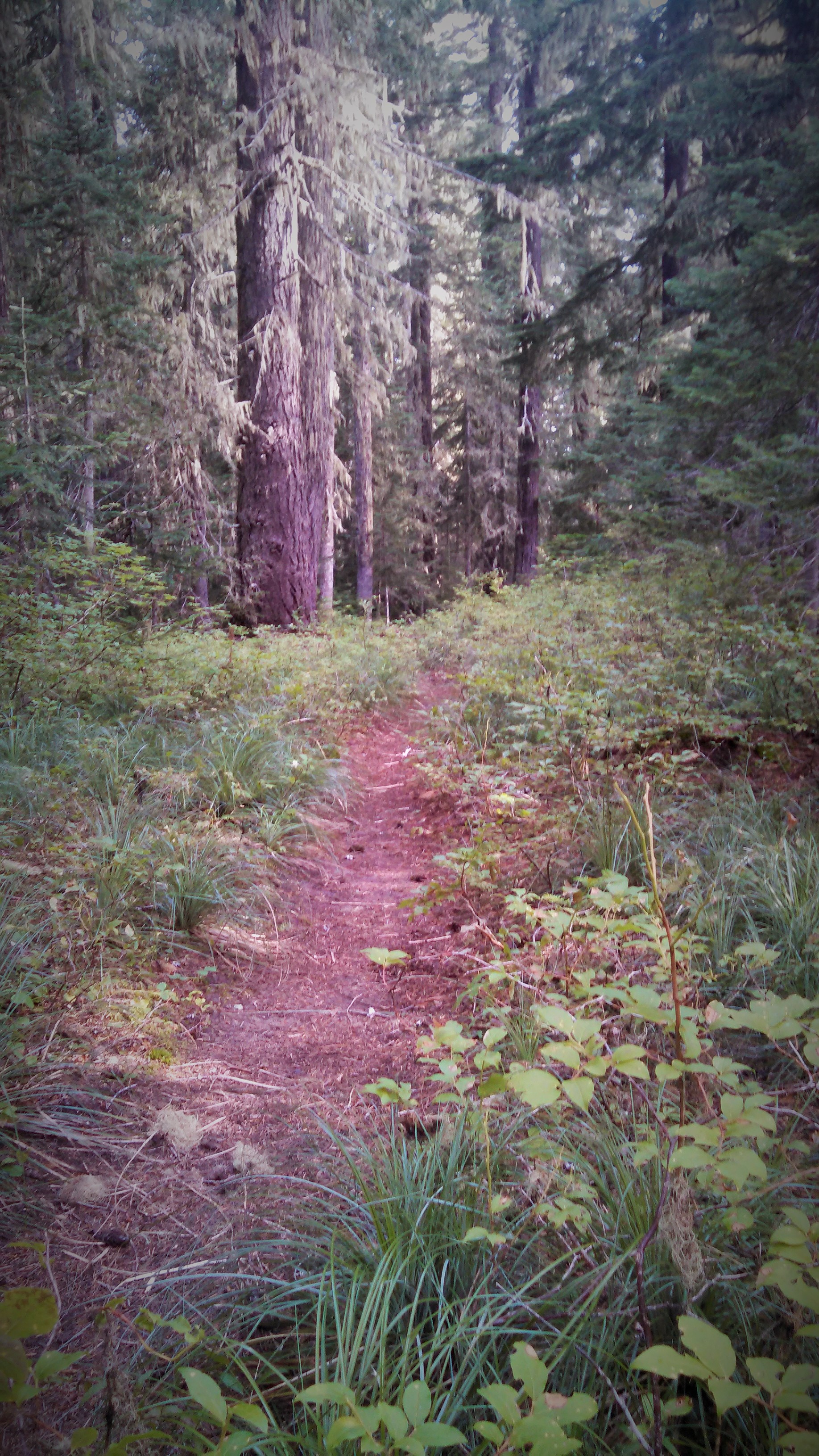
Start of the trail

Start of the trail

Still to reach timberline, one often needs to hike through timber.  This was the case in August when I hike my third section of the Pacific Crest Trail (PCT) in southern Washington.  The trail is aptly named in that it seeks to follow the crest line of the Cascade Mountains of Oregon and Washington.  Often the crest is above tree line, but not always.

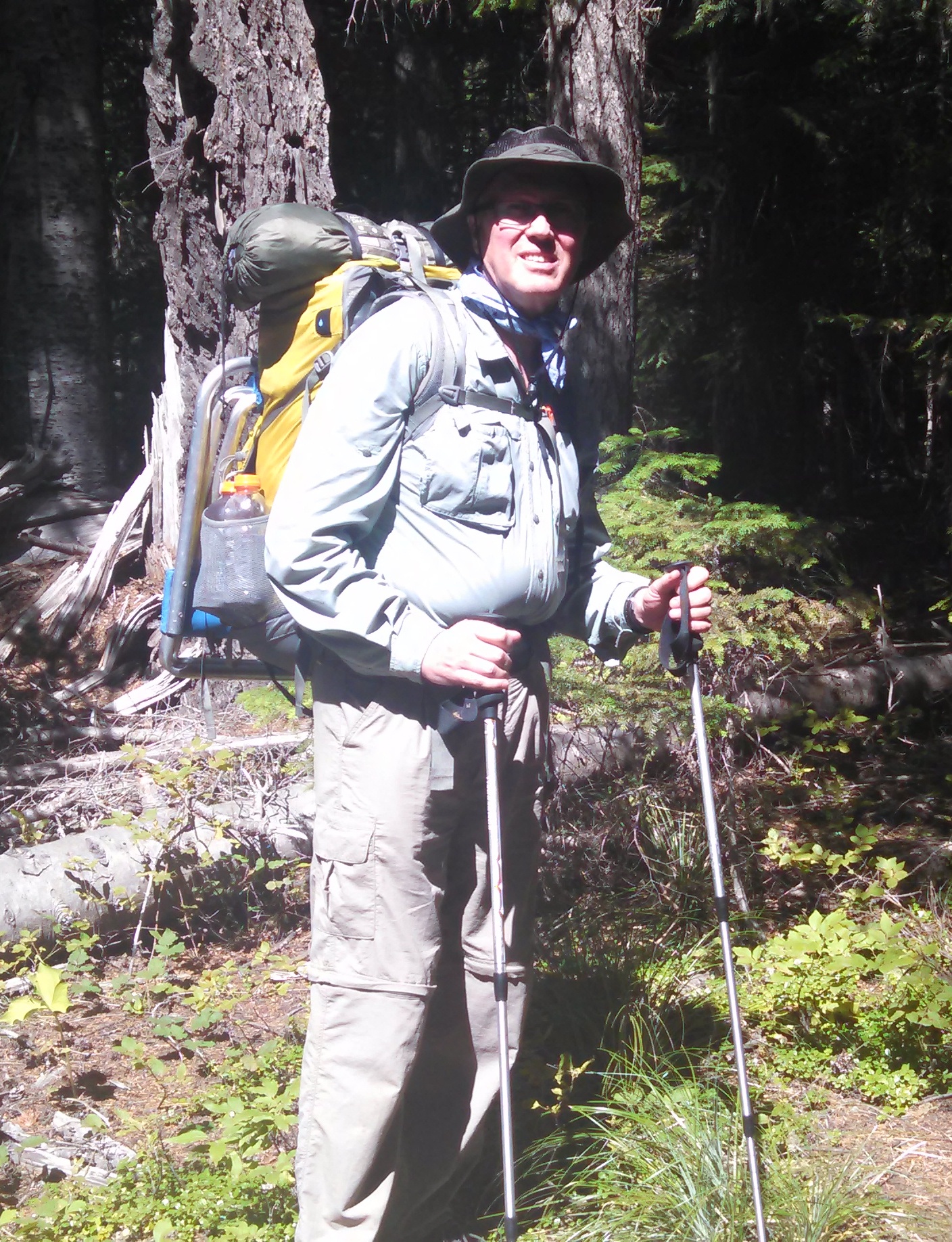
For this portion of the PCT I decided to skip the first forty miles as it climbs through the thick forest of the Columbia River Gorge (the border of Washington and Oregon).  I started just south of the Indian Heaven Wilderness where a forest service road crossed the trail.  After my brother Robert snapped my picture, I plunged into the forest.

IMG_20140821_105737_776 (2)

I soon discovered that the wilderness area named Indian Heaven is not my personal vision of heaven.  Though dotted with dozens of small lakes, the trail was all below timberline.  Occasionally the trail climbed a small ridge where one could glimpse some of the distant peaks.  But mostly, for the first two and half days and 35 miles, I walked through a multi-green tunnel.

As I hiked through the forest, I explored my mental bias.  I recognized that forest hiking is part of long distant hiking.  Just as in life, one cannot always choose the surroundings one may prefer.  I also discovered that forest walking is a great place to practice both intercessory prayer and mindfulness.  As I walked I prayed for my family, friends and for my congregation.  I used a simple prayer of compassion.  For example, my prayer for Resurrection Lutheran Church was

May Resurrection be filled with loving kindness.
May Resurrection be filled with peace.
May Resurrection be strong and vibrant
May Resurrection live as children of God.

I would repeat the prayer several dozen times, as I breathed in and out.  A peace and purpose came with the prayer.

IMG_20140822_162010_988I also practiced mindfulness, dwelling in the present moment, experiencing each footfall and each touch of my trekking poles.  I try not to race ahead mentally to when I would reach the high country.  Rather let this moment in the forest be my experience.

It was not easy.   My mind still likes to jump around, bouncing from one habitual thought to the next.  Yet the more I practice, the more I see the reward of simply being in the moment, even when surrounded by a green tunnel.  And truly God is in the forest valley as much as the high country.

I was reminded of Psalm 1 as I hiked:

Happy are those who do not follow the advice of the wicked, or take the path that sinners tread, or sit in the seat of scoffers;  but their delight is in the law of the Lord, and on his law they meditate day and night.  They are like trees planted by streams of water, which yield their fruit in its season, and their leaves do not wither. In all that they do, they prosper.

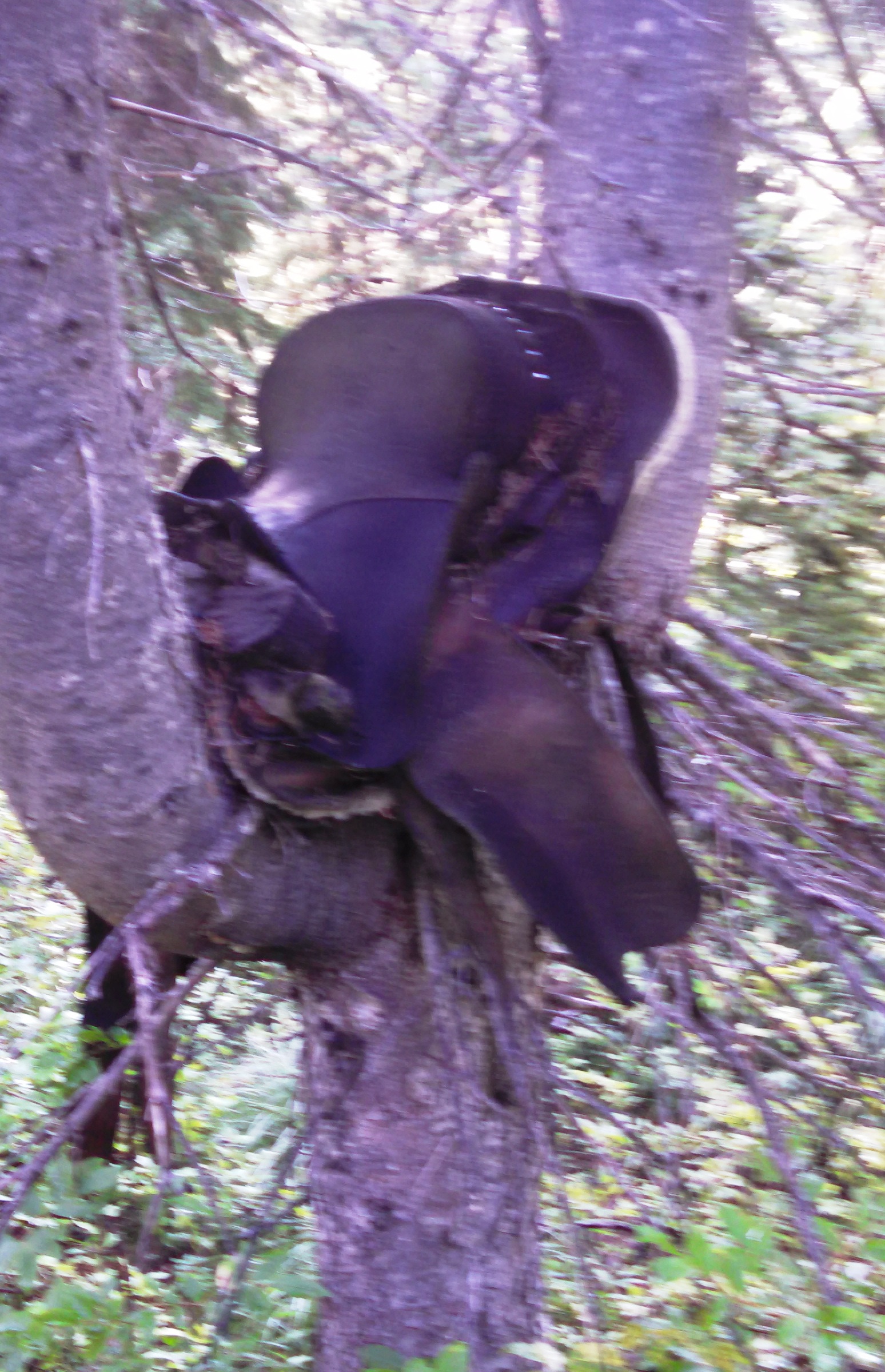
An abandoned saddle resting in a trail-side tree

An abandoned saddle resting in a trail-side tree

And if one keeps one’s eyes and mind alert, strange sights can be encountered.   One can imagine all kinds of story on how a saddle ended up in a tree.


Lord Jesus, keep me alert to your constant presence.


Next, Reaching High Country.

Hooked on Backpacking

Marymere Falls. Photo by C. Bubar/NPS

My dad was leading our family on a short one mile nature hike to Marymere Falls in Olympic National Park. The trail was near my childhood home of Port Angeles, Washington.   I was about seven years old and enjoyed racing ahead of my younger siblings.   I sometimes hid along the trail in an attempt to scare them.   It is no wonder therefore that in the confusion of children running up and down the trail, we missed a critical trail junction and plunged deeper into the forest of Barnes Creek.

We probably went an extra mile or so with no sign of Marymere Falls.  As a child I thought we were deep in the jungle, all alone.   Then around a corner came three individuals, carrying large bundles on their backs.   They told my dad that he had missed the junction and that we should probably turn around.   “The trail gets pretty rugged up ahead.”   In a moment, the three were gone.

A more recent backpacker

But their memory stayed with me.   I asked my dad what they were doing.  “Oh they were backpacking.  Did you see those large packs?   They carried all their own food and tents to stay in the mountains.”   Wow, I thought.   To camp out in the woods, far from roads and car campgrounds –that is a real adventure!

Ever since that hike, I wanted to go on a backpacking trip in the mountains.   Then in the spring of 1969, a high school  friend invited me on a trip to Lena Lake in the Olympics over Memorial Day week-end.  I immediately said yes.   Even though it rained the entire two mile hike to Lena and I was soaked to the bone, even though I had a borrowed pack that did not fit me, and even though I made a fool of myself trying to light a fire, I fell in love with backpacking.  I experienced a sense of place and belonging.   I was hooked.

Over the decades I have completed scores of overnight backpacks, each unique and rewarding.  Last year I blogged about completing a section of the Pacific Crest Trail in northern Washington state.   Tomorrow, I start another hike along a section in southern Washington.

Mt. Adams and Goat Rocks Wilderness are part of the trail this year.

Backpacking has become a kind of spiritual refuge for me, a time and method to be centered in God’s grace and love.  I am reminded of one on my favorite prayers from the Lutheran Book of Worship:

Lord God, you have called your servants
to ventures of which we cannot see the ending,
by paths as yet untrodden,
through perils unknown.
Give us faith to go out with good courage,
not knowing where we go,
but only that your hand is leading us
and your love supporting us;
through Jesus Christ our Lord. Amen.

I will be carrying good maps (and an extra pair of glasses – see here) so I don’t expect to become lost.  But if I do, I am confident that God will provide me with three strangers to guide and inspire me, just like he did years ago on the trail beyond Marymere Falls.

Where do you find your spiritual refuge?

Lord Jesus, guide us.

Healing at the Center

Centering Prayer is saving my mind while healing my soul.

IMG_20140812_190249_047-EFFECTS

St. Paul Monastery in Minnesota

I just returned from a five-day silent retreat at the St. Paul Monastery.  I practiced Lectio Devina (a form of prayerful reading and conversation).  I was familiar with the practice – we use a form of it during our staff meetings at Resurrection – yet the monastic practice strengthened my love of God and God’s Word.

Jesus in the Center of Prayer

Jesus in the Center of Prayer

However the most profound part of the week was the practice of Centering Prayer.  Each morning at 7 am we sat together for an hour simply breathing and praying our holy word.  We repeated it again at 10 and at 3.  Too many it sounds incredibly boring.   For me, it was drinking from the river of the water of life (Revelation 22:1).   It was simply resting or floating in God’s gracious love. Emptying the mind so God’s love could fill it.  Not just thinking about God’s love, but actually resting in it.

Oh, my mind fought the emptiness.  My thoughts and feelings would race from one idea to the next.  The river seemed to be covered with all kinds of flotsam and debris.  “What is happening at church?”  “Why did I say that to her?” “What will we have for lunch.” This would happen hundreds of time during the quiet.   Each time I caught the thought skipping across the surface, I let it go and return to my breath and my word.  To simply BE in God.

Henri Nouwen wrote in Here and Now, 1994

The real enemies of our life are the “oughts” and the “ifs.” They pull us backward into the unalterable past and forward into the unpredictable future. But real life takes place in the here and the now. God is a God of the present. God is always in the moment, be that moment hard or easy, joyful or painful. When Jesus spoke about God, he always spoke about God as being where and when we are. “When you see me, you see God. When you hear me you hear God.” God is not someone who was or will be, but the One who is, and who is for me in the present moment. That’s why Jesus came to wipe away the burden of the past and the worries for the future. He wants us to discover God right where we are, here and now.

Centering prayer is a form of mindfulness practice, living in the current moment.

Fire Creek was ablaze with color.

At times I missed the beauty that surrounded me

I discovered my real need for this last summer when I was backpacking on the Pacific Crest Trail.   I had looked forward to the trip for months and was in absolutely beautiful alpine country, yet my mind kept racing back to worries in Minnesota or to past actions that I regretted or wished I could change.   Here I was in the place I wanted to be, and my mind could not stay there!    I knew I needed help.

This past spring I took Mindfulness Based Stress Reduction class which is a secular form of Buddhist meditation practices.  It was incredibly helpful.  The Centering Prayer has similarities to meditation, yet centers the practice in the love of God in Christ Jesus.   That has been healing.

Now next week, I head back out to Washington state to do another section of the PCT.  I will continue my practice of Centering Prayer and Lectio Devina.  I trust that my mind will be able to stay on the trail with my body this year.

How does prayer touch your life?

Lord Jesus, teach us to pray.