Category Archives: Prayer

Two Portraits of Jesus

In John 17, Jesus prayed with confidence and clarity.  After finishing the Last Supper  Jesus looked to heaven and prayed, 

Jesus looked to heaven

So now, Father, glorify me in your own presence with the glory that I had in your presence before the world existed. (John 17:5)

This confidence is such a strong contrast with the prayer he prayed in Matthew, Mark and Luke when he went to the Garden of Gethsemane a short time later.  As the disciples slept, Jesus prayed for strength to face the cross:

Jesus praying in Gethsemane by artist He Qi

Abba, Father, for you all things are possible; remove this cup from me; yet, not what I want, but what you want.  (Mark 14:36)

In John’s Gospel there is no prayer in the Garden.  In Matthew, Mark and Luke there is no extended prayer at the Passover meal.

Such contrasts can be disturbing for some.  I believe that the Gospels of Matthew, Mark, Luke and John are more like portrait paintings than historical biographies.  Whereas John’s Gospel  paints a portrait in which Jesus had a laser-like focus on his “hour” to be glorified on the cross (John 2:4, 7:30, 8:20, 12:23, 12:27, 13:1, 17:1), Mark’s Gospel shows Jesus wrestling with this cosmic decision as he approached the cross (Mark 14:32-41).  Both portraits are true, yet they reveal different insights.

Mark reveals that Jesus was truly human; his emotions were raw and deep.  On the cross he would cry out, “My God, my God, why have you forsaken me?”  (Mark 15:34).  Jesus understood our own human dilemma, our trials, our brokenness.  Mark’s portrait is so brutally human.

John reveals the divine purpose of Jesus and his constant trust in God’s purpose.  Jesus accomplished God’s purpose of reconciling the world.  As he breathed his last breath, Jesus said, “It is finished, (accomplished, completed).” John’s portrait is so beautifully divine.

In my own life, at times I find support and comfort in Mark’s raw intimacy.  At other times, I am inspired and uplifted by John’s cosmic vision.   Together with Matthew and Luke, I have a deeper understanding of the mystery of Jesus Christ, my Lord and my God.

What stories of Jesus do you turn to most often?  What stories do you try to ignore?

Lord Jesus, be my light in the midst of whatever confusion or darkness I experience this day. 

Jesus’ Prayer as Gift

This Sunday the Gospel reading is from John 17, Jesus’ great prayer for his followers.  After finishing his last meal with his disciple, Jeus looks up to heaven and talks to his Father about keeping his disciples safe.

I am asking on their behalf; I am not asking on behalf of the world, but on behalf of those whom you gave to me, because they are yours.  All mine are yours, and yours are mine; and I have been glorified in them. (John 17:9-10)

We belong to God and to Jesus, we are woven into the fabric of the Trinity.  Jesus not only prays for us, he models how we can enter into deeper relationship with God through prayer.  Our prayer relationship is a gift from God that we sometimes try to push or pull our way.

Henri Nouwen has written many things on prayer that I find helpful.  The following quote is from his Genesee Diary when he spent six months living at a monastary in 1975.

I wonder if depression in the spiritual life does not mean that we have forgotten that prayer is grace.  The deep realization that all the fruits of the spiritual life are gifts of God should make us smile and liberate us from any deadly seriousness. We can close our eyes as tightly as we can and clasp our hands as tightly as firmly as possible, but God speaks only when he wants to speak. When we realize this our pressing, pushing and pulling become quite amusing.  Sometimes we act like a child that closes his eyes and thinks  that he can make the world go away.

After having done everything t0 make some space for God, it is still God who comes on his own initiative.  But we have a promise upon which to base our hope: The promise of his love.  So our life can rightly be waiting in expectation, but waiting patiently and with a smile.  Then indeed, we shall be really surprised and full of joy and gratitude when he comes.  (The Genesee Diary, p. 129)

Who has been a model of prayer for you and what have you learned from them?

Lord Jesus, like your disciples, teach us to pray.

A Locked Door in Grief

On this Memorial Day week-end, I have been reflecting on my last post and how C. S. Lewis was so joyous in his description of heaven in The Last Battle. However his writing took a very different tone a few years later when Lewis described his own grief. In A Grief Observed, Lewis held back nothing as he wrestled with his faith in God after the death of his beloved wife, Joy.

Meanwhile, where is God? This is one of the most disquieting symptoms. When you are happy, so happy that you have no sense of needing Him, so happy that you are tempted to feel His claims upon you as an interruption, if you remember yourself and turn to Him with gratitude and praise, you will be — or so it feels — welcomed with open arms.

 But go to Him when your need is desperate, when all other help is vain, and what do you find? A door slammed in your face, and a sound of bolting and double bolting on the inside. After that, silence. You may as well turn away. The longer you wait, the more emphatic the silence will become. There are no lights in the windows.  What can this mean? Why is He so present a commander in our time of prosperity and so very absent a help in time of trouble?” p.4

Later in the book he comes to some reconciliation with his grief and unanswered prayers

When I lay these questions before God I get no answer. But a rather special sort of ‘No answer.’ It is not the locked door. It is more like a silent, certainly not uncompassionate, gaze. As though He shook His head not in refusal but waiving the question. Like, ‘Peace, child; you don’t understand.’ p.80

This is one reason why in caring for a grieving friend it is better to be a silent companion rather than a “glib answer man.” Lewis, ever the philosopher, has one more observation that gave me a smile as I think about my attempts to ask the great theological questions.

Can a mortal ask questions which God finds unanswerable? Quite easily, I should think. All nonsense questions are unaswerable. How many hours are there in a mile? Is yellow square or round? Probably half the questions we ask – half our great theological and metaphysical problems – are like that. p.81

How have you experienced grief and what support helped you the most?

Lord Jesus, grant us hope in the midst of whatever questions we may ask of you.

Screwtape Letters I

The Screwtape Letters by C. S. Lewis

C. S. Lewis’ Screwtape Letters is my current read (more accurately, my commuting audio-book). This book launched Lewis as a popular Christian author in 1942 and is a series of letters written by a senior devil, named Screwtape, to his nephew and junior tempter, Wormwood, instructing him on how to lead a young British man (call the patient) towards damnation and hell. These clever letters give the reader a humorous, yet wise perspective on the temptations to pride, lust, greed, gluttony, and self-righteousness.

Lewis’ insights still speak truth today. For example in letter eight, Screwtape writes regarding the natural ebbs and flows, (the undulation) of human emotions, even for Christians.

Humans are amphibians—half spirit and half animal. . . As spirits they belong to the eternal world, but as animals they inhabit time. This means that while their spirits can be directed to an eternal object, their bodies, passions, and imaginations are in continual change, for to be in time means to change. Their nearest approach to constancy, therefore, is undulation—the repeated return to a level from which they repeatedly fall back, a series of troughs and peaks.

If you had watched your patient carefully you would have noticed this undulation in every department of his life—his interest in work, his affection for his friends, his physical appetites, all go up and down. As long as he lives on earth, periods of emotional and bodily richness and liveliness will alternate with periods of numbness and poverty. The dryness and dullness through which your patient is now going are not, as you fondly suppose, your workmanship.

Lewis goes on to write that the trough of spiritual dryness and dull heart can be the true place of spiritual growth, because in these valleys we learn to walk with God out of obedience and trust, and not simply because we feel some good pleasure in it. As a moody Scandinavian I often wrestle with my darker emotions. The tempter wants me to see the dark valley as God’s abandonment; God wants me to see the valley as a training ground for deeper faith and commitment.   As Lewis writes,

Hence prayers offered in the state of dryness are those that please Him (God) best.

How do you understand your emotional, spiritual, and physical ebb and flow?

Lord Jesus, teach me to be faithful, especially at my low points.

Acts 2:42 part 2

Lord's Supper by Sadao Watanabe

The second chapter of Acts is a pivotal chapter in the history of God’s people.  The chapter begins with the explosion of the Holy Spirit in the lives of the Jesus’ disciples, continues with Peter’s first sermon which results in 3000 baptisms, and concludes with a summary statement on the life of the earliest disciples.  The 3000 new believers did not simple wander off into their old patterns of behavior. Rather they became devoted followers of Jesus.

They devoted themselves to the apostle’s teaching and fellowship, to the breaking of bread and the prayers. (Acts 2:42)

The breaking of bread was mostly likely the earliest version of the sacrament of Holy Communion.  The meal was one concrete way to stay connected to Jesus Christ.  Through the Lord’s Supper they remembered him (I Cor. 11:24).  The meal also meant that Jesus communed with the believers because it was his own body and blood that he gave with the bread and wine.  Jesus was truly present.  Also it proclaimed the Lord’s death until Jesus returned (I Cor 11:26).

Holy Communion continues to be a central part of our Christian faith and worship. We remember the past events of Jesus’ death and resurrection.  We commune with him in the present moment as we share the meal of his body and blood. And we look forward to our future hope of Christ’s return in glory.

 The early disciples also devoted themselves to the prayers.  Prayer was not new to the church. The Jews had been praying for centuries.  Jesus had taught the disciples to pray using the words of the Lord’s Prayer.    With the coming of the Holy Spirit, their prayers became supercharged.  So can ours.

Likewise the Spirit helps us in our weakness; for we do not know how to pray as we ought, but that very Spirit intercedes for us with sighs too deep for words. (Romans 8:27)  

The same Holy Spirit that powered the early church in its mission is the same Holy Spirit that works through our prayers.  Let us ask God to create within us a similar devotion to the Apostle’s teachings, fellowship, breaking bread and prayer.

To which practice is God calling you to be devoted?

Lord, create in me a heart of devotion.

Remembering God’s Way

Eustace and Jill from Silver Chair by Dunechaser on Flickr

I am on a C. S. Lewis binge, rereading his Chronicles of Narnia.   The Silver Chair is this week’s read, in which Eustace Scrubb and Jill Pole are given the mission of rescuing the Narnia Prince Rilian.  Near the beginning of the story, King Aslan gives to Jill four signs that will aid in their mission.  She is instructed to remember the signs by repeating them every day, telling them to Eustace and later their companion, Puddleglum. The discipline of the repetition will allow them to recognize the signs when she, Eustace or Puddleglum encounter them.  In the hardship of her journey she neglects the repetition and therefore they must face unnecessary challenges.

This act of remembering echoes God’s words to the Israelites while they were wandering in the wilderness, prior to entering the promise land.  You shall love the Lord your God with all your heart, and with all your soul, and with all your might.  Keep these words that I am commanding you today in your heart.  Recite them to your children and talk about them when you are at home and when you are away, when you lie down and when you rise.  Bind them as a sign on your hand, fix them as an emblem on your forehead, and write them on the doorposts of your house and on your gates. (Deut. 6:5-9)

The act of daily devotions can at time feel like a chore or empty ritual.  Yet to neglect the ritual is to open oneself to other, less healthy, less meaningful influences.  To read a passage of scripture, to pray the Lord’s Prayer, or to confess the Apostle’s Creed aides one in reorienting oneself to God’s mission and path. I confess I can easily be distracted from the main tasks of the day.  Asking for God’s guidance, courage and strength helps me stay true to my mission to trust, live and serve.  

How has daily time with God enhanced your life of faith?

Prayer: Lord God, only you know what is ahead for me today.  I ask you to guide my thoughts, words and deeds, that they might bring honor to you.

Story “Time”

Running With Joy?

When we tell stories, we usually leave out the boring, repetitive stuff.   Yesterday I mentioned my story about running or lack of running.  After finishing Grandma’s Marathon last June, I have not been able to run without pain.  I’ve mentioned this before, but have tried not to dwell on it, since my whining will not help me nor edify you.  

In mid February that I mentioned a new physical therapy called Muscle Activation Therapy (MAT).  MAT involved reactivating little used muscles to help stabilize my left hip.  Every morning I go down into the basement to do my series of MAT exercises, which are boring, tedious, aggravating, and humbling.  Each time I remember Shannon’s promise that they will work overtime.  That is the hard part – over time. If my story were a movie, these exercises would be the parts you would fast-forward through.   

But also, if this were a movie, I would yearn for the dramatic crisis point.  I would say something about giving up, packing it in, throwing my running shoes into the garbage can and slamming the lid.  Then I would talk to Shannon and she would tell me to give it one more try . . .  and, after some stiff coaching, I would meekly pull my shoes out of the garbage, tie them on and (drum roll ) begin to run with joy!

My life is not a movie.  I still have my shoes, I still have hope, and I will continue my exercises.  I have noticed that my left IT band is much better and I can walk without pain.  In time, I am hopeful that I will run again.  But right now, I am simply in the boring part of the story.

One caveat.   In my February 11 blog I compared MAT to PAT (Prayer Activated Therapy).   Part of my Lenten therapy is to learn the contemporary wording of the Lord’s Prayer.  Though I still stumble a bit, the stumbling has pushed me to deeper pondering on Jesus’ prayer.  “Lead us not into temptation” versus “Save us from the time of trial.”   Yes, Jesus, save me from my whining, complaining self.  Teach me to be patient in all things and to seek your kingdom.  Amen.

Is your story speeding up, slowing down, stopped or on track?

Questions about God and Prayer

At Resurrection, confirmation students complete sermon notes.  I enjoy reading the questions they write after the sermon is done.  Normally they offer just one, but this past Wednesday one student was truly inspired.  I had preached on Moses and his encounter with God at the burning bush in Exodus 3.   I started the sermon with the verses that come immediately prior:

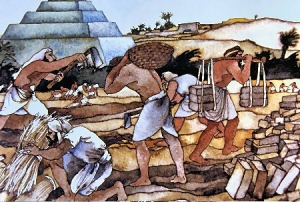
Hebrew Slaves Cry Out

The Israelites groaned under their slavery, and cried out.  Out of the slavery their cry for help rose up to God.  God heard their groaning, and God remembered his covenant with Abraham, Isaac and Jacob.  God looked upon the Israelites, and God took notice of them. Exodus 2:23ff

The cry of the Israelites created all kinds of questions for the student:

While God’s people were slaves, many died.  Why did He not save them? Why did he wait?  Were they the “bait”/sacrificed for us to grow closer to God? How do you know if God is listening? (you don’t feel he is there.)  Why did God “then” hear their “cries?”

Great questions!    

Though the Israelites had been slaves in Egypt for generations (Exodus 1:8), this is the first record of their calling out to God for help.  They may have called out before, but we have no record of it.   God knew their struggle and was preparing a way out of Egypt through his preparation of Moses for leadership.   The cry of the people and God’s call for Moses to lead the people are linked here in Exodus.  God waited both for the people’s desire to leave and for the right leader to be ready.

As to the question of whether we know God is listening, the point is the Israelites did not know at first.   They cried out to God and God chose Moses, even though Moses has no desire to be God’s leader.   Moses was God’s answer to the Israelites cry for help, but they did not know it at first.  In fact, when Moses first arrives they reject him, Exodus 5:21!

The story demonstrates that God’s answers prayers, but not always in the time and way we choose.  We are called to trust God even as we wait.  It also demonstrates that we might become the answer to someone else’s prayers.

When was a time that you had to wait for God’s answer to your cries for help?

Your Will Be Done RIGHT NOW!

Learning to Pray Anew

On coming to Resurrection Lutheran Church four months ago, I discovered that the congregation had adopted the contemporary translation of the Lord’s Prayer.   I appreciated this because the only time I used “thee” and “thine” in prayer was in the Lord’s Prayer.    Praying “forgive us our sins” makes much more sense than “forgive us our trespasses” as does “save us from the time of trial.”  But I knew that it would be a challenge to change my interior prayer life to the new translation, just as it is for congregations when they embrace the newer version.  The old is deeply imbedded.

I have had little trouble during public worship, since it is projected on the screen to read.   The real challenge is for me to pray it in non-worship settings.  After our annual meeting, I wanted us to close with the Lord’s Prayer.   I started off strong, but after praying “Forgive us our sins as we forgive those who sin against us” I crashed and burned, stumbling over “lead, ah, save us from time,  . . temptation, No,  of trial?”  My voice trailed off.  Fortunately strong prayer leaders picked up the congregation as I fell.  It was a congregational prayer after all.

With this in mind, I decided to practice the prayer through Lent, using it as part of my drive to church.  My intention was not to simply recite the prayer, but to pray it with all my heart and mind. Still I would keep eyes open as I drove.

Am I praying or driving?

So last Saturday morning as I pulled onto the partially plowed freeway,  I began to pray.  Suddenly I saw the car next to me pull to the shoulder,  and at the same instance an ambulance dashed by, its lights blazing.   Also I was surprised to see a police car stopped to assist two cars in the ditch; I touched my brakes and realized that road was more slick than I anticipated.  I was praying the petition, “your will be done,”  and it struck me, “God’s will is for me to be a non-distracted driver RIGHT NOW!”  I stopped praying and immediately gave full attention to driving my car.  Later I could give God full my full attention.

How has prayer impacted your life?

“As we forgive others”

Forgiveness

Thursday it was a challenge.   I attended a meeting outside of church.  Prior to going, I had decided that I would practice my Lenten discipline of listening, more than speaking.   I thought that should be easy. Usually I am a good listener.  I was doing well until we broke into small groups and one person began to dominate the conversation.  I would have appreciated the one-way conversation if I had heard clear, wise, helpful  ideas.  But the whole time I listened, I kept thinking, “this is not valuable to me. This person is too self-absorbed to help me.” As I listened,  I began to realize the hardness of my own heart towards another’s life journey.

Since that conversation, I have been wondering if that might not be how God hears many of my prayers, as self-absorbed drivel.  There are times when I pour out the deepest parts of my heart to God, but too often it is the superficial complaints of a spoiled child.  Still God promises to be gracious to me, to listen and uphold me, to seek my presence.  Can I not do that with another?   Can I simply be gracious and attentive to God’s children around me?

The heart of the Lord’s Prayer speaks volumes for my relationship with others.  Forgive me my sins as I forgive those who sin against me.    Yesterday I discovered once again how challenging it is to love my neighbor as God has loved me.  Yet I am forgiven and can start fresh today.

What does forgiving others mean for you?