Category Archives: story

Holy Week Story – Tuesday

Continued Reflections on the Holy Week Story

Readings for today: Matthew 26:17-46
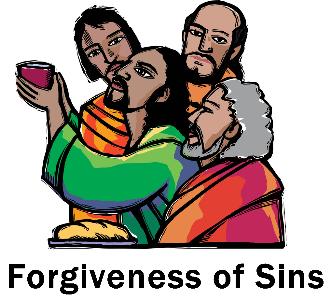
And while they were eating, he said, “Truly I tell you, one of you will betray me. Matt 26:21

And he gave (the cup) to them saying, “Drink from it all of you, for this is my blood of the covenant, which is poured out for many for the forgiveness of sins.” Matt 26:27-28

What a sharp contrast of emotions in today’s text!  We are again reminded that one of Jesus’ own disciples will betray him.   Jesus, who loved each disciple deeply, was wounded by Judas’ act.  Judas was not an outside official who simply wanted to keep the status quo.  Judas was a friend, who had seen, heard, and experienced Jesus’ ministry of healing and hope.  Scholars speculate what motivated Judas to do this.   Was it greed?  Or disillusionment that Jesus was not the Messiah Judas wanted?

I think the motivation is left unclear so that we can have identification with Judas.  At some time each of us has betrayed God or God’s children either in thought, word or deed.  We profess that we love Jesus with our lips, but our actions towards his children betray our fickle hearts.  We betray Jesus, when we do not love our neighbor as ourselves.

Yet on that night of betrayal, Jesus gave us the gracious gift of communion, the promise of forgiveness.  In Luke’s gospel, it is clear that Judas was still present when the cup of the new covenant was passed among the disciples.  God’s forgiveness was offered to Judas, even as he prepared to turn Jesus over to the high priest.   God’s forgiveness knows no boundaries, and here is a clear example of his gracious, forgiving love.  No matter who we are or what we have done, the promise of God’s forgiveness is declared for us.  We are forgiven people.    

When have you seen or visited someone who needed a tangible expression of God’s love?  How can you help that person realize how precious they are to God?

Prayer: Lord God, thank you for the gift of your own body and blood.  Let that gift strengthen me in the knowledge that you love me more than anything.  Amen

Holy Week Story – Monday

"A Woman Anoints Jesus" by Floridian artist Jan Richardson, 2006.

For the next five days I will be reflecting on parts of Holy Week Story.

Today’s reading is Matthew 16:1-16.

Jesus said to his disciples, “You know that after two days the Passover is coming, and the Son of Man will be handed over to be crucified.” (Matt 16:2)

Plans and plots abound. The climax of God’s plan to rescue and restore humanity is near.  Jesus knows this and has tried his best to prepare his disciples.   The chief priest and religious officials are also planning their own intervention to arrest Jesus by stealth and kill him.  They think that now they must take control of the situation, but they do not realize that only Jesus is truly writing the story.  Even Judas, Jesus’ friend and betrayer, is not working in total independence.  He is part of a bigger plot.   This does not excuse his betrayal, but rather demonstrates God’s power to weave a new thing from our human foibles and sin.

The only person, besides Jesus, who acts with compassion and understanding, is the woman who anoints Jesus with costly perfume (Matt 16:6-13).  Her name is never given, but she prepares Jesus for his tomb. The disciples object to her apparent extravagant waste of money, but Jesus defends her.  By pouring this ointment on my body she has prepared me for burial. (Matt 16:12).

 I think, at times, I am like every character in the story.  I can be the religious official that tries to control how and when God will act.   I can be the disciples, misunderstanding how a brother or sister in Christ is serving God’s kingdom.   I can even be Judas, betraying a friend in little acts of bitterness or disappoint, whether in thought, word or deed.   And then, by the grace of God, I can also experience the woman’s joy of generosity in giving God a special gift.    The Holy Spirit can use .

 Prayer starter: Lord Jesus, turn my heart away from control, betrayal or manipulation to being generous towards You and Your people.

Crowd Power

Catalyst had Crowd Power

This morning’s Palm Sunday worship reminded me once again of the power of a crowd.  As American I don’t think we reflect on the dynamic power of mass audiences because we tend to think we are all independent individuals.  Yet we experience the power of a crowd when we go to a crowded athletic venue, and the spectators begin to chant, holler and scream as the score becomes close.  Or when we go to a music concert and the performer is very good at stirring up the audience during the performance.   We say that the performer feeds off the energy in the room.

This crowd power can be a positive influence.  Last fall I attended a large Christian Conference in Atlanta called the Catalyst Conference. This home-made video captures just a bit of the energy I experienced in that auditorium with 12,000 other Christians.  I strongly encourage people to experience a large gathering of fellow believers in worship, prayer and praise together.  The power of the Holy Spirit can be magnified in such settings.

As one reads the story of Jesus’ entrance into Jerusalem, one has the feeling that there is incredible crowd power in that parade with palms and cloaks, shouts and songs.   The crowd truly believed the King was in their midst and they could not hold back.  Jesus does not chastise them but rather the religious officials who try to stop the celebration.  Jesus said to them, “If they keep quiet the stones will cry out.” Luke 19:40.

The problem with crowd power is not their enthusiasm but their fickle character.   In a sport’s arena, one play can suddenly change the game and the crowd becomes deflated, even hostile.   In politics, Hitler was able to utilize mass rallies to gather and solidify support for his totalitarian regime.  The crowd is not always right.

Friday morning we will read again the Gospel story of the crowd as it gathered outside Governor Pilate’s court.   Their cries will have turned from “Hosanna!” to “Crucify him.”

How have you experience crowd power in a positive or negative way?

Does crowd power have a place in our contemporary life with Jesus?

Write Habits

The Write Stuff

Writing this blog has become one of my daily work habits.  My original intention was to help my new congregation get to know me by telling some of the stories that have shaped my life, especially my faith life in Jesus Christ.  Yet I also believe that the act of writing shapes my faith as well.  Writing this blog has pushed me to express my faith in meaningful, concrete ways.

I have kept a journal since college, but it has always been a private thing.  Sometimes it has been my Bible study and prayer journal.  During the call process last summer, it was one way to reflect on whether or not to pursue the call to Resurrection. There have been long stretches where I did not journal much.  Other times where it was a daily MUST-DO to stay sane and keep perspective. 

In recent years, as I embraced running, my journal habit became my running log.  There are several on-line programs where a runner/biker/walker/blader can log their daily miles and work-out notes.  I became pretty meticulous in my record keeping, measuring my daily workouts  to the nearest tenth of a mile and second.  I could not go running without my heart-rate-monitor watch to record all the detail.  After the summer and fall of 2005, when I trained and ran my best marathon, my log from that training period shaped all my future marathon training programs.  

In a way this blog has taken on some of the characteristics of my journal and exercise log.  Since I have embraced this practice, I want to grow in my ability as well as my faith.   The one big difference is now I have a public audience (small but growing) that I seek to encourage, provoke, inform and challenge.  The readers’ comment help shape this blog and in turn shape me.  Thank you.

Proverbs 27:17 Iron sharpens iron, and one person sharpens the wits of another.

What habits shape your faith life?

Our Part in the Fifth Act

N. T. Wright, the New Testament scholar, helps me understand the Biblical story as a drama with five acts.  The first act is creation, beautiful and good, Genesis 1-2.  The second act is the human rebellion against God (also known as the Fall), Genesis 3-11.  The third act is the entire story of Israel, from Abraham to the Messiah (Paul sketches this out in Galatians 3 or Romans 4).  The story of Jesus’ life, death and resurrection is the climatic fourth act of the drama, the hinge on which everything turns.  The fifth act is the story of the church beginning with the book of Acts, and this is where we live today.

Wright goes on to explain,   

When we read the story of Jesus, we are confronted with the decisive and climatic fourth act, which is not where we ourselves live – we are not following Jesus around Palestine, watching him heal, preach and feast with the outcasts, and puzzling over his plans for a final trip to Jerusalem – but which, of course, remains the foundation upon which our present (fifth) act is based.    Indeed, telling the story of Jesus as the climax of the story of Israel and the focal point of the story of the creator’s redemptive drama with his world is itself a major task of the fifth act. (The Last Word, N. T. Wright, p. 124)

This story structure is central to our understanding of scripture, how we read and interpret it.  We are still in the story and it has not been completely written, but the main outline is known.  Jesus’ death and resurrection is now our assurance that evil and death has been defeated.    We live in confidence that God has won the war.  There may be individual battles and struggles ahead, times we feel discouraged or in grief.   Yet God’s victory is assured.  The centrality of Jesus’ death/resurrection is why we retell over and over the Good Friday/Easter story every year.

That is also why we can read the story of John 11, the raising of Lazarus, as our story, thinking at times like Martha and Mary that death has won the day.  But we know that Jesus’ resurrection has happened and we live in that new reality.   A new creation is present now and will be fully realized in the future.

How has the story of Jesus become your story?

Stories, Butler Bulldogs and Lazarus

As shown in my recent posts, I am a big fan of stories, especially how the Biblical story intersects with our own individual and community stories.   I am an advocate of narrative theology, the idea that the heart of the Bible is not an instruction book of regulations and rules, but a story of God’s creative and redeeming that we live into.   Yes, there are commandment and rules to follow; all stories have those.  The commandments guide and shape the story but they are not the essence of the story.   Stories have surprises, twists and turns, which the story actors discover along the way.

Bulter Bulldog Prior to Game

Last night NCAA championship basketball game had its own story.  Butler University, a non-major University from Indiana, was playing for title against an established powerhouse, the University of Connecticut.  The Butler Bulldogs was poised to write a new chapter in the “David versus Goliath” motif.  I confess my own fascination in the developing storyline.  

Then the game was played.  Butler could not buy a basket, and the expected story fell apart.  Now the Butler team and fans will have to adapt to a different conclusion to their story.  

Stories have a way of doing that, not following the established plot line.  Lives have that trajectory as well.   One can follow all the rules, do all the hard work, follow the established norms and still not achieve the desired outcome.  Or a surprise or twist of grace can intervene and a new story begins.

This Sunday the gospel text is John 11, the story of Lazarus.   Lazarus was sick and his sisters, Mary and Martha, sent for their friend, Jesus, to come quickly that Jesus might heal their brother.  One would expect that Jesus would have honored their request.  The story explicitly states: “Jesus loved Martha and her sister and Lazarus.” (John 11:5).

The story, however, takes a strange twist.  “Yet when he heard that Jesus that Lazarus was sick, he stayed where he was two more days.”  Jesus deliberately chose not to rush to Lazarus’ aid. The story catches us off guard.   That twist opens us up to a new perspective on Jesus and life.   Jesus is not a magician who serves our needs.  Jesus is like an author shaping the stories we live. 

More on Jesus’ part in our story tomorrow.

Who are active writers in your life story?