Category Archives: theology

Stories, Butler Bulldogs and Lazarus

As shown in my recent posts, I am a big fan of stories, especially how the Biblical story intersects with our own individual and community stories.   I am an advocate of narrative theology, the idea that the heart of the Bible is not an instruction book of regulations and rules, but a story of God’s creative and redeeming that we live into.   Yes, there are commandment and rules to follow; all stories have those.  The commandments guide and shape the story but they are not the essence of the story.   Stories have surprises, twists and turns, which the story actors discover along the way.

Bulter Bulldog Prior to Game

Last night NCAA championship basketball game had its own story.  Butler University, a non-major University from Indiana, was playing for title against an established powerhouse, the University of Connecticut.  The Butler Bulldogs was poised to write a new chapter in the “David versus Goliath” motif.  I confess my own fascination in the developing storyline.  

Then the game was played.  Butler could not buy a basket, and the expected story fell apart.  Now the Butler team and fans will have to adapt to a different conclusion to their story.  

Stories have a way of doing that, not following the established plot line.  Lives have that trajectory as well.   One can follow all the rules, do all the hard work, follow the established norms and still not achieve the desired outcome.  Or a surprise or twist of grace can intervene and a new story begins.

This Sunday the gospel text is John 11, the story of Lazarus.   Lazarus was sick and his sisters, Mary and Martha, sent for their friend, Jesus, to come quickly that Jesus might heal their brother.  One would expect that Jesus would have honored their request.  The story explicitly states: “Jesus loved Martha and her sister and Lazarus.” (John 11:5).

The story, however, takes a strange twist.  “Yet when he heard that Jesus that Lazarus was sick, he stayed where he was two more days.”  Jesus deliberately chose not to rush to Lazarus’ aid. The story catches us off guard.   That twist opens us up to a new perspective on Jesus and life.   Jesus is not a magician who serves our needs.  Jesus is like an author shaping the stories we live. 

More on Jesus’ part in our story tomorrow.

Who are active writers in your life story?

Love Wins or the Great Divorce?

C. S. Lewis's Great Divorce

Yesterday I finished Rob Bell’s book, Love Wins.  I understand how evangelical can be upset with him, but as a Lutheran I don’t feel such judgement.   If I could use one word to describe God it would be Gracious.   God’s grace is infinite and total and I see it extending beyond this life.   Like Bell, I don’t understand how God can condemn someone to eternal, infinite punishment if they never had the opportunity to hear the gospel of Jesus Christ.  I remember conversations I had with fellow students at Fuller Seminary where some thought that the church had the obligation to proclaim the Gospel to keep people from going to hell.  They believed that we HAD to preach it or else unbelievers would burn, even those in distant lands.

I do believe in proclaiming the Good News of Jesus Christ, but not as some cosmic obligation to keep people from hell.   I preach the good news because I am in love with Jesus, the creator of the universe and I am excited to have others experience that liberating love as well.  I am a participant in the new creation with Jesus and I am humbled that God can use someone like me to accomplish God’s will.  

Rob Bell does a great job of describing the incredible, awesome, overwhelming love of God for us.  However I do have qualms with him, such as how he misquotes Martin Luther as if Luther was a closet universalist.  Carl Trueman, Departmental Chair of Church History at Westminster Theological Seminary in Philadelphia, has written a length blog post on this very subject. See http://www.reformation21.org/articles/easy-virtues-and-cruel-mistresses.php.  Then again I disagree with Carl Trueman’s comparison of Love Wins with Dan Brown’s Da Vinci Code.  But disagreements are part of  a healthy theological conversation.

In an earlier post, I wrote that I have been rereading parts of C. S. Lewis.  When I finished Bell’s book, I discovered that he had a section for further reading.  His second reference is this: “On hell, see C. S. Lewis’s The Great Divorce.”  Later in the acknowledgments he thanks his parents for suggesting that while in high school he read C. S. Lewis.   I must agree.  I appreciate both writers, but the better IMHO is C. S. Lewis.  Next week I will move on to other topics.

What writer or artists has best help you see the magnificent love of God?

Images of Heaven

Is this a Scriptural Image of Heaven?

Since it is still snowing in Minnesota, I need a brief glimpse of “paradise” to give me hope.  Many of us tend to recreate the new heaven and earth in our own favorite images and struggle with the images that scriptures uses.   Rob Bell in Love Wins has a comical reference to this:

Think of the cultural images that are associated with heaven: harps and cloud and streets of gold, everybody dressed in white robes. (Does anybody look good in white robes? Can you play sports in white robes? How could it be heaven without sports? What about swimming? What if you spill food on the robe?)

All of our images of heaven are somewhat speculative since they are describing something beyond our present ability to comprehend.  All language is symbolic, especially when it comes to God.  C. S. Lewis wrote a wise sermon, called The Weight of Glory.  In it he categorizes the Scriptural images of heaven:

The promise of Scripture may very roughly be reduced to five heads.  It is promised, firstly, that we shall be with Christ; secondly that we shall be like Him; thirdly, with an enormous wealth of imagery, that we shall have “glory”; fourthly that we shall, in some sense, be fed or feasted or entertained; and, finally, that we shall have some sort of official position in the universe — ruling cities, judging angels, being pillars in God’s temple.  The first question I ask about these promises is: “Why any of them except the first?”  Can anything be added to the conception of being with Christ?  . . . . I think the answer turns again on the nature of symbols.

Lewis goes on to describe how we each turn our perception of “being with Christ,” into our own version of what friendship or camaraderie or human love is like here on earth.  Lewis concludes,  

The variation of the promises does not mean that anything other than God will be our ultimate bliss; but because God is more than a Person, and lest we should imagine the joy of His presence too exclusively in terms of our poor experience of personal love, with all its narrowness and strain and monotony, a dozen changing images, correcting and relieving each other, are supplied. 

What image of heaven most surprises or unsettles you?  What could that say about you?

Intersecting Hell


Where do you dwell?

My recent readings have intersected.  I have been reading a series of lectures on C. S. Lewis by a Dr. Louis Markos as well as reading Rob Bell’s Love Wins: A Book about Heaven, Hell, and the Fate of Every Person Who Ever Lived.   Bell starts with Jesus’s word for hell, Gehenna.  Gehenna was an actual valley outside of Jerusalem that was used as the city dump, where fires burned constantly and animals gnashed teeth as they fought for scrapes.   Gehenna was not desirable real estate. 

Lewis wrote about hell in The Great Divorce.   His image of hell: dirty, grey mean streets of a city slum where it is always dusk and always raining.  Scholars think Lewis was using London during a smog alert.  (I might be tempted to use a picture of Minnesota in March, when snirt (snow/dirt) never leaves and spring never comes. )   Lewis’ basic definition of hell is the absence of God: where God says to those who reject Him, “your will be done.” 

 Both Bell and Lewis agree that hell is not only a destination to be avoided after death.  It can be our reality right now.  Hell emerges when we allow our sinful nature to dominate our lives.  It can be drugs, alcohol, ambition or greed.  Or it can be something simple like grumbling.   C. S. Lewis wrote,

Hell begins with a grumbling mood, always complaining, always blaming others . . . but you are still distinct from it. You may even criticize it in yourself and wish you could stop it. But there may come a day when you can no longer. Then there will be no you left to criticize the mood or even to enjoy it, but just the grumble itself, going on forever like a machine. It is not a question of God ‘sending us’ to hell. In each of us there is something growing, which will BE Hell unless it is nipped in the bud.

The Good News is that God has come to rescue us from hell.  Jesus’ life, death and resurrection carries all who believe into his kingdom of heaven.  Tomorrow I will post on their intersection in heaven.

Do images of hell help or hinder your faith in God?

Apples and Friends

Is Your Apple Finished?

Yesterday’s I mentioned my childhood friend, David Brown, and our logging adventures.  Our friendship had many ups and downs.    He was bigger and more athletic than I was and so he was often selected for playground teams when I was not.  I thrived in the classroom, where he often struggled.  On most days these differences did not bother us. We were best friends.  Occasionally, however, we get into intense disagreements over trivial matters. 

I remember the day my mom gave us each an apple to eat.  I ate my apple down to the core, savoring every bite.  David nibbled around the outside and said it was finished.

 I said, “Your apple isn’t finished.  You barely started.”

“Oh, my apple is done.”

“No, it’s not!”

“Yes it is!” 

He stormed off home and I swore we would never be friends again.  But the next morning, I stopped at his house on the way to school and we picked up as if nothing happened, until the next argument erupted.

In Simply Christianity, N. T. Wright describes our hunger and deep desire for relationships and yet our daily struggle to make our relationships work.  Wright writes, “We are made for each other.  Yet making relationships work, let alone making them flourish, is often remarkably difficult.  We all know that we belong to communities, that we were made to be social creatures. Yet there are many times when we are tempted to slam the door and stomp off into the night by ourselves, simultaneously  making a statement that we don’t belong anymore and that we want someone to take pity on us , to come to the rescue and comfort us.  We all know we belong in relationships, but we can’t quite work out how to get them right.  The voice we hear echoing in our heads and our hearts reminding us of both parts of this paradox and its worth pondering”  (p. 30). He goes on to suggest that the “echo” we are experiencing is the love God created us to experience with God and our neighbor, but our human sin has clouded and twisted our capacity to give and receive love.

How have you struggled in your relationships? How has God been faithful?

A Logger’s Confession

Red Alder Woods

When I was in elementary school, my best friend was David Brown.  Every morning I would stop by his house so we could walk the last five blocks to school together.   We attended the same church and sang in the children’s choir.  After school we would usually end up at his home or mine for whatever adventure we could dream up.

One of those adventures involved the deep woods across from my house.   We lived near a lumber mill and logging trucks rumbled by throughout the day.  We aspired to be loggers, so at the tender age of nine, we “borrowed” my dad’s hatchet and started chopping.  It took us three days of swinging our mighty hatchet to finally watch the tall red alder begin to wobble.  When it fell, David and I leaped out-of-the-way to watch.  Unfortunately the woods were thick and the tree did not crash to earth, but came to rest on another tree.   So David and I would climb the half-fallen tree, bouncing up and down, pushing it to the earth. We left the tree to rot on the ground and went off in search for some new adventure.

Over the next couple of years we probably chopped down 10-15 trees.   Our parents never knew of our “adventures.” David and I both moved away in sixth grade and our logging days were over.  

I write about this experience, because at the time it seemed so innocent, yet now it troubles me. It was a secret I kept from my parents.  Our chopping trees was simply for our pleasure and served no useful purpose.  Our behavior could have hurt either of us seriously.  We had no respect for the creation God had given to us nor for our neighbor’s land.  Perhaps most troubling, at the time we had no idea we were doing anything wrong.  Could I be doing something today that I don’t realize is harmful to God or my neighbor?

As we prepare to confess our sin on Ash Wednesday, let us be mindful that sin can come in various forms and disguises.   Let us ask God to cleanse us of known and unknown sin, and to lead us out of darkness into light.

 Has sin every troubled you?

Bible Favorites

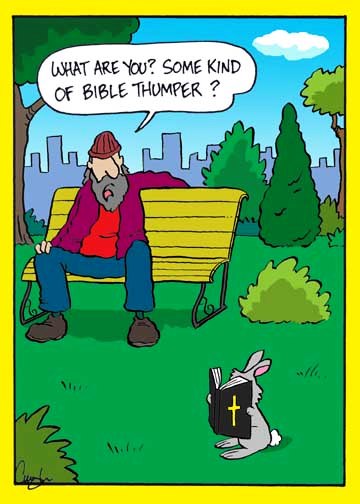
What are you?

Recently I asked members of Resurrection Lutheran to write brief devotionals based on their favorite Bible verse.  These devotionals will be assembled into a booklet to used during Lent by members and friends of the congregation.  I am excited with how the writers have engaged Scripture and its interplay with their lives.  Each person has a unique perspective, reflection, or idea that opens up a verse or story in a new way.

When I was growing up, the Bible was a storybook filled with fascinating characters and plots.  It was exciting, lively and challenging.  As a teenager I sometimes went down strange tangents, looking for new interpretations that would catch my fancy.  I remember reading the “wheel within a wheel” passage in Ezekiel 1 and wondering if it was describing a spaceship!    The wonder and mystery of the Bible was alluring to me.   

 Then I went off to college and I was challenged to see the historical context of the authors, to learn the Biblical languages of Hebrew and Greek, and to understand the literary motifs and forms within the Bible.  At times I was fascinated with this knowledge, gaining tremendous insight into this ancient collection of books, poems and laws. To read Genesis 1 and 2 in light of the Babylonian creation myths brought me new wisdom and excitement.   But I also was disturbed by this avenue of learning because it seemed to make the Bible into an artifact to be dissected and classified.  The Bible lost some of it awe and wonder.

I know that some of my classmates lost their faith during this time of critical examination.  I waffled from time-to-time in my own grasp of  truth and faith.   Yet the sheer power of God’s glorious grace continued to shine through to me.  God’s love was evident in the midst of the history, language and myth of the scripture.   I remember hearing a quote from the great Swiss theologian, Karl Barth.   When asked how one could best summarize the Bible, he said, “Jesus loves me, this I know, for the Bible tells me so.”   

I am excited to see how the Lenten devotional will touch and influence the culture of Resurrection.  We are all called to engage scripture, to listen for God’s voice in God’s Word.  

How or when has a Bible story or verse impacted your life?

The Purpose of Scripture

The Bible is Word Power

Have you heard the concept, “The BIBLE stands for Basic Instruction Before Leaving Earth?”   I struggle with that concept.  My fear is that we will turn the Bible into a glorified self-help book that we try to control, rather than the Word of God that comes to recreate us in God’s image.  God’s Word has more than great advice; it has the power to transform us.

N. T. Wright describes this transforming power. “The Bible isn’t there simply to be an accurate reference point for people to look things up and be sure they’ve got them right.  It is there to equip God’s people to carry forward his purposes of new covenant and new creation.  It is there to enable people to work for justice, to sustain their spirituality as they do so, to create and enhance relationships at every level, and to produce that new creation which will have about it something of the beauty of God himself.”   (Simply Christian, p. 182-183)  God’s Word is to actively work at transforming us into the image of Christ.   It calls and empowers us to love God by loving our neighbor in creative, just ways.

Jesus himself had to reinterpret the law because the Pharisees and other religious officials had misused it.   The Pharisee’s loved the Torah (first five books of the Bible), but in their love they tried to control and protect it by building sharp boundaries between holy and unholy.   They tried to avoid all contact with unholy people, so as to remain pure before God.   They used the scripture as their way to stand apart from those in need (lepers, tax collectors, prostitutes, sinners).  Jesus proclaimed a message that engaged the unclean and envisioned a new creation.   Jesus did not come to abolish the law but to fulfill it (Matthew 5:17).

How is God’s Word transforming your life?

Prayer Helps

Bishop N. T. Wright

I am preparing for a talk on prayer this evening and wonder if and when anyone uses the written prayers of others to guide their prayers.  I am convicted by N. T. Wright’s comments that, “we moderns are so anxious to do things our own way, so concerned that if we get help from anyone else our prayer won’t be ‘authentic’ and come from our own heart, that we are instantly suspicious about using anyone else’s prayers. . . . We are hamstrung by the long legacy of the Romantic movement, (which) produced the idea that things are authentic only if they come spontaneously, unbidden, from the depths of our hearts. ” (N. T. Wright, Simply Christian, p. 164-165)

I confess that I have at time been such an advocate of spontaneous prayers of the heart.   Yet I also know the value of written prayers that have guided Christian prayer for centuries.   Jesus, being a first-century Jew, learned memorized prayers such as the Shema (“Hear, O Israel: the Lord is our God, the Lord is one,” found in Deuteronomy 6:4)  and the Psalms.  He taught his own disciples his kingdom prayer, the prayer we call the Lord’s Prayer (Matthew 6 and Luke 11).  The prayer of St. Francis continues to “make us instruments of God’s peace.”   Martin Luther wrote short prayers for the morning and evening to be included in his Catechism.   AA groups use Reinhold Niebuhr’s Serenity Prayer to close their meetings.  Written prayers can give shape and structure to our devotional life.

One of my favorite written prayers I learned from the Lutheran Book of Worship, but it probably has a deeper history.   The prayer is part of the morning prayer service and I have used it at various time in my ministry, especially at the beginning of something new.

Lord God, you have called your servants to ventures of which we cannot see the ending, by paths as yet untrodden, through perils unknown.  Give us faith to go out with good courage, not knowing where we go, but only that your hand is leading us and your love supporting us; through Jesus Christ our Lord.  Amen.

What written prayer(s) have shaped your faith life?  In what ways?

Ocean Hike

Ruby Beach

As a teenager I backpacked two portions of the wilderness beaches along the Pacific Ocean.   The beaches were part of the Olympic National Park in Washington state and were the only trails open during the winter season (the high mountain passes were snow-covered).

I use the word “trail” loosely, because most of the route was the beach itself. Hikers simply kept the ocean on  their right or left, depending on whether they were going north or south.  Campsites could be found on the beach itself or inside the neighboring forest.  There were no roads or towns, just forest, ocean and beach.

However beach hiking had its tricky sections.   Steep, rocky headlands would jut out into the ocean.  Theses headland had little or no beach so a hiker had a choice.   Wait for low tide and race around the headland or find a trail that led up and over the headland to the open beach beyond.   I carried a tide table with me when I hiked, so I could know when the low tide would be and plan accordingly.   If I arrived at a headland too early or too late, I had to wait or try to find the bypass trail.  (Sort of like trying to find a portage trail in the BWCA.) 

I often think our spiritual walk with Jesus is like hiking on the beach. There can be long sections were the path is very clear and beautiful, yet wild at the same time.  We simply need to remember to keep the ocean (Jesus) on our left or right.  But then we come to some rocky headland, some struggle or challenge, that blocks the path.   We learn to either stop and look at the tide table, (a sort of prayer time) waiting for the tide to recede.  Or we take our chances in finding the wilderness trail (never easy) that leads up and over.    We may even loses sight of the ocean (Jesus), for a time.    Yet the sound of crashing waves and smell of salt air reminds us that Jesus is close by.

What images of walking with Jesus do you carry in your life?