Category Archives: theology

God at Work

God at Work

Today I read Pastor Tim Keller’s comments about serving God in the work place.  Tim is no relative of mine, but I like the way he thinks, especially being a Presbyterian quoting Martin Luther.  You can check his remarks yourself at http://bit.ly/i77xMD.  A key concept for Keller is Luther’s “Priesthood of All Believers.”  Luther was commenting on I Peter 2:9, “You are a chosen race, a royal priesthood.”

One does not need to be in the church to serve God.  As a pastor I like it when people volunteer and serve in our congregation.  I often give them special recognition and encouragement.  But the congregation is only one place where a Christian can serve God.  God’s work is not limited to congregations, important as they are.  

I serve God as I love my neighbor, which I can do in various ways.  I love to quote Dr. Marc Kolden, “God does not need your good works, but your neighbor does!”  And we love our neighbor through our daily work as a spouse, parent, worker, community leader and citizen.  The home, the office, and the community are as vital to God as the congregation.

For example, if one owns a small manufacturing company that makes machine parts for cars, the owner loves his neighbor in at least two key ways.  The company is helping provide necessary transportation (car parts) as well as providing employment to the workers.  God would want the owner to be fair and equitable with the employees and with the customers.   In this way God is working through the owner.  God does this with farmers, salespersons, artists, nursing aides, and even politicians.  As Luther wrote, these are the “masks God wears” to accomplish God’s task on earth. 

For sure, we live in sinful, broken world, in which people take advantage of each other.  As sinful human being we can turn work into a false god that consumes our lives.  We can make monetary profit the god that rules our lives.    We need God’s grace mediated through Jesus Christ to call us back to the vibrant life.  And the church can be a community that helps us stay faithful to God’s call at work.

How have you loved your neighbor this past week?
Salt of the Earth?

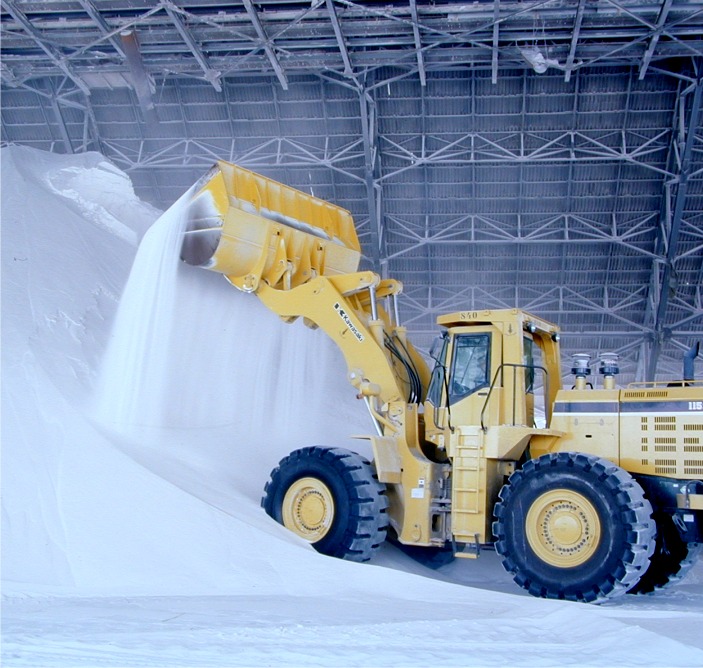
A Mountain of Salt

In his Sermon on the Mount, Jesus declares, “You are the salt of the earth; but if salt loses it taste, how can its saltiness be restored? It is no longer good for anything, but is thrown out and trampled under foot” (Matthew 5:13).  Such a metaphor raises all kinds of questions for me.  Salt seems so ordinary and mundane, something we take for granted.   Yes, it is necessary for making a fine meal, but it is the exotic spices and herbs that get the attention.  Salt brings out other  flavors, but who wants a dish with too much salt?

Years ago, on April 1st, my older sister pulled a practical joke on my siblings by mixing a large quantity of salt into the sugar bowl.  At breakfast, as they spooned sugar on to their cereal, she watched us carefully, saying nothing.  When they took their first bite and then spit it all out, she burst out laughing.   But my mother was not too pleased with the wasted cereal. My sister had to clean up the mess from too much salt. 

When Jesus spoke, salt was used in Jerusalem for temple sacrifices, “You shall not omit from your grain offering the salt of the covenant with your God; with all your offerings you shall offer salt” (Leviticus 2:13).  Could Jesus be inferring that our lives are to be an offering to God, a gift for God to use?  Could we be part of God’s covenant to renew and restore the earth?  Do I enhance God’s flavor in the world?

And just how does salt lose its saltiness?   Perhaps it means that the salt is polluted with impurities and stray matter.   In Exodus 30:35 God instructs the Israelites to make a prayer incense that includes salt, “seasoned with salt, pure and holy.”  I know that my own life at times becomes polluted in ways not pleasing to God.  How will I know when I have lost my saltiness?  Does the community have a role in helping me stay salty?

Jesus’ last phrase about salt being trample under foot makes me smile. In Minnesota there is plenty of salt being spread on roads, bridges, and sidewalks for us to trample upon.   Jesus did not concern his audience with the ice-melting properties of salt, but it is a critical part of our culture. Road salt covers my car after yesterday’s snowstorm, yet I am thankful for its ability to clear road ice. 

What thoughts comes to your mind when Jesus declares, “You are the salt of the earth“?

Quarks and Prayers

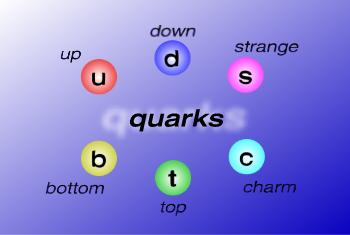
Quarks: sub-atomic particles

This morning I listened to a podcast of an interview with John Polkinghorne, an English physicist and theologian.  He described how his understanding of sub-atomic quarks helped him to understand prayer. http://being.publicradio.org/programs/2011/quarks-creation/   In the past science explained the world in mechanistic terms as fixed and determined, like a carefully made watch that is ticking away.  But now physicists realize that things are not quite so pre-determined. Quarks are the tiniest participles of matter, smaller than atoms, that scientist cannot exactly locate nor predict.  Quarks are sort of “cloudy,” fluid, chaotic.

For Polkinghorne this changed his understanding of prayer.  In a mechanical, pre-determined world, prayer did not make much sense.  Everything was locked into a set pattern of laws that God had established at creation.  But in the world of quarks, where it is much more fluid and unknown, prayer becomes an interaction with God and creation. 

In old science, God was simply a watchmaker who created the world, wound it up and then step back to observe the watch from a distance. And yes, there are some strong physical laws that guide our days.  The sun will rise in the east, not the west.  If you jump off a roof, you will not fly, but fall to earth.   Yet, in the field of quarks, God is also like a conductor, constantly interacting with the musicians who are making music together.  With quarks Polkinghorne found beauty, wonder and awe, like a good jazz improvisation. 

This makes sense to me. For example I do not pray that the January cold-snap in Minnesota will suddenly become a July heat-wave.  The seasons are fixed.  Yet the chaotic, fluid nature of weather could be influence by the prayers of God’s people.  The prophet Elijah’s prayers for a drought in I Kings 17-18 is indicative of this.  The same is true for prayers of healing; there is an interplay between our body, mind and spirit that truly affects the body’s healing.  Prayer is an invitation for God to participate in our body’s healing, in a deep elemental way.  When we pray for someone to be healed of cancer, we are asking God to allow the healthy cells in the body to replace/remove the cancer cells at the most basic biological level.

My favorite prayer of Jesus reflects such an attitude.  We pray, “Your kingdom come, Your will be done, on earth as in heaven.”  As we pray this prayer we are opening ourselves to God’s activity in the world, seeking to be in the flow of  God’s Spirit.  The Spirit is not pre-determined, but more fluid and sometimes chaotic, like a dance. The will of God has fixed aspects, like the ten commandments.  Yet in our daily life, we seek to see the conductor’s baton and stay with God’s rhythm and beat.

How has your understanding of prayer changed overtime?