Category Archives: trust

Marathon Dreams and Christian Hope

This summer I am training for the Twin Cities Marathon. After taking a couple of years off from such focused training due to injuries and my new call to Resurrection Lutheran Church, I will attempt to complete my eleventh marathon on October 7. Finishing is not some vague wish that I am hoping to accomplish. It is an honest assessment of my fitness, training and experience.

Like almost any physical endeavor, patient, persistent training leads to success. From past experience I know that if I am able to run consistently 35-45 miles per week, complete several long runs of 16+ miles and stay injury free, I have a better than 90% chance of finishing the 26.2 mile course. Factors that may contribute to not finishing are an unforeseen injury or illness. I have had some poor race performances (Des Moines Marathon in 2009 and Grandmas in 2007) but even in my poor races I finished.

In recent years my marathon goal has been more ambitious than simply finishing the race. I  aspire to qualify and run the historic Boston Marathon. To qualify for Boston, a runner needs to run a marathon under a certain time based on their age and gender. I qualified once in 2005, but a running injury kept me from running Boston in 2006 and the qualifying time is only valid for about eighteen months. This fall I am hoping to run under 3:55 so that I can qualify for the 2014 Boston.

Now that hope is not outrageous, but it will be a true test of my abilities. It will require proper training and rest. (Overtraining can be as detrimental in marathon preparation as under-training.) It will require focused nutrition and stress management. It will also require some good luck on factors I cannot control (like race day weather).

Still I have the hope and dream of qualifying.

What distinguishes this aspiration from my Christian hope is that my marathon dreams primarily rests in myself and my abilities. My Christian hope rests totally in Jesus Christ and what he has accomplished through his death and resurrection. To quote a famous hymn, my hope is built on nothing less than Jesus’ blood and righteousness. I am a fallible human being who may twist an ankle tomorrow, ending my marathon dreams. But my hope in Jesus remains steadfast because of the promise of God’s Word.

We have our hope set on the living God, who is the Savior of all people, especially of those who believe. I Timothy 4:10.

Lord Jesus, thank you for being my rock and my hope.

No Matter What You Feel . . . You Can Trust God

This morning in Vacation Bible Adventure our children experienced John 11 when Jesus raised Lazarus from the dead.  Today’s theme was “No matter what you feel . . . you can trust God.”

John 11 certainly has a roller coaster of emotions along with the challenge to trust God in the midst of the emotions.

Too often when John 11 is read, we want to jump immediately to the end when Jesus shouts at the tomb, “Lazarus, come out.” The dead man walked out, his hands and feet still bound with strips of cloth. The raising of Lazarus verifies trust in Jesus.

But I think most of us live not at the end of the story, but rather the middle. We live with Mary and Martha, the two sisters who cared deeply about their brother Lazarus and worried when he became ill. They knew and trusted Jesus, so they immediately sent word to him, asking for his help. Jesus’ response is puzzling,

Jesus said, “This illness does not lead to death; rather it is for God’s glory.” Accordingly, though Jesus loved Martha and her sister and Lazarus, after having heard that Lazarus was ill, he stayed two days longer in the place where he was (John 11:4-5).

Jesus’ delay puzzled the children at today’s VBA and it puzzles me as well. Jesus cared but delayed. Jesus tells the disciples that it will be beneficial to them and others that he was not there to heal Lazarus (John 11:14).

This story has shaped some of my thinking on emotions.  First, after Mary and Martha sent the message, they would be hopeful that Jesus would respond quickly. Then their emotions would move to disappointment as Lazarus nears death and still no Jesus. When Lazarus died, they would be devastated, shocked, probably angry. Did their friendship with Jesus count for nothing?

Finally, when Jesus showed up four days after Lazarus’ funeral, I sense resentment. Martha said to him, “Lord, if you had been here, my brother would not have died” (John 11:21). A little later, Mary says the exact same words to Jesus. One can hear the disappointment, hurt and anger in their statements. Yet there remains also a note of hope. Even in this most difficult moment, they call Jesus, “Lord.” Even in their pain they see Jesus as the true ruler to be trusted.

Lord Jesus, help me to trust you no matter what I feel.

Mystery of Trust

Paul at the Areopagus by artist Kennedy Paizs

One of the great mysteries of faith is why some people believe in Jesus and others do not.  One trusts completely while another turns away.  In Acts 17, Paul comes to Thessalonica and preaches in the Jewish synagogue.

And Paul went in, as was his custom, and on three sabbath days argued with them from the scriptures,  explaining and proving that it was necessary for the Messiah to suffer and to rise from the dead, and saying, “This is the Messiah, Jesus whom I am proclaiming to you.”  Some of them were persuaded and joined Paul and Silas, as did a great many of the devout Greeks and not a few of the leading women. (Act 17:2-4)

Paul was persuasive and some came to trust in Jesus, yet many did not believe. I recognize that the Holy Spirit, prayer, and human temperament all play a role, yet I am amazed that within one family, exposed to the same environment and influences, some members place their trust in Jesus and other members do not. The parents and church community express the gospel in word and deed, but not everyone hears and responds. It is like the seed in Jesus’ parable of the sower in Mark 4. Some seed falls on rocky soil, some among the weeds, some on the trodden path, and some on the good soil. Only the see in the good soil takes root and bears fruit.

Occasionally what seems to be the random nature of faith can be disheartening. My intellectual curiosity can twist me into knots. At those times, I “fold the wings of my intellect” and simply rest in  Jesus. I trust in his mercy and grace. Jesus has touched and changed my life through the gift of the Holy Spirit. The Word of God has impacted my life. And I have seen other lives changed as well. With hope I continue to fling the seed of God’s Word, trusting in God and not myself.

So faith comes from what is heard, and what is heard comes through the word of Christ, Romans 10:17

Lord Jesus, create in each of us a faith that bears fruit for your kingdom.

Team Work at RLC

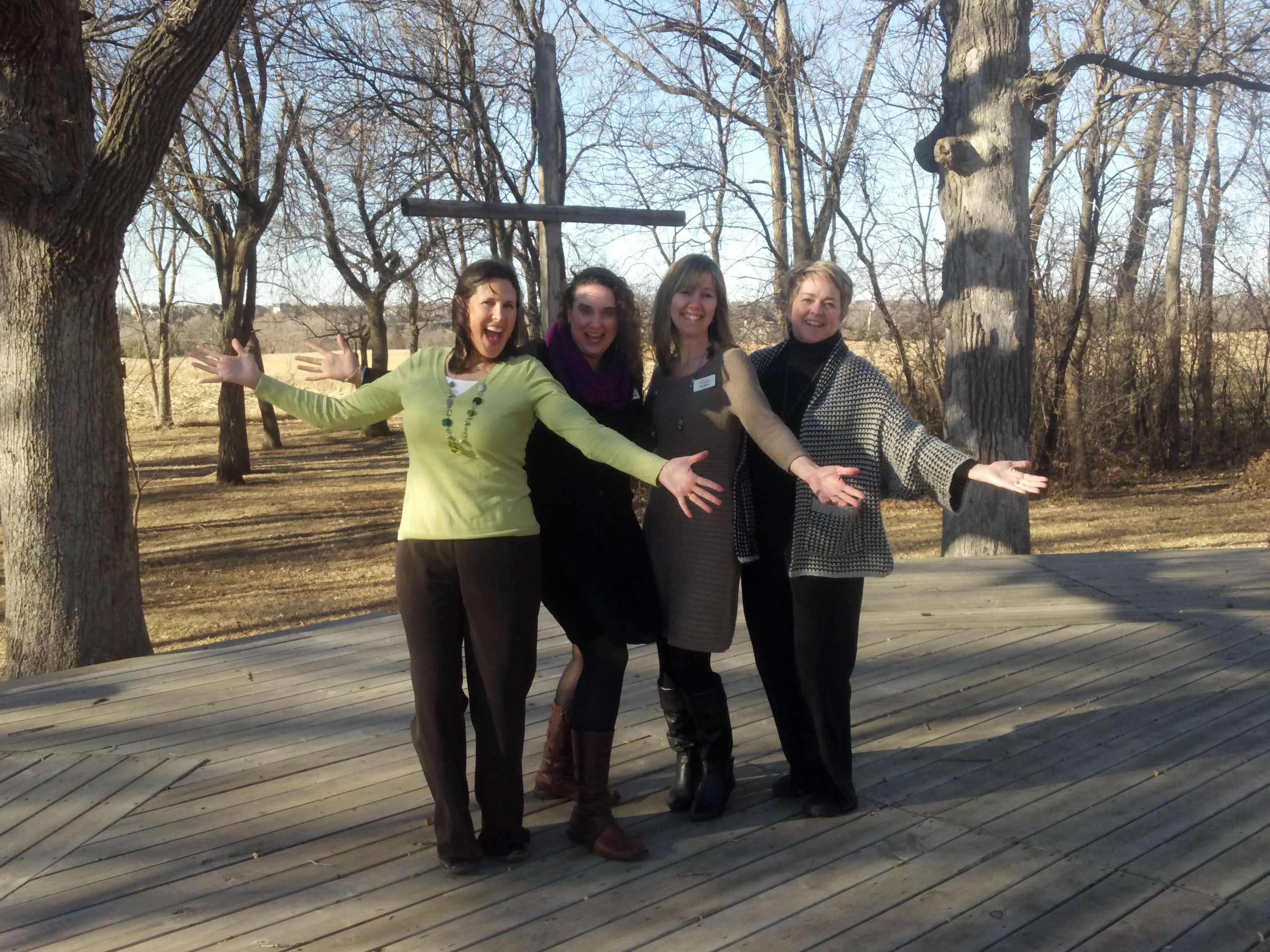
I am blessed at Resurrection Lutheran Church to work with a great team. Yesterday we had a day-away planning session to look towards the coming year. The room was a buzz of ideas, reflections and possibilities. We laughed, prayed, ate and celebrated. What a joy to serve with such people as Betsy, Hannah, Sue, Sarah, Brad and Larry.

Team ministry has always been part of the church. Jesus chose twelve disciples to share in his ministry. In the early church, Paul worked with Barnabas on their first missionary journey through Asia Minor. Then Paul and Barnabas split and Paul worked with Silas and Timothy. They shared in the struggles and victories together.

To be a good team, there needs to be not only shared vision but also a deep trust in one another. We need to disagree and argue for the sake of the mission without hurting each other’s feelings. This can be challenging for some of us who think conflict means “you don’t like me.”  Jesus challenged his disciples, yet loved them deeply. It is in the wrestling with ideas and priorities that we discover how God is at work and that we truly can trust and love each other.  As Patrick Lencioni says in his book, The Five Dysfunctions of a Team, “Trust is knowing that when a team member does push you, they’re doing it because they care about the team.”

I am so thankful for a staff that can challenge and improve my ministry; I pray that I can do the same for our team. We all want Resurrection Lutheran to be the best congregation possible, by becoming what God called us to be. And together the whole congregation can rise to meet the challenges and opportunities we face.

Lord Jesus, challenge us to become what you created us to be.

Snow Making Machine

Yesterday I realized that I have a “regional snow making device.” As I was taking down the heated roof cable from my roof, I thought,

The past fifteen years I have placed this cable on my roof and each year we have had minimal amount of snow, except last winter. The winter of 2010-2011 we had lots of snow, and for several reason, I did not put up the roof cable that winter.

If I take the time and effort to put it up, we receive minimum snow. If I do not put it up, we receive lots of snow. So obviously, my roof cable MUST be the cause of minimal or maximal snow fall.

I realize this is crazy thinking, a kind of magical thinking, but many of us practice it. We have lucky shoes for races, or lucky golf club, or favorite fishing shirts. At the root of such thinking is the desire to have some control over things that are beyond our control. Whether it is the amount of snow that falls, or the fish we catch, we wish to have influence and power.

Naturally there are things we can control. If I become a practiced fisherman, I can learn where and when to fish a particular lake, what bait to use, what depth to try. Still the elusive walleye will not be magically summoned by the shirt or hat I wear.

Yet many things remain far outside my control. As I wrapped up my roof heater coil, I enjoyed the gift of sunshine on my back and the budding trees. I do not control the weather, but I know the one who does and trust in God’s mercy and kindness. I know that God sends the rain for all humanity to enjoy. As Paul preached to the non-Christians at Lystra,

God has not left himself without a witness in doing good—giving you rains from heaven and fruitful seasons, and filling you with food and your hearts with joy (Acts 14:17).

Still, as I packed the roof cable away I wondered, “Would any of my friends who love cross-country skiing and snowshoeing be willing to make a donation to Resurrection Lutheran so that I would not put up my roof cable next fall.” Just wondering.

Lord Jesus, thank you for the gift of this day and its myriad of blessings. I trust you to be Lord.

The Grass Withers

Spring has arrived in Minnesota. The lilacs are in bloom and the trees are in bud. The grass has turned green and my days of mowing have begun. Vibrant life surrounds us.

Still, in the back of my mind, is this nagging sense. This season will pass. The trees in bud will drop their leaves. The grass will wither.  Spring is transitory and fleeting.

A voice says, “Cry out!” And I said, “What shall I cry?” All people are grass, their constancy is like the flower of the field. The grass withers, the flower fades, when the breath of the Lord blows upon it; surely the people are grass. The grass withers, the flower fades; but the word of our God will stand forever. Isaiah 40:6-8

Robert C. Roberts in his book Spiritual Emotions: A Psychology of Christian Virtues reflects on Isaiah’s message,

You are grass: your life is a blooming and a fading, a flourishing and a withering, a birthing and a dying. This thought frequents the human mind – though mostly in its recesses. Walking to work, peeling potatoes, chatting at a cozy party over a glass of wine, holding hands with your spouse, playing silly games with your children. And there’s the lurking thought: flesh fading and disappearing, withering grass. (Robert C. Roberts. Spiritual Emotions: A Psychology of Christian Virtues (Kindle Locations 663-665).

Our mortality can never be totally denied. We may try to push the thought of death far from our minds, yet death will come to us all. Roberts continues,

But at times this truth comes home with a special shock, and what is only a nagging uneasiness changes into outright terror: the sudden absurd death of a friend, a close brush with accidental death in the midst of play, a pain that I interpret as the first symptom of a dread disease. (Roberts, (Kindle Locations 665-667).

So if we are such transitory beings who know that death awaits us, why not just despair and turn to drugs, alcohol, sex or some other pain killer to escape that reality? Because God our creator has provide a steadfast hope for us.

A person who is inclined to view his own life honestly and admit without casting his eyes aside that all flesh is grass will welcome the thought of an enduring rock amidst the flux of things. Isaiah’s preaching, if we really hear it, touches our deepest need. He ministers to the worry that pervades all our thoughts. But why does he say that the word of our God endures forever? Wouldn’t it be enough to proclaim that God is eternal, that he stands forever? (Kindle Locations 678-679). Kindle Edition.

No, God’s eternal nature is not enough for us as humans, but rather God’s eternal connection to us, his word of steadfast love and mercy is what we need to heal our fear. God is not only eternal, but has created us with an eternal longing to be connected, to hear the message of God’s love.

When I die, I trust God’s first word to me will be, “Beloved child, welcome home.” And it will be a word that only God can speak and my heart hear.

Lord Jesus, calm my fear with your word of grace.

The Rock in the Storm

The Book of Psalms has been the topic of our Men’s Bible Study this month. The Psalms were the worship songs of the ancient Israelites and they reflect both the tremendous joy and extreme sorrow the people experienced in their relationship with God and their neighbors. One frequent theme is that in life’s struggles, God is our rock and refuge. The rock image has been a favorite of mine throughout my life.

The Lord is my rock, my fortress, and my deliverer, my God, my rock in whom I take refuge. Psalm 18:2

You are indeed my rock and my fortress; for your name’s sake lead me and guide me Psalm 31:3

For God alone my soul waits in silence; from him comes my salvation. He alone is my rock and my salvation, my fortress; I shall never be shaken. Psalm 62:1-2

Among the ancient Israelites, the sea was a symbol of chaos and catastrophe. The rock was the opposite symbol, a sign of continuity and steadfast devotion. The picture above captures some of the energy and wildness of the sea as it crashes against the rock. In that moment, the sea seems victorious, but the wave recedes and the rock remains.

In our life, we are often hit with waves of wild chaotic energy that threatens to destroy us. It can be moments of grief when we remember a loved one who has died. It can be the sudden change in the marketplace when our job or career takes a beating. Or the wave might be a diagnosis of some health issue that causes our life to spin. Or it can be a relationship that suddenly shifts in a difficult, unexpected way.

Or sometime it is the chaos we created within ourselves by the bad choices we made.

In the moment we seem overwhelmed; but we need to remember that God remains our rock, our fortress in the midst of the challenges. God is steadfast.

For God alone my soul waits in silence, for my hope is from him. He alone is my rock and my salvation, my fortress; I shall not be shaken. On God rests my deliverance and my honor; my mighty rock, my refuge is in God. Psalm 62:5-7

God remains the ultimate source of peace, calm and hope.

Lord Jesus, be my rock and fortress today and always.

Through A Mirror Dimly

Drew Jonell’s recent photograph ignited some deeper reflections for me on Jesus’ resurrection and my faith.

First, we see our risen Lord in “a mirror dimly, but then we will see face-to-face” (I Corinthians 13:12). We can never fully comprehend the wonder and reality of Jesus’ resurrection; he moves beyond our limited understanding of the universe. I once thought that if one had a video camera set up outside the tomb on Easter morning, one could “record” the resurrection and place it on you-tube for all to see. But with today’s CGI special effects one could not trust such a video. People still need to make a faith step.

Second, the dark window frame is in focus, just like I tend to focus on my immediate needs, situation and experiences. I can become self-absorbed. Even this blog can become an exercise in seeking attention for myself. Yet I must confess that I am called to be a frame that holds the glass through which the sun shines. God can use me, in spite of myself. The resurrection calls me to see life beyond my closed “tomb” like world, out in the glorious light of Jesus’ ever living presence.

Third, the morning sun shines bright, even though it is partially blocked by the frame. Jesus is alive, and though my witness may be streaked and pitted, his light will shine through. Peter, James and John were all flawed witnesses, yet the good news of the crucified and risen Lord shone through their testimony. Even the skeptic Thomas came to faith.

What do you see with the eyes of faith?

Lord Jesus, open my eyes that I might see you today.

Drew Jonell is a member of Resurrection Lutheran Church and you can see more of his creative photography here.

Doubt and Faith

“Doubting Thomas” will be focus of many sermons this Sunday in congregations that use the Revised Common Lectionary.  The story of Thomas in John 20:24-31 is assigned every year because it occurs the week after Jesus resurrection. In the story the other ten disciples tell Thomas, “We have seen the Lord,” after he missed the first resurrected appearance of Jesus on Easter Sunday. Thomas responds with skepticism, “Unless I see the mark of the nails in his hands, and put my finger in the mark of the nails and my hand in his side, I will not believe” (John 20:25).

"Still Doubting" by artist John Granville Gregory

Today I read a helpful blog post on the challenges of being selective in our skepticism from TE Hanna. He points out that one cannot be semi-skeptical as one looks at the data of faith. Either you look at all or none of the evidence. I am not a philosopher, but his reasoning helped me think about faith and Thomas.

A certain amount of skepticism or doubt is needed in daily life. So much information assaults our senses every day that we have to filter what is valid and helpful. Not everything I see on the internet, read in a book, or watch on television is true. We are not to be gullible to everything someone says.

Of course part of our skepticism is based on the character of the witness. Last week I was with a group of pastors for our weekly text study when one began to tell us the story of his upcoming trip to Rome. He and his wife had been planning it for several months. He had told a Catholic priest, a friend, and the priest had told, “I think I can arrange an audience with the Pope while you are there.” My pastor friend went on for a few more minutes about his excitement about the upcoming audience while I and others peppered him with curious questions and exclamations about how wonderful his audience with the pope will be. Finally, with a big grin, my pastor friend said, “April Fools.” The papal audience was a joke that he played on us, though the trip to Rome is real. The whole group had believed his story, in large part because he rarely tells such fables. He had always been a reliable witness.

That is part of the struggle in the Thomas story. When confronted by his ten friends, he is sure they must be bearing false witness. As I wrote about this last year, I wonder what the week between appearances was like for Thomas and the other disciples.

Which pushes me to deeper reflection, is my life congruent with my testimony of Jesus’ resurrection? Do people believe in Jesus because my life and my words bear witness to his resurrection? I pray that this is so for each of us.

Lord Jesus, may my words and my deeds bring deeper faith in you to others.

Walk by faith or by sight?

Women Arriving at the Tomb by He Qi

The glory of Easter worship still rings in my ears and heart. The Gospel of Mark’s bold message announced to the women and to us, “You are looking for Jesus of Nazareth, who was crucified. He has been raised” (Mark 16:6). The resurrection is what sets Christ apart from all other prophets and religious teachers. It is central to our Christian faith, yet seems so beyond our personal experience.

Perhaps that is one of the reason so many people become uncomfortable with how Mark’s Gospel ends. Reliable scholarship points to the final verse being verse 8:

So they (women) went out and fled from the tomb, for terror and amazement had seized them; and they said nothing to anyone, for they were afraid.

The gospel writer provides both the empty tomb and the young man’s witness that Jesus is raised and believes that is sufficient for the reader. This seems inadequate and unsettling at first. Where are the appearances of the risen Jesus as described by Paul (I Corinthians 15) or Matthew (28:16-20) or Luke (24:13-53) or John (20-21)? Where are the final instructions from Jesus to his disciples? Verse eight has an unfinished feel to it. In fact, early in the church’s history, additional endings were added to Mark to give a more “comfortable” and “respectable” ending.

As I preached on this yesterday, I think Mark’s ending makes sense at verse eight, if we see it as the challenge to us and our faith that it is. The writer wants us to wrestle with the message of resurrection and the promise that he is going ahead of us.  Stories of Jesus’ appearances may give some comfort but none of us have actually seen the resurrected Jesus. We have only the written reports of the Gospels, such as the young man at the tomb. Ultimately we will have to judge the validity of the witnesses. Paul makes this case in I Corinthians 15.

I continue to think that the most valid testimony of Christ’s resurrection is the transformed lives of his followers. They had trusted him to be the Messiah, but he had been crucified. Their hope was crushed that day. The were like the frightened women, tongued-tied.  Only the actual resurrection of Jesus could have changed them from frightened ex-followers into courageous ambassadors of Jesus. And I have seen such transformation in people’s lives today as they trust in Christ.

The end of Mark’s gospel pushes the reader to trust in the message of the young man.

It is only fitting that just at the tomb will not contain Jesus, neither can Mark’s story. Jesus is not bound by its ending; he continues into the future God has in store for the creation. In the meantime there is only the Word, the bread, and the wine, and the promise that “you will see him.” We walk by faith and not by sight. We can only trust that God will one day finish the story, as God has promised. (Donald Juel, Mark, Augsburg Commentary on the New Testament. p. 235.)

Lord Jesus, help me to walk by faith and not by my own narrow vision.