Category Archives: trust

Holy Spirit Business

Holy Spirit comes to work

I am preparing for my first annual congregational meeting at Resurrection Lutheran which will be this Sunday.  Annual meetings among pastors often have the reputation either of being boring, business-as-usual constitutional necessities or of being highly emotional and conflicted debates on peripheral or personality issues.   As a pastor, I don’t want either extreme to happen, but I do pray that the Holy Spirit comes to work: to coax, push, pull and move the congregation towards God’s future.  Discussion regarding a congregation’s priorities can be passionate and yet loving, for we share a common mission to trust, live and serve God.

The book of Acts has a lengthy account of a large church meeting in Jerusalem.  Paul and Barnabas brought a major concern to the whole church for discussion and debate.   Their concern was whether new Gentile members to the church had to fully convert to Judaism before they could embrace Jesus.  Since most of the early members of the church were Jewish and since Jesus was a Jew, many believed that Jewish laws should be upheld.  Paul felt otherwise and a strong debate developed among the leadership of the church.  What rules and regulations, if any, were needed?  After a lengthy debate, the leadership wrote a letter to the many new Gentile believers,  “It seems good to the Holy Spirit and to us to impose on you no further burden than these essentials: that you abstain from what has been sacrificed to idols and from fornication” (Acts 15:28-29).  What stands out is that they trusted the Holy Spirit to be part of the discussion.  This was a matter of faith, since the Holy Spirit did not fly into the meeting like a dove and deliver a telegram from heaven.  It was in the discussion itself that God’s Spirit worked.

I think every pastor hopes and prays that the Holy Spirit would be the key partner in any congregational meeting. The Holy Spirit is neither boring, nor highly emotional, but is trustworthy.   The Spirit calls us to trust God in all things.   That seems good to me!

How has the Spirit worked in guiding you and your life with other Christians?

Top Ten Children Prayers

Child Praying

Yesterday I ran across an internet listing of children’s prayers which I have reduced to my top 10.  These prayers you can pray with exceeding joy!

10.  Dear God,
please put another holiday between Christmas and Easter. There is nothing good in there now.
Amanda

9.  Dear God,
Thank you for the baby brother but what I asked for was a puppy. I never asked for anything before. You can look it up.
Joyce

8.  Dear God,
how did you know you were God? Who told you?
Charlene

7.  Dear God,
do you draw the lines around the countries? If you don’t, who does?
Nathan

6.  Dear God,
I keep waiting for spring, but it never did come yet. What’s up?  Don’t forget.
Mark

5.  Dear God,
Is Pastor Keller a friend of yours, or do you just know him through the business?
Donny

4.  Dear God,
I bet it’s very hard for you to love all of everybody in the whole world. There are only 4 people in our family and I can never do it.
Nancy

3.  Dear God,
I do not think anybody could be a better God than you. Well, I just want you to know that. I am not just saying that because you are already God.
Charles

2.  Dear God,
I am doing the best I can. Really !!!!
Frank

And, saving the best for last   .

1.  Dear God,
I didn’t think orange went with purple until I saw the sunset you made on Tuesday night. That was really cool.
Thomas

I think #2 captures our tremendous need for confession and God’s promise of forgiveness while #1 describes the joy of praising God for the wonder and beauty of creation.   Sometime the simplest prayers are the best.  Romans 8:26 The Spirit helps us in our weakness; for we do not know how to pray as we ought, but that very Spirit intercedes for us with sighs too deep for words.

What prayers give you joy?

Prayer Helps

Bishop N. T. Wright

I am preparing for a talk on prayer this evening and wonder if and when anyone uses the written prayers of others to guide their prayers.  I am convicted by N. T. Wright’s comments that, “we moderns are so anxious to do things our own way, so concerned that if we get help from anyone else our prayer won’t be ‘authentic’ and come from our own heart, that we are instantly suspicious about using anyone else’s prayers. . . . We are hamstrung by the long legacy of the Romantic movement, (which) produced the idea that things are authentic only if they come spontaneously, unbidden, from the depths of our hearts. ” (N. T. Wright, Simply Christian, p. 164-165)

I confess that I have at time been such an advocate of spontaneous prayers of the heart.   Yet I also know the value of written prayers that have guided Christian prayer for centuries.   Jesus, being a first-century Jew, learned memorized prayers such as the Shema (“Hear, O Israel: the Lord is our God, the Lord is one,” found in Deuteronomy 6:4)  and the Psalms.  He taught his own disciples his kingdom prayer, the prayer we call the Lord’s Prayer (Matthew 6 and Luke 11).  The prayer of St. Francis continues to “make us instruments of God’s peace.”   Martin Luther wrote short prayers for the morning and evening to be included in his Catechism.   AA groups use Reinhold Niebuhr’s Serenity Prayer to close their meetings.  Written prayers can give shape and structure to our devotional life.

One of my favorite written prayers I learned from the Lutheran Book of Worship, but it probably has a deeper history.   The prayer is part of the morning prayer service and I have used it at various time in my ministry, especially at the beginning of something new.

Lord God, you have called your servants to ventures of which we cannot see the ending, by paths as yet untrodden, through perils unknown.  Give us faith to go out with good courage, not knowing where we go, but only that your hand is leading us and your love supporting us; through Jesus Christ our Lord.  Amen.

What written prayer(s) have shaped your faith life?  In what ways?

Holy Place of Peace

Hiking below Mt. Rainier

This morning I lead a class on prayer and one of the prayer exercises was a guided meditation, based on Psalm 46:10, “Be still and know that I am God.”  One method that has helped me enter into silent meditation is to take an imaginary trip to a favorite place that emotes peace.  Many people (especially during a Minnesota winter) might choose a tropical beach with warm breezes and rhythmic surf.  Or a beautiful garden that is under a brilliant blue sky and filled with fragrant blooms.  I choose the Cowlitz Ridge near Mt. Rainier.

I hiked the ridge once, nearly forty years ago.  The week before I left for my freshman year of college, my friend Marv and I decided on one last hike together.  We picked a three-day trip along the Wonderland trail which circles Mt. Rainier.  At first we climbed the steep switchbacks up out of the dark forested river canyon.  As we near the top of the ridge we stepped out of the dark forest into brilliant sunshine and a spectacular view of Mt. Rainier.  We camped in that meadow for two nights, soaking up the beauty and wonder of that ridge.

Now whenever I want a special time of prayer, I go on an imaginary journey to that same spot.  The only difference is that I take the imaginary trip with Jesus as my guide and friend.  For many reason, I find rest, comfort, strength, hope in visualizing him there with me.  As I meditate a deep abiding peace grows up around me.  I realize that I could imagine Jesus with me in other locations, but that spot has become a very holy spot.

I sometimes wonder if I will ever make the hike back to Cowlitz Ridge.  I might, but it is not essential to my spiritual life.  The essential part remains Jesus who is my guide and source of peace and joy wherever I am.

 Has guided meditation helped you in your spiritual journey?  Where do you find God’s peace?

Salt of the Earth?

A Mountain of Salt

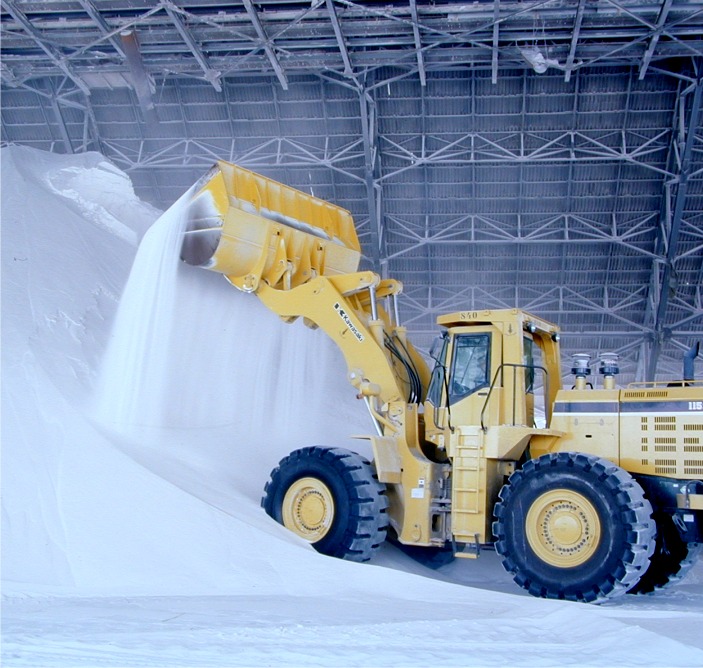
In his Sermon on the Mount, Jesus declares, “You are the salt of the earth; but if salt loses it taste, how can its saltiness be restored? It is no longer good for anything, but is thrown out and trampled under foot” (Matthew 5:13).  Such a metaphor raises all kinds of questions for me.  Salt seems so ordinary and mundane, something we take for granted.   Yes, it is necessary for making a fine meal, but it is the exotic spices and herbs that get the attention.  Salt brings out other  flavors, but who wants a dish with too much salt?

Years ago, on April 1st, my older sister pulled a practical joke on my siblings by mixing a large quantity of salt into the sugar bowl.  At breakfast, as they spooned sugar on to their cereal, she watched us carefully, saying nothing.  When they took their first bite and then spit it all out, she burst out laughing.   But my mother was not too pleased with the wasted cereal. My sister had to clean up the mess from too much salt. 

When Jesus spoke, salt was used in Jerusalem for temple sacrifices, “You shall not omit from your grain offering the salt of the covenant with your God; with all your offerings you shall offer salt” (Leviticus 2:13).  Could Jesus be inferring that our lives are to be an offering to God, a gift for God to use?  Could we be part of God’s covenant to renew and restore the earth?  Do I enhance God’s flavor in the world?

And just how does salt lose its saltiness?   Perhaps it means that the salt is polluted with impurities and stray matter.   In Exodus 30:35 God instructs the Israelites to make a prayer incense that includes salt, “seasoned with salt, pure and holy.”  I know that my own life at times becomes polluted in ways not pleasing to God.  How will I know when I have lost my saltiness?  Does the community have a role in helping me stay salty?

Jesus’ last phrase about salt being trample under foot makes me smile. In Minnesota there is plenty of salt being spread on roads, bridges, and sidewalks for us to trample upon.   Jesus did not concern his audience with the ice-melting properties of salt, but it is a critical part of our culture. Road salt covers my car after yesterday’s snowstorm, yet I am thankful for its ability to clear road ice. 

What thoughts comes to your mind when Jesus declares, “You are the salt of the earth“?

Patience and beyond

Pastor John when he could run

 I must confess that I have had trouble keeping up with my running buddies due to my own inactivity.  Over the past several months I have tried a few tentative runs, actually jogs, to see if my hip was better. Each time, the same pain came back and I would stop running and walk. I’ve stretched, I’ve iced, I’ve strengthen, I’ve Ibuprofen, I’ve massaged.  I have prayed.  I have had five appointments with a physical therapist to manipulate the SI joint.  Now I am scheduling an appointment with my doctor to see what options I have.  During this inactivity, several people have told me, “You must be patient.”

I have been hearing that patient word a lot.   As a new pastor in a congregation friends tell me tobe patient as I learn new names, faces, family connections and ministry choices.  At home I am learning to be patient with my siblings as we try to remodel and sell my mother’s home in Washington state.   I know that patience is a part of the fruit of the Holy Spirit (Galatians 5:22) and it is good virtue to possess.  I just wish that I could be more patient in learning to be patient.   

In my journal, as I wrote about these frustrations, I came to the realization that in the grand scheme of things, a season or two without running is not the end of the world.  I have had other such experiences of inactivity from running injuries and eventually recovered.   In fact, this hiatus may just open me to some new activity of the Holy Spirit.  Like learning to walk in the Spirit of God.  Or cross-country skiing or snow showing or cycling or yoga.

And thanks for your patient listening and prayers for my recovery.

What has been an important lesson in patience for you?

Serenity Prayer

Serenity in Winter

I have always been a great fan of the Serenity Prayer:

“God grant us the serenity to accept the things we cannot change,
courage to change the things we can,
and wisdom to know the difference.”
 

It is used not only at AA meeting, but throughout the church.  The author of the prayer was Reinhold Niebuhr, an American pastor and theologian of the last century.  His original prayer continued

Living one day at a time;
Enjoying one moment at a time;
Accepting hardships as the pathway to peace;
Taking, as He did, this sinful world
as it is, not as I would have it;
Trusting that He will make all things right
if I surrender to His Will;
That I may be reasonably happy in this life
and supremely happy with Him
Forever in the next.

Amen.”

I am one who believes in the power of prayer, but that prayer is not some magic bullet that offers instant results.  Prayer is always based on the ongoing relationship we have with God, and God’s expectations for us.  There are things we are meant to change and we need to discern what they are and our role in the change. Whether at home, at work, or in our congregation, there are attitudes and behaviors that we can change.  Asking for God’s guidance in our relationships and daily life is critical to healthy change.

 Which brings us to those things that we can not change, like the weather.   This winter started early and will probably be around at least two more months.  I know that I can complain about it, but I am asking for serenity to enjoy this day as a gift from God.   I believe there might be some wisdom in that.

How has prayer shaped your life this winter?

Seek or Wait?

Pastor John hiking in Cascade Mountains of Washington

Tomorrow Psalm 27 will be read in worship.    Psalm 27 begins with a powerful insight, “The Lord is my light and my salvation; whom shall I fear? The Lord is the stronghold of my life; of whom shall I be afraid?”  God is a light to our path, but the path can be difficult, strenuous, challenging.  We fear what is ahead so we try to make our own way.   Our fear leads us a way from God, like a backpacker who leaves the trail for what he thinks is a short-cut, only to discover that he is lost and alone. 

That lost, alone person needs to get back on God’s path, but how?  The psalmist gives us two hints in how to retrace our steps.  In Psalm 27:8 the psalmist writes,  “Come,” my heart says, “seek his face!” Your face, Lord, do I seek.  When we have gotten off trail and are lost, we need to admit that we are lost and we need God’s direction.   To seek God’s face is to seek intimacy with God, to have a direct face-to-face conversation with our creator and savior.  This is an action of the heart, more than the mind.

But then the psalmist gives wisdom on how to seek God’s face.  In verse 14,  Wait for the Lord; be strong, and let your heart take courage; wait for the Lord!  This can be difficult in our instant response world.   We expect God to immediately answer our requests.   Waiting can be so difficult.  Lost backpackers are instructed to find a safe place and wait for the rescue team to find them.  Their inclination is to go thrashing about in the woods, but that only makes rescue more difficult. 

Seek the Lord’s face.  Wait on the Lord.  Still wise words for us to heed in our daily walk with God. 

How do you seek or wait on the Lord?

Quarks and Prayers

Quarks: sub-atomic particles

This morning I listened to a podcast of an interview with John Polkinghorne, an English physicist and theologian.  He described how his understanding of sub-atomic quarks helped him to understand prayer. http://being.publicradio.org/programs/2011/quarks-creation/   In the past science explained the world in mechanistic terms as fixed and determined, like a carefully made watch that is ticking away.  But now physicists realize that things are not quite so pre-determined. Quarks are the tiniest participles of matter, smaller than atoms, that scientist cannot exactly locate nor predict.  Quarks are sort of “cloudy,” fluid, chaotic.

For Polkinghorne this changed his understanding of prayer.  In a mechanical, pre-determined world, prayer did not make much sense.  Everything was locked into a set pattern of laws that God had established at creation.  But in the world of quarks, where it is much more fluid and unknown, prayer becomes an interaction with God and creation. 

In old science, God was simply a watchmaker who created the world, wound it up and then step back to observe the watch from a distance. And yes, there are some strong physical laws that guide our days.  The sun will rise in the east, not the west.  If you jump off a roof, you will not fly, but fall to earth.   Yet, in the field of quarks, God is also like a conductor, constantly interacting with the musicians who are making music together.  With quarks Polkinghorne found beauty, wonder and awe, like a good jazz improvisation. 

This makes sense to me. For example I do not pray that the January cold-snap in Minnesota will suddenly become a July heat-wave.  The seasons are fixed.  Yet the chaotic, fluid nature of weather could be influence by the prayers of God’s people.  The prophet Elijah’s prayers for a drought in I Kings 17-18 is indicative of this.  The same is true for prayers of healing; there is an interplay between our body, mind and spirit that truly affects the body’s healing.  Prayer is an invitation for God to participate in our body’s healing, in a deep elemental way.  When we pray for someone to be healed of cancer, we are asking God to allow the healthy cells in the body to replace/remove the cancer cells at the most basic biological level.

My favorite prayer of Jesus reflects such an attitude.  We pray, “Your kingdom come, Your will be done, on earth as in heaven.”  As we pray this prayer we are opening ourselves to God’s activity in the world, seeking to be in the flow of  God’s Spirit.  The Spirit is not pre-determined, but more fluid and sometimes chaotic, like a dance. The will of God has fixed aspects, like the ten commandments.  Yet in our daily life, we seek to see the conductor’s baton and stay with God’s rhythm and beat.

How has your understanding of prayer changed overtime?

“Come and See” Invitation or Command?

Jesus said, "Come and See"

After Jesus’ baptism, two of JB’s disciples began to tag after Jesus (John 1:35-39).  Jesus spotted these secretive observers and asked a deep question, “What are you looking for?”  I could write my whole Sunday sermon on Jesus’ question. What are we looking for when we come to prayer, Bible study, or worship? 

The two responded with their own question, “Rabbi, where are you staying?”  Again, one could dwell with that question for a long time; where is Jesus staying today?  Where do we find him?  Is he in the obvious or in the hidden? 

Then came Jesus’ response, “Come and see.”   I have often thought of these words as a gracious invitation to explore a relationship with Jesus Christ.  As if Jesus were giving the two followers the choice on whether to stay with him or go someplace else.  In our American culture, we like to have choices, options, possiblities.  We want to decide what we do or don’t do.   And so we see this word of Jesus as a choice.  A choice that seems to ebb and flow in our lives among the many choices.  Some days we respond with joy; some days with hesitation or fear. 

But could “come and see” be more like a command or declaration?   Like when Jesus commands the sea to be calm or when Lazarus is raised from the dead (John 11)?   Later Jesus declared, “No one can come to me unless drawn by the Father who sent me” (John 6:44).  The two disciples responded as if it was a command. “They came and saw where he was staying” (John 1:39).  

Could it be that our faith is more a gift of God than a heroic choice by us?  I find comfort and hope in the promise that the Father draws me to Jesus.  Some called it “irrestible grace.” Jesus pulls me along, rather than me running to catch up.  The more I think about it the more I am looking forward to preaching on Sunday!

How have you experienced the pull of God in your spiritual life?