Category Archives: Uncategorized

What is Humility?

In the winter of 1863 General Ulysses S. Grant was promoted to lieutenant-general, a permanent promotion that had previously been given only to George Washington. Grant’s military success in the Mississippi River valley during the Civil War had earned him this distinct promotion. Through the early years of the war he had never been to Washington D.C. nor met President Lincoln, but in December he was called to Washington to receive his promotion and to command the entire Union Army. Grant had reached the top of the military ladder and a splendid reception was planned.

When Grant arrived in Washington that morning, no one was there to greet him at the train station. He and his son walked to a nearby hotel to book a room. The hotel clerk looked at the dusty, unkempt military officer before him and said he might have small upstairs room in the back of the hotel. Grant said this would be acceptable and signed the guest register. When the hotel clerk saw the signature, “Ulysses S. Grant,” he was aghast and tried to change the hotel arrangements. Grant didn’t care.

I offer this story because it demonstrates that humility is not so much an emotion as the absence of an emotion. Grant did not feel slighted or peeved that he did not receive instant recognition and respect from the hotel clerk. He did not see himself superior to the hotel clerk or look down on him with contempt. Grant was obviously a “superior” general to the hotel clerk (to be fair, the clerk probably never competed to be a “superior” general), but that “superiority” did not dictate how he treated the clerk in their daily affairs.

As Robert C. Roberts writes in Spiritual Emotions: A Psychology of Christian Virtues,

Humility is not itself an emotion, like joy or gratitude or contrition. A person could be a wonderful exemplar of humility without ever feeling humble; in fact, one who frequently feels humble is probably not very humble. But humility is an emotion-disposition – primarily a negative one, a disposition not to feel the emotions associated with caring a lot about one’s status. As an inclination to construe as my equal every person who is presented to me, humility is a disposition not to be downcast by the fact that someone is clearly ahead of me in the games of the world nor to find any satisfaction in noting that I am ahead of someone in those games.

It is the ability to have my self-comfort quite apart from any question about my place in the social pecking order (whether the criterion is accomplishments, education, beauty, money, power, fame, or position). . . . It is thus a self-confidence, one that runs far deeper than the tenuous self-confidence of the person who believes in himself because others look up to him. (Kindle Locations 1186-1196)

The best example of humility is Jesus Christ. As Paul writes in his letter to the Philippians

Jesus had equal status with God but didn’t think so much of himself that he had to cling to the advantages of that status no matter what. Not at all. When the time came, he set aside the privileges of deity and took on the status of a slave, became human! Having become human, he stayed human. It was an incredibly humbling process. He didn’t claim special privileges. Instead, he lived a selfless, obedient life and then died a selfless, obedient death – and the worst kind of death at that: a crucifixion (The Message: Phil 2:6-8)

Just prior to this humble description of Christ, Paul encourages us to “think of yourselves the way Christ Jesus thought of himself.” Our thinking and our judgments effects how we respond to others and their comments. Even when one is the Commanding General of the Army.

Lord Jesus, thank you for your humble service. May I reflect you in my life today.

“If I were you. . .” Repost

Compassion and empathy are Christian virtues that Jesus taught us to cultivate. Jesus’ command “love our neighbor as ourselves” (Matthew 22:38) is a central to our Christian faith. We cannot love unless we empathize with our neighbor and seek to understand his or her situation. As St. Paul wrote, “Rejoice with those who rejoice, weep with those who weep” (Romans 12:15).

Now empathy and compassion are not restricted to the church. Seth Godin is a respected author on marketing and business. He wrote in his blog yesterday about the need for empathy in customer service.

“If I were you…”

But of course, you’re not.

And this is the most important component of strategic marketing: we’re not our customer.

Empathy isn’t dictated to us by a focus group or a statistical analysis. Empathy is the powerful (and rare) ability to imagine what motivates someone else to act. . .

When a teacher can’t see why a student is stuck, or when an interface designer dismisses the 12% of the users who can’t find the ‘off’ switch… we’re seeing a failure of empathy, not a flaw in the user base.

When we call a prospect stupid for not choosing us, when we resort to blunt promotional tactics to get attention we could have earned with a more graceful approach–these are the symptoms that we’ve forgotten how to be empathetic.

You don’t have to wear panty hose to be a great brand manager at L’eggs, nor do you need to be unemployed to work on a task force on getting people back to work. What is required, though, is a persistent effort to understand how other people see the world, and to care about it.

Seth’s last point, “to care about it” is part of what it means to have spiritual emotions such as compassion and empathy. Our faith can impact our daily lives, even at work.

Lord Jesus, teach me to care about the people and thing for which you are passionate.

You Will Show Me the Path of Life

One of the joys of blogging is reading other inspirational blogs. I have discovered that frequently Sister Pat has great Biblical reflection combined with her own wonderful photography. She preaches well. This post is based on a favorite scripture verse, Psalm 16:11

opreach's avatarOPreach

From Thursday’s Responsorial Psalm (Psalm 16) we read:

Keep me safe, O God; you are my hope.

You will show me the path to life,
fullness of joys in your presence,
the delights at your right hand forever.

Keep me safe, O God; you are my hope.

And when God shows us the path of life, may we all see it as clearly as the one above.

View original post

Myths about Emotions Part One

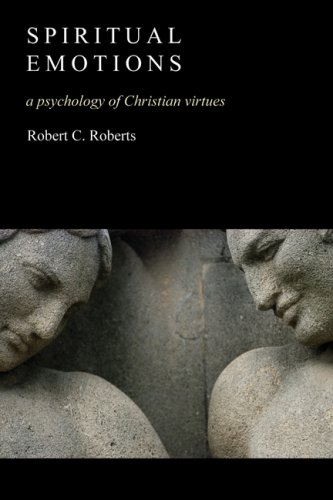
I am preparing for a sermon series this summer that I have titled Spiritual Emotions: Turning our Hearts to God. I have been reading various books and articles regarding how our emotions and spirit interact.

I recently posted on Robert Roberts works here.

I have wrestled with various myths in regards to our emotions.

The first myth is that emotions are wildly disruptive and irrational, something we cannot control. An emotion like anger seems to grab hold of me and I am unable to think or act rationally. The emotion takes control and bad things happen, sort of like the comic book hero The Incredible Hulk who is the alter ego of Dr. Bruce Banner. Whenever Dr. Banner becomes angry, he is transformed in monster/superhero The Hulk and things get smashed.

I still remember the day when I was driving my family to the store and as I approached a parking spot someone cut in front of me and took the parking spot. I immediately felt this wave of anger push up inside me, “This not fair,” and I jumped out of the car to confront the other driver. He was startled by the vehemence of my indignation (as was my family). In my anger, I told him to get back into his car and move it. He just looked at me strangely and then walked away. I was still fuming as I returned to my car and found a new parking spot. My wife chastised me for letting my anger become so wild.

Now my anger in that situation was irrational and I did some foolish things. But it is a myth to say that my anger “made” me do it. I made choices in my actions that I controlled. I now confess that I was “wrong” to confront the driver in such a angry manner.

In Genesis 4, God warns Cain about his anger towards his brother Able.

The Lord said to Cain, “Why are you angry, why has your countenance fallen? If you do well, will you not be accepted? And if you do not do well, sin is lurking at the door; its desire is for you, but you must master it.” (Genesis 4:6-7)

Though feelings of anger rose within me, when what I was thought of as “my” parking spot was taken, I had choices.  I could choose to see the perspective of the other driver. Perhaps he did not see me waiting; perhaps he had some urgent matter. I did not need to jump out and confront the other driver. I could have chosen to “count to ten” or pray for him or ask for God’s grace to aid my emotions. I may not always be able to avoid the emotion of anger, but I can learn how to direct and manage my actions around it.

Tomorrow I will post on the myth that emotions are either good or bad, positive or negative.

Lord Jesus, rule in my heart so my heart and body can reflect you.

Mystery of Trust

Paul at the Areopagus by artist Kennedy Paizs

One of the great mysteries of faith is why some people believe in Jesus and others do not.  One trusts completely while another turns away.  In Acts 17, Paul comes to Thessalonica and preaches in the Jewish synagogue.

And Paul went in, as was his custom, and on three sabbath days argued with them from the scriptures,  explaining and proving that it was necessary for the Messiah to suffer and to rise from the dead, and saying, “This is the Messiah, Jesus whom I am proclaiming to you.”  Some of them were persuaded and joined Paul and Silas, as did a great many of the devout Greeks and not a few of the leading women. (Act 17:2-4)

Paul was persuasive and some came to trust in Jesus, yet many did not believe. I recognize that the Holy Spirit, prayer, and human temperament all play a role, yet I am amazed that within one family, exposed to the same environment and influences, some members place their trust in Jesus and other members do not. The parents and church community express the gospel in word and deed, but not everyone hears and responds. It is like the seed in Jesus’ parable of the sower in Mark 4. Some seed falls on rocky soil, some among the weeds, some on the trodden path, and some on the good soil. Only the see in the good soil takes root and bears fruit.

Occasionally what seems to be the random nature of faith can be disheartening. My intellectual curiosity can twist me into knots. At those times, I “fold the wings of my intellect” and simply rest in  Jesus. I trust in his mercy and grace. Jesus has touched and changed my life through the gift of the Holy Spirit. The Word of God has impacted my life. And I have seen other lives changed as well. With hope I continue to fling the seed of God’s Word, trusting in God and not myself.

So faith comes from what is heard, and what is heard comes through the word of Christ, Romans 10:17

Lord Jesus, create in each of us a faith that bears fruit for your kingdom.

Garage Sale Stewardship

Testing a Garage Sale Donation

Thursday, May 10, begins the big Woodbury Lions Club Garage Sale and Resurrection Lutheran will be participating. The church is being transformed into a market place of new and used items.  I took a few minutes this morning to test a donation.

The test remined me of a discussion with fellow pastors about stewardship. It was triggered by one pastor’s comment that his congregation does not “do” special fundraisers like car washes or garage sales. “Our congregation has adopted the stewardship philosophy that all funding comes through the offering plate. Our members believe in the mission of the congregation and they donate directly to its budget.”

I agree that the bulk of the stewardship giving needs to be through the offering plate or direct contributions to the congregation. This has become more sophisticated with on-line giving and electronic fund transfers such as Simply Giving from Thrivent. We recently added QR codes to our bulletins so that people can use their smart phones on Sunday Morning to make contributions. I am delighted with how many members of Resurrection Lutheran stepped up in March to make special contributions for our High School youth who will be attending the ELCA Youth Gathering this summer.  Direct contributions remain the primary way people give to their congregation.

As Paul wrote to the church at Corinth about being generous in giving,

This relief offering is a prod to live at your very best, showing your gratitude to God by being openly obedient to the plain meaning of the Message of Christ. You show your gratitude through your generous offerings to your needy brothers and sisters, and really toward everyone. (2 Corinthians 9:13, The Message)

Still I think there is a place for special fund-raisers like the Garage Sale. It allows a variety of people to participate actively in a congregational ministry, thus building relationships. It promotes the recycling of various items, eliminating some of the waste that goes in landfills, a form of environmental stewardship. It also allows new and old residents to visit our church building; last year I met two people who later came back for our outdoor worship. We also provide a service to the shoppers by having clean restrooms and shelter. The garage sale has become a unique form of ministry for our congregation.

I certainly don’t want our church building and volunteers to do this every week. It is neither our primary mission nor our primary form of stewardship. There will probably come a day when Resurrection will not participate. Still, for three days this week, Resurrection Lutheran will be a place of friendly hospitality and great deals. Check it out.

Lord Jesus, guide each of us to be good stewards of our time, talents and treasures.

Snow Making Machine

Yesterday I realized that I have a “regional snow making device.” As I was taking down the heated roof cable from my roof, I thought,

The past fifteen years I have placed this cable on my roof and each year we have had minimal amount of snow, except last winter. The winter of 2010-2011 we had lots of snow, and for several reason, I did not put up the roof cable that winter.

If I take the time and effort to put it up, we receive minimum snow. If I do not put it up, we receive lots of snow. So obviously, my roof cable MUST be the cause of minimal or maximal snow fall.

I realize this is crazy thinking, a kind of magical thinking, but many of us practice it. We have lucky shoes for races, or lucky golf club, or favorite fishing shirts. At the root of such thinking is the desire to have some control over things that are beyond our control. Whether it is the amount of snow that falls, or the fish we catch, we wish to have influence and power.

Naturally there are things we can control. If I become a practiced fisherman, I can learn where and when to fish a particular lake, what bait to use, what depth to try. Still the elusive walleye will not be magically summoned by the shirt or hat I wear.

Yet many things remain far outside my control. As I wrapped up my roof heater coil, I enjoyed the gift of sunshine on my back and the budding trees. I do not control the weather, but I know the one who does and trust in God’s mercy and kindness. I know that God sends the rain for all humanity to enjoy. As Paul preached to the non-Christians at Lystra,

God has not left himself without a witness in doing good—giving you rains from heaven and fruitful seasons, and filling you with food and your hearts with joy (Acts 14:17).

Still, as I packed the roof cable away I wondered, “Would any of my friends who love cross-country skiing and snowshoeing be willing to make a donation to Resurrection Lutheran so that I would not put up my roof cable next fall.” Just wondering.

Lord Jesus, thank you for the gift of this day and its myriad of blessings. I trust you to be Lord.

The Grass Withers

Spring has arrived in Minnesota. The lilacs are in bloom and the trees are in bud. The grass has turned green and my days of mowing have begun. Vibrant life surrounds us.

Still, in the back of my mind, is this nagging sense. This season will pass. The trees in bud will drop their leaves. The grass will wither.  Spring is transitory and fleeting.

A voice says, “Cry out!” And I said, “What shall I cry?” All people are grass, their constancy is like the flower of the field. The grass withers, the flower fades, when the breath of the Lord blows upon it; surely the people are grass. The grass withers, the flower fades; but the word of our God will stand forever. Isaiah 40:6-8

Robert C. Roberts in his book Spiritual Emotions: A Psychology of Christian Virtues reflects on Isaiah’s message,

You are grass: your life is a blooming and a fading, a flourishing and a withering, a birthing and a dying. This thought frequents the human mind – though mostly in its recesses. Walking to work, peeling potatoes, chatting at a cozy party over a glass of wine, holding hands with your spouse, playing silly games with your children. And there’s the lurking thought: flesh fading and disappearing, withering grass. (Robert C. Roberts. Spiritual Emotions: A Psychology of Christian Virtues (Kindle Locations 663-665).

Our mortality can never be totally denied. We may try to push the thought of death far from our minds, yet death will come to us all. Roberts continues,

But at times this truth comes home with a special shock, and what is only a nagging uneasiness changes into outright terror: the sudden absurd death of a friend, a close brush with accidental death in the midst of play, a pain that I interpret as the first symptom of a dread disease. (Roberts, (Kindle Locations 665-667).

So if we are such transitory beings who know that death awaits us, why not just despair and turn to drugs, alcohol, sex or some other pain killer to escape that reality? Because God our creator has provide a steadfast hope for us.

A person who is inclined to view his own life honestly and admit without casting his eyes aside that all flesh is grass will welcome the thought of an enduring rock amidst the flux of things. Isaiah’s preaching, if we really hear it, touches our deepest need. He ministers to the worry that pervades all our thoughts. But why does he say that the word of our God endures forever? Wouldn’t it be enough to proclaim that God is eternal, that he stands forever? (Kindle Locations 678-679). Kindle Edition.

No, God’s eternal nature is not enough for us as humans, but rather God’s eternal connection to us, his word of steadfast love and mercy is what we need to heal our fear. God is not only eternal, but has created us with an eternal longing to be connected, to hear the message of God’s love.

When I die, I trust God’s first word to me will be, “Beloved child, welcome home.” And it will be a word that only God can speak and my heart hear.

Lord Jesus, calm my fear with your word of grace.

Spiritual Emotions?

I am reading Spiritual Emotions: A Psychology of Christian Virtues by Robert C. Roberts, preparing for a preaching series this summer. Twenty years ago I read his book, The Strengths of a Christian, which continues to shape how I look at the virtues of self-control, patience and perseverance. I posted on Strengths previously.

In Spiritual Emotions, Roberts asks the questions, can Christians shape or tend to our emotions? Or are they simply electro-chemical reactions in our brains that we have no control over? Can emotions be something that we cultivate and link to our Spiritual lives?

Roberts proposes that emotions are concern-based construals, a framework for interpreting a situation and responding  to it. I am reminded of an example of this in Stephen Covey’s classic, Seven Habits of Highly Effective People. In the book, Covey described riding on a subway car and becoming very irritated with a father whose young children were acting out. The children’s behavior was loud and disruptive and Covey became more and more irritated, even angry, with the father for not intervening. Finally Covey confronted the father about the obnoxious behavior of his children. The father, who seemed preoccupied, looked over at his children and then responded, “Yes, I guess they are being unruly. You see, we just came from the hospital where their mother, my wife, died today.”

Suddenly Stephen Covey’s understanding (construal) changed from one of anger to one of compassionate understanding. At first he interpreted the situation one way, “an inattentive father,” that fostered anger within him. But his interpretation or construal changed when he realized that the father was inattentive due to grief, fostering compassion.

Now, according to Roberts, Stephen Covey had some choice in how to respond to the new information. He might have stayed angry, thinking that his subway ride was still being interrupted by these disruptive children and that it did not matter what the reason was. Most of us would see such a construal or interpretative framework as being selfish and un-Christian. Or Covey might have become embarrassed and upset, again focusing more on his own needs. Instead Covey made a choice (perhaps out of habit) to respond with compassion and offer assistance.

Emotions are not just feeling that arbitrarily hit us and we have no control over them. Neither can we automatically dictate what emotions we will have. They are fruit of the Holy Spirit, which we help cultivate and grow over time, practice and attentiveness.  I believe Robert’s book will help me in this practice.

Lord Jesus, shape my heart to be a harbor of love and not fear.

Acting Out

Yesterday I was excited as I taught the children to “leap” with praise.  In worship we read Acts 3, the story in which Peter and John healed a crippled beggar outside the temple gate and the man entered the temple with them, “walking and leaping and praising God.” The children and I enjoyed leaping up to give God’s praise. Their energy got me ready to preach.

The original healing and leaping gave Peter the opportunity to preach as well. The miracle caused such a commotion that Peter had to address the crowd to direct the crowd’s attention away from John and himself and back to Jesus Christ. He called the crowd to repent and turn to God (Acts 3:19).

This is Peter’s second sermon in the book of Acts. After the first, on the day of Pentecost, the crowd asked what they needed to do. Peter respond, “Repent and be baptized;” three thousand were baptized that day (Acts 2:38,41). Marvelous fruit for one sermon.

Peter’s second sermon had a different effect: the priest and officials of the temple arrestted them because they were proclaiming that in Jesus there is the resurrection of the dead (Acts 4:1-2). Peter and John were “acting out” against the norms of their temple religion and had to be quieted in some way. So the leaders questioned Peter and John by whose authority they were teaching and healing. Peter, by the Holy Spirit declared to these religious officials,

Let it be known to all of you and to all the people of Israel, that this man is standing before you in good health by the name of Jesus Christ of Nazareth, whom you crucified, whom God raised from the dead (Acts 2:10).

Nothing is keeping Peter from proclaiming Jesus with all boldness, even to the gang that had Jesus executed.

May we each have such boldness to proclaim Jesus Christ.

Lord Jesus, give me courage to speak your name, even to act out when needed.