Category Archives: Uncategorized

Beginning the Transition

Recently I posted on my decision to leave as Lead Pastor of Resurrection.   Today I am writing about my decision to train for interim ministry.

Every new beginning comes from some other beginning’s end
Semisonic’s  “Closing Time”

I was introduced to transitions twenty years ago with William Bridges book, Transitions: Making Sense of Life Changes.   Bridges describes every transition as having three parts.

1.       An Ending
2.       An In-between  Period of Confusion/Distress
3.       A new Beginning.
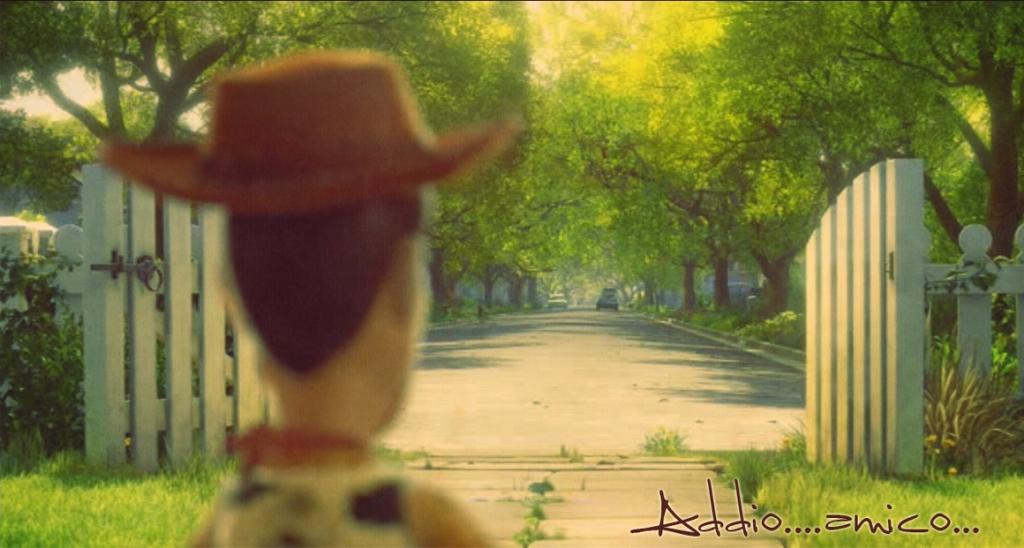
"So long, partner" Woody, Toy Story 3

“So long, partner” Woody, Toy Story 3

Each part needs attention.   For example, right now I am in the midst of an ending as I prepare to leave Resurrection.  Ending always have some element of grief and pain, even when they are chosen endings. Bridges writes “Those who had chosen their transitions tended to minimize the importance of endings, almost as if they felt that to acknowledge that an ending was painful would be to admit that the transition was a mistake.”  Leaving a group of people who you love is hard.

question

The second part of a transition is often neglected in our instant society.  People and congregations like to rush immediately to the new beginning.   “Let’s call a new pastor as soon as possible!”  Sometimes a congregation is ready to call a new pastor.  Often they are not.

Before rushing to the new beginning, individuals and congregations need to pause and assess where they are and what God is doing.  Bridges calls this time “The Neutral Zone.”   I prefer to call it “The Wilderness Time,” remembering both the wilderness stories of Exodus and Jesus.   The Israelites spent forty years between the time they left slavery in Egypt and prior to their new start in the land of Canaan.  They wandered in the wilderness.  Jesus spent forty days in the wilderness after his baptism. His was a time of intense prayer as to what his ministry would be.

Christ in the Wilderness by Ivan Kramskoy

Christ in the Wilderness by Ivan Kramskoy

And the Spirit immediately drove Jesus out into the wilderness.  He was in the wilderness forty days, tempted by Satan; and he was with the wild beasts; and the angels waited on him. (Mark 1:12-13)

The wilderness period can be an intensely spiritual time because the armor of daily routine and thought are cracked wide open.  The Spirit has new ways to penetrate the hardness of our hearts.   It can also be a time of darkness and temptation, yet such temptations can be points of new wisdom as well, “for angels waited on him.”

Intentional Interim Ministry is for the wilderness time in a congregation’s life.  When a long-tenured pastor leaves, an interim pastor is hired to serve a short contract (6-18 months) to shepherd the congregation through a time of assessment as it prepares to call a new pastor.   These “temporary shepherds” may need to deal with certain issues (past conflict, neglect, staff concerns to name just a few) as well as help the leadership prepare for their next pastor.

I sense a call to this kind of intense but short-duration ministry.  My own prayer life is centered on the phrase, “Be still and know that I am God” Psalm 46:10.  During an interim a congregation needs to be still and discover whose they are.  I believe I have the wisdom, experience, patience and pastoral skills to assist congregations during their transition.  Time will tell.

I will start the specialized training for Intentional Interim Ministry on Monday, October 26.  Prayers appreciated.

The Serenity of the Serenity Prayer

The Serenity Prayer begins with three requests:  the serenity to accept the things I cannot change,  the courage to change the things I can and the wisdom to know the difference.

When I first prayed this prayer, I wondered if the order should not be changed.  I wanted the courage to act, to move, to change things.  I sought the power to DO God’s will and to ACT in God’s name.  Should not courage come first?

Serenity in Winter

Serenity in Winter

Instead the prayer starts with the serenity to accept things that cannot be change, to be at peace with the way things are before any changes come.  Four years ago I wrote about the Serenity Prayer and the challenges of accepting Minnesota winters.  The weather is definitely something I cannot change (though I can change where I live).

The weather is not the only thing I cannot change.  On a more profound level – and where I think AA and Al-Anon see the prayers connection to their program – I cannot change other people’s behavior or attitudes.  Oh, I can love and care for, cajole and advise other people.  But I cannot change them.   A spouse or parent is unable to change the addictive behavior of a loved one.  A family intervention might help a spouse or child seek rehab but ultimately the alcoholic or addict must seek healing for themselves.

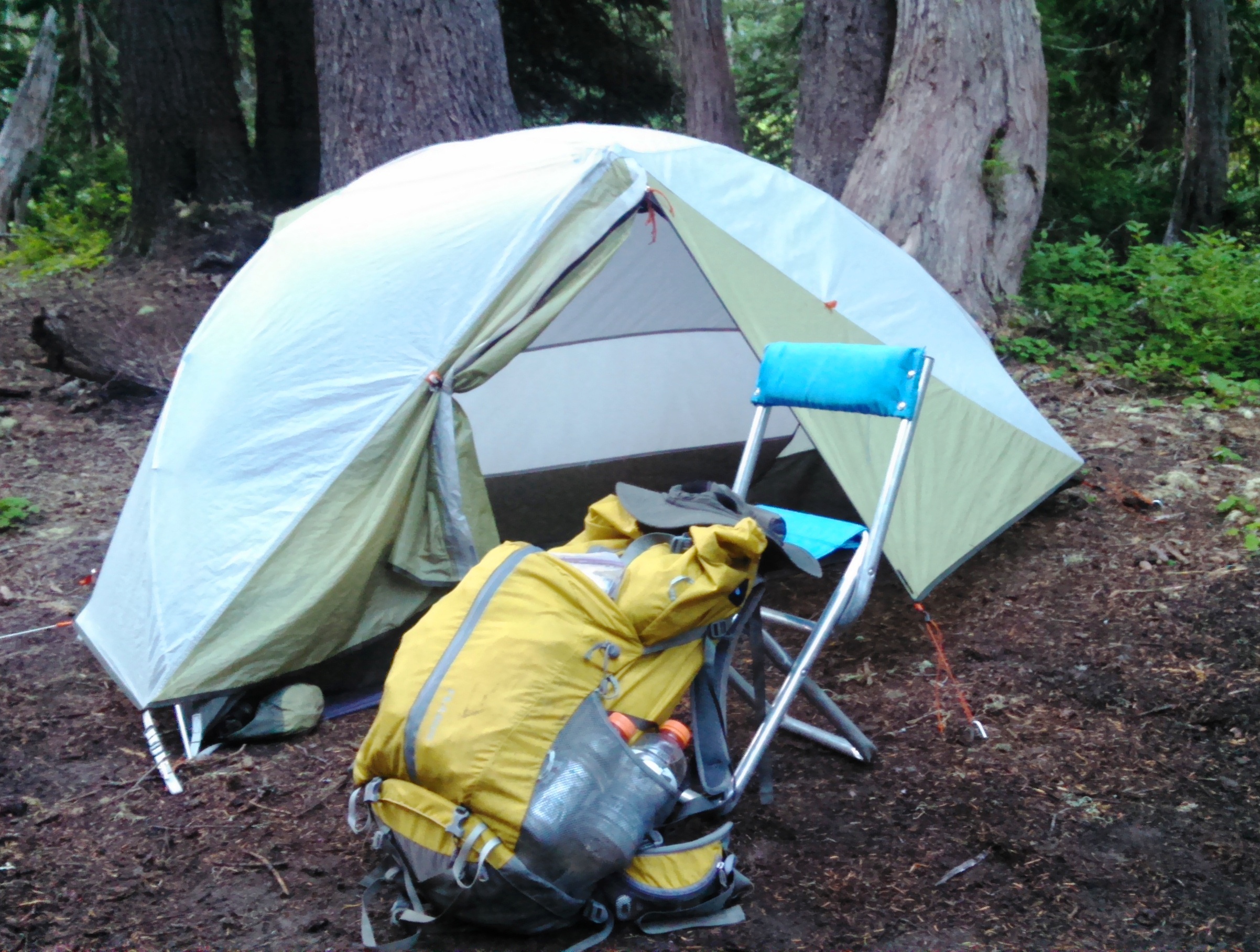
Backpack Tent 2014

I carry a one man tent when backpacking

But it does not need to be as dramatic as alcoholism.  In marriage, husbands and wives need to able to love, accept and support each other as they are.  When I first married Carolyn, I thought I could change her to share my love of backpacking.  I thought that I simply had to get her in the right setting and she would see the light.  I was wrong.  Though we both enjoy day hikes and the beauty of God’s creation, she does not share my fascination with sleeping on the ground in sweaty clothes after eating dehydrated gruel.   At the same time, she has come to accept that she will not expunge my fascination with carrying a forty pound pack up and down trails for days on end. Instead we accept each other as we are while enjoying the passions we share.

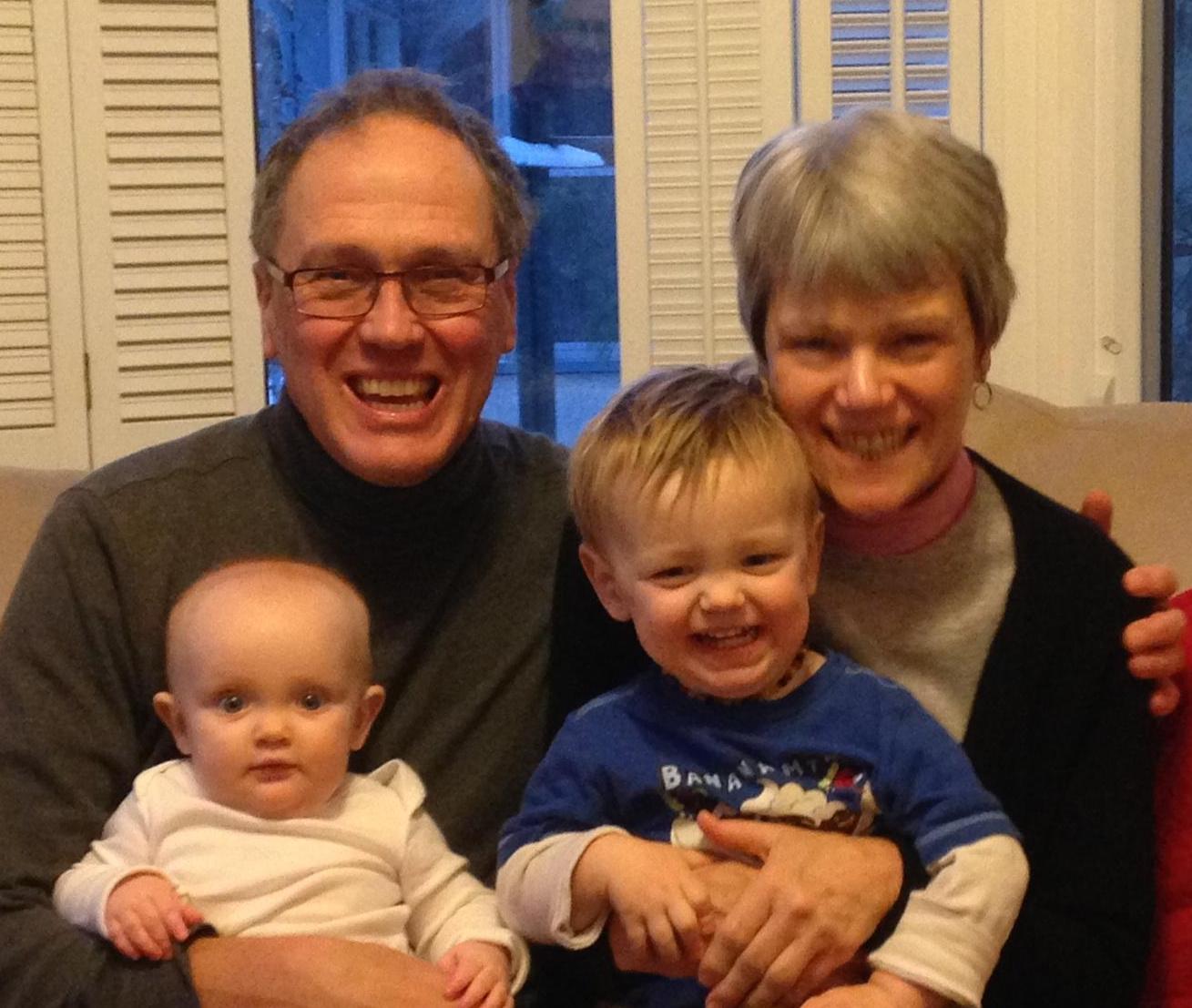
One passion that Carolyn and I share is our love for our grandchildren.

One passion that Carolyn and I share is our love for our grandchildren.

The prayer uses the word serenity as the heart of this acceptance.  Serenity is NOT the grit-your-teeth-and-bear-it attitude, but rather the calm, internal state of mind that sees reality for what it is: reality.  I remember experiencing such serenity when my father died twenty years ago.  He had contracted pancreatic cancer and then had a debilitating stroke.  When I sat by his bedside during his final hours, I felt sadness that the father I loved was dying, but also serenity that this was his reality. I could not change it.

To develop such serenity takes practice.   We may have moments of instant serenity, but to have consistent serenity takes the practice of prayer and meditation. Saint Paul connected prayer and peace.

Do not worry about anything, but in everything by prayer and supplication with thanksgiving let your requests be made known to God.  And the peace of God, which surpasses all understanding, will guard your hearts and your minds in Christ Jesus. (Phil. 4:6-7)

How have you experience serenity?

Lord Jesus, grant me the serenity to accept the things I cannot change.

Movie “Unbroken” Broke

unbroken-cover_customLast night I saw an early screening of  Unbroken  The movie is based on Laura Hillenbrand’s 2010 book, Unbroken, A World War II Story of Survival, Resilience and Redemption, which is a biography of Louis Zamperini.   I was enthralled with the book; the movie left me disappointed.

Louis Zamperini’s life (he died July, 2014) is worthy of a Hollywood movie. There are at least four parts to his story: Olympic runner, sea survivalist, prisoner-or-war, and redeemed hero.   The movie focuses on the middle two parts, briefly tells the first with flashbacks, but ignores the story of his redemption.

ZamperinniBorn in 1917 Louis was the son of Italian immigrants and bullied as a child since his family spoke no English.  His older brother got him involved in track as a way to keep him from trouble and Louie excelled.  He set the national high school record in the mile in 1934 and was the youngest American Olympic competitor ever in the 5000 meters during the Berlin Olympics in 1936.  Though finishing with a huge kick on the final lap, Louis placed eighth.   As stated in the movie his bigger goal was to run and medal in the 1940 Tokyo Olympics.

The second and third part of Louis’ story centered on his war experiences as a bombardier in the Pacific.  Here the movie shines, opening with amazing flying scenes of a B-24 in combat.  Louis’ plane later crashed and the story morphs into a sea survival story of 47 days, a record. We see Louis’ indomitable spirit as well as his desperate cry for God’s help.

keyart2The movie morphs again when Louis’ is captured by the Japanese and held in various prisoner-of-war camps.  A particularly brutal guard (nicknamed “The Bird”) tormented Louis in vicious ways.  The climax of the movie is a confrontation between Louis and “The Bird” that whole camp stops to watch.   In a contest of wills, Louie wins.  Shortly afterwards the war ends and Louie returns home.

Here is where the movie utterly fails.   The movie gives only a couple of postscript descriptions of Zamperini’s life,  stating that he suffered from post-traumatic stress disorder and had a faith conversion that helped him to forgive.  Such a brief treatment is totally inadequate. By his own admission, his heroic life crumbled when he returned home. His dream of Olympic glory had been crushed and he was plagued by nightmares. He became a bitter alcoholic.

Here was the true climax in Louis’ life.  As described in Hillenbrand’s biography, he attended an early Billy Graham crusade in 1949 and had a Christian conversion.    That transformed his life, both his past and future.   His new trust in Jesus is a critical lens for understanding his life and the Coen brothers’ script glosses over it.

I received the tickets for the advance viewing from Grace Hill Media.  They are a PR and marketing firm originally “established to reach an enormous and underserved population – religious America.”  They were reaching out to pastors in hope we would use video clips and sermon outlines that Grace Hill Media provided as a way to promote the movie.    After reading the book I can see why they thought that pastors might be good candidates for the movie.  Unfortunately I cannot recommend it since  the movie Unbroken has broken ending.

Super Slow Mo Moments

I often want to rush through things, get to the good stuff.  But such rushing often causes unnecessary pain.   I have discovered that slowing down helps.  Even in training to run a race.

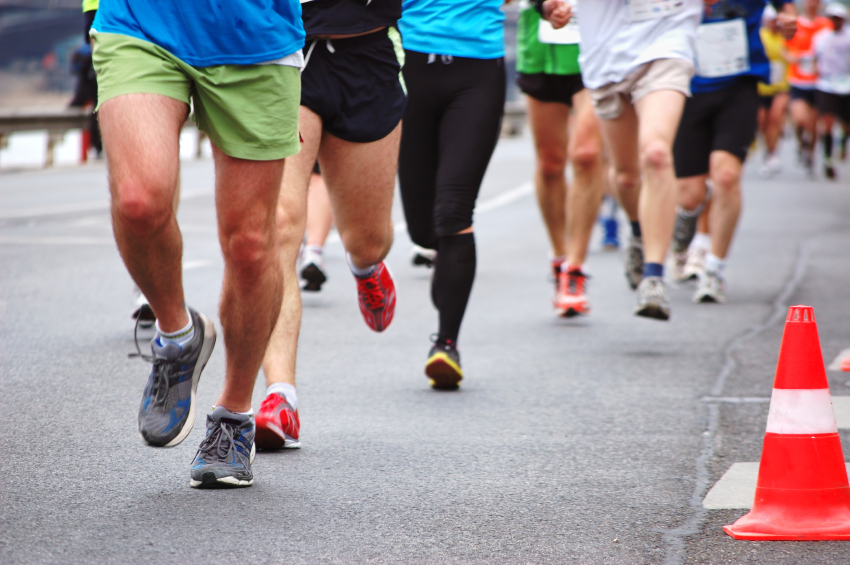
iStock_000016821441SmallA marathon takes a lot of time.   Not only the weeks and months of training, but the actual event takes anywhere from 3-6 hours to run.   Most runners would like to go faster, finish quicker.

But what if we just slowed down.  At least for a moment.

My running friend, Bob Timmons, connected to me a beautiful video from last month’s Twin Cities Marathon that does just that.   A friend of Bob, Ben Gavin, who works for the St. Paul Pioneer Press, shot a series of super slow motion clips that he titled Extraordinary Human Beings in Slow Motion at the Twin Cities Marathon Finish Line

What struck me in the video is that it expresses a central truth not only about the marathon, but also about life.   Life, like a marathon, is not one thing, but an incredible series of moments that are strung together.  The trick is to stay in the moment, in the now, and not worrying about the future or obsessing about the past.  Each moment is a moment of beauty.  Some days we need to slow down to see it.

As the Psalmist wrote, “This is the day the Lord has made, let us rejoice and be glad in it.” Psalm 118:24

Lord Jesus, teach me to walk with you, moment by moment.

Let God Lead With Generosity

Transitions are tough.  To move to a new town is challenging for us.  To start a new job and to learn new work habits and culture adds to the difficulty.  Yet thousands of people do it every year.  My wife and I did it when we married and moved to St. Paul from Kansas City so that I could start seminary.  I helped my daughter Christina move to Austin, Texas, so she could begin her first teaching job. With patience, wisdom and perseverance people transition to a new life.

The people of Israel had a difficult transition as they entered the Promise land of Canaan.  They had been nomadic sheep and goat herders in their wandering in the wilderness.  Moses, before he died, had a final word from God. In the book of Deuteronomy he instructed the people on how they were to act once they transition to farming.   

grain in basket    When you have come into the land that the Lord your God is giving you as an inheritance to possess, and you possess it, and settle in it,  you shall take some of the first of all the fruit of the ground, which you harvest from the land that the Lord your God is giving you, and you shall put it in a basket and go to the place that the Lord your God will choose as a dwelling for his name.
And you shall say, “The Lord brought us out of Egypt with a mighty hand and an outstretched arm, with a terrifying display of power, and with signs and wonders;  and he brought us into this place and gave us this land, a land flowing with milk and honey.  So now I bring the first of the fruit of the ground that you, O Lord, have given me.” You shall set it down before the Lord your God and bow down before the Lord your God. Deuteronomy 26:1-2, 8-10

This was the offering of first fruits.  God was teaching the people to practice generosity in their daily living.  The first-fruit generosity was stated as the expectation of God for his people as a response to God’s generosity in giving them the land they now settled and farmed.  Notice why they gave. It was not a payment in order to earn God’s favor.  Rather it was a thankful response to what God had already given to them.

The practice of generous giving is one that our contemporary society can embrace.  Our congregation witnessed such generosity when Inez Oehlke donated her farm buildings and land to the congregation when she transition out of the farm house.   We are ever grateful for her example of generosity.

The Oehlke farm house remains on church property

The Oehlke farm house remains on church property

The practice reminds us to open our hearts and minds towards God’s gracious gifts towards us.  It reminds us that God has given us not only the created world and all its produce, but has given us new life in his Son, Jesus Christ.  God is generous and gracious towards us; can we not be generous toward God’s ministry in the world?

When have you recognized a gift of generosity towards yourself?   When have you practiced generosity?

Lord Jesus, teach to me practice generosity towards others.

A New Place of Wonder on the PCT

Writing this blog, I realize what a geological snob I am.  I have lived in Minnesota for over 40 years (including my first year of life) and yet it still seems too flat to me.  I know rolling terrain exists, that hills and ravines are scattered throughout the state.  The thousands of lakes and tens of thousands of pond add wondrous geography to our map.  Still I yearn for mountains and the wonder they ignite in my soul.

Hiking towards Mt. Adams

Hiking towards Mt. Adams

I had seen Mt. Adams in southern Washington from a distance, but had never hiked near it.  Mt. Rainier, Mt. Baker, and Mt. St. Helens tend to get the trail guide publicity.  However being 12, 281 feet high, it is the second highest peak in the state.  The Pacific Crest Trail approaches Mt. Adams from the southwest and then skirts around the peak at about the 6000 foot level, right along timberline.  Unlike my hike around Glacier Peak the year before (where I had to climb up and over several ridges) the trail remain at a fairly steady elevation.

IMG_20140821_144122_781

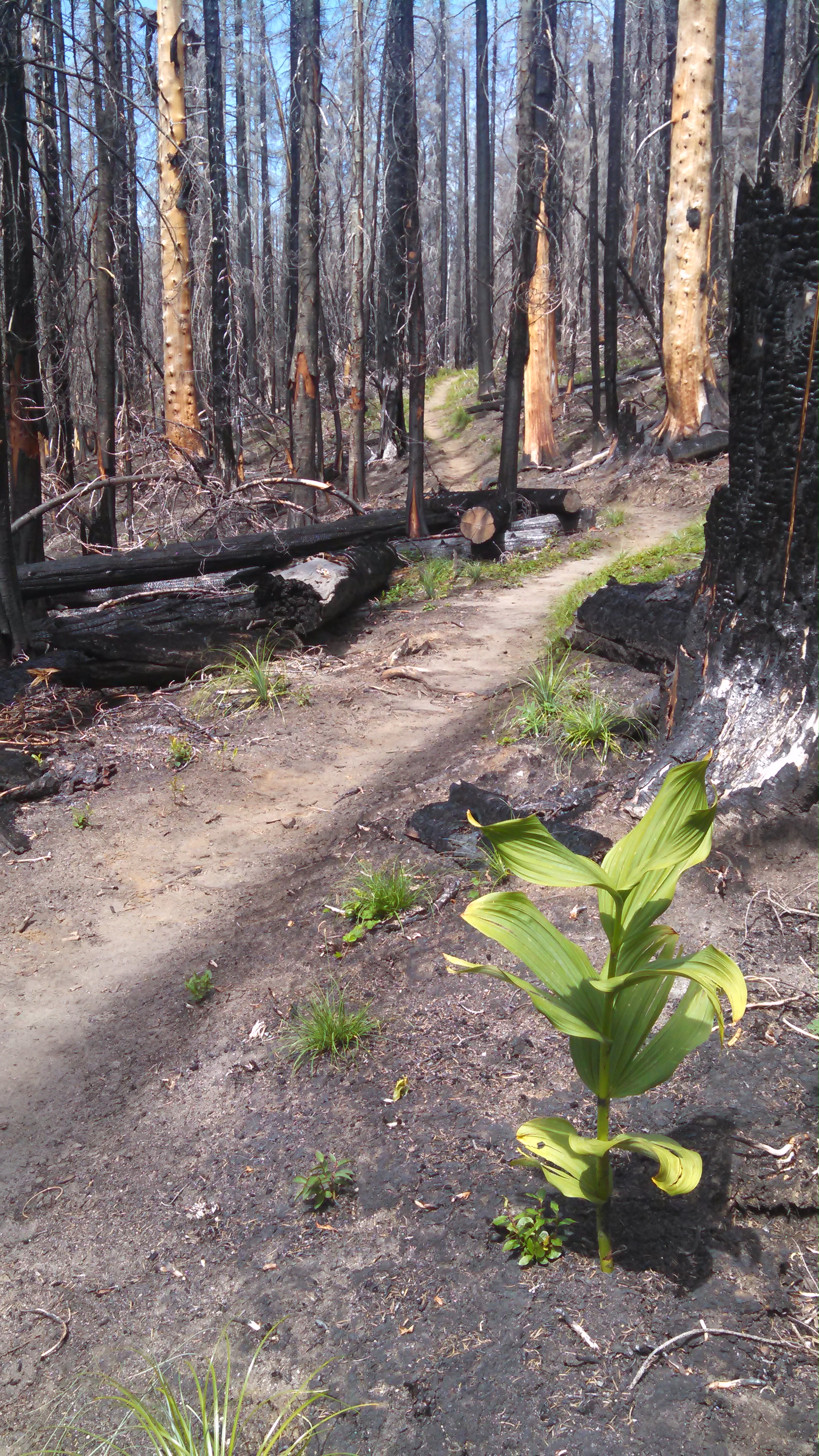
The one disappointment was the big burn area that I hiked through for more than six miles.  A forest fire two years ago destroyed several square miles of forest.  Intellectually I understand that such fires are necessary for the long-term health of the ecosystem.  Still I felt grief and lost that the beautiful subalpine forest (which takes decades to re-grow) would not be replenished in my life-time.   The good news was that new green life was already taking a foothold on the landscape.


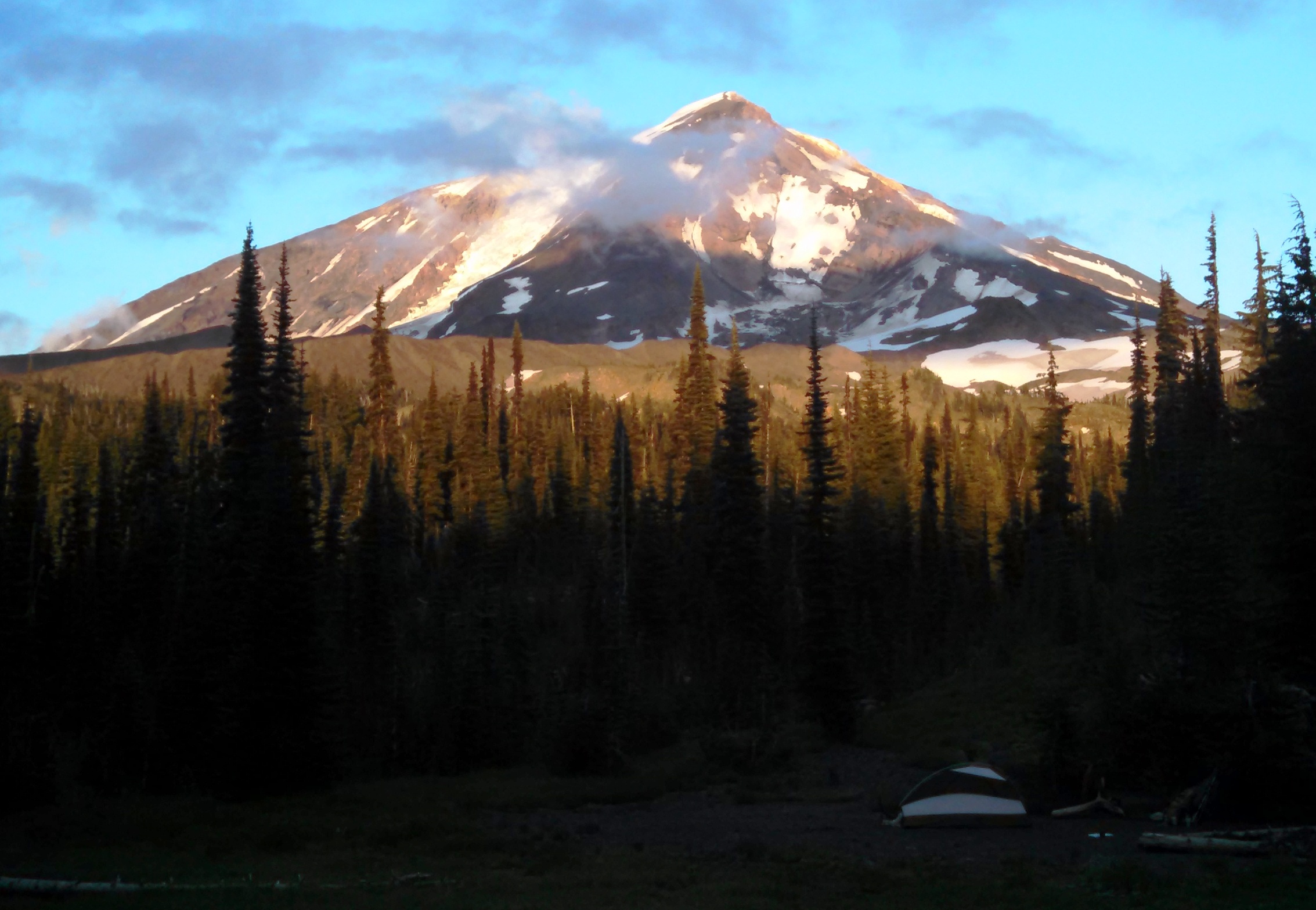
On my third night I camped near Sheep Lake.

Mt Adams from Sheep Lake

Mt Adams from Sheep Lake

As the sun slowly sank behind some clouds, the alpine glow on Mt. Adams held me transfixed.  Even as the temperature dropped, I soaked in the splendor.  As the glow faded, I watched the stars come out.

Mt Adams at SunsetThe next morning I packed up and continued around the peak. Mid-morning I moved off the trail and up a small hill where I could dry my tent, wet from the morning frost.  As I meditated on the beauty around me, I watched two hikers pass by.  One looked to a long-distant hiker with his long beard, skinny pack and frame.  He asked his companion, “Do you know the name of this mountain here?”  I was shocked that he could hike hundreds of miles and not know the name of most prominent feature for dozens of miles.  Not that the name is critical for appreciation of beauty.  Still some through-hikers seemed so obsessed with their daily mileage goals, that they were oblivious to the wonder around them.

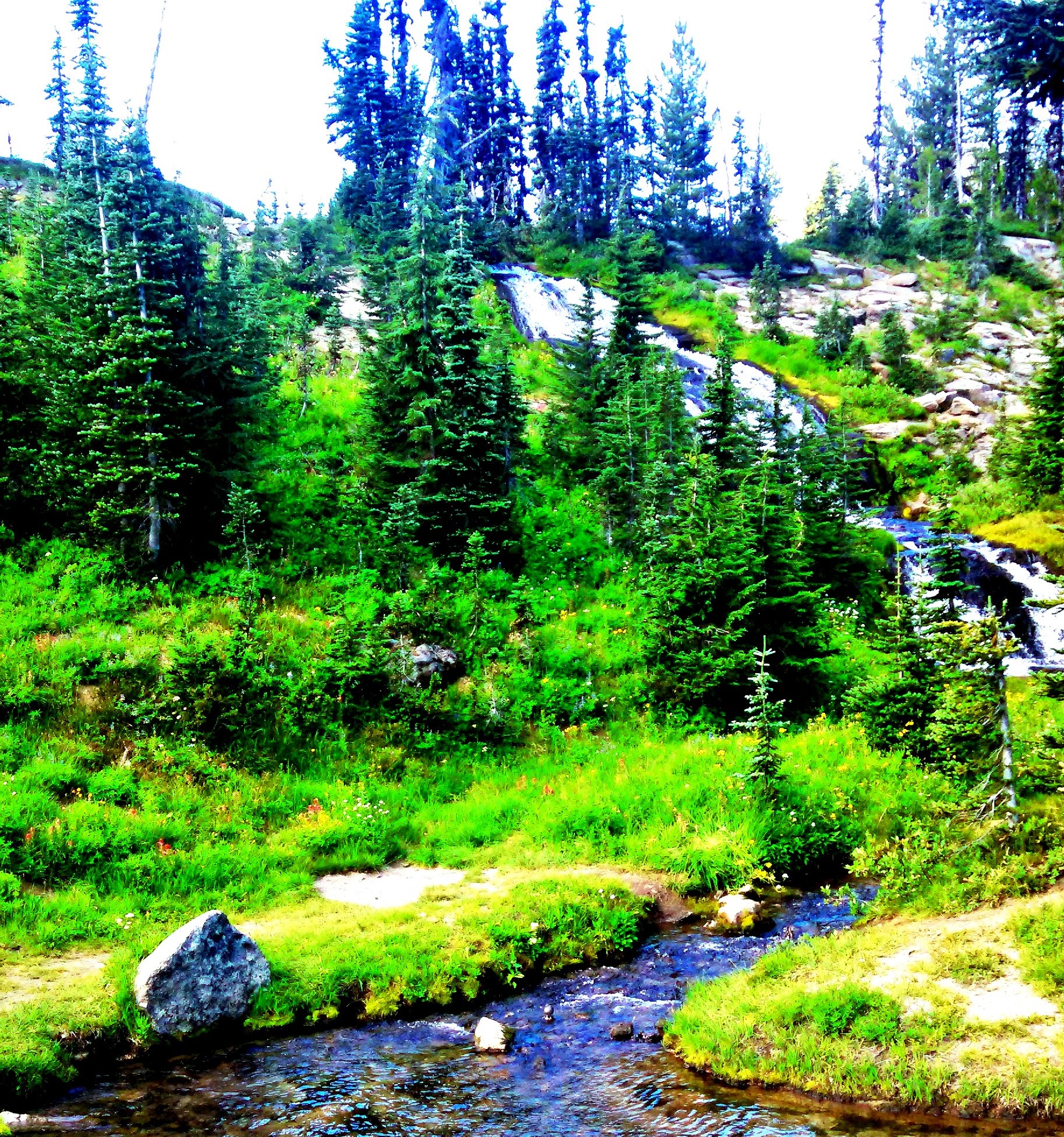
Killen Creek

Killen Creek

Later that morning, after crossing Killen Creek, the PCT took a turn to the norht and I started back down into the forest.  It was a bittersweet moment as I left the beauty of the high alpine meadows.  There are trails that circumnavigates Mt. Adams and I may be adding them to my future hikes.  Even though it is not the highest mountain in Washington, it is still one of the most magical.

Where have you experienced wonder?

Lord Jesus, thank you for the capacity for wonder and awe.

PCT Reflection – Playing Hide and Seek with Mt. Rainier

States have notable geographical landmarks.  New York has Niagara Falls.  Minnesota has 10,000 lakes.  Arizona has the Grand Canyon.  Florida has the Everglades.  And Washington has Mt. Rainier.

https://www.flickr.com/photos/erinkohlenbergphoto/5464033068/

When my father bought a lot outside of Bremerton, Washington, he made sure that our house took full advantage of our view.   The house sat on a hill overlooking an inlet of the Puget Sound.  On a clear day, Mt. Rainier rose on the horizon like the top of giant ice cream cone.  Granted, clear weather comes at premium in Western Washington with the weeks of grey, low clouds obscuring all mountain vision.  Yet when the clouds cleared, the mountain was always there, sunlight gleaming off the multiple glaciers.   In high school and college, I remember sitting on our deck, transfixed by the magenta alpine glow on Mt. Rainier at sunset.

When I decided to do the southern section of the PCT this summer, I deliberately chose to hike from south to north for the explicit reason of hiking towards Mt. Rainier.   Though I would be hiking near Mt. Hood and Mt. St. Helens, and directly beneath Mt. Adams,  my heart and eyes were focused on Mt. Rainier.   And I was not disappointed.

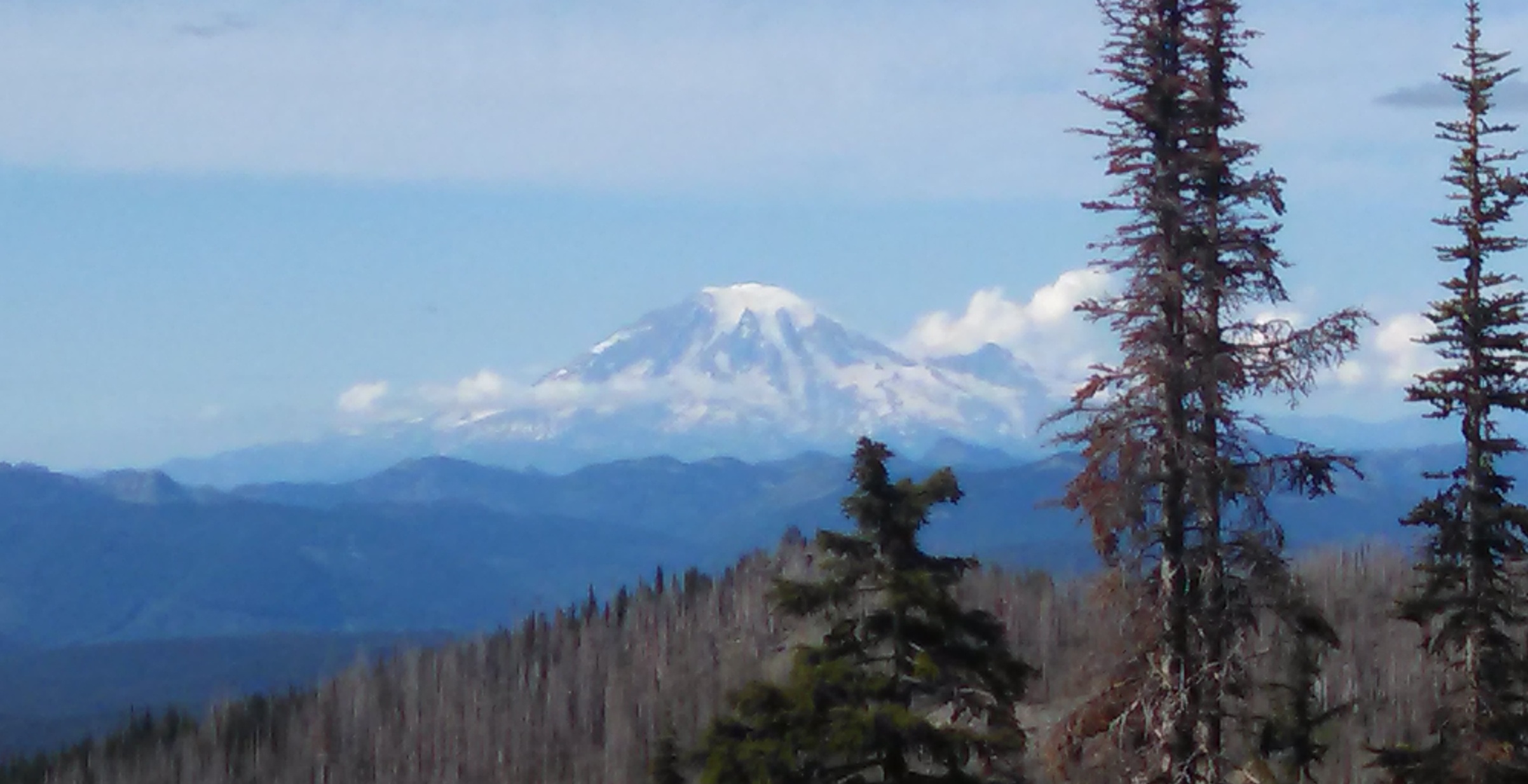
First Glimpse of Mt. Rainier from Mt. Adams on the PCT

First Glimpse of Mt. Rainier from Mt. Adams on the PCT

As mentioned in my previous post, my first two and half days were mostly in the forest.  But on my third day, as I climbed the ridges surrounding Mt. Adams, I caught my first glimpse of Mt. Rainier.   For the next four days I played a game of hide and seek, wondering where the next view would come. There were several from Mt. Adams, but the best view of Rainier came when I entered the Goat Rocks Wilderness Area.  Though the haze and midday sun made photography difficult, I made sure my final  lunch stop included a Rainier view.

Last Day Lunch Stop

Last Day Lunch Stop

After such splendid views, I started to think again about hiking The Wonderland Trail.  Its 93 miles circumnavigates the mountain and offers many elevation challenges as one hike up and over the many ridges that radiate out from the peak.  Due to its popularity, access is limited to a kind of lottery system in reserving backcountry campsites.  But now I am convinces it would be worth the gamble.

I often use Mt. Rainier as part of guided meditation prayer that helps me stay grounded in Christ.  Also I sing a song based on Psalm 46.  “Great is the Lord, and greatly to be praised.  In the city of our God, in the mountain of his holiest, beautiful for situation, the joy of the whole earth – is Mt. Zion on the side of the north, the city of the great king.”  From an early age, I have associated Mt. Zion with Mt. Rainier, both places of beauty, elevation and holiness.  And I know the mountain has brought me much joy.

Lord Jesus, thank you for the holy places in our lives.

PCT Day 1and 2: Seeing the Forest for the Trees

I confess: I am a biased hiker. The high alpine country above timberline is where I prefer to hike.  The sweeping vista of snow-capped peaks and the dazzling array of alpine flowers strike the sweet spot in my backpacking experience.  I was exposed to this as a young child, making the annual family trek from sea level to ski level on the seventeen mile road from Port Angeles to Hurricane Ridge.  The Olympic Mountains remain spectacular in my humble opinion.

Hurricane Ridge in Olympic National Park

Hurricane Ridge in Olympic National Park


Start of the trail

Start of the trail

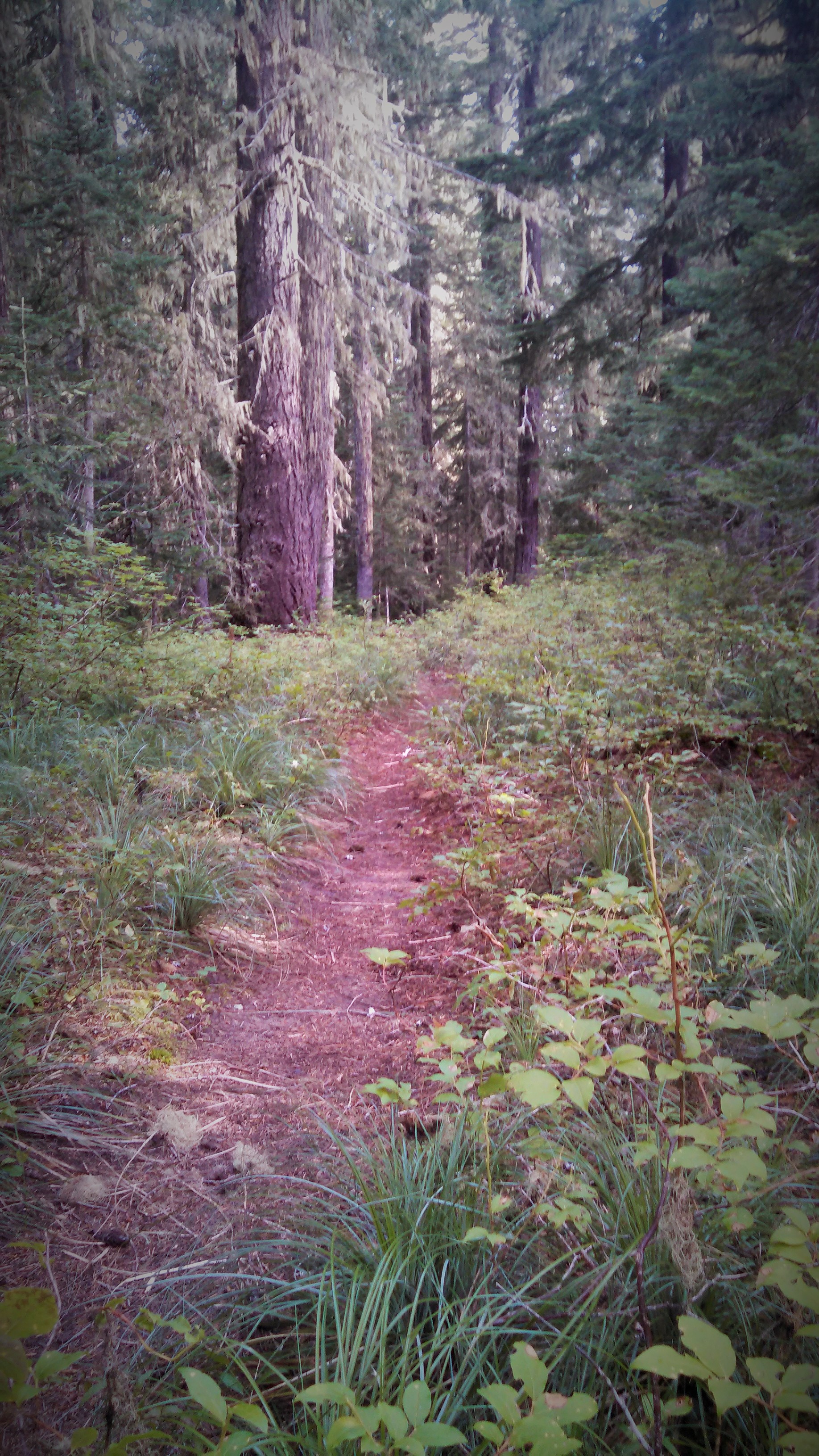
Still to reach timberline, one often needs to hike through timber.  This was the case in August when I hike my third section of the Pacific Crest Trail (PCT) in southern Washington.  The trail is aptly named in that it seeks to follow the crest line of the Cascade Mountains of Oregon and Washington.  Often the crest is above tree line, but not always.

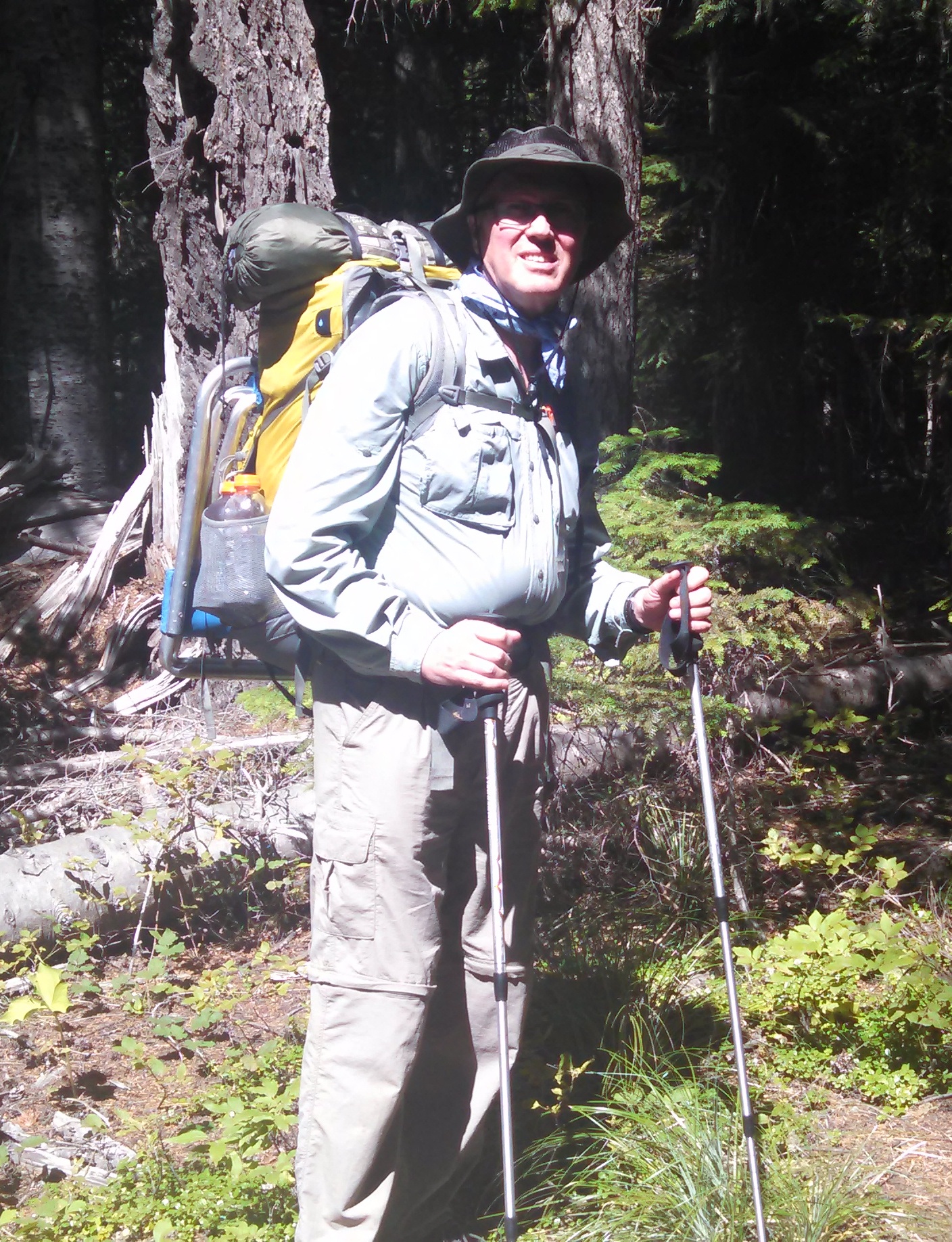
For this portion of the PCT I decided to skip the first forty miles as it climbs through the thick forest of the Columbia River Gorge (the border of Washington and Oregon).  I started just south of the Indian Heaven Wilderness where a forest service road crossed the trail.  After my brother Robert snapped my picture, I plunged into the forest.

IMG_20140821_105737_776 (2)

I soon discovered that the wilderness area named Indian Heaven is not my personal vision of heaven.  Though dotted with dozens of small lakes, the trail was all below timberline.  Occasionally the trail climbed a small ridge where one could glimpse some of the distant peaks.  But mostly, for the first two and half days and 35 miles, I walked through a multi-green tunnel.

As I hiked through the forest, I explored my mental bias.  I recognized that forest hiking is part of long distant hiking.  Just as in life, one cannot always choose the surroundings one may prefer.  I also discovered that forest walking is a great place to practice both intercessory prayer and mindfulness.  As I walked I prayed for my family, friends and for my congregation.  I used a simple prayer of compassion.  For example, my prayer for Resurrection Lutheran Church was

May Resurrection be filled with loving kindness.
May Resurrection be filled with peace.
May Resurrection be strong and vibrant
May Resurrection live as children of God.

I would repeat the prayer several dozen times, as I breathed in and out.  A peace and purpose came with the prayer.

IMG_20140822_162010_988I also practiced mindfulness, dwelling in the present moment, experiencing each footfall and each touch of my trekking poles.  I try not to race ahead mentally to when I would reach the high country.  Rather let this moment in the forest be my experience.

It was not easy.   My mind still likes to jump around, bouncing from one habitual thought to the next.  Yet the more I practice, the more I see the reward of simply being in the moment, even when surrounded by a green tunnel.  And truly God is in the forest valley as much as the high country.

I was reminded of Psalm 1 as I hiked:

Happy are those who do not follow the advice of the wicked, or take the path that sinners tread, or sit in the seat of scoffers;  but their delight is in the law of the Lord, and on his law they meditate day and night.  They are like trees planted by streams of water, which yield their fruit in its season, and their leaves do not wither. In all that they do, they prosper.

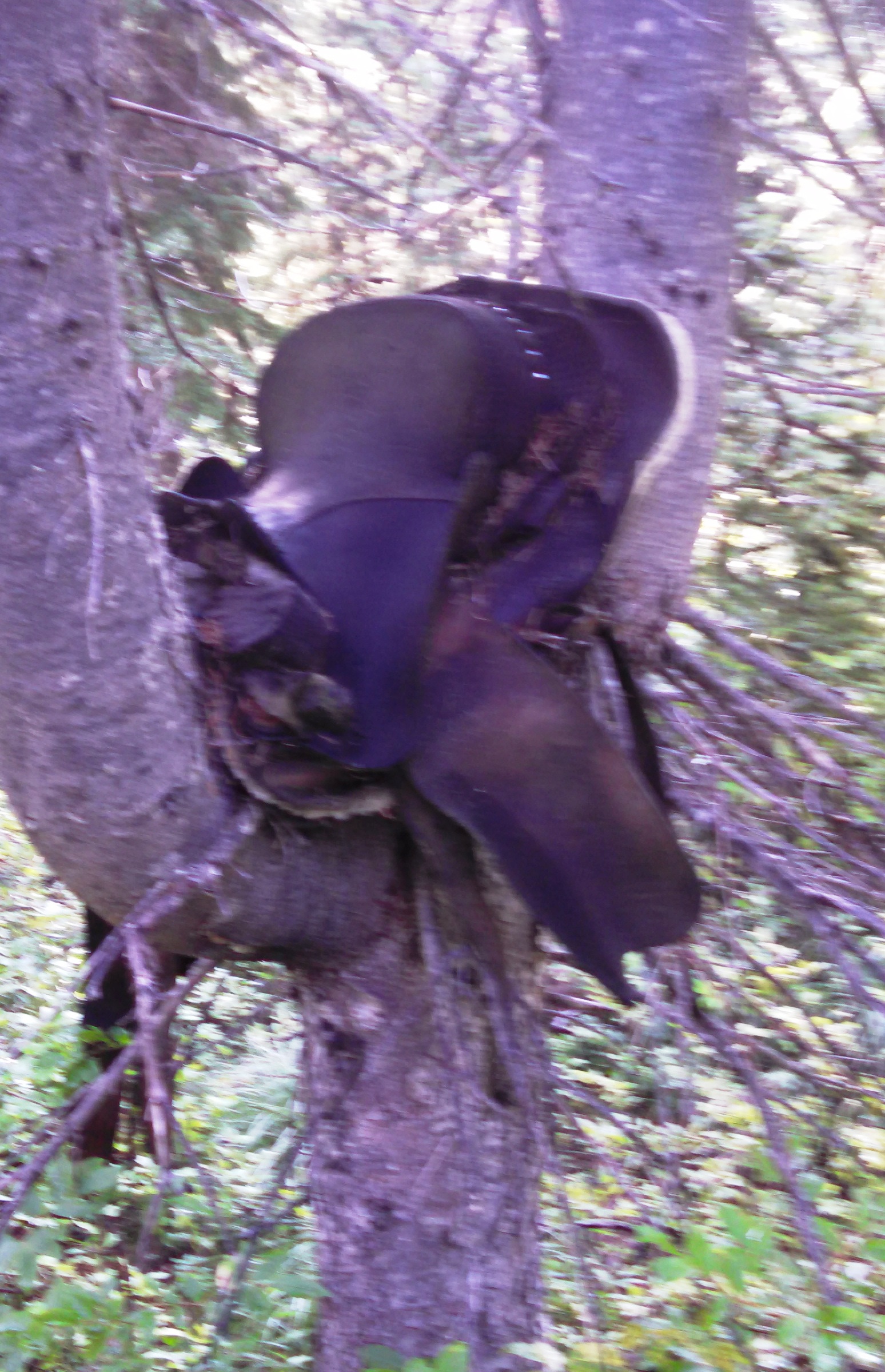
An abandoned saddle resting in a trail-side tree

An abandoned saddle resting in a trail-side tree

And if one keeps one’s eyes and mind alert, strange sights can be encountered.   One can imagine all kinds of story on how a saddle ended up in a tree.


Lord Jesus, keep me alert to your constant presence.


Next, Reaching High Country.

Healing at the Center

Centering Prayer is saving my mind while healing my soul.

IMG_20140812_190249_047-EFFECTS

St. Paul Monastery in Minnesota

I just returned from a five-day silent retreat at the St. Paul Monastery.  I practiced Lectio Devina (a form of prayerful reading and conversation).  I was familiar with the practice – we use a form of it during our staff meetings at Resurrection – yet the monastic practice strengthened my love of God and God’s Word.

Jesus in the Center of Prayer

Jesus in the Center of Prayer

However the most profound part of the week was the practice of Centering Prayer.  Each morning at 7 am we sat together for an hour simply breathing and praying our holy word.  We repeated it again at 10 and at 3.  Too many it sounds incredibly boring.   For me, it was drinking from the river of the water of life (Revelation 22:1).   It was simply resting or floating in God’s gracious love. Emptying the mind so God’s love could fill it.  Not just thinking about God’s love, but actually resting in it.

Oh, my mind fought the emptiness.  My thoughts and feelings would race from one idea to the next.  The river seemed to be covered with all kinds of flotsam and debris.  “What is happening at church?”  “Why did I say that to her?” “What will we have for lunch.” This would happen hundreds of time during the quiet.   Each time I caught the thought skipping across the surface, I let it go and return to my breath and my word.  To simply BE in God.

Henri Nouwen wrote in Here and Now, 1994

The real enemies of our life are the “oughts” and the “ifs.” They pull us backward into the unalterable past and forward into the unpredictable future. But real life takes place in the here and the now. God is a God of the present. God is always in the moment, be that moment hard or easy, joyful or painful. When Jesus spoke about God, he always spoke about God as being where and when we are. “When you see me, you see God. When you hear me you hear God.” God is not someone who was or will be, but the One who is, and who is for me in the present moment. That’s why Jesus came to wipe away the burden of the past and the worries for the future. He wants us to discover God right where we are, here and now.

Centering prayer is a form of mindfulness practice, living in the current moment.

Fire Creek was ablaze with color.

At times I missed the beauty that surrounded me

I discovered my real need for this last summer when I was backpacking on the Pacific Crest Trail.   I had looked forward to the trip for months and was in absolutely beautiful alpine country, yet my mind kept racing back to worries in Minnesota or to past actions that I regretted or wished I could change.   Here I was in the place I wanted to be, and my mind could not stay there!    I knew I needed help.

This past spring I took Mindfulness Based Stress Reduction class which is a secular form of Buddhist meditation practices.  It was incredibly helpful.  The Centering Prayer has similarities to meditation, yet centers the practice in the love of God in Christ Jesus.   That has been healing.

Now next week, I head back out to Washington state to do another section of the PCT.  I will continue my practice of Centering Prayer and Lectio Devina.  I trust that my mind will be able to stay on the trail with my body this year.

How does prayer touch your life?

Lord Jesus, teach us to pray.

Judging First Impressions

First impressions get me into trouble.  Does that happen to you?

Copyright:'http://www.123rf.com/profile_dolgachov'>dolgachov / 123RF Stock PhotoWhen I meet someone for the first time, I often make some snap decision regarding them based on their handshake, body size, facial expression, and or taste in fashion.  It sometimes feels like I am giving an instant “thumbs up” or “thumbs down” judgment before any word is spoken.  Such snap decision can then color how my conversation goes with the person and what I think of them.

And a big part of my problem with this is that I don’t even realize that I am doing it!

Jesus’ words, “do not judge, lest you be judged” (Matthew 7:1) are a clear warning for me to examine my judgmental character.   And his story about the Pharisee and the Tax Collector highlights how as a religious person I can easily judge others.

 “Two men went up to the Temple to pray, one a Pharisee, the other a tax man.  The Pharisee posed and prayed like this: ‘Oh, God, I thank you that I am not like other people – robbers, crooks, adulterers, or, heaven forbid, like this tax man.  I fast twice a week and tithe on all my income.’  “Meanwhile the tax man, slumped in the shadows, his face in his hands, not daring to look up, said, ‘God, give mercy. Forgive me, a sinner.'”  Jesus commented, “This tax man, not the other, went home made right with God. If you walk around with your nose in the air, you’re going to end up flat on your face, but if you’re content to be simply yourself, you will become more than yourself.” (Luke 18:10-14, The Message)

My first step in becoming less judgmental is first to recognize that I am doing it all the time.   I judge in the morning whether I like or dislike the weather outside my window.  I judge whether my breakfast is tasty, my coffee is too cold, or my attitude is too cranky.  Mindfulness meditation has helped me to see that these judging thoughts are simply that: thoughts or feelings that are not always reality.

Now when I recognize a judging thought,  I simply observe it and note its existence.  I may investigate to see what its history and/or cause may be.  Then I can decide whether I want to hold on to it or let it go (in a sort of non-judgmental way).

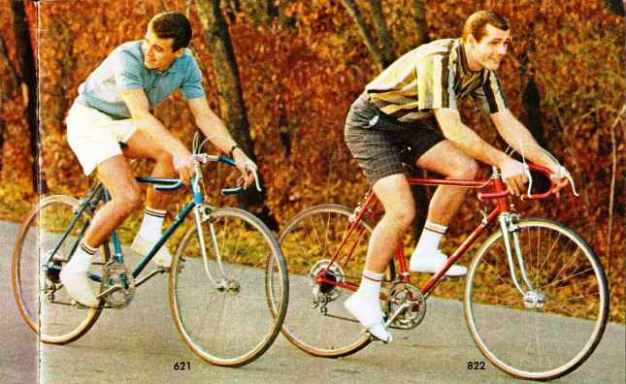
For example: I met up with some of my buddies for a bike ride and a new person is there whom I have not met.  I might scan their bike and see how new and/or what make it is as a way to size up what kind of cyclist they may be.   I look at what clothes they wear and how fit they appear.   These first impressions all take but a few seconds, but they can easily color my opinion of the n1964_schwinn_varsity_super_sportew person.

If I were to stop and investigate these impressions, I would remember how I felt when I had an old Schwinn ten speed bike and rag-tag cycling gear.  Also I would remember cycling with people who did not look fit yet could easily outride me.  I recognize these “judgments,” and their accompanying feelings, then set them aside as I introduce myself to the new rider.   Who knows, they may become a new friend.

Here is a link to a video that describes non-judging from a mindfulness training perspective.

How do you live out Jesus’ words, “judge not”?

Lord Jesus, grant me grace to see each person, each moment, as a gift from you.