Tag Archives: backpacking

Wilderness Journey – Day Four

Last Night at Tileston Meadow Campsite

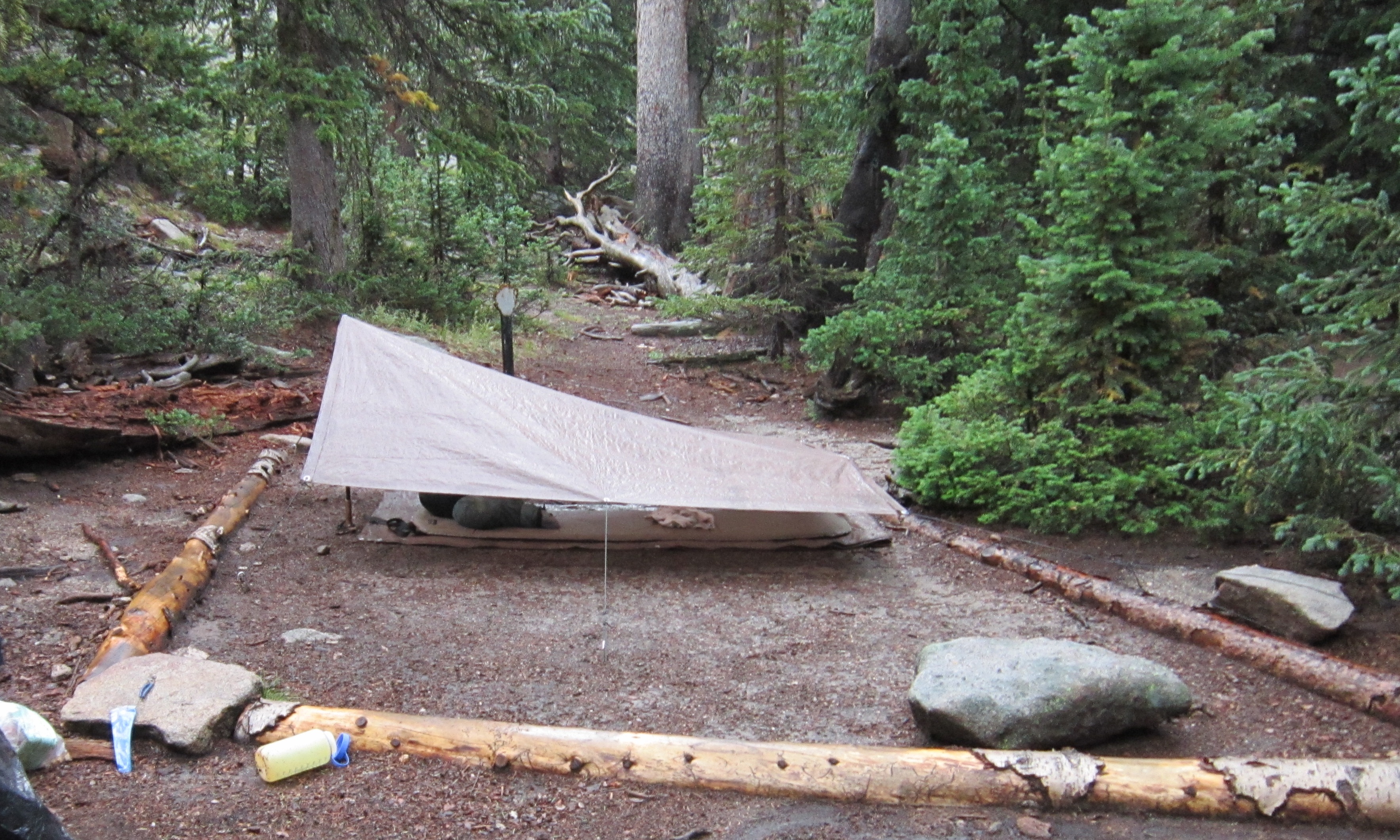
My last night on the trail involved one more thunderstorm. This time it was not the lightning that disturbed me, but the rain itself. In the alpine meadow on Mummy Mountain, the vegetation there absorbed most of the water. Here at the designated campsite, the tent pad was simply flat dirt. The rain splattered from the tarp to the ground to my ground cloth and sleeping pad. After a few minutes my ground tarp was splattered with muddy water and debris. I had pitched my tarp too high with too much space between the edge of the tarp and the ground. After the evening storm passed, I lowered the tarp.

I also questioned the wisdom of concentrating all backpackers to a few locations. I realize that many backpackers do not practice “leave-no-trace” camping, and that the national parks are trying to keep the back country as wild and pristine as possible. But the designated campsites create sites devoid of vegetation and wonder.

I prefer to seek my own stealth campsite off the beaten trail where I can create a wonderful sleep space for one night. In the morning I work hard to clear any trace of my having been there. Fortunately a hiker can use such techniques on the Pacific Crest Trail where I plan to hike a section next summer.

My last morning on the trail was uneventful. The sky was partly sunny and my body and mind were ready to leave. It was not that I was tired of the trail, but that I had set my expectations for four days and was ready to go.

My path on the Black Canyon trail was consistently downhill and I gobbled up the miles. My feet and legs were stronger now and I was thankful for my decision to use trail running shoes instead of my heavier backpacking boots. Only in the boulder fields on Mummy Mountain did I have any doubts regarding this decision. My feet seemed light and quick as I strode down the trail and I reflected on a sermon I once heard from Richard Mouw, president of Fuller Seminary. He preached on Isaiah 52:7.

How beautiful upon the mountains are the feet of the messenger who announces peace, who brings good news, who announces salvation, who says to Zion, “Your God reigns.”

He observed that most people would focus on the words or mouth of the messenger, but the text reflects on the feet. His observation is that the words or mouth of the messenger have no significance unless the messenger first arrives at his or her destination. Messengers need to use their feet and go.

As I hiked out, I was thankful for the opportunity to be on trail, but also thankful for the opportunity to go, live and serve among the people of Resurrection Lutheran Church. My feet and I were ready to continue the mission of announcing, “Your God reigns!”

Lord Jesus, show me how to announce that your kingdom comes.
Wilderness Journey – Day Three – Afternoon

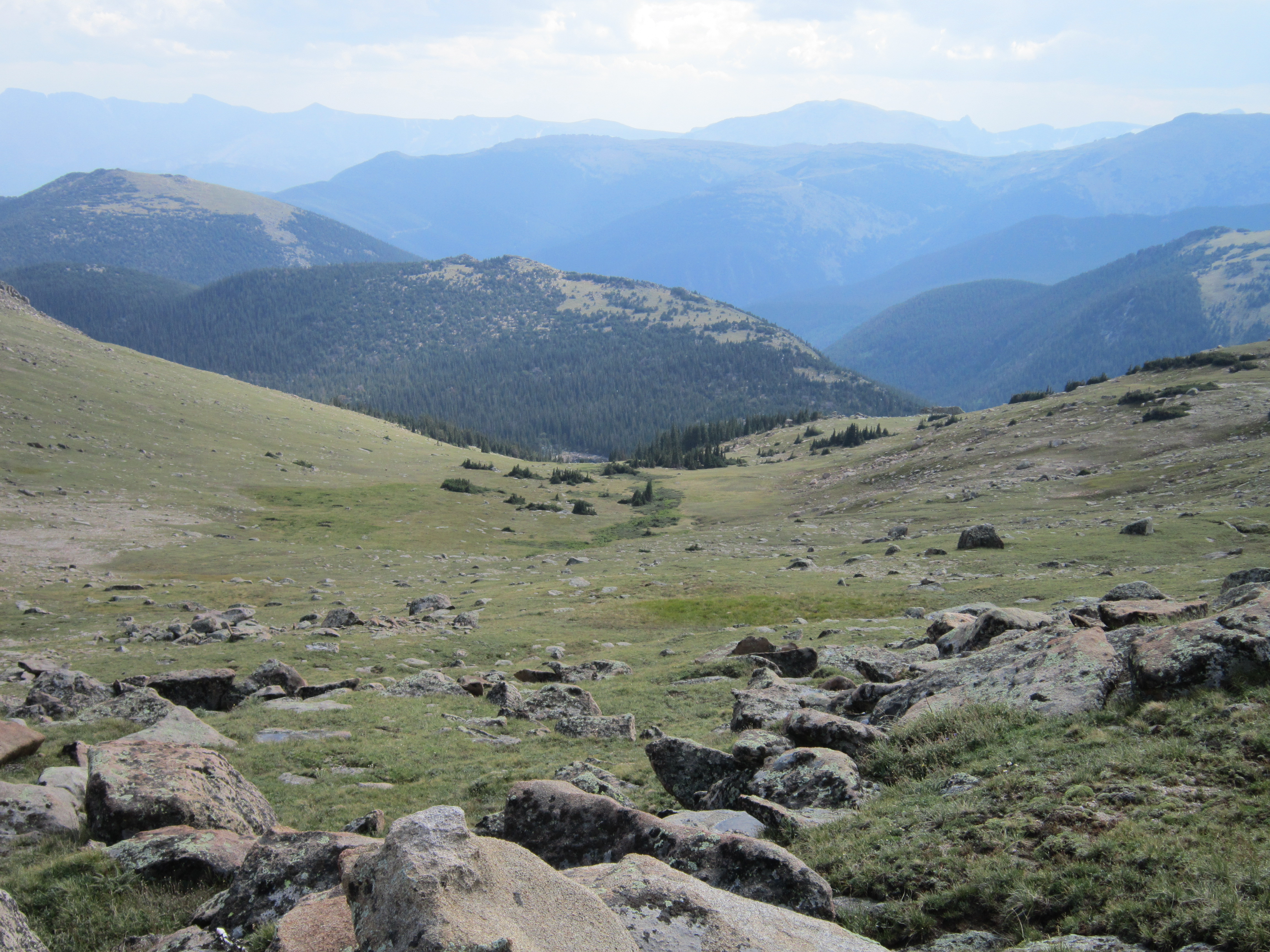
As I continued my journey around Mummy Mountain I remained well above timberline.  I could see far down the West Creek basin, even spotting the place on a distant ridge where I had lunched two days before.

Gathering Storm Clouds

I also spotted a gathering thunderstorm to the west and I hurried my pace.

About 1:00 pm I ran into my first real challenge. The slope transitioned from a meadow to gigantic boulder field. I scrambled between boulders, always seeking a safe, secure route. This took time and energy. I slipped a few times. I also heard cracks of thunder in the distant and  felt a few  raindrops. I dropped lower on the slope, hoping to find fewer boulders. Dark clouds moved closer.  I started looking for a place to wait out the approaching storm.

Krummholz in West Creek Basin

I finally reached the open valley below the final ridge. It was free of boulder fields and had several small krummholz of alpine trees. These small dense stands of trees could give me some protection. As I looked over this isolated valley, I reveled at how beautiful it was, especially in the storm’s twilight.

My revelry was broken by the first splattering of large rain drops. I had to find shelter fast.

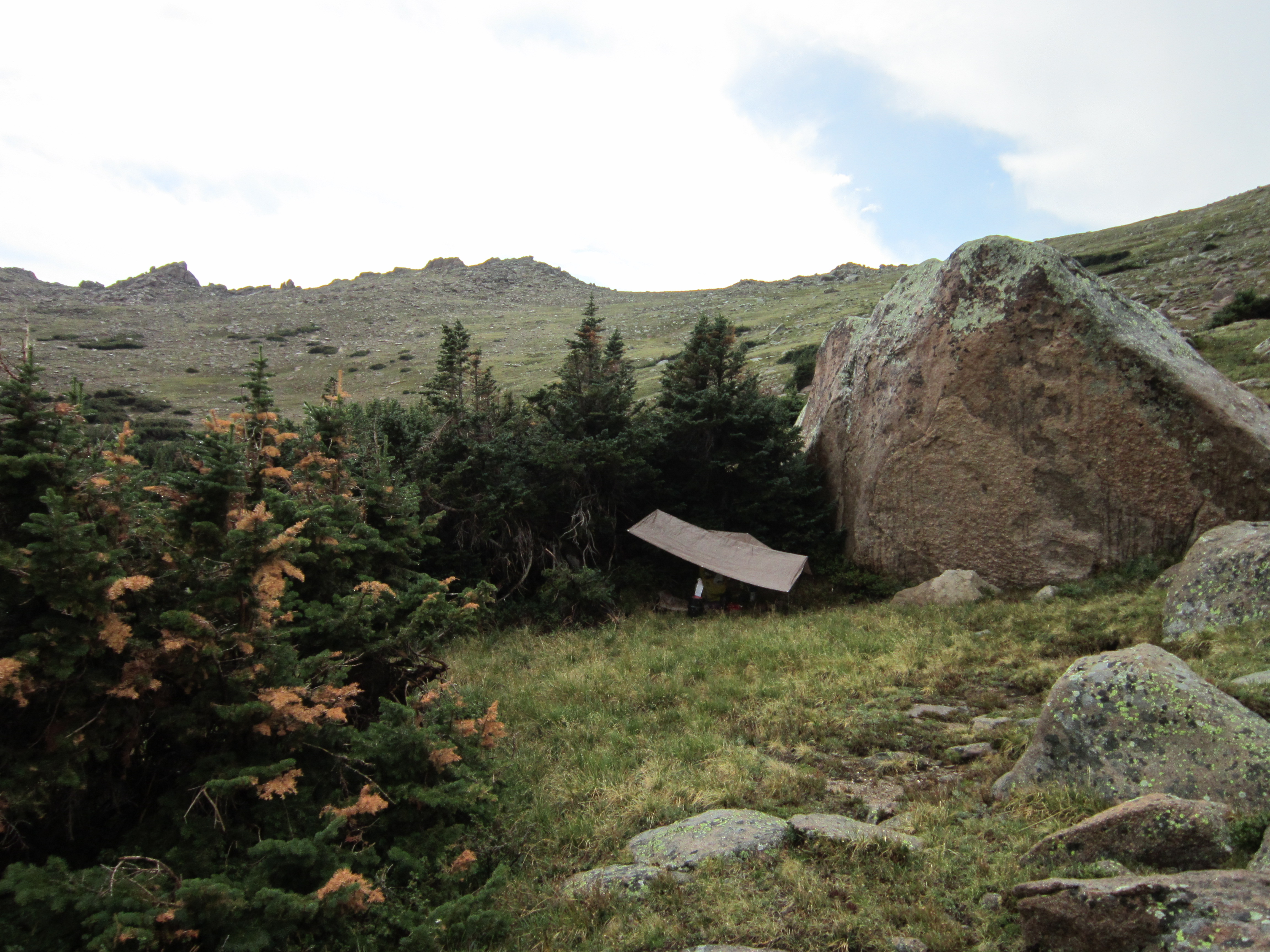
The thunder was louder and closer now. I headed toward a large boulder in the valley, close to a krummholz. Even though the boulder offered some protection, I realize the storm may last awhile and I needed better shelter. My problem was that I had not packed my backpack with such a need in mine. My trusty rain-tarp was at the bottom of my bag. I had to pull everything out into the rain to reach it. However, my experience of pitching a rain-tarp in wet Washington state proved helpful. In less than five minutes the rain tarp was set and my gear and I safely under it.

Shelter from the Storm

For the next two hours it rained, hailed, thundered and boomed. Counting the seconds between flash and thunder, the closest strike was less than a mile away. Fortunately, I was off the exposed ridge line, and away from the largest trees and boulders. I changed out of my wet clothes, fixed a cup of hot chocolate and waited. As the storm continued I wondered if I might have to spend the night here.

Just as suddenly as it started, the storm ended. The sun broke through the clouds and I again marveled at the beauty of this rain-splashed alpine meadow. I repacked my gear, this time keeping my wet rain-tarp tied to the outside of my pack for quick access.

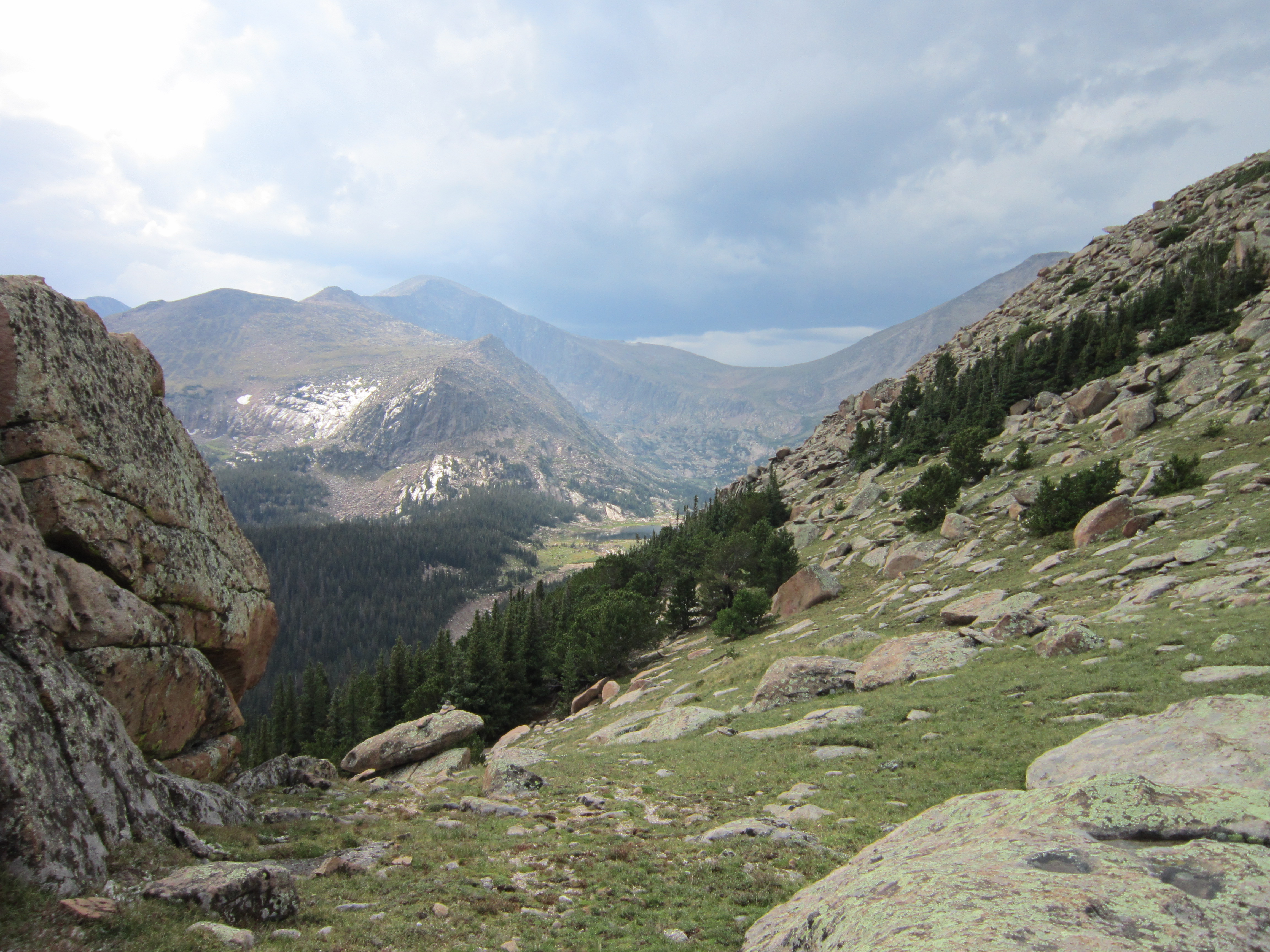
Looking south from the last Mummy Mountain ridgeI reached the final ridge shortly after 4:00 pm and crossed from the West Creek Basin into the Black Canyon. I quickly worked my way off the ridge and towards the forest below.

As I climbed down the ridge, I kept thinking about the thunder-storm and how it had humbled me.   I was not the master of this domain, but a simple wilderness wanderer.  The Israelites at Mount Sinai encountered God in a thunderstorm.

    On the third day at daybreak, there were loud claps of thunder, flashes of lightning, a thick cloud covering the mountain, and an ear-piercing trumpet blast. Everyone in the camp shuddered in fear. Moses led the people out of the camp to meet God. They stood at attention at the base of the mountain. Exodus 19:16-17

I reflected, “God is reminding me once again who is LORD!”

About halfway down, I spotted two rock cairns (small piles of stones) used to mark a way trail. Finally I had reached the improvised trail that leads directly from Black Canyon trail to Mummy Mountain. I followed it down, losing it a couple of times due to poor markings and tired legs and mind. Eventually I connected to the main Black Canyon trail and reached my campsite at Tileston Meadows about 5:15 pm, tired, but safe.

Lord Jesus, Let me never forget that you are LORD.

Wilderness Journey – Day Three – Morning

North Fork of the Big Thompson River

At dawn’s first light, I was up and on the last portion of National Park trail. I passed Lost Lake and quickly found a place to wade the North Fork of Big Thompson River (more like little Thompson creek at this altitude).

From here on, I would be off-trail, but I was above timberline and the slope was not too steep. I took my time, enjoying the unfolding view and relishing the challenge of finding my own route (which was no challenge at this point.)

By 10:00 I was on the wet plateau between Mt Dunraven and Mummy Mountain and I stopped for an early lunch.

Looking south towards Mummy Mountain

At this point I debated whether to climb Mummy Mountain, 13425 feet in elevation. It would delay me from climbing off the ridge and thus expose me to possible storms. However I figured I may never again have the opportunity to climb the peak and, like John Muir, I hungered for some mountain adventure. Just below the peak, at about 12,300 elevation, I dropped my pack near a large boulder and started hiking straight up.

Can you spot my pack?

As I climbed, I kept looking back to see where my pack was. I was glad I did, since after a while every boulder looked like another and I could have easily lost my pack.

I took my time, stopping to rest several times. The climb was challenging and I began to wonder if I might be one of the first people to climb Mummy Mountain this summer because of its isolation. Perhaps there would be climber’s log at the summit that would answer my question.

Looking West from Mummy Peak at Crystal Lake and Fairchild Mountain

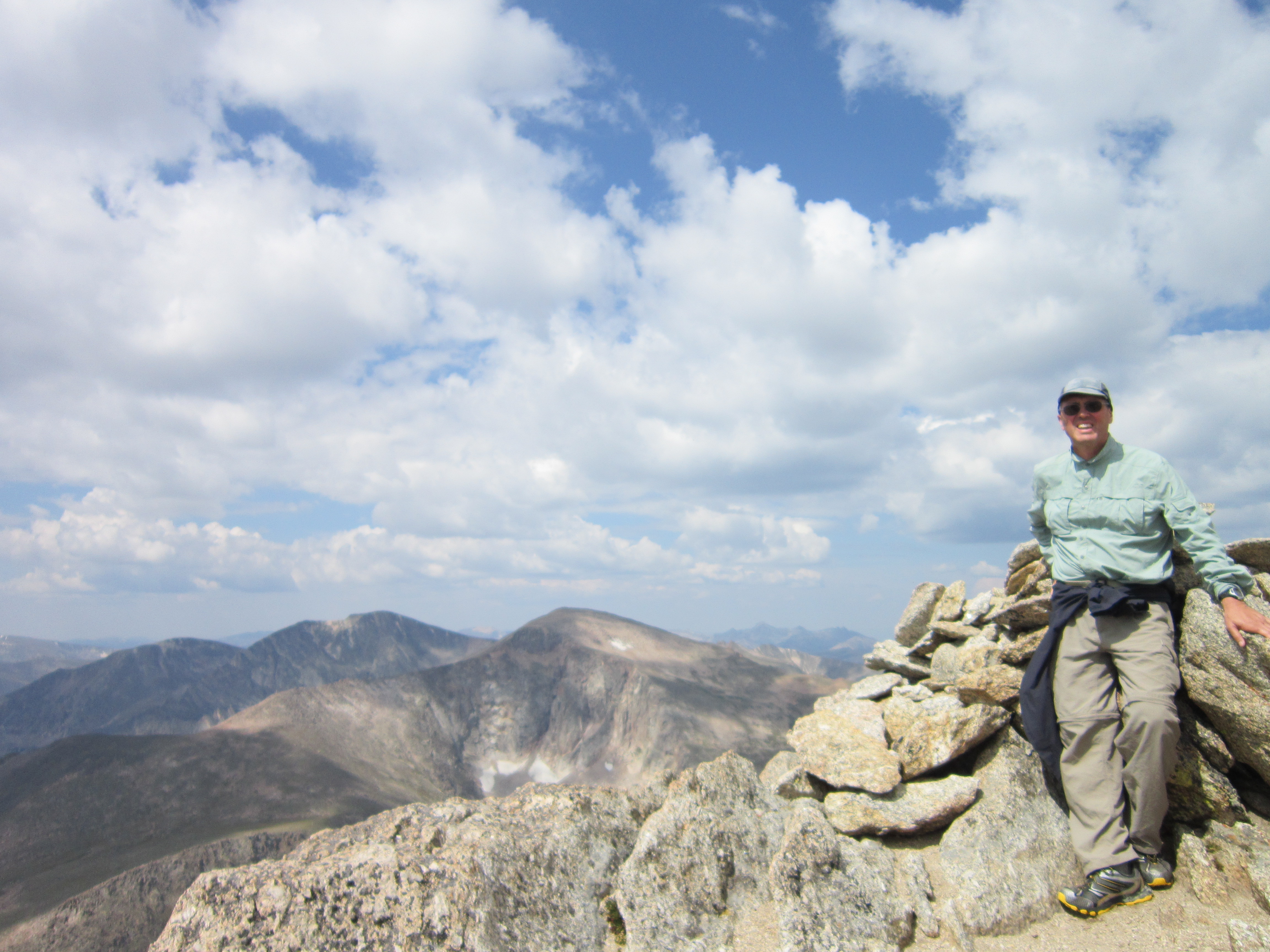
At 11:10 I reached the summit. The peak has a spectacular view to the south and west. I could see Lawn Lake, Crystal Lake, the Saddle, Fairchild Mountain and even Ypsilon Mountain. I found the climber’s log in a plastic plumber’s pipe and discovered that I was the fourth climber that week! I realized that there must be an established route (directly up the ridgeline from the southeast?) and that I might be able to use a portion of it later on.

My pack remained a thousand feet below me so I decided to continue my original plan: to contour around Mummy Mountain, remaining in the West Creek basin until I came to the ridge above Tileston Meadow’s. The ridge was at 11,750 feet so I figured I could gradually lose some elevation as I hiked around the mountain side. I scrambled back to my pack and continued on.

The terrain remained mostly meadow with many large boulders. Occasionally I encountered large clumps of boulders that I had to go over or around. I generally chose to go around, dropping to a lower elevation.

Contemplating which path to take

As I picked my way along the slope, I reflected on what a seminary professor once regarding Psalm 119:105, Your word is a lamp to my feet and a light to my path.   He said, “Remember that the lamps of ancient Israel where not blazing maglite flashlights by which you can see the path for hundreds of feet.  Rather they were flickering oil lamps which gave you visibility of only a few feet.  But that is all you need.  The text reminds us that God does not reveal the whole path at once, but just enough to show us the way.”

As I worked my way around Mummy Mountain, I thanked the Lord for each small section of path that I could see.

Lord Jesus, show us our path for today.

Next: a stormy afternoon.

Backpacking For a Weary Soul

Last Monday I attended a class on light-weight backpacking at my local REI store. The class re-energized my long-term goal to hike the Washington state portion of the Pacific Crest Trail. The Pacific Crest Trail (PCT) is a 2,650-mile national scenic trail that runs from Mexico to Canada through California, Oregon and Washington.

In the summer of 2009 my son and I hiked 90 miles of it in seven days. We started at Stevens Pass and ended at Snoqualmie Pass east of Seattle. We had great weather except for the last 24 hours, where we hiked through a cold, wet fog and heavy drizzle. It was a trip that whetted my appetite for more. I am planning to hike another section in 2013.

A key component to long-distance hiking is to keep your backpacking basics to a minimum, ideally under twenty pounds. This include the pack, sleep system, shelter, clothes and cooking gear. This does not include food, which is usually about two and half pounds per day. My pack for a week-long trip should start at 35-40 pounds, not including water, but in 2009 it was over 50 pounds.  I need to lose pack weight.

As a child, I first saw people with strange monstrous packs when our family went on a short nature hike near Lake Crescent in Olympic National Park. As we meanders and strolled towards Marymere Falls, a group of backpackers marched by us as they headed down out of the mountains. I asked my dad about the packs and people. He told me about backpacking and how hikers could travel far into the mountains. My thirst for the high alpine adventure started that day.

One thing backpacking has taught me is how little we truly NEED to survive. I can carry it all on my back if I choose. When I return, I do appreciate a dry house, warm bed, running water, flush toilets, fresh vegetables and electrical appliances (like my laptop). Still backpacking is a way of cleansing my soul and mind of my perceived need for more stuff. (Except perhaps my need for more light-weight backpacking stuff.)

Backpacking gives me a deep appreciation for Jesus’ words from Matthew 11:28-30.

Come to me, all you that are weary and are carrying heavy burdens, and I will give you rest. Take my yoke upon you, and learn from me; for I am gentle and humble in heart, and you will find rest for your souls. For my yoke is easy, and my burden is light.

How do you keep your soul light when you are weary?

Lord Jesus, let us find rest for our weary souls in you.

Ocean Hike

Ruby Beach

As a teenager I backpacked two portions of the wilderness beaches along the Pacific Ocean.   The beaches were part of the Olympic National Park in Washington state and were the only trails open during the winter season (the high mountain passes were snow-covered).

I use the word “trail” loosely, because most of the route was the beach itself. Hikers simply kept the ocean on  their right or left, depending on whether they were going north or south.  Campsites could be found on the beach itself or inside the neighboring forest.  There were no roads or towns, just forest, ocean and beach.

However beach hiking had its tricky sections.   Steep, rocky headlands would jut out into the ocean.  Theses headland had little or no beach so a hiker had a choice.   Wait for low tide and race around the headland or find a trail that led up and over the headland to the open beach beyond.   I carried a tide table with me when I hiked, so I could know when the low tide would be and plan accordingly.   If I arrived at a headland too early or too late, I had to wait or try to find the bypass trail.  (Sort of like trying to find a portage trail in the BWCA.) 

I often think our spiritual walk with Jesus is like hiking on the beach. There can be long sections were the path is very clear and beautiful, yet wild at the same time.  We simply need to remember to keep the ocean (Jesus) on our left or right.  But then we come to some rocky headland, some struggle or challenge, that blocks the path.   We learn to either stop and look at the tide table, (a sort of prayer time) waiting for the tide to recede.  Or we take our chances in finding the wilderness trail (never easy) that leads up and over.    We may even loses sight of the ocean (Jesus), for a time.    Yet the sound of crashing waves and smell of salt air reminds us that Jesus is close by.

What images of walking with Jesus do you carry in your life?

Seek or Wait?

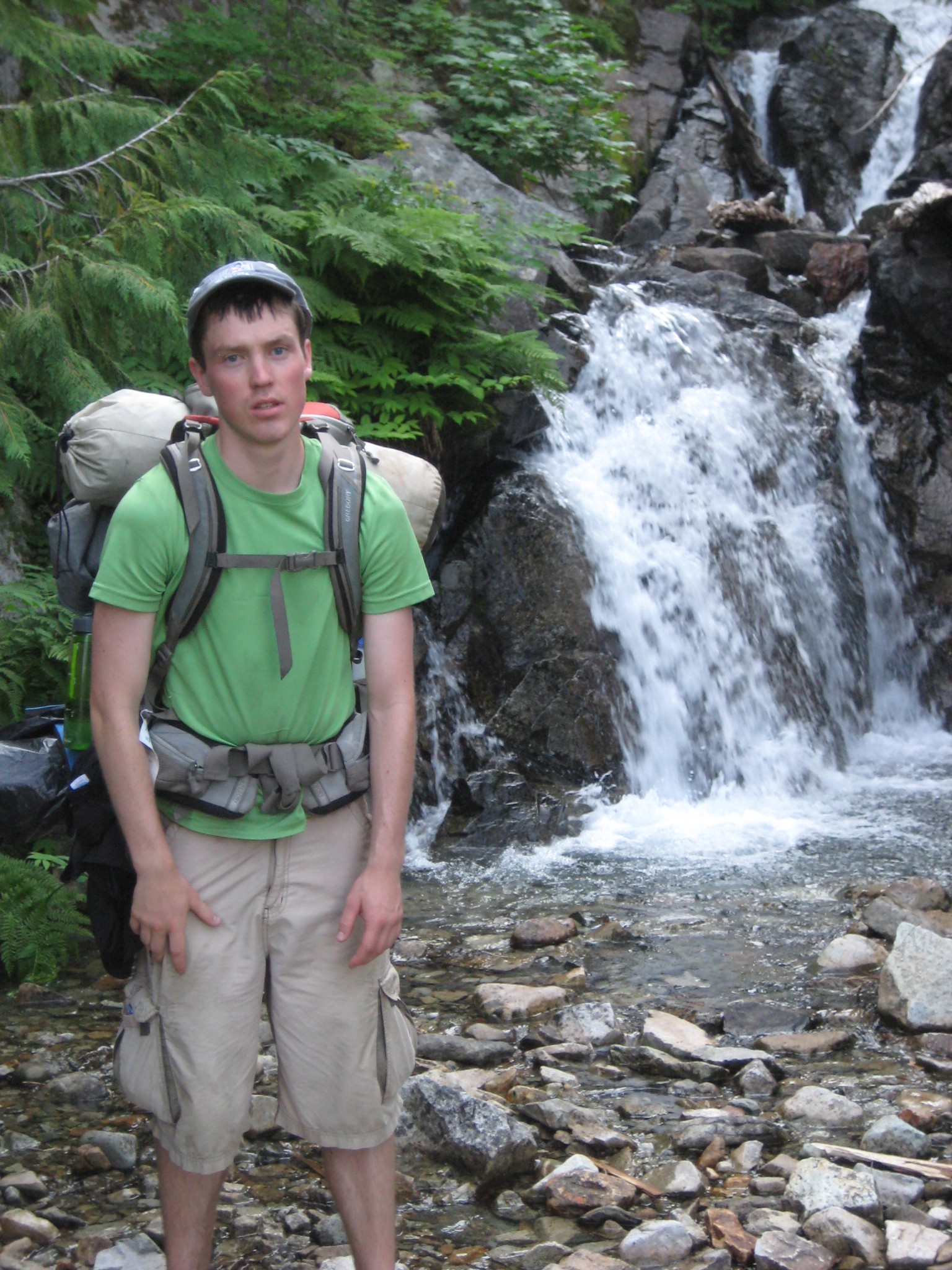
Pastor John hiking in Cascade Mountains of Washington

Tomorrow Psalm 27 will be read in worship.    Psalm 27 begins with a powerful insight, “The Lord is my light and my salvation; whom shall I fear? The Lord is the stronghold of my life; of whom shall I be afraid?”  God is a light to our path, but the path can be difficult, strenuous, challenging.  We fear what is ahead so we try to make our own way.   Our fear leads us a way from God, like a backpacker who leaves the trail for what he thinks is a short-cut, only to discover that he is lost and alone. 

That lost, alone person needs to get back on God’s path, but how?  The psalmist gives us two hints in how to retrace our steps.  In Psalm 27:8 the psalmist writes,  “Come,” my heart says, “seek his face!” Your face, Lord, do I seek.  When we have gotten off trail and are lost, we need to admit that we are lost and we need God’s direction.   To seek God’s face is to seek intimacy with God, to have a direct face-to-face conversation with our creator and savior.  This is an action of the heart, more than the mind.

But then the psalmist gives wisdom on how to seek God’s face.  In verse 14,  Wait for the Lord; be strong, and let your heart take courage; wait for the Lord!  This can be difficult in our instant response world.   We expect God to immediately answer our requests.   Waiting can be so difficult.  Lost backpackers are instructed to find a safe place and wait for the rescue team to find them.  Their inclination is to go thrashing about in the woods, but that only makes rescue more difficult. 

Seek the Lord’s face.  Wait on the Lord.  Still wise words for us to heed in our daily walk with God. 

How do you seek or wait on the Lord?