Category Archives: Bible

The Rock

Raise Your Ebenezer

Our house has a large granite rock in our backyard. Over two feet high, it is not something easily moved. It may have been there since the house was constructed or perhaps since the glaciers covered Minnesota. The rock is a pain to mow around, but it is a marker in our yard.

Several years after we moved into our house, I looked out the window one day and saw a young boy sitting on the rock. At first I did not recognize him as one of the neighborhood children, but when his mother walked over and called him, I knew who he was. He was the son of the former owner of our house. The son had come back to see, touch, and sit upon the rock that had long been his.  I sensed that he received some strength and comfort in that visit to the rock.

In Israel, large rocks were very common and became part of their faith language. In I Samuel 7, the prophet Samuel invokes God’s help to lead the Israelites in victory over the Philistines. He marks the victory by raising a stone marker.

Samuel took a single rock and set it upright between Mizpah and Shen. He named it “Ebenezer” (Rock of Help), saying, “This marks the place where God helped us.” I Samuel 7:12

In Psalm 18:2 rock is used a symbol of strength and security, where we can find safety.

The Lord is my rock, my fortress, and my deliverer, my God, my rock in whom I take refuge.

Jesus uses the image of a rock to describe his teachings and how we are to rely on his teachings as a firm foundation:

“Everyone then who hears these words of mine and acts on them will be like a wise man who built his house on rock.” (Matt 7:24)

Paul, using the story from Exodus when Moses provided water to the thirsty Israelites in the wilderness, described Jesus as the Rock from which comes spiritual water:

For they drank from the spiritual rock that followed them, and the rock was Christ. (I Cor 10:4).

How is a rock a helpful image of God for you? Would you use a different image today?

Lord Jesus, be my rock and fortress today.

The Journey Towards Transformation

The Turning Point in My Journey

Tomorrow I am driving to Bloomington, Indiana, to pick up my daughter Suzanne and her things and together we will drive home.  It will be short trip, but I am looking
forward to it.  I am not looking for any drama, but I am open to an adventure and change during the journey.

Journeys are a frequent theme in the Scriptures. A couple of weeks ago in worship, we read about the two disciples who walked seven miles to Emmaus and during the walk encountered Jesus.  Their simple walk became a spiritual journey of transformation. (I posted on this story here).

There are many other such journeys in the Bible.   The Israelites journeyed/wandered in the wilderness for forty years after their exodus from slavery in Egypt and prior to their
arrival in the Promised Land. Elijah the prophet made the journey from Northern
Israel to Mt. Horeb in Sinai to encounter God (I Kings 19).  Jonah made a side trip to the sea and a whale before making the trip to Nineveh. Jesus went into the wilderness for forty days to pray and fast before starting his ministry (Matthew 4) and later set his face towards Jerusalem for his passion (Matthew 16:21).   The book of Acts is filled with journeys, especially Paul’s missionary sojourns.

Contemporary literature also uses the metaphor of journey for spiritual transformation.  J. R. R. Tolkien’s Lord of the Rings and C. S. Lewis’ Voyage of the Dawn Treader both use the journey motif as means to describe the main characters movement from self-centered, complacent beings to courageous, self-sacrificing heroes.   Their stories carry the Biblical image into our current worldview.

I don’t expect any major transformation during my drive to and from Indiana.  After all it is only three days.  But I think any journey has the potential to open us up to new perspectives and insights, especially if we invite God to be a part of the journey.  I’ll let you know when I return.

Jesus said, I am the way. (John 14:7)

Do you remember a trip or journey where the Spirit renewed or redirected your life?

Prayer: Lord Jesus, guide me this day on the path to life.

Turning the Faucet On

The New Faucet

Yesterday (Friday) was my day off. Days off are meant to be relaxing, non-stressful, and harmonious, so naturally yesterday was filled with drama and tension. (Warning: this post is longer than most and slightly sanitized).

Several months ago I had purchased a new faucet for the downstairs bathroom. I had procrastinated with installation, because the upstairs bathroom had been a pain. Our house, built in the early ‘70s, does not have shut-off valves under the sink and the pipes are old. The only scheduled event yesterday was to take my mom to the dentist in the early afternoon. So, at my wife’s suggestion, I got started on the faucet replacement hoping to be finished by noon. After all, the instructions with the faucet said it could be installed easily without hand tools!

The instructions said nothing about removing an old faucet in the tiny, cramped space of small bathroom, especially when the locknuts are rusted and frozen. My wife, trying to be helpful, asked how she could help. In as few words as possible, I strongly recommended that she stay far away. With frustration building in my throat, I grunted, groaned and called out for mercy, as I twisted, turned and grappled with a ten-cent nut. I tried first one tool, then another; I sprayed WD40 around every nut, bolt, faucet, pipe and joint within a six-mile radius. I was not finding harmony.

Finally I removed the old faucet and started installation of the new. It actually progressed smoothly. The instructions were helpful and accurate. I thought, “I could be a plumber,” until I tried to attach the waste water trap and the waste pipe snapped off behind the wall. Reality crashed in upon me.

“I am not a plumber!” I shouted at the world, or more specifically my wife.

On the phone she quickly found a plumber who could come that afternoon. She took my mom to the dentist, while I waited for the expert. Jerry arrived, courteous and knowledgeable. He got to work, without any groans, shouts or comments. He had all the right parts and tools in his truck. Within an hour he had the faucet, two new shut-off valves, and a new waste pipe and trap installed and working properly. I paid for his service, grateful for his expertise.

This morning I read an e-mail that one reason the Christian faith is at risk, is that we have turned it into a religion run by experts. People feel uncomfortable studying the Bible because they don’t feel like they have the proper tools or expertise to understand it. Many feel like they will only make a bigger mess if they read the Bible on their own, like me trying to replace a faucet.

I admit that there is a time and place for experts, even in Bible study. Yet most of us take time each week or month to mow the lawn, plant a garden, change the light bulbs, and clean the kitchen without using an expert. To simply read the stories of Scripture and to ask for God’s guidance does not require an expert. You can do it today. God delights in teaching us the story of his people.

Your word is a lamp to my feet and a light for my path. (Psalm 119:105)

What fears keep you from reading the Bible? What joys have you discovered in God’s Word?

Lord Jesus, teach me to read your Word with joy and hope.

Acts 2:42 part 2

Lord's Supper by Sadao Watanabe

The second chapter of Acts is a pivotal chapter in the history of God’s people.  The chapter begins with the explosion of the Holy Spirit in the lives of the Jesus’ disciples, continues with Peter’s first sermon which results in 3000 baptisms, and concludes with a summary statement on the life of the earliest disciples.  The 3000 new believers did not simple wander off into their old patterns of behavior. Rather they became devoted followers of Jesus.

They devoted themselves to the apostle’s teaching and fellowship, to the breaking of bread and the prayers. (Acts 2:42)

The breaking of bread was mostly likely the earliest version of the sacrament of Holy Communion.  The meal was one concrete way to stay connected to Jesus Christ.  Through the Lord’s Supper they remembered him (I Cor. 11:24).  The meal also meant that Jesus communed with the believers because it was his own body and blood that he gave with the bread and wine.  Jesus was truly present.  Also it proclaimed the Lord’s death until Jesus returned (I Cor 11:26).

Holy Communion continues to be a central part of our Christian faith and worship. We remember the past events of Jesus’ death and resurrection.  We commune with him in the present moment as we share the meal of his body and blood. And we look forward to our future hope of Christ’s return in glory.

 The early disciples also devoted themselves to the prayers.  Prayer was not new to the church. The Jews had been praying for centuries.  Jesus had taught the disciples to pray using the words of the Lord’s Prayer.    With the coming of the Holy Spirit, their prayers became supercharged.  So can ours.

Likewise the Spirit helps us in our weakness; for we do not know how to pray as we ought, but that very Spirit intercedes for us with sighs too deep for words. (Romans 8:27)  

The same Holy Spirit that powered the early church in its mission is the same Holy Spirit that works through our prayers.  Let us ask God to create within us a similar devotion to the Apostle’s teachings, fellowship, breaking bread and prayer.

To which practice is God calling you to be devoted?

Lord, create in me a heart of devotion.

Acts 2:42 part 1

Studying the Apostle's Teachings

Life in the early church may sound strange to our contemporary ears. The description of miracles and healings, the passionate letters of Paul, and the missionary zeal of the apostles can appear to be other-worldly.  Our lifestyle, political systems, technologies and economic complexities can seem distant from the stories of the Bible. Perhaps that is why I value Acts 2:42 so much.

Acts 2:42 describes the life of the early church in Jerusalem, shortly after Peter preached his first sermon and several thousand people placed their trust in Jesus as their Savior and Lord.

They devoted themselves to the apostle’s teaching and fellowship, to the breaking of bread and prayers. (Acts 2:42)

Their four signs of devotion are still practiced by followers of Jesus today:
1. Apostle’s Teachings
2. Fellowship
3. Breaking of Bread
4. Prayers

Followers of Jesus continue to study the “apostle’s teaching:” Matthew, Mark, Luke, John, the Book of Acts, the Epistles of Paul, John and Peter.   The apostle’s teachings became our New Testament. We study them to understand who Jesus is and what his life, death and resurrection mean for us.

As we study together we continue to create fellowship, because we discover how the teachings impact our shared lives.  We listen to each other’s joys and sorrows.  We care for one other during times of illness, stress or hardship.  Fellowship is more than a shared cup of coffee after worship; fellowship is the shared cup of blessing and generosity through all of life.

One of my deepest tastes of apostle’s teaching and fellowship came in college when I participated in the Haverford-Bryn Mawr Christian Fellowship.  Every Friday evening twenty to forty college students would gather to study God’s Word and to reflect together how it impacted our lives.  It created a missionary zeal in many of us.  We did not want to simply survive college with our faith intact. We felt a calling to bear witness to Jesus Christ in an often academically hostile environment.   The study and fellowship gave us the courage and compassion to speak.  The ancient devotions brought us life.

How has the study of the apostle’s teaching affected your fellowship?

Tomorrow, reflections on the breaking of bread and prayers.

 Prayer: Lord Jesus, teach me to be devoted to your ways.

Cleopas the unknown apostle

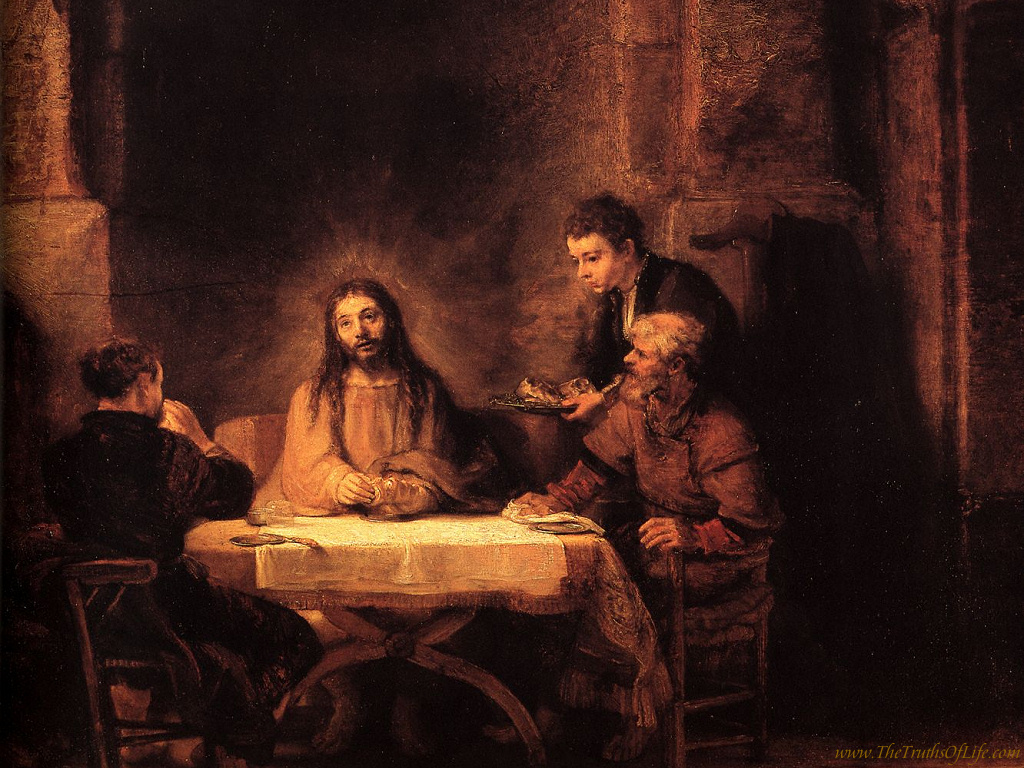
Cleopas is mentioned once in the Bible.  In Luke 24 two disciples leave Jerusalem on Easter evening and walk to Emmaus, a village seven miles away.  They are distraught that their leader has been executed.  They are joined in their walk by a stranger who is the resurrected Jesus, but they do not recognize him. (This is a common experience for Jesus after his resurrection; I think it still happens today.)   As they walk along the stranger (Jesus) asks what they are discussing about Jerusalem. 

Then one of them, whose name was Cleopas, answered him, “Are you the only stranger in Jerusalem who does not know the things that have taken place there in these days?” (Luke 24:18). 

Jesus Revealed During The Meal in Emmaus - Rembrandt

Cleopas is not listed in Luke 6 with the other apostles.  We do not know how deep his commitment was to Jesus.  Yet Jesus chose to reveal himself to Cleopas and his unnamed companion when they stopped for a meal together.  Cleopas, in turn, had the opportunity to race back to Jerusalem and tell the other disciples what he had seen and heard. 

He did not care whether he got future credit.  He simply had to tell someone.   

I think ministry is often like that today.  God does not always choose the most committed or gifted or wisest person to be the messenger.   God chooses the one who is willing to speak her mind and who is willing to share the good news that God is at work. 

Cleopas was willing to hurry back to Jerusalem and to testify to the truth.  He ended up where he started, but everything changed in the journey to Emmaus and back. 

What journey are you on?  Are you open to God speaking through a stranger?

Prayer: Lord Jesus, open my heart, soul, and mind to hear your voice and to do your will.

Remembering God’s Way

Eustace and Jill from Silver Chair by Dunechaser on Flickr

I am on a C. S. Lewis binge, rereading his Chronicles of Narnia.   The Silver Chair is this week’s read, in which Eustace Scrubb and Jill Pole are given the mission of rescuing the Narnia Prince Rilian.  Near the beginning of the story, King Aslan gives to Jill four signs that will aid in their mission.  She is instructed to remember the signs by repeating them every day, telling them to Eustace and later their companion, Puddleglum. The discipline of the repetition will allow them to recognize the signs when she, Eustace or Puddleglum encounter them.  In the hardship of her journey she neglects the repetition and therefore they must face unnecessary challenges.

This act of remembering echoes God’s words to the Israelites while they were wandering in the wilderness, prior to entering the promise land.  You shall love the Lord your God with all your heart, and with all your soul, and with all your might.  Keep these words that I am commanding you today in your heart.  Recite them to your children and talk about them when you are at home and when you are away, when you lie down and when you rise.  Bind them as a sign on your hand, fix them as an emblem on your forehead, and write them on the doorposts of your house and on your gates. (Deut. 6:5-9)

The act of daily devotions can at time feel like a chore or empty ritual.  Yet to neglect the ritual is to open oneself to other, less healthy, less meaningful influences.  To read a passage of scripture, to pray the Lord’s Prayer, or to confess the Apostle’s Creed aides one in reorienting oneself to God’s mission and path. I confess I can easily be distracted from the main tasks of the day.  Asking for God’s guidance, courage and strength helps me stay true to my mission to trust, live and serve.  

How has daily time with God enhanced your life of faith?

Prayer: Lord God, only you know what is ahead for me today.  I ask you to guide my thoughts, words and deeds, that they might bring honor to you.

Visitor from Wibaux

Yesterday after worship, I met Wayne, a visitor from Rochester, New York.  He was here in Minnesota on a business trip and decided to worship at Resurrection.   We had a pleasant conversation around visiting churches.   After our conversation, I observed others conversing with him.  Hospitality was being practiced.

Wayne’s visit reminded me of my first week at my old church.  My first Sunday morning was a bit overwhelming.  Like Resurrection, it was a growing congregation and being the new staff person, every face and name was new to me. A primary part of my job was to follow-up with visitors via letter and phone calls.  On Monday morning, as I looked through the small stack of visitor cards, one card stood out: a visitor from Wibaux, Montana.

Pierre Wibaux, the town's namesake.

Wibaux is a tiny town on the eastern edge of Montana.  Wibaux has no distinction, other than it was where my father grew up in the 1920’s and 1930’s.  My grandfather had been the county doctor.  Though the area has hit hard times in recent years, my father always spoke with great fondness for this high-plains town.  

When I saw the Wibaux welcome card, I wrote a special letter of welcome with a note asking if the visitor knew of my grandfather or father.  She wrote me back a short note, saying that yes, she had known my grandfather. In fact, he had assisted in the delivery of her children years ago.  She also wrote how she appreciated the visit to the church and the hospitality.  Her kind letter gave me some much-needed affirmation during a stressful transition.

In Genesis 18, Abraham is sitting by his tent when he spots three visitors approaching.  He immediately offers hospitality to the visitors, providing a special meal for them.  Soon he discovers that his guests are angelic visitors from God, who bring the promise of a son for Abraham and Sarah.  Hospitality has always been a hallmark of God’s people that brings blessings to both the giver and recipient.

How have you practiced hospitality recently?  When have you received hospitality from others?   

Prayer: Lord Jesus, may I practice mercy and kindness towards the stranger in your name.

Hidden With Christ

Hidden Picture #1

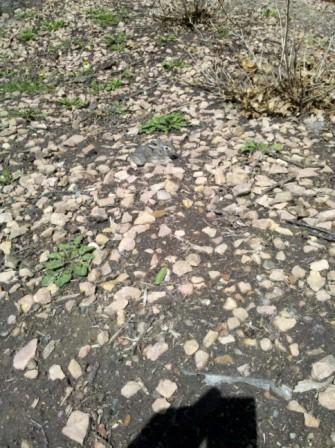
Yesterday, I was cleaning out a small pile of fallen leaves around a bush near our house when suddenly I was startled by a flash of movement from the pile.  A small animal scurried out, frighten by my invasion of its space.  I was startled as well, not sure what kind of animal it was.  I first thought it was a gopher or mole, but after looking more carefully I discovered it was a small rabbit. 

I left the small rabbit burrow alone, and went inside for my camera.  The rabbit stayed motionless for several minutes so I was able to take a picture.   After taking the picture, I saw how well the rabbit blended into its surroundings (see picture #1).  It was hidden even while in plain sight.  Only on closer examination could it be seen (see picture #2).   

Hidden Picture #2

As I thought about this encounter, a Bible phrase flashed into my head, hidden with Christ.  I had to do a search on the computer to find the exact verse. 

Set your minds on things that are above, not on things that are on earth,  for you have died, and your life is hidden with Christ in God. Colossians 3:2-3

Paul, the writer of Colossians, is encouraging us to see our lives as having a secure anchor in the midst of constant earthly turmoil and temptation.  Our place of safety is our relationship with Jesus Christ.  He is our secure burrow, our hiding place, when the evil one attacks.

I have not gone near the rabbit burrow since that first encounter, nor have I seen the small bunny.  I am unsure if I damaged the burrow beyond repair.   And upon further reflection, after seeing the horrific destruction this week by tornadoes in Alabama and other parts of the south, I can never be sure that my own home is forever safe from such destruction.  

The one secure promise is that my life is hidden with Christ and I am safe with him.

In whom is your life hidden?  Where do you find safety and security?

Prayer: Lord Jesus, keep me safe in you, my rock and shield.  Bring comfort, strength and courage to those whose homes and families have been devastated by storms.

John’s Portrait of Jesus

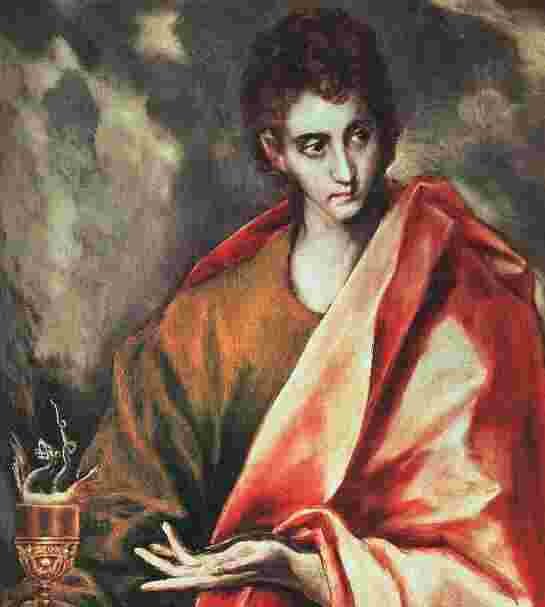
St. John the Evangelist by El Greco

At the end of chapter twenty, John declares,

Now Jesus did many other signs in the presence of his disciples, which are not written in this book. But these are written so that you may come to believe that Jesus is the Messiah, the Son of God, and that through believing you may have life in his name. (John 20:30-31)

Contemporary readers of the Gospels often compare them to modern biographies, but the Gospel writers did not intend this.  They were creating vivid portraits of Jesus that inspire and transform the reader.  The writer of John states that he could have included other material but chose not to.   The gospel writers were artists, not biographers.

Art isn’t only a painting. Art is anything that’s creative, passionate, and personal. And great art resonates with the viewer, not only with the creator.

What makes someone an artist?  I don’t think it has anything to do with a paintbrush.  There are painters who follow the numbers, or paint billboards or work in a small village in China, painting reproductions.  These folks, while swell people, aren’t artists.  On the other hand, Charlie Chaplin was an artist, beyond a doubt. So is Jonathan Ive, who designed the iPod. You can be an artist with oil paints or marble, sure. But there are artists who work with numbers, business models, and customer conversations.  Art is about intent and communication, not substances. (Seth Godin, Graceful, Making a Difference in a World that Needs You. 2010, p. 22)

The writer of John, inspired by God, created a masterpiece. 

How is your life touching others with creativity, joy and vibrancy ?

Prayer, Lord Jesus, inspire me to create beauty and joy in your name.