Category Archives: Body Mind Spirit

The Unshakeable Joy: A Christian Response to Turmoil

Joy. It’s a word we hear often, but do we truly understand its depth, especially in the context of our Christian faith? In a world that often equates happiness with fleeting pleasures and circumstantial successes, it’s crucial to distinguish between happiness and the enduring virtue of joy.

Happiness, as we commonly understand it, is often tied to our circumstances. Our team wins, we get a promotion, the sun shines – these can all bring us moments of happiness. But what happens when the team loses, the job gets stressful, or the clouds roll in? Happiness, being dependent on happenstance, can be fickle.

The joy of the Lord is your strength. Nehemiah 8:10

Joy, on the other hand, is something far more profound. It’s not a fleeting emotion but an abiding sense of God’s loving presence in our lives. It’s a deep-seated assurance that transcends our current circumstances, rooted in our eternal connection with God. This is the kind of joy that the Apostle Paul speaks of so frequently in his letter to the Philippians.

Paul wrote this letter while imprisoned, facing hardship and uncertainty. Yet, his words are filled with exhortations to rejoice. “Rejoice in the Lord always,” he writes, “again I say, rejoice!” (Philippians 4:4). How could Paul, in his difficult situation, speak of joy? Because his joy wasn’t dependent on his circumstances. It was rooted in his unwavering faith in Christ.

This is the essence of Christian joy. It’s not about putting on a fake smile or pretending everything is okay. We feel the pain or anger of the moment. Christian joy is about recognizing God’s constant presence and love, even in the midst of trials. It’s about trusting that God is working all things for our good, even when we can’t see the bigger picture.

Christian joy is a gift, a fruit of the Holy Spirit (Galatians 5:22). It’s cultivated through prayer, immersing ourselves in God’s Word, and fellowship with other believers. It’s a joy that strengthens us, gives us hope, and empowers us to face whatever life throws our way.

This week, let’s reflect on the source of our joy. Is it tied to fleeting circumstances, or is it rooted in the unshakeable love of God? Let’s strive to abide in joy, allowing it to transform our lives and shine brightly in a world that desperately needs it.

Two previous posts on JOY from my blog
Rocks

The Super Bowl of Emotions


Embracing Gentleness: The Strength of Meekness

In a world where loud voices often dominate and confidence is measured by brashness, the Christian value of gentleness stands out as a quiet yet powerful call to action. Philippians 4:5 urges, “Let your gentleness be known to everyone.” This simple yet profound statement challenges us to embody Christ’s love, patience, and humility in a culture that prizes assertiveness and power.

Gentleness is not weakness; it is strength under control. It listens with compassion, speaks with kindness, and responds with grace. Jesus affirmed this in the Sermon on the Mount: “Blessed are the meek, for they will inherit the earth” (Matthew 5:5). In a world that equates success with dominance and boldness, meekness is countercultural. Yet, it is Christ’s way—a way that values humility over pride, listening over speaking, and compassion over confrontation.

Our culture often celebrates forceful speech and unwavering confidence, creating a world where people shout over one another rather than seek understanding. This division makes gentleness a rare and precious gift—one that can heal wounds, build bridges, and restore relationships.

The practice of Centering Prayer offers a powerful antidote to this cultural noise. In my own life, daily quiet sitting with God is transforming me. Centering Prayer teaches us to “return ever so gently to the sacred word” when our minds wander. This practice nurtures a spirit of gentleness, helping us approach our thoughts—not with harshness or self-condemnation, but with patience and grace. Instead of forcing control over our minds, we gently return to God’s presence. In doing so, we cultivate endurance—not just for prayer, but for life’s challenges and relationships.

Gentleness is not just for moments of peace; it sustains us in life’s storms. In a chaotic world, we are called to reflect Christ’s gentleness. When we let our gentleness be known, we demonstrate a power that transcends human strength—a power of peace, love, and grace.

So today, let’s embrace gentleness. Find a spiritual practice, like Centering Prayer, that nurtures a gentle heart. By doing so, we reflect Jesus to the world—one act of kindness at a time.

To learn more about Centering Prayer check out these past blog posts
Centering Down In Patience
Building Resilience Through Contemplative Prayer

Seed of Silence

As a spiritual practice, I sometimes write journal entries in the present tense to give the memory depth and meaning. The following is one memory regarding my early introduction to practice of silence.

Olympic Lutherhaven Bible Camp

Ten miles from my adolescent home in Bremerton, Washington, is a small Bible camp named Lutherhaven.  Situated on the west side of Wildcat Lake, the camp has two sections.  The first is a picnic area with a large picnic shelter for congregational gatherings, a softball field and a small swimming beach with a short dock.  Across a small footbridge and deeper into the tall fir forest is the camp itself.  Six or so small sleeping cabins with metal frame bunks line a path in the woods. They feel ancient and bare-bones to my teenage  senses.  The path leads to the tall A-frame building with cedar shakes, through which I can see the sky.   The building holds the kitchen, open dining hall/chapel, and a small office/storage rooms.   My first trips to the camp had been for the annual confirmation retreat that always seem to coincide with the fishing opener so that my pastor could spend the early morning on the dock fishing.

My strongest memory and an essential seed to my spiritual path is a High School retreat.   Jerry and Nada Torgerson are my church Luther League advisors and I am about 16 years old.  Nada is a student at the Lutheran Bible Institute and they often bring engaging Bible lessons or spiritual practices for our Luther League gatherings.  At this retreat of a dozen teenagers Nada invites us to practice silence for several hours one evening, instructing us to be silent and pray or read scripture.  We are free to move about the camp but not to engage in conversation with each other.

At first I am surprised that they want us to be silent.  Usually they want us to talk about Jesus, God, the Bible, or other religious material.  I don’t think I will like the silence, a whole evening to sit, pray, and reflect alone.  After all I enjoy talking!

 I wander into the kitchen wondering if there might be something to snack on. After looking and finding nothing appetizing, I sit on a counter and just observe the other people there.  Even though we are not talking, we are interacting – something about the silence seems to draw us into deeper intimacy – as if we have peeled back one of the masks we are often wearing and now are seeing each other without the persona.  A feeling of contentment enfolds me. I silently pray a word of gratitude.

In the chapel, I read a short piece of scripture and start to pray my thoughts, but my mind wanders after a bit. The silence is disarming. Is God truly here? What time is it?

After awhile I go outside, down to the dock to sit.  The stillness of the night strikes me.  I feel the cold air as I breathe.  I look up and marvel at the night sky and the silent forest around me.  I sense that there is more here than I am ready to receive. I am drawn into the silence yet unsure how to be with it.  I am trying to analyze it and figure it out.  I have glimpses of something special going on, but then my mind moves on to other ruminations and thoughts.  The evening ends and we all quickly jump back into conversation.  We talk about how cool the silence was, but it is a novelty that we are not quick to repeat.  

I sense that the evening of shared silence was healing and significant, yet I am not sure how to move deeper with it.  I have no instruction about how to deal with my relentless thoughts and ideas.  I vaguely hear a call or whisper in the silence but unsure what to do.  A seed of silence is planted, but it would take decades for it to sprout and grow. Not until I pick up the daily spiritual practice of Centering Prayer (in my sixties) will the silence begin to show its true depth and beauty.

If you sense a whisper or call to silence, sign up for the Introduction to Centering Prayer on Zoom that I will be co-teaching, starting Tuesday, November 10 at 9am.  You will learn how to build a daily spiritual practice of twenty minute silence and how to “manage” the ongoing thoughts, feeling and sensations that accompany us as we consent to God’s presence and action within us.   More information and registration are at https://www.minnesotacontemplativeoutreach.org/enrichment.html#intro

Building Resilience through Contemplative Prayer

Gooseberry Beach along Lake Superior

As winter approaches and the Covid-19 pandemic continues, dread can enter our hearts and minds.  Though the arrival of a Covid-19 vaccine(s) is highly probable it will still be late spring or summer before the necessary percentage of the population has been vaccination to ease the pandemic.   Many of us are suffering from “pandemic fatigue” or even “pandemic anger.”  We want (or demand) that the social restrictions be lifted so we can get back to “normal.”  But humans are not controlling this pandemic – the virus is.

Though at times my faith wavers, I trust that God is greater than the virus and that God will bring forth good from that time of sufferingWe know that all things work together for good to them that love God and are called according to his purpose (Romans 8:28).  I seek to love God  and neighbor in midst of our shared trial.  

As a society we are learning how to live with the virus.  New medical treatments are being developed to treat those afflicted with the virus.  New behaviors, like keeping social distance, wearing face masks, washing hands, and avoiding large indoor crowds help reduce its transmission.   Old practices like phone calls, exercise and prayer help us maintain hope in the midst of the challenging time.  Particularly the spiritual practice of contemplative prayer can be most beneficial in helping one to quiet the reactive thoughts and emotions that can overwhelm us at times.

Contemplative prayer has a rich and broad history within the Christian tradition.  The heart of contemplative prayer is simply being with God.   Various spiritual practices seek to open our hearts and minds to the indwelling love of God.    For example, you can use the power of imagination in order to visualize or experience the stories of the Bible as your own story, such as imagining yourself as one of  the two sons in Jesus parable in Luke 15.  Another is the daily practice of gratitude which invites you to set aside time to give thanks to God for the many blessing you have receive.  These are but two of many spiritual practices.

The contemplative spiritual practice that I have embraced is Centering Prayer. I have written about on my blog here and here.   Centering Prayer is a method designed to prepare our minds and hearts to receive the gift of God’s gracious presence. Centering Prayer is not meant to replace other kinds of prayer; rather it casts a new light on them.  The twenty minutes of silence teaches me to Be still and know that I am God (Psalm 46:10). Centering Prayer is also called the Prayer of Consent, in which we let go of our own thoughts, reactions, desires and feelings, so that God may commune with us.  We let go, to let God.    Learning to let go has strengthen my resilience and patience during this year of Covid-19.

The Guidelines of Centering Prayer

  1. Choose a sacred word or a sacred breath as the symbol of your intention to consent to God’s presence and action within.
  2. Sitting comfortably and with eyes closed, settle briefly and silently introduce the sacred word as the symbol of your consent to God’s presence and action within.
  3. When engaged with your thoughts, return ever-so- gently to the sacred word. Thoughts include body sensations, feelings, images, and reflections.
  4. At the end of the prayer period, remain in silence with eyes closed for a couple of minutes.

 I will be co-teaching a four week Introduction to Centering Prayer (on Zoom), beginning Tuesday, November 10th from 9-10:30am.  Rev. Luna Gebbengreen will be co-facilitating with me. The class is open to anyone who wants to learn how to start their own practice of Centering Prayer.  Further information and registration are at minnesotacontemplativeoutreach.org/enrichment

Let Go with a Limp

hiking with Springloaded technology braceA few months back I wrote about my experience in letting go of running.  You can read about it here.  One thing I should make clear is that the physician who diagnosed the osteoarthritis in my right knee talked about me not running marathons again, but she did not rule running out entirely.  She prescribed an off-loading knee brace and said, “You might be able to run with it; I don’t know.”
FusionMensOAPlus_100

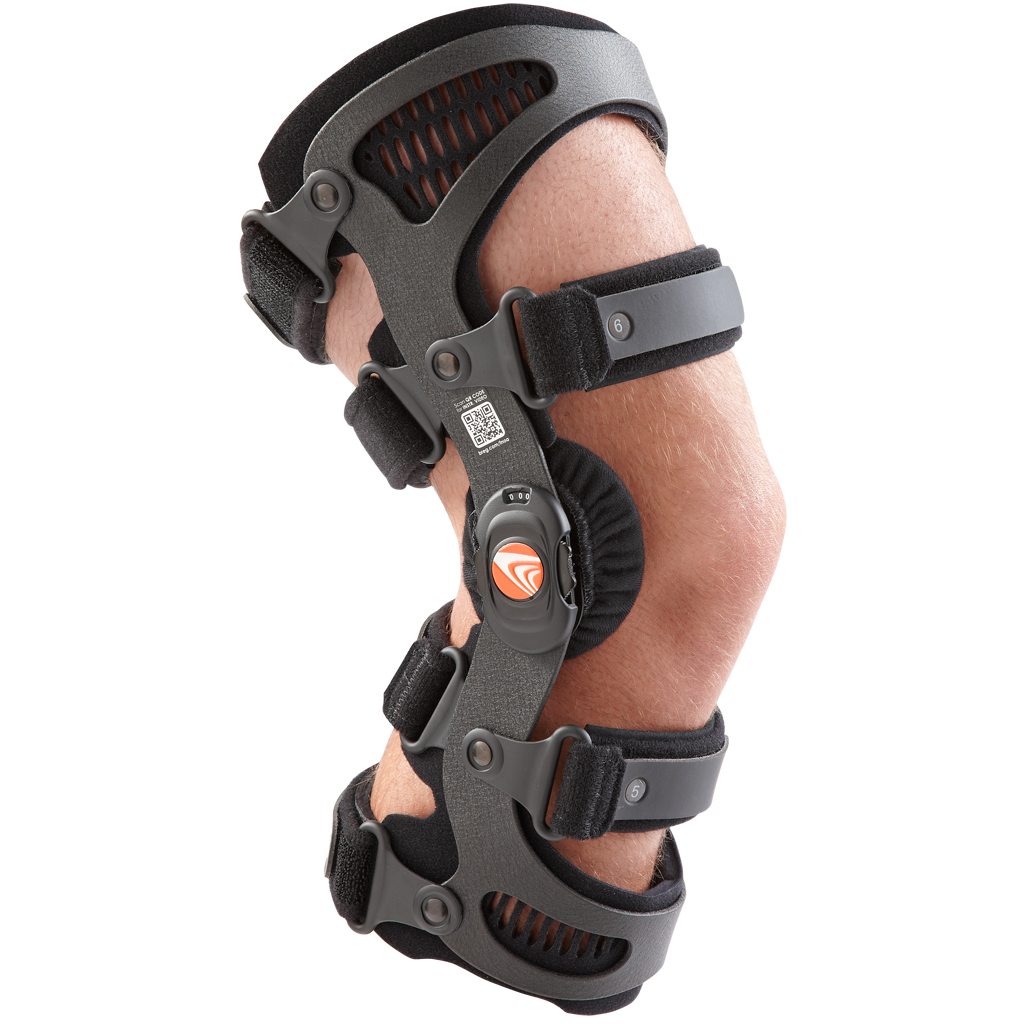
The Breg Fusion® OA Plus Osteoarthritis Knee Brace that I have. 

In early December I was fitted with the brace and started using it.  I noticed that I had a slight limp or hitch in my walk as I use it.  I mostly wear it when I go on longer walks of three to four miles. Also I have worn it on occasion at the gym, using it with an elliptical trainer and walking on a treadmill.  I have not as yet tried to run with it.  Partly because it is winter in Minnesota and I fear slipping on some patch of snow or ice.  Partly because I want my body to adjust to wearing the brace during walking.  This spring, when I feel the urge, I will try a short run.

For now, at this moment, I have set running aside.  I may be able to run in the future, but for now I am not.  What mindfulness continues to teach me is to live in this moment, accepting as life is, not as I would like it to be.  In the past I have wasted a lot of mental and emotional energy regretting some event or yearning for something different.  Learning to live in this moment is challenging.  My mind seems to have a default mental state (sometimes referred to as the default mode network) that likes to ruminate about some past event or fret about some future challenge or problem.

Jesus warned about the danger of future worries in Matthew 6:34

So do not worry about tomorrow, for tomorrow will bring worries of its own. Today’s trouble is enough for today.

Centering Prayer is retraining my mind to let go of these ruminations and worries while coming back to the simple awareness of God’s presence.  As one sits in centering prayer, one may notice the mind wandering to some thought, feeling or judgment. When one notices the mind moving off on this mental tangent, whether it be some joyful anticipation or some anxious though,  the practice of centering prayer is to gently let go of whatever thought or feeling my mind is following and return to my chosen sacred word.  I may do this dozens of times during my twenty minute session. It is the continual practice of letting go and turning to God that is the exercise portion of centering prayer.  (You can read more about centering prayer here.)

Like walking with my brace, my practice of centering prayer still feels like it has a pronounced limp. Yet my trust is not in my feelings during centering prayer, but in the fruit of the Spirit that has come with the practice in my daily life.  I have discovered that I am more consistent in letting go of my worries and my attachments, such as my fixation on running.  At least for the moment, which is sufficient for today.

Gate Closed

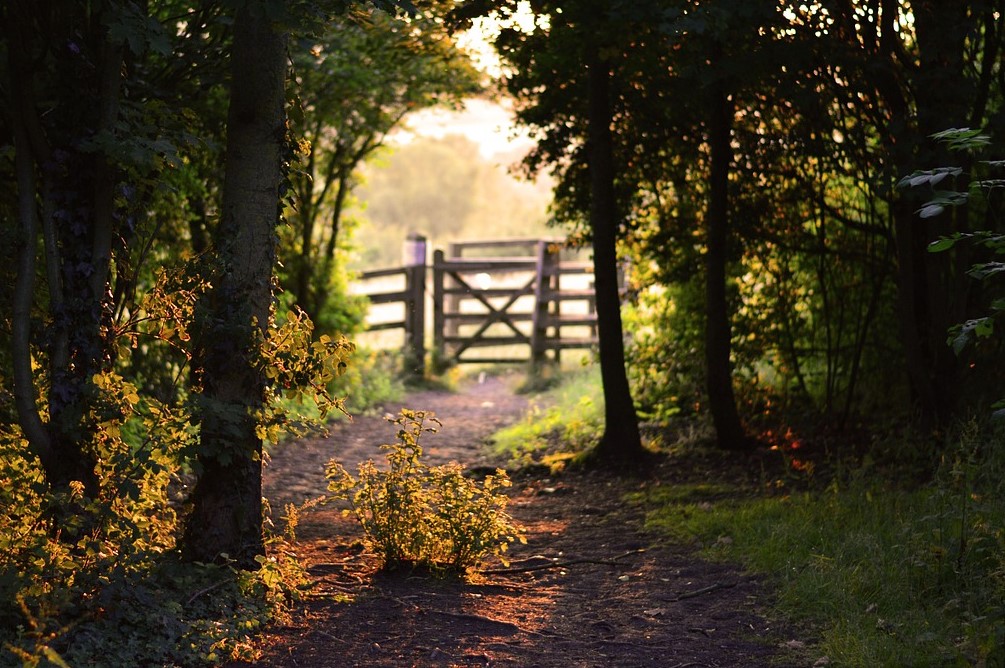
Yesterday a gate closed for me.  Others may close in the coming months and years.  All are a part of the growing older.

Grand Valley

Last summer I backpacked in the Olympic National Park and my first day included a two thousand foot descent into Grand Valley.  It was late in the afternoon and my right knee began to ache as I dropped altitude rapidly.   I took some ibuprofen that night and hiked on.

When I returned home and started running again I notice that my right knee became sore after most runs.  It usually subsided in a few hours, but not always.  Occasionally the pain and discomfort woke me up at night.  In late September after a full day bike ride, I noticed the discomfort as I drove home.  I stopped running and biking.  The pain continued.   I started a series of trips to my family physician, an MRI, and finally Dr.Andrea Saterbak , a respected orthopedic surgeon who is the team physician for the US Ski team.

I went in knowing from the MRI that I had a torn meniscus but that it was “complex” tear.   Many meniscus tears can be “repaired” with arthroscopic surgery.  Friends had told me of their surgery and how they were back running within weeks.  I hoped my story would be the same with a successful arthroscopic surgery soon behind me.

After examining my knee and while looking at the MRI Dr. Andrea Saterbak said emphatically, “This cannot be repaired by surgery.”  Then she wrote at the top of on my treatment plan, “Early Osteoarthritis in Right Knee.”

She asked, “What exercise do you use to stay fit?”

“Running.   I like to run marathons.”

“I don’t think marathons are in your future,” She responded.

A gate closed for me as she said this.  She went on to explain that the pounding of running will aggravate the knee further, resulting in more arthritis.  My heart sank a bit as she carefully explained that my tear was more like a “frayed” meniscus and that orthopedic surgery would only aggravate the joint and cause further  pain.  She didn’t rule out running entirely, but she emphasized I will need to be gradual in my approach and see how my knee responds.

Other aerobic sports will need to be monitored as well, including biking and hiking. Especially long downhill descents like the one I did last summer into Grand Valley. She said a specialized knee brace may be helpful for such adventures and she gave me a referral for the brace.  The gates to bikes and hikes may be closing as well, but it is too early to know.

She gave me a four point treatment plan.

1.      Lose 10 pounds (mostly by restricting calorie intake)

2.      Cortisone Injection  (she gave me one before I left)

3.      Low impact activity

4.      NSAIDS (Ibuprofen occasionally as needed).

I walked out of her office disappointed but not devastated.  I could look for a second opinion.  Dr. Saterbak said that I could probably find a surgeon who would arthroscopically “trim” the meniscus, but I would be back in the surgeon’s office complaining about pain and inflammation within six months.  Overall, I trusted Dr. Saterbak’s experience, diagnosis and treatment plan.  I may not like what she said, but that does not invalidate it.

My practice of Centering Prayer, a form of Christian meditation, has strengthened over the past three years.   Centering Prayer has a corollary prayer called the Welcome Prayer in which I am instructed to welcome whatever new circumstance may enter my daily life with the prayer,  “Welcome, Christ, in the midst of this new circumstance.”  Whether it is a pleasant experience that I enjoy or drudgery that I wish to avoid, God will be present in my response.    With this diagnoses of osteoarthritis I am practicing the Welcome Prayer as follows  “Lord, I may not like this diagnosis, but You are here in the midst of it and I welcome you and ask you to help me respond with grace and compassion – towards my body, my community and you.”

One thought I have embraced is that this diagnosis is not life-threatening.  I will not die tomorrow or next month.   It is life-changing and that is the part I am seeking to understand and affirm.

Now I could respond with requests for healing, but somehow that seems unwise.  God could miraculously heal my knee, but then I would miss out on what God is teaching me in the midst of this situation.  I believe that God is present as I rethink, refocus and deepen my trust in God.

The diagnosis is still fresh and my emotions and thoughts are processing.  This blog post is part of that process.  I will probably write more in the coming weeks and month.

Thanks for taking time to read this.  Peace be with you.

Breath Focus

This post is the fourth in a series focusing on my path to Christian Mindfulness. The series starts here.

At the second class of Mindfulness Based Stress Reduction (MBSR) we were introduced to a simple form of meditation.  We sat on a yoga pillow or chair in an upright position, keeping our body in a relaxed but vertical position.  The instructor gently directed us to close our eyes and to focus on our breathing. We kept a non-judgmental focus as we breathed in and out, simply observing how each breath felt and where we experienced it.  I noticed my attention focusing on my nostrils as each breath passed in and out of my body.  (Afterwards I observed that this kept my observation safely near my “head” since this is my place of security.)

With the instructor’s gentle guidance I was able to stay focused.  However, as her vocal instructions became fewer and fewer, my mind tended to drift away on wandering thoughts, “Am I doing this correctly?”  “I did this once before in CPE, and it was different.”  “Will this work when I go home?”

I was instructed that each time I noticed my mind wandering away to return my attention with gentle compassion to my breath.  This was a frequent occurrence since I found my mind wandering off on some tangent ever few breathes.  The instructor had warned us that no matter how many times our mind wanders, simple let go of the thought, idea or feeling  and bring our attention back to our breath.  I remembered the struggle I had had on the PCT, where my mind kept shifting to various thought streams. The solution was to consistently and gently return to the moment. Patience and perseverance were critical components.

Our homework each week was to practice this meditation every day, slowly expanding the amount of time we invested in meditation.  By the end of the 10 week class, I was able to meditate for 30 minutes, though I continue to have wandering thoughts that distract me. I continue to patiently bring my attention back to my breath (or my sacred word.)

I thought of my mediation practice as a new form of prayer.  Later that summer I would discover centering prayer that closely resembles this form of breath meditation.

Jon Kabat Zin, the principle founder of the Mindfulness Based Stress Reduction Class, offers a guided meditation exercise at this link 

Next post: The Key Ingredients for Meditation


Homework: The Body Scan

This post is the third in a series focusing on my path to Christian Mindfulness.  The series starts here.

Our homework for the first week of MBSR was to do a daily “body scan.”  This was a guided meditation exercise in which I laid on the floor on my back.  I listened to a thirty minute audio recording during which my instructor systematically guided me through my body, focusing my attention on different parts.  She started with my feet and with a gently voice helped me observe any tension and/or sensation occurring there.  She gave me visualization cues to help my feet relax.  Then she moved on to my legs and through the rest of my body.

dsc_0148

The corpse pose in yoga is useful for the body scan

The process was relaxing and peaceful. I remember having a similar experience in my Clinical Pastoral Education (CPE) class in seminary decades ago.  My CPE supervisor was active in meditation and he led us in a similar exercise each Friday afternoon.  That pleasant memory reassured me that scanning my body was a healthy and life-giving form of prayer.

As a Christian I have experienced a love/hate relationship with my body.  My Christian belief sees the goodness of God’s creating human bodies, including my own.  I was taught and still believe that God chose to become a human being in Jesus Christ (John 1:14) and that my body is the temple of the Holy Spirit (I Corinthians 3:16).   Yet my Christian heritage also has elements that negate or de-emphasize the body, seeing it as corrupt and evil.  My sinful appetites (the lust of the flesh, I John 2:16) are centered in my body.  I was taught that my body was not to be trusted, since it was weak and prone to sin.

Growing up, I  learned to live mostly in my head. I was a bright child intellectually and grasp new ideas and concepts quickly.  I received most of my affirmation from being a good student, which also focused my attention on the thoughts and ideas revolving in my head and less on my body.  I was not much of an athlete, so my body did not receive much consideration growing up.  I was a gangling naïve nerd that basically ignored my body.

iStock_000016821441SmallThat began to change when I began to train for my first marathon in 1999.  As I ran I learned a lot about my body (what ached, what thrived) and became more familiar with it.  Yet even my running seemed to be in my head.  Running friends shared how running helped them calm their minds and relieved their stress.  My running rarely did that.

As I continued to practice the body scan meditation, I discovered tension that rested in my shoulders, as if I were carrying the load of the world’s troubles. I often fell asleep, showing me how tired I was. I explored the knot or ache that sat in the bottom of my stomach and how often I ate for emotional reasons.  My body was trying to tell me something, but I was so busy living in my thoughts that I rarely listen. Now I was learning to listen.  My home work was starting to lead me home.

In what ways do you listen to your body?

Stop and Ask for Directions

This is the second in a series of posts on my path to Christian mindfulness practices.  The series started here.

Mountaintops were not the only places I recognized my run-away mind.  I remember getting trapped in catastrophe-thinking-patterns after some criticism at church.   My sermon hadn’t gone well, I made some flub leading worship, or too few people showed up for new member class.  My thought pattern would devolve into a revolving rant that “I was worthless” or “I am a terrible pastor.”  Occasionally I recognized the untruth in these thoughts, yet I struggled to let them go.  I would pray asking for God’s help, but at times prayer only added power to the whole destructive thought pattern.

In 2013 my life hit bottom.  For a variety of reasons, I separated from my wife.  I moved into the farmhouse owned by the church where I was serving at the time.  My wife and I started marriage counseling shortly afterwards and I started visiting with another pastoral counselor for myself.  Though we both wanted the marriage to work, we each had our turf to protect. I was lost and uncertain what path to take.

Then one day, after describing my mini-tantrum over a broken mailbox, our marriage counselor mentioned that I might benefit from a Mindful Based Stress Reduction Class.  By God’s grace that suggestion stuck with me as my answer to prayer.  I went on-line, found where a class was being offered locally and registered.  What did I have to lose?  Like a driver hopeless lost without a phone or map, I figured I needed to stop and ask for directions.

Full Catastrophe Livi

The text book of MBSR

The Mindfulness Based Stress Reduction (MBSR) class started on a Monday morning in March of 2014.  I entered the storefront yoga studio to discover I was the only male in the class of fourteen.  The instructor welcomed us and led us through a meditative body scan. What I immediately appreciated was that the class was not a series of lectures, but actual practices that engaged our body, mind and spirit.  The piece of wisdom that stood out that morning was the instructor’s insistence to practice the various exercises and meditation daily, whether one felt like it or not.  The benefits would not be instantaneous, but if we practiced over the ten weeks we would see benefits in our lives.  I made the decision to practice daily and trust that the Spirit of God would work.  I was not disappointed.

 Happy are those who find wisdom, and those who get understanding.Proverbs 3:13 

Next time: some of the lessons I learned through the MBSR class.


Path to Mindfulness

Nearly three years ago I started a path that eventually lead to my own Christian mindfulness practice.  Over the next weeks I will describe my journey.

The vista was spectacular, what I had dreamed it would be.  But my mind kept jumping to internal perspectives.

IMG_20130818_134449_651

Beauty surround me but I had trouble seeing it. 

I was hiking the Pacific Crest Trail (PCT) near Glacier Peak in Washington State.  I was in the middle of an eight day hike that I had been planning for months.  That day the trail followed a high ridge whose side dropped a thousand feet into a deep green river valley.  Beyond the valley were several snow capped peaks.  The sky was clear, the alpine flowers brilliant and the view stretched for miles.  Still my mind could not stay centered.

IMG_3289As I walked I noticed that my mind kept jumping back to Minnesota, to worries about work or family.  Who could I find to help with the church stewardship drive next fall?  What sermon series would be helpful to the congregation?  How were my children doing, each starting new work adventures?  These were not “bad” thoughts, but they certainly distracted me from being centered on the present path.
I remember stepping back (inside my head) and noticing how these different trains of thought were jumping around.  Who exactly was this observer inside my head noticing the jumps? I prayed, asking God to care for these different concerns, but my prayers seemed only to add to the confusing cacophony of thoughts and ideas rolling around in my head.

IMG_20130817_143516_947As the trail began to descend from the ridge, I was surprised to be passed by a fellow solo backpacker.  He was moving at a fast clip with a light pack.  He had the harden look of a PCT thru-hiker, but he was southbound. May a yo-yo hiker, I speculated.  I watched him quickly disappear around a corner.   My mind thought, “Moving that fast he must be missing out on truly seeing the spectacular view.”  But another thought followed, “But are you any different, with your mind jumping around?  Are you present to this moment?”

I knew that I wanted to change my busy mind but unsure how to go about it.  So I asked Jesus for help.

Ask, and it will be given you; search, and you will find; knock, and the door will be opened for you.  For everyone who asks receives, and everyone who searches finds, and for everyone who knocks, the door will be opened.  (Matthew 7:7-8)

Next post: Introduction to MBSR