Category Archives: Body Mind Spirit

Praying the Lord’s Prayer (Part One)

Jesus instructed his disciples to pray. He modeled a life of prayer, taking time to pray early in the morning (Mark 1:35). After a time of prayer, his disciples asked him to teach them to pray and he taught them the familiar words of the Lord’s Prayer, “Our Father who art in heaven. . .”

I grew up in a traditional Lutheran home and memorized the familiar words of the prayer at a young age. My confirmation instructor, Pastor Crawford, unpacked the meaning of each petition. I learned about God’s kingdom, daily bread, forgiving trespasses and deliverance from evil. Every Sunday during worship, the congregation would recite the familiar words that seemed to become stronger as we finished, “For thine is the kingdom, and the power, and the glory forever and ever. AMEN!”

The traditional words and phrases stayed with me into adulthood. I found great comfort with it, but I also noticed that I often recited the prayer rather than consciously praying it. I would catch my mind starting to drift and realized that though my lips were saying the sacred words, my heart was not in synch. Partly it was the speed at which we “prayed” it, partly it was my own inattentiveness.

In seminary I was introduced to some of the newer translations of the prayer. The replacement of “thy” and “thine” with “your,” made perfect sense to me. Prayer need not be some formal exercise of old language. Prayer is conversation with God.  At the same time I knew that switching to the new language/translation would be very difficult. The Lord’s Prayer was deeply imprinted in our minds and souls, a kind of rock in the chaotic sea of spirituality.

My first twenty-five years of ministry was in a congregation whose worship stripped away several liturgical practices of traditional Lutheran worship: the Kyrie, the Great Thanksgiving, but we continued to use the traditional wording of the Lord’s Prayer. Intellectually I believed that someday the words would need to change, but emotionally I liked being able to guide a family at a graveside service in praying the familiar words, “Our Father who art in heaven. . .”

When I came to Resurrection I immediately discovered that in worship, the congregation had embraced the new translation, “Our Father in heaven, hallowed be your name.”  I embraced the change intellectually, but found myself stumbling over the new wording as my heart and soul tried to catch up. The deep imprint of memorization would not quickly adapt.

Now two years later, I can recite the words without too much difficulty, but I also discovered something else. I sense that I am more often “praying” the prayer, truly connecting with the words. I am more conscious that I am asking God to save me from the time of trial and to protect me from the evil one. The bumpy transition and the new translation has pushed me out of my rut into a deeper appreciation of what Jesus is teaching us.

Lord Jesus, teach us to pray.

Marathon Challenge Completed (for now)

Sunday I finished my eleventh marathon, my first in over two years. As forecasted, the weather was cold at the start. Many runners were shivering in the starting chutes. Fortunately for me my son Jonathan came to support me and took my warm-ups a few minutes prior to the start. I even took one shirt back after tossing it to him. Cold muscles do not function well. Later at mile five I handed him my gloves, ear band and warm-up shirt, finally warm enough to run comfortably in shorts and t-shirt.

The marathon has sometimes been described as a twenty-mile warm-up and a six-mile race. By mile twenty the leg muscles are often depleted of glycogen and overall fatigue sets in. The description is especially appropriate for the Twin Cities Marathon, since after mile twenty the race course climbs out of the Mississippi River Valley towards the hills by Macalester College and St. Paul Cathedral.

Through mile twenty my race had gone well with no big surprises. I did discover that I did not need to drink as much Powerade as I had during hot summer runs. Fortunately there were plenty of porta-potties along the way. I also discovered that I had not practiced enough specific pace workouts, in which I practice running the specific pace I planned for the marathon. I wanted to run 8:46 mile pace, but as I checked my watch at each mile I learned that I did some miles in 8:20 and some at 9:15 (stops at porta-potties did not help). As I have written before, each marathon has something new to teach me.

At mile twenty, the real challenge began. My legs, especially my hamstrings and quadriceps became heavy and sore. My run became more like a fast shuffle.  As I approached the hill at Summit Avenue my pace slowed. My lofty goal of 3:50 had already slipped away and my secondary goal of 3:55 (my Boston Qualifier) was in doubt.

Jonathan supported me in 2003 TCM

But that is when helped arrived. My son Jonathan met me at mile 21 to run the last 5.2 miles with me. He has done this in my past two marathons when I had really struggled at the end and had to walk a lot. This time his strong words of encouragement and support kept me moving forward at a 9:20 pace. He reminded me that “This is the day the Lord has made, let us rejoice and be glad in it” (Psalm 118:25) and “The joy of the Lord is our strength” (Nehemiah 8:10). Though I felt this overwhelming urge to walk I knew that my goal of 3:55 was in doubt and any walking breaks would kill it. We powered on.

At mile 22 I heard above the many cheering spectators the loud strong voice of Tim Torgerson as he bicycled the course, shouting encouragement to me and others. “Relax your jaw, keep your arms pumping, stay strong.” He would not let me stop, but pushed me to do my best.

I am reminded of Hebrews 12:1-2 where the writer reminds us of “we are surrounded by so great a cloud of witnesses and let us run with perseverance the race that is set before us.” In the preceding chapter the writers highlighted the heroes of faith in the Old Testament that now cheer for us in our race to Jesus. I felt like Jonathan and Tim were my own unique witnesses who gave me the specific words I needed to accomplish my task.

As I pushed the final mile to the finish line, I knew it would be close to 3:55. As I stopped my watch, it read 3:53:53. I had finished with 1:07 to spare.* I had my BQ!  A decade-old dream of running the oldest, perhaps most prestigious marathon is now possible.

My next challenge will be to prepare well and to stay injury free for the Boston Marathon in April, 2014. I just hope I have a similar cloud of witnesses that day.

Lord Jesus, thank you for being with me in the challenges of life.

*My official chip-time was 3:53:54.  I must have been a little fast with my watch.

The Marathon Challenge

My first marathon was Twin Cities in 1999. Like this year, the forecast was for a cold start, around 35-40 degrees. Having run mostly in warm weather, I panicked and rushed out to buy my first pair of running tights a couple of days before the race. I used them and never felt very comfortable the whole race. I also made other rookie mistakes, like surging ahead at mile 15 when I was feeling great, only to hit the wall at mile 22. I finished in just over four hours, thinking “that was TOUGH.”

 
What if the Marathon was in January?

Many runners finish their first marathon and think, “Okay, I’ve done that. Don’t need to go through the pain, struggle and adversity again. Once is enough.” For me, the race had the opposite effect. I saw it as a great puzzle or challenge that I still have not figured out. Not that I think I will ever “solve” the marathon puzzle, but the combination of physical, mental and spiritual challenges continues to intrigue me. The challenge pushed me to run year round, even in Minnesota winters.  Plus I still have that elusive goal of qualifying to run the Boston Marathon.

This Sunday, I may be a bit cold when I approach the start line in Minneapolis, wearing shorts and t-shirt, hat and gloves. I will also have an old long-sleeve t-shirt that I will toss aside after warming up during the first couple of miles. After finishing ten marathons, I will know not to surge at mile 15, but wait for the real challenge at mile 21 and beyond. My marathon mantra, “The joy of the Lord is my strength” (Neh. 8:10) will be on my lips and the encouraging words of my friends and family will be in my ears. The chill of marathon morning will quickly pass as my body, mind and spirit rise to the challenge.  The finish is only 26.2 miles away.

Lord Jesus, let me meet the challenges of this day with your strength and joy.

Middle Laps

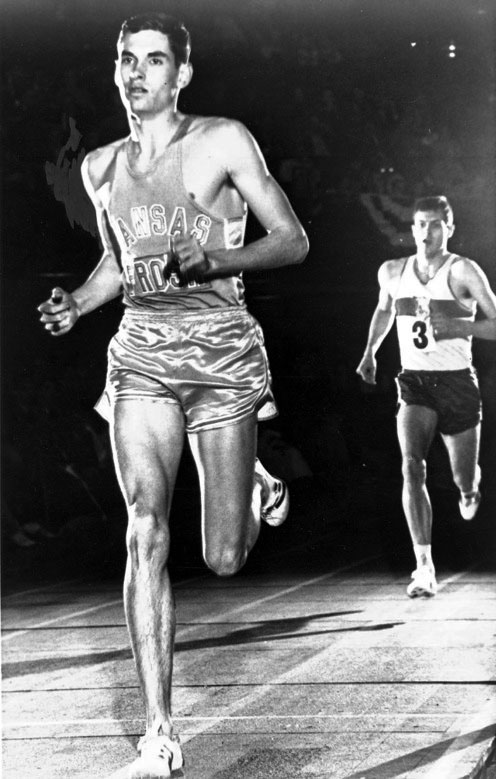
Jim Ryun Running at Kansas

Jim Ryun Running at Kansas

In college, I ran track. I was not very fast, but I grew up watching Jim Ryun run a sub-4 minute mile while in high school. I dreamed of being such a miler, clicking off each of the four laps on the track in 60 seconds. In reality, I rarely could run one lap under 70 seconds, let alone four in a row. Still I competed each year, yearning to improve.

One thing track taught me was the value of persistence, especially in the middle laps. The first and last laps of a mile race have their own magic which can pull the runner along. The first lap has the quick start and the pack jockeying for position. The gun lap has the pull of the finish line and the knowledge that the race will soon be completed.

It is the second and especially the third lap that always challenged me mentally and physically. The pain of running at race pace had become reality, but the finish seemed too far away to contemplate. If I focused on the pain, I rarely did well. If I focused on staying calm, relaxed, and fluid, I could maintain my semi-fast pace. By my senior year I knew the challenge I faced each time I approached the start line.

I think of this as I prepare to run Twin Cities Marathon on October 7. My training is now in the middle laps; my last long run of 16 miles is still ten days away and I have a few more track sessions to complete. Nearly every day I am up early to run so as to beat the late summer heat. My mind and spirit has begun to tire from the long training cycle and many miles. Still I have been here before and I recognize that I must be patient and persevere. After my last long training run, I will begin a three-week taper of reduced miles so that my body can adequately rest and recover for the race.

The Christian life also requires persistence and perseverance. The joy of the Lord is our strength (Nehemiah 8:10), yet not every day will be happy. Life can be difficult and challenging; it can feel like we are in the middle laps of a very long race. Our prayers may seem to circle around our heads, never reaching God’s heavenly ear. Saint Paul reminds us that we are to keep on praying, keep on believing and trusting, even when the days seem long.

Rejoice in hope, be patient in suffering, persevere in prayer (Romans 12:12)

My fall marathon will soon come and then be over. Yet our life in Christ will carry on for many more laps. Christ is not simply at the start or the finish, but running beside us each lap of the race, helping us to stay patient and calm. Thanks be to God.

Lord Jesus, open the eyes of my heart to see you each day.

Doing Something New

One of my favorite quotes is from Ken Blanchard, a business consultant. “Unless you feel awkward doing something new, you are NOT doing something new.”

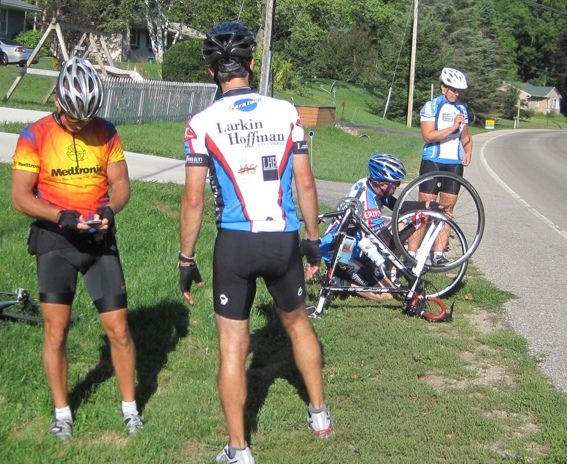
Awkward Second Change

I remembered it as I joined six friends in August on a long bike ride near La Crosse WI and learned that I was one of the least experienced cyclists in the group. In the first seven miles I had a flat and I felt awkward as I tried to change the tire as quickly as possible.  In my haste I only pinched or damaged two new tubes and so felt a triple embarrassment as I changed each new flat.  I seriously thought about dropping out and riding/walking back to the motel.

Yet the marvelous thing about my cycling buddies is that they graciously responded to my awkwardness with understanding and care. No one abandoned me. No one spurned me. The helped me in part because they each had been in the same awkward position on other rides. They had experienced flat tires and awkward changes.

This fall I want to encourage you to try something new. It might be a new volunteer opportunity or new social group.  It might be a small group Bible Study or worship experience.  You may feel a bit awkward starting out, but unless you try something new you will never fully appreciate the wonder of discovery.

At the same time, if you are in an established group and someone new arrives, practice  hospitality and be attentive to their needs.   Jesus taught this simple rule, “In everything, do to others as you would have them do to you” (Matt. 7:12). This is our encouragement to see the newcomer as someone to welcome and to guide as we remember our own first arrival in the group.  The newcomer may feel awkward the first time they run with a group or open a Bible or serve on a task force or change a flat.   Yet we can help them move out of the awkward, beginning stage.

I am so glad I was able to swallow my pride and continued the ride.  We saw some spectacular scenery and shared some major climbs.   As we finished our sixty-plus miles, we all marveled at what a wonderful day it was.  And no one mentioned flat tires.

Lord Jesus, challenge me again to discover something new in life.

Wilderness Journey – Day Two

I awoke early, packed my backpack and headed up the trail. The trail climbed steadily as it followed the North Fork of the Big Thompson River. Breaks in the forest gave me opportunity to scout the high country near Mt. Dunraven.

I anticipated an easy day of backpacking to my next campsite, Lost Meadows. This was only a mile below Lost Lake, a high alpine tarn that is the end of the maintained trail. It was only five miles between campsites so I decided to take a side trip.

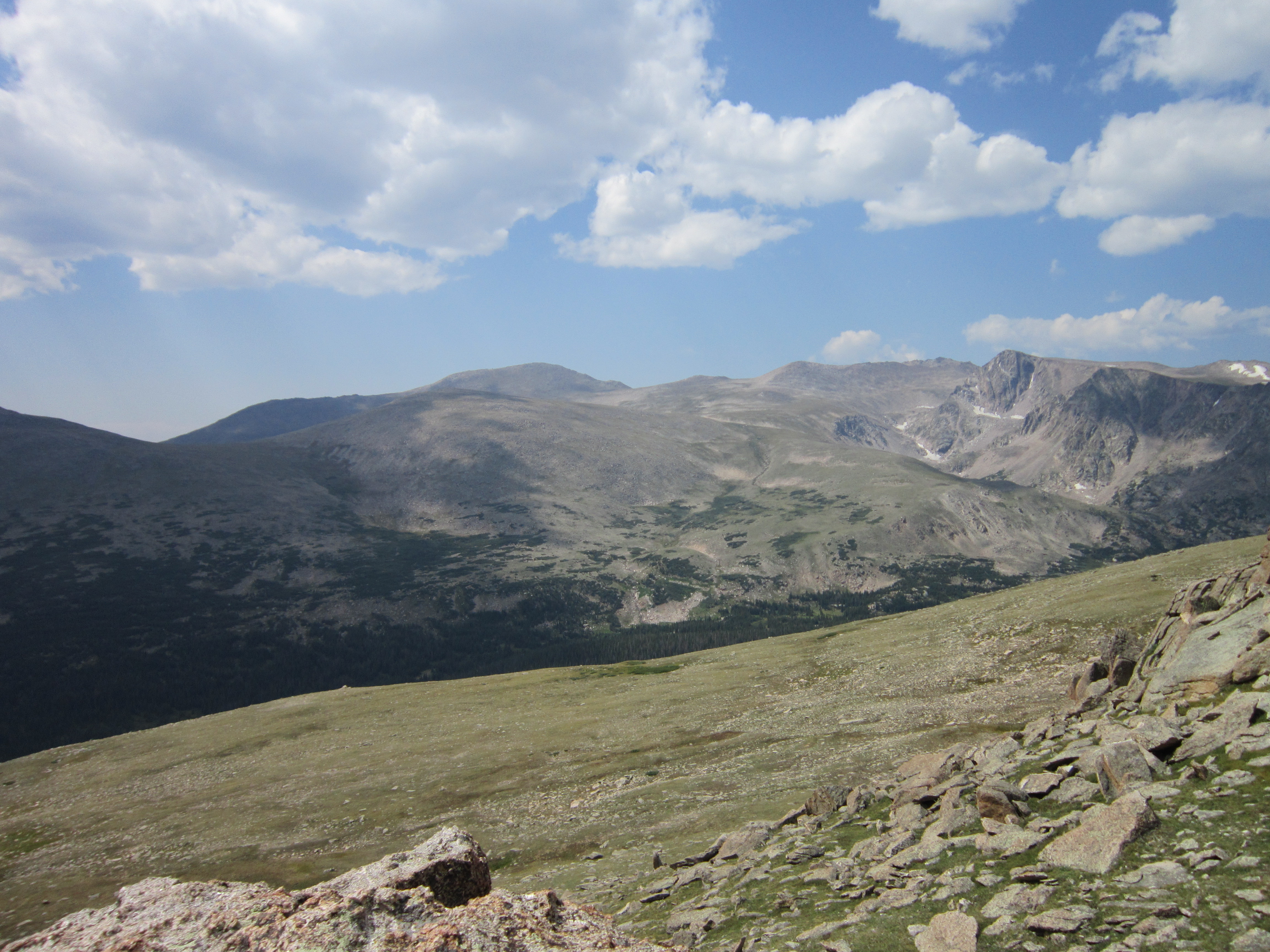
Looking toward Mummy Mountain from Stormy Peaks South campsite.

About halfway between Silvanmere Campsite and Lost Meadow was a spur trail that climbed the north side of the canyon to Stormy Peaks Pass. I left my backpack at the trail junction and started the 2000 foot climb to the pass with just lunch and water. The trail started out a series of switchbacks that quickly climbed above timberline. Here I encountered a flat shelf in the ridge where the National Park located the Stormy Peaks South backcountry campsite. It certainly had a spectacular view of the upper Big Thompson canyon, Rowe Peak and Mt. Dunraven.

The trail continued an additional 1.5 miles to pass. As I climbed towards the ridge line, I had to stop several times to scout how the trail proceeded. There was some thick growth of evergreen bushes and small trees where the trail seemed to disappear. I would be merrily hiking along and suddenly there was no trail beneath my feet, just alpine meadow. Now the meadow was fine for walking and I could find my own way, but the trail used the most efficient means to climb the ridge. It became a sort of game to find the trail in the midst of meadow and brush.

I was reminded of a conversation Jesus had with his disciples. In John 14, Jesus is preparing them for his coming crucifixion. He says to them, “I go to prepare a place for you. . ., that where I am you may be also. And you know the way to the place where I am going.”

Thomas responded, “Lord, we do not know where you are going. How can we know the way?”

Jesus said, “I am the way, the truth and life.”

Jesus is the way, the trail, that we seek to guide us through life. But it can be so easy to slip “off trail”, to think that I know the way on my own and don’t need Jesus. As I searched for the trail that morning, I reflected on who is my true trail guide.

Looking south towards Mummy Mountain from Stormy Peaks Pass

I finally reached a small peak just south of the pass. I knew that the next day, I would face the most difficult part of my backpack, climbing up over Mummy Mountain Ridge and down into the Black Canyon Trail. From the overlook near Stormy Peaks Pass, I could see the first half of my next day’s climb. It looked challenging but doable, so I hiked back down to my backpack and continued on to Lost Meadow campsite.

As I settled in for the night, I knew that the next morning I would be off trail for about eight miles, a serious challenge for me.  But I also knew that besides my map and compass, I had a good trail guide walking beside me, giving me encouragement, hope and wisdom. My simple prayer was, “Jesus, stay close and keep me on your path.”

Lord Jesus, you are the way.  Keep me close to your path for my life.

Canoe Journey Begins

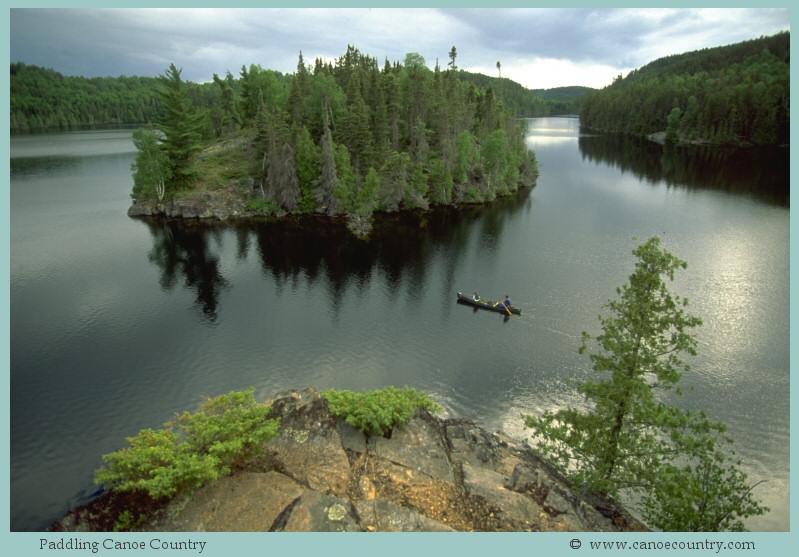
This morning I start a four-day canoe trip in the Boundary Water Canoe Area Wilderness with my son and nine other men from Resurrection Lutheran Church. It will be journey not only through the beautiful wilderness of northern Minnesota, but also a spiritual journey into the wonder of God’s grace.

The image of journey or pilgrimage has deep roots in the Christian tradition. A person starts in one place, travels to another, and then returns to the starting point. The person make look the same, but the journey has transformed him or her.

The Biblical narrative is filled with journey stories from Abraham and Sarah to the Exile in Babylon. The life of Jesus is primarily a journey. Each Gospel records how Jesus’ ministry begins in northern Galilee but eventually he heads south to Jerusalem to the cross and empty tomb.

The Gospel of Luke perhaps takes this image most seriously. Mary travels through the hill country to visit her cousin Elizabeth after the angel Gabriel’s visit (Luke 1:39). Mary and Joseph go to Bethlehem for Jesus’ birth and then to the temple in Jerusalem for his dedication (Luke 2). As a boy Jesus makes the pilgrimage to the Passover Festival in Jerusalem where he is lost for three days. (An excellent post on this story here).

As an adult Jesus’ ministry is a journey from town to town and across the Sea of Galilee. Two of my favorite parables from Luke focus on people who travel—the Good Samaritan (Luke 10) and the Prodigal Son (Luke 15). Jesus sends his disciples on not one, but two training missions (Luke 9, 10). After his resurrection Jesus meets two disciples on the road to Emmaus (Luke 24). The final scene in Luke is Jesus leading his disciples out as far as Bethany for his ascension. (I will only mention that the Book of Acts, written also by Luke, contains more journey stories.)

I do not know how or where God will encounter our two canoe groups, but I am confident that through the journey, the Spirit of God will be working to transform us into his glorious image. I’ll let you know when we return.

Lord Jesus, may we walk, canoe, run, move, dance, play, work, serve with you today.

Marathon Dreams and Christian Hope

This summer I am training for the Twin Cities Marathon. After taking a couple of years off from such focused training due to injuries and my new call to Resurrection Lutheran Church, I will attempt to complete my eleventh marathon on October 7. Finishing is not some vague wish that I am hoping to accomplish. It is an honest assessment of my fitness, training and experience.

Like almost any physical endeavor, patient, persistent training leads to success. From past experience I know that if I am able to run consistently 35-45 miles per week, complete several long runs of 16+ miles and stay injury free, I have a better than 90% chance of finishing the 26.2 mile course. Factors that may contribute to not finishing are an unforeseen injury or illness. I have had some poor race performances (Des Moines Marathon in 2009 and Grandmas in 2007) but even in my poor races I finished.

In recent years my marathon goal has been more ambitious than simply finishing the race. I  aspire to qualify and run the historic Boston Marathon. To qualify for Boston, a runner needs to run a marathon under a certain time based on their age and gender. I qualified once in 2005, but a running injury kept me from running Boston in 2006 and the qualifying time is only valid for about eighteen months. This fall I am hoping to run under 3:55 so that I can qualify for the 2014 Boston.

Now that hope is not outrageous, but it will be a true test of my abilities. It will require proper training and rest. (Overtraining can be as detrimental in marathon preparation as under-training.) It will require focused nutrition and stress management. It will also require some good luck on factors I cannot control (like race day weather).

Still I have the hope and dream of qualifying.

What distinguishes this aspiration from my Christian hope is that my marathon dreams primarily rests in myself and my abilities. My Christian hope rests totally in Jesus Christ and what he has accomplished through his death and resurrection. To quote a famous hymn, my hope is built on nothing less than Jesus’ blood and righteousness. I am a fallible human being who may twist an ankle tomorrow, ending my marathon dreams. But my hope in Jesus remains steadfast because of the promise of God’s Word.

We have our hope set on the living God, who is the Savior of all people, especially of those who believe. I Timothy 4:10.

Lord Jesus, thank you for being my rock and my hope.

Learning From Others

I read a great blog post from the longest-running Lutheran blog.  Pastor Clint Schnekloth (who serve in Arkansas) wrote Mid-life Lesson #20: Accepting help is a spiritual gift.  I encourage you to check it out.  I think many Americans have a hard time receiving assistance from others because we place such a strong emphasis on self-reliance.   The reality is that we are all interdependent and we need one another.  God created us to love our neighbor, and sometime loving the neighbor means receiving love from our neighbor.

Lord Jesus, help me to be able to accept help from others.

Beat the Heat

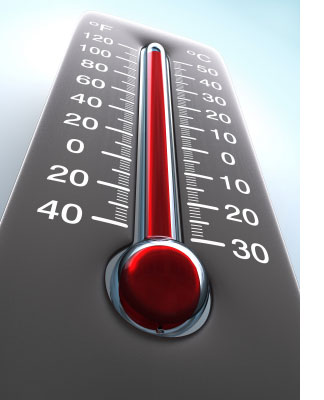
Like much of the country, Minnesota is going through an extended heat wave. Our temperature is regularly topping out at over 95 degrees with plenty of humidity. It would be easy to complain, but complaining about the weather rarely helps. Rather I recommend some other coping strategies.

  1. 1.  Remember last winter when it was sub-zero and the cold seemed relentless. This heat is refreshing as I look back.
  2. 2. Read “cold” books. I remember listening to Jon Krakauer’s book, Into Thin Air, which describes the 1996 group climbing disaster on Mount Everest. Krakauer’s descriptions of the cold and ice were extremely realistic. Our family was traveling through Kentucky in the heat of summer, but as we listened to the book we had to take breaks at rest stops so that we could warm-up from the “cold.” Other possible “cold” books are Roland Huntford’s The Last Place on Earth and Caroline Alexander’s The Endurance: Shackleton’s legendary Antarctic expedition.

    Mo Farah Enjoying an Ice Bath
    Photo Credit: Simon Freeman

  3. Exercise in the cool of the morning. Most of my runs now start before 6:30 am.  And after my weekly long run, an ice bath for my legs feels oh so good.
  4. At the Spirituality and Practice website I found inspiration on their posts: Spiritual Practices for Hot Weather. One story in particular struck me.

The Catholic priest Anthony De Mello tells a story that sums up the best way to live with scorchers:

“Traveler: ‘What kind of weather are we going to have today?’

Shepherd: ‘The kind of weather I like.’

“Traveler: ‘How do you know it will be the kind of weather you like?’

“Shepherd: ‘Having found out, sir, I cannot always get what I like, I have learned always to like what I get. So I am quite sure we will have the kind of weather I like.’ “

5.    Pray for those who are truly struggling with the heat: the poor and powerless, those
whose work requires them to be outdoors, and those who have breathing difficulties.

Rejoice always, pray without ceasing, give thanks in all circumstances; for this is the will of God in Christ Jesus for you (I Thess. 5:16-18).

Lord Jesus, comfort and aid those who are struggling with the heat.