Category Archives: Jesus

The Rock

Raise Your Ebenezer

Our house has a large granite rock in our backyard. Over two feet high, it is not something easily moved. It may have been there since the house was constructed or perhaps since the glaciers covered Minnesota. The rock is a pain to mow around, but it is a marker in our yard.

Several years after we moved into our house, I looked out the window one day and saw a young boy sitting on the rock. At first I did not recognize him as one of the neighborhood children, but when his mother walked over and called him, I knew who he was. He was the son of the former owner of our house. The son had come back to see, touch, and sit upon the rock that had long been his.  I sensed that he received some strength and comfort in that visit to the rock.

In Israel, large rocks were very common and became part of their faith language. In I Samuel 7, the prophet Samuel invokes God’s help to lead the Israelites in victory over the Philistines. He marks the victory by raising a stone marker.

Samuel took a single rock and set it upright between Mizpah and Shen. He named it “Ebenezer” (Rock of Help), saying, “This marks the place where God helped us.” I Samuel 7:12

In Psalm 18:2 rock is used a symbol of strength and security, where we can find safety.

The Lord is my rock, my fortress, and my deliverer, my God, my rock in whom I take refuge.

Jesus uses the image of a rock to describe his teachings and how we are to rely on his teachings as a firm foundation:

“Everyone then who hears these words of mine and acts on them will be like a wise man who built his house on rock.” (Matt 7:24)

Paul, using the story from Exodus when Moses provided water to the thirsty Israelites in the wilderness, described Jesus as the Rock from which comes spiritual water:

For they drank from the spiritual rock that followed them, and the rock was Christ. (I Cor 10:4).

How is a rock a helpful image of God for you? Would you use a different image today?

Lord Jesus, be my rock and fortress today.

The Journey Towards Transformation

The Turning Point in My Journey

Tomorrow I am driving to Bloomington, Indiana, to pick up my daughter Suzanne and her things and together we will drive home.  It will be short trip, but I am looking
forward to it.  I am not looking for any drama, but I am open to an adventure and change during the journey.

Journeys are a frequent theme in the Scriptures. A couple of weeks ago in worship, we read about the two disciples who walked seven miles to Emmaus and during the walk encountered Jesus.  Their simple walk became a spiritual journey of transformation. (I posted on this story here).

There are many other such journeys in the Bible.   The Israelites journeyed/wandered in the wilderness for forty years after their exodus from slavery in Egypt and prior to their
arrival in the Promised Land. Elijah the prophet made the journey from Northern
Israel to Mt. Horeb in Sinai to encounter God (I Kings 19).  Jonah made a side trip to the sea and a whale before making the trip to Nineveh. Jesus went into the wilderness for forty days to pray and fast before starting his ministry (Matthew 4) and later set his face towards Jerusalem for his passion (Matthew 16:21).   The book of Acts is filled with journeys, especially Paul’s missionary sojourns.

Contemporary literature also uses the metaphor of journey for spiritual transformation.  J. R. R. Tolkien’s Lord of the Rings and C. S. Lewis’ Voyage of the Dawn Treader both use the journey motif as means to describe the main characters movement from self-centered, complacent beings to courageous, self-sacrificing heroes.   Their stories carry the Biblical image into our current worldview.

I don’t expect any major transformation during my drive to and from Indiana.  After all it is only three days.  But I think any journey has the potential to open us up to new perspectives and insights, especially if we invite God to be a part of the journey.  I’ll let you know when I return.

Jesus said, I am the way. (John 14:7)

Do you remember a trip or journey where the Spirit renewed or redirected your life?

Prayer: Lord Jesus, guide me this day on the path to life.

Acts 2:42 part 2

Lord's Supper by Sadao Watanabe

The second chapter of Acts is a pivotal chapter in the history of God’s people.  The chapter begins with the explosion of the Holy Spirit in the lives of the Jesus’ disciples, continues with Peter’s first sermon which results in 3000 baptisms, and concludes with a summary statement on the life of the earliest disciples.  The 3000 new believers did not simple wander off into their old patterns of behavior. Rather they became devoted followers of Jesus.

They devoted themselves to the apostle’s teaching and fellowship, to the breaking of bread and the prayers. (Acts 2:42)

The breaking of bread was mostly likely the earliest version of the sacrament of Holy Communion.  The meal was one concrete way to stay connected to Jesus Christ.  Through the Lord’s Supper they remembered him (I Cor. 11:24).  The meal also meant that Jesus communed with the believers because it was his own body and blood that he gave with the bread and wine.  Jesus was truly present.  Also it proclaimed the Lord’s death until Jesus returned (I Cor 11:26).

Holy Communion continues to be a central part of our Christian faith and worship. We remember the past events of Jesus’ death and resurrection.  We commune with him in the present moment as we share the meal of his body and blood. And we look forward to our future hope of Christ’s return in glory.

 The early disciples also devoted themselves to the prayers.  Prayer was not new to the church. The Jews had been praying for centuries.  Jesus had taught the disciples to pray using the words of the Lord’s Prayer.    With the coming of the Holy Spirit, their prayers became supercharged.  So can ours.

Likewise the Spirit helps us in our weakness; for we do not know how to pray as we ought, but that very Spirit intercedes for us with sighs too deep for words. (Romans 8:27)  

The same Holy Spirit that powered the early church in its mission is the same Holy Spirit that works through our prayers.  Let us ask God to create within us a similar devotion to the Apostle’s teachings, fellowship, breaking bread and prayer.

To which practice is God calling you to be devoted?

Lord, create in me a heart of devotion.

Acts 2:42 part 1

Studying the Apostle's Teachings

Life in the early church may sound strange to our contemporary ears. The description of miracles and healings, the passionate letters of Paul, and the missionary zeal of the apostles can appear to be other-worldly.  Our lifestyle, political systems, technologies and economic complexities can seem distant from the stories of the Bible. Perhaps that is why I value Acts 2:42 so much.

Acts 2:42 describes the life of the early church in Jerusalem, shortly after Peter preached his first sermon and several thousand people placed their trust in Jesus as their Savior and Lord.

They devoted themselves to the apostle’s teaching and fellowship, to the breaking of bread and prayers. (Acts 2:42)

Their four signs of devotion are still practiced by followers of Jesus today:
1. Apostle’s Teachings
2. Fellowship
3. Breaking of Bread
4. Prayers

Followers of Jesus continue to study the “apostle’s teaching:” Matthew, Mark, Luke, John, the Book of Acts, the Epistles of Paul, John and Peter.   The apostle’s teachings became our New Testament. We study them to understand who Jesus is and what his life, death and resurrection mean for us.

As we study together we continue to create fellowship, because we discover how the teachings impact our shared lives.  We listen to each other’s joys and sorrows.  We care for one other during times of illness, stress or hardship.  Fellowship is more than a shared cup of coffee after worship; fellowship is the shared cup of blessing and generosity through all of life.

One of my deepest tastes of apostle’s teaching and fellowship came in college when I participated in the Haverford-Bryn Mawr Christian Fellowship.  Every Friday evening twenty to forty college students would gather to study God’s Word and to reflect together how it impacted our lives.  It created a missionary zeal in many of us.  We did not want to simply survive college with our faith intact. We felt a calling to bear witness to Jesus Christ in an often academically hostile environment.   The study and fellowship gave us the courage and compassion to speak.  The ancient devotions brought us life.

How has the study of the apostle’s teaching affected your fellowship?

Tomorrow, reflections on the breaking of bread and prayers.

 Prayer: Lord Jesus, teach me to be devoted to your ways.

Cleopas the unknown apostle

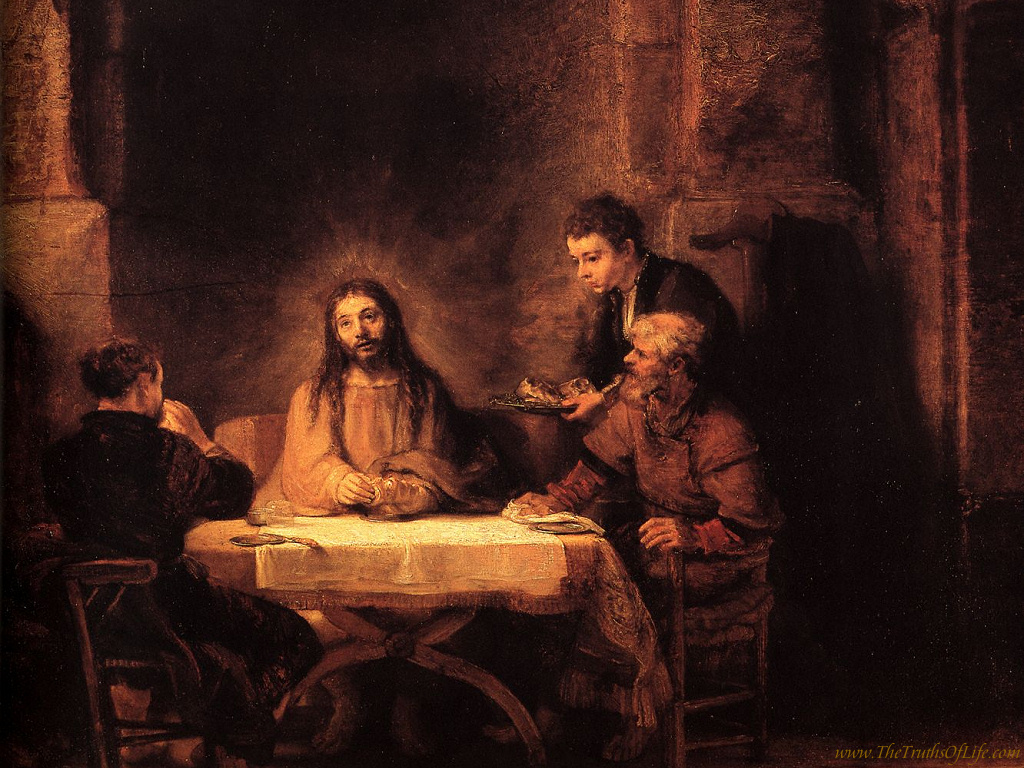
Cleopas is mentioned once in the Bible.  In Luke 24 two disciples leave Jerusalem on Easter evening and walk to Emmaus, a village seven miles away.  They are distraught that their leader has been executed.  They are joined in their walk by a stranger who is the resurrected Jesus, but they do not recognize him. (This is a common experience for Jesus after his resurrection; I think it still happens today.)   As they walk along the stranger (Jesus) asks what they are discussing about Jerusalem. 

Then one of them, whose name was Cleopas, answered him, “Are you the only stranger in Jerusalem who does not know the things that have taken place there in these days?” (Luke 24:18). 

Jesus Revealed During The Meal in Emmaus - Rembrandt

Cleopas is not listed in Luke 6 with the other apostles.  We do not know how deep his commitment was to Jesus.  Yet Jesus chose to reveal himself to Cleopas and his unnamed companion when they stopped for a meal together.  Cleopas, in turn, had the opportunity to race back to Jerusalem and tell the other disciples what he had seen and heard. 

He did not care whether he got future credit.  He simply had to tell someone.   

I think ministry is often like that today.  God does not always choose the most committed or gifted or wisest person to be the messenger.   God chooses the one who is willing to speak her mind and who is willing to share the good news that God is at work. 

Cleopas was willing to hurry back to Jerusalem and to testify to the truth.  He ended up where he started, but everything changed in the journey to Emmaus and back. 

What journey are you on?  Are you open to God speaking through a stranger?

Prayer: Lord Jesus, open my heart, soul, and mind to hear your voice and to do your will.

Death of Osama

Seeking Justice

There has been considerable reflection on the death of Osama Bin Laden and the impromptu celebrations that broke out in parts of America.  NPR asked the question, Is it wrong to celebrate Bin Laden’s death.  I have my own two-part response.

My first response revolves around the issue of justice.  When evil has done harm to people, as a culture we seek justice.   We punish those who have caused the harm with the hope of redeeming the loss.  When a hit-and-run driver leaves the scene of an accident, we feel it is just to find the driver and have that driver pay for any/all damages.  If there is a loss of life, the driver receives a punishment of prison and/or probation based on his or her responsibility for the crime.  Cain was punished for the murder of his brother, Able, in Genesis 4. Punishment is a means for restricting further violence and sin.  Lutherans call this the first use of God’s law, to curb our violent and selfish ways.

Bin Laden claimed responsibility for the tragedy of 9/11.  We had a moral right to seek justice with him regarding this crime.  I trust the statements that the SEAL strike team was seeking first to capture Bin Laden, but had to execute him as a combatant.  I see partial justice in his death and I hope his death will stop further acts of violence.  But we have no guarantee of that.   

Now comes the second response regarding the celebration of his death.   God created all human being with purpose and meaning.  God loves all human beings, even when they turn away from God’s purposes and ways.  God’s law shows us our sinful nature and our need for a savior.   Lutherans describe this as the second use of the law: our profound need for Jesus’ mercy and grace.  So what I celebrate today is the Gospel of Jesus Christ.

The Roman Catholic Church responded to the news of bin Laden’s death with this statement: “Faced with the death of a man, a Christian never rejoices, but reflects on the serious responsibility of everyone before God and man, and hopes and pledges that every event is not an opportunity for a further growth of hatred, but of peace.”

That is my prayer today.  That peace and justice might reign, not more death and destruction.

Lord, have mercy.

Hidden With Christ

Hidden Picture #1

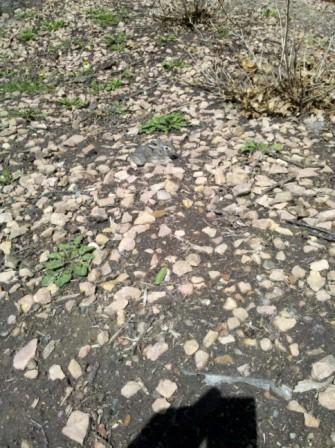
Yesterday, I was cleaning out a small pile of fallen leaves around a bush near our house when suddenly I was startled by a flash of movement from the pile.  A small animal scurried out, frighten by my invasion of its space.  I was startled as well, not sure what kind of animal it was.  I first thought it was a gopher or mole, but after looking more carefully I discovered it was a small rabbit. 

I left the small rabbit burrow alone, and went inside for my camera.  The rabbit stayed motionless for several minutes so I was able to take a picture.   After taking the picture, I saw how well the rabbit blended into its surroundings (see picture #1).  It was hidden even while in plain sight.  Only on closer examination could it be seen (see picture #2).   

Hidden Picture #2

As I thought about this encounter, a Bible phrase flashed into my head, hidden with Christ.  I had to do a search on the computer to find the exact verse. 

Set your minds on things that are above, not on things that are on earth,  for you have died, and your life is hidden with Christ in God. Colossians 3:2-3

Paul, the writer of Colossians, is encouraging us to see our lives as having a secure anchor in the midst of constant earthly turmoil and temptation.  Our place of safety is our relationship with Jesus Christ.  He is our secure burrow, our hiding place, when the evil one attacks.

I have not gone near the rabbit burrow since that first encounter, nor have I seen the small bunny.  I am unsure if I damaged the burrow beyond repair.   And upon further reflection, after seeing the horrific destruction this week by tornadoes in Alabama and other parts of the south, I can never be sure that my own home is forever safe from such destruction.  

The one secure promise is that my life is hidden with Christ and I am safe with him.

In whom is your life hidden?  Where do you find safety and security?

Prayer: Lord Jesus, keep me safe in you, my rock and shield.  Bring comfort, strength and courage to those whose homes and families have been devastated by storms.

John’s Portrait of Jesus

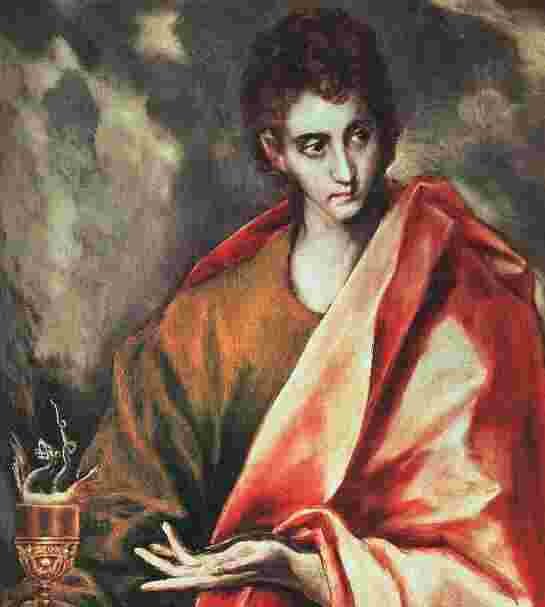
St. John the Evangelist by El Greco

At the end of chapter twenty, John declares,

Now Jesus did many other signs in the presence of his disciples, which are not written in this book. But these are written so that you may come to believe that Jesus is the Messiah, the Son of God, and that through believing you may have life in his name. (John 20:30-31)

Contemporary readers of the Gospels often compare them to modern biographies, but the Gospel writers did not intend this.  They were creating vivid portraits of Jesus that inspire and transform the reader.  The writer of John states that he could have included other material but chose not to.   The gospel writers were artists, not biographers.

Art isn’t only a painting. Art is anything that’s creative, passionate, and personal. And great art resonates with the viewer, not only with the creator.

What makes someone an artist?  I don’t think it has anything to do with a paintbrush.  There are painters who follow the numbers, or paint billboards or work in a small village in China, painting reproductions.  These folks, while swell people, aren’t artists.  On the other hand, Charlie Chaplin was an artist, beyond a doubt. So is Jonathan Ive, who designed the iPod. You can be an artist with oil paints or marble, sure. But there are artists who work with numbers, business models, and customer conversations.  Art is about intent and communication, not substances. (Seth Godin, Graceful, Making a Difference in a World that Needs You. 2010, p. 22)

The writer of John, inspired by God, created a masterpiece. 

How is your life touching others with creativity, joy and vibrancy ?

Prayer, Lord Jesus, inspire me to create beauty and joy in your name.

Peace be with you

Prayer for Peace by American artist Cindy Walker

Twice the resurrected Jesus greets his frighten disciples with the words, “Peace be with you.” (John 20:19, 26).  This is more than the absence of conflict.  In Hebrew peace, shalom, means fullness or wholeness, having all that you need to be fully alive.

Peace is something  for which many of us still seek.  We may not fear the direct persecution which the early disciple’s feared, but we feel overwhelmed at times by the complexity and uncertainty of modern life.  We fear that our jobs may disappear, or our children may stray, or our health may fail.  The news media is unrelenting in showing us the potential disasters we face.  We long for peace, deep personal peace.

Jesus offers peace, but not the absence of conflict or storm.  When he appeared to the disciples, he showed them his scars from the cross.  He had suffered and died.  Yet the darkness of death could not hold him.  Jesus’ death seems the very opposite of peace.  Yet, as Frederick Buechner writes,

The contradiction is resolved when you realize that, for Jesus, peace seems to have meant not the absence of struggle, but the presence of love. (Beyond Words, p. 307)

Jesus’ presence gave assurance of peace and love to the scared disciples.  His presence today gives the same benefit. 

How have you experienced God’s love and peace this week?

Prayer: Lord Jesus, open my life to be full and at peace with you.

Friends Between Stories

Friendship by Nova Scotia artist Karen Morrison

In John 20: 19-29 two stories are told.  The first is Jesus’ initial appearance to the disciples in a locked room.  He appears, not as a ghost, but in a resurrected body, and gives them the blessings of peace and the Holy Spirit.  The encounter is quick yet vibrant.   Afterwards the disciples are excited to tell Thomas, their friend and colleague.

For some unreported reason, Thomas was not present during Jesus initial appearance.   Perhaps he was the only disciple who had courage to go out and pick up some fish and bread for supper.  Perhaps he went out to get a stiff drink or wanted some time alone to think.  Whatever the reason, Thomas was gone and missed all the excitement.

Then he ruins the disciple’s excitement with his skeptical response, “Unless I see the marks, touch the wounds, I will not believe.”   I suspect that such honest skepticism threw cold water on the disciples.  How were they to tell other about Jesus’ resurrection when their own friend immediately rejected the claim?  I wonder if an argument between Thomas and the others ensued; there is no report of one.   Did the disciples’ faith simply wilt under the harsh, cold logic of Thomas, or did they continue to believe with burning hearts? 

It was a week before Jesus showed up and turned doubting Thomas to confessing Thomas.   A week of wonder, questions, and some dis-ease.  I wonder how Thomas and the others got along during that time.  It is a powerful witness to their lasting friendship that he is still hanging out with the guys when Jesus briefly appears again. 

I remember my friend, Jerry Zimler, in college.  Raised a secular Jew in New York, he came to a faith in Jesus while in college.  He and I would disagree on many matters of faith, like worship, prayer, and ethics.  Still he invited me home over Thanksgiving break to experience the love (and chaotic vitality) of his family.   I still cherish that visit even though Jerry died some twenty-five years ago.

How do you handle those who disagree with you?  Do all your friends have to think like you?

Prayer: Lord Jesus, teach me to listen to my friends and neighbors and to learn from them.