Category Archives: Jesus

“I am” and Green Algae

Last week-end I participated in our ninth grade confirmation retreat at Camp Wapo.  The sixteen youth will be confirmed in October, affirming their baptismal covenant. This group had a few “energetic” boys who could be distracting at times so we had to find creative ways to teach.

The retreat focused on the “I am” statements in John’s Gospel. At Friday’s campfire we introduced God’s name “I AM WHO I AM;” God gave this name to Moses at the burning bush (Exodus 3:14). The name in Hebrew became so sacred that later generations of Jews would not pronounce it. Yet Jesus utilized the “I am” name to describe himself. For example in John 9 when he healed a man born blind, he said, “I am the light of the world.”

The next morning we explored the other “I am” statements of Jesus. To keep their attention, we walked about the camp as we discussed, thinking about “I am the way” (John 14:6). We walked through the gate of the “Gaga Pit,” for a discussion of “I am the gate for the sheep” (John 10:7).
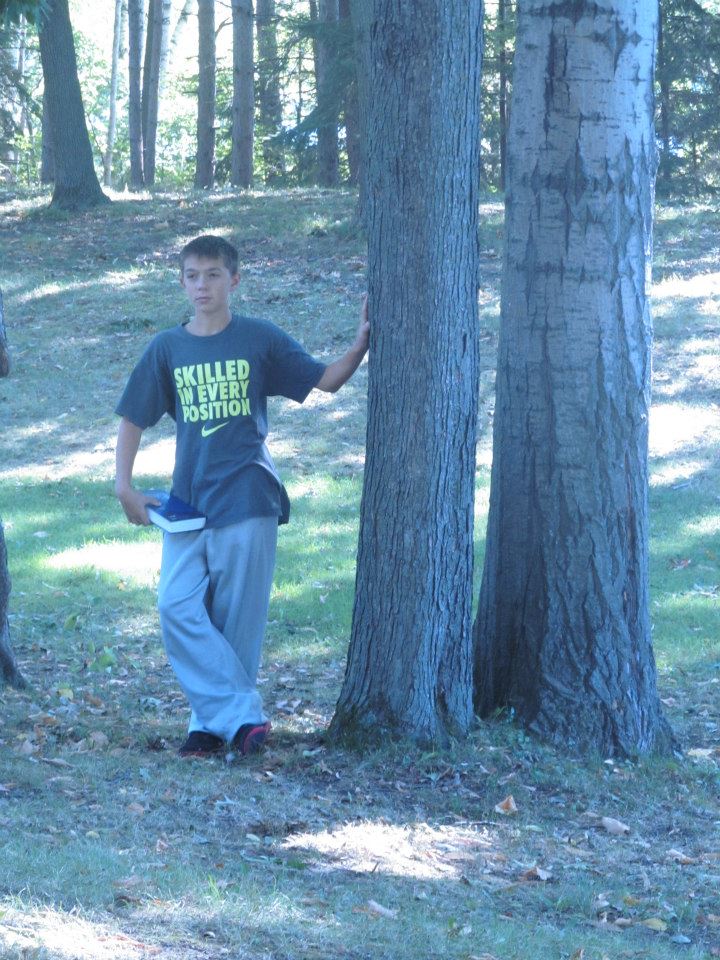
I am the vine, you are the branches.

As we stopped in a grove of trees, we listen to Jesus’ words, “I am the vine; you are the branches” (John 15:1) and prayed as we grasped the trunk/vine in our hands. For the most part, the students seem to be connecting to Jesus’ words.

As we approached the swimming beach, I had planned to have the student remember their baptism and Jesus’ words, “I am the resurrection and the life” (John 11:25-26). We were to walk down to the lake shore, dip our hands in the water and make the sign of the cross on our forehead. We would say the words, “I am alive in Christ.” The water would connect us to our baptism and our life in Christ.

However I had neglected to scout the beach prior to our approach. It had not been used for a few weeks, since summer camp ended. As I walked to the shore, I discovered that there was at least a half-foot of thick mud at the water’s edge and that the water had become a sickly green. Instead of life, the water reminded me of death. Uncertain what to do, I looked up to see one of the “energetic” boys walking out onto the dock. It stretched beyond the mud and green algae.

So there on the dock, we reached over into the lake water and renewed our baptism, water dripping from our heads and hands.

I hope someday that I can incorporate an actual immersion under the water as a way of remembering our baptism. I am still Lutheran in my embrace of infant baptism as God’s means of grace. God starts the covenant relationship. But I think many of us need experiential rites along the way to affirm and remember this covenant. Being dunked in a lake could help us remember that we are buried with Christ and raised with Christ in the waters of our baptism (Roman 6:3-4).

I will first need to find a lake without green algae.

Lord Jesus, I am alive in you. Thank you

Wilderness Journey – Day Two

I awoke early, packed my backpack and headed up the trail. The trail climbed steadily as it followed the North Fork of the Big Thompson River. Breaks in the forest gave me opportunity to scout the high country near Mt. Dunraven.

I anticipated an easy day of backpacking to my next campsite, Lost Meadows. This was only a mile below Lost Lake, a high alpine tarn that is the end of the maintained trail. It was only five miles between campsites so I decided to take a side trip.

Looking toward Mummy Mountain from Stormy Peaks South campsite.

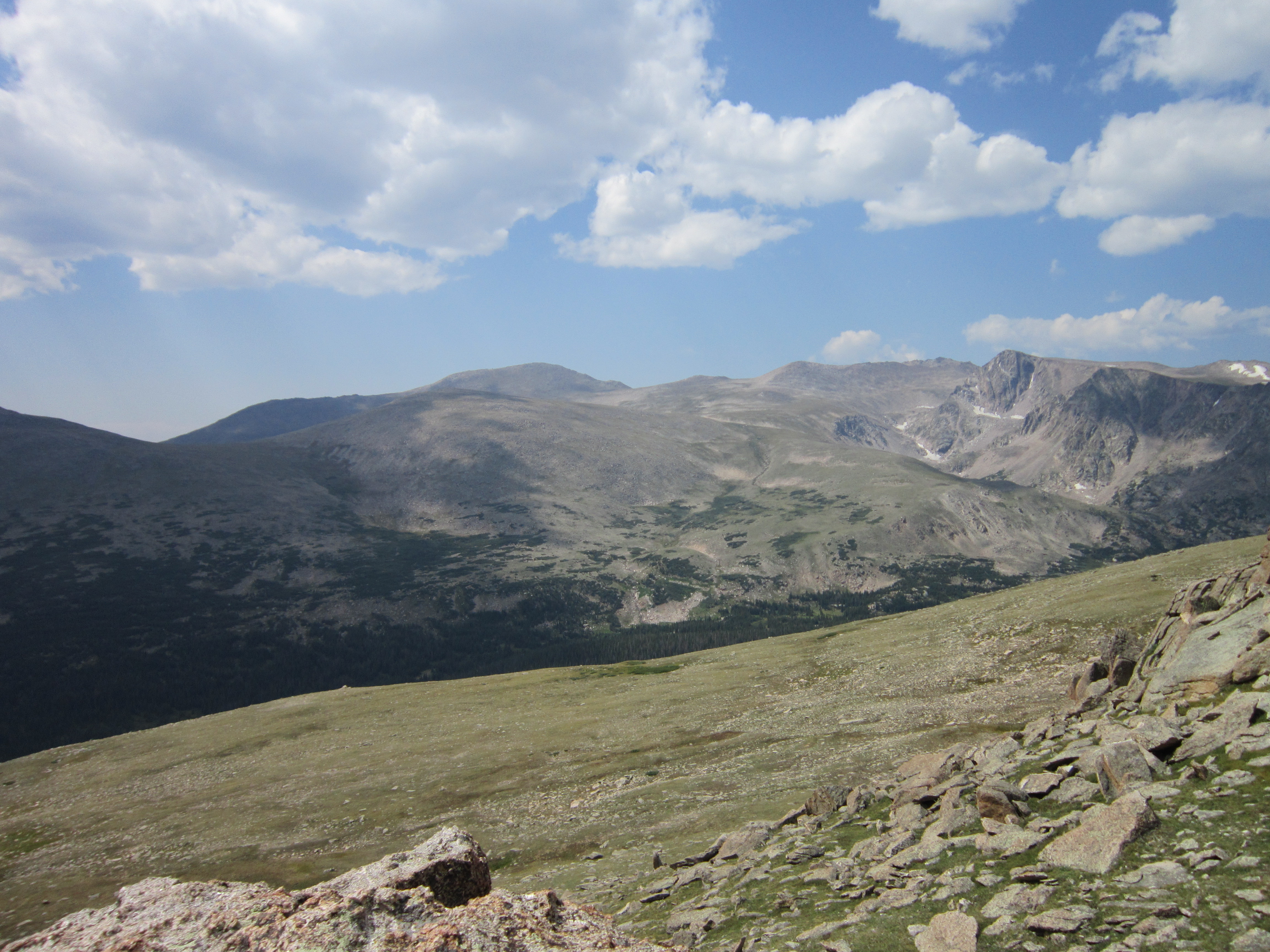
About halfway between Silvanmere Campsite and Lost Meadow was a spur trail that climbed the north side of the canyon to Stormy Peaks Pass. I left my backpack at the trail junction and started the 2000 foot climb to the pass with just lunch and water. The trail started out a series of switchbacks that quickly climbed above timberline. Here I encountered a flat shelf in the ridge where the National Park located the Stormy Peaks South backcountry campsite. It certainly had a spectacular view of the upper Big Thompson canyon, Rowe Peak and Mt. Dunraven.

The trail continued an additional 1.5 miles to pass. As I climbed towards the ridge line, I had to stop several times to scout how the trail proceeded. There was some thick growth of evergreen bushes and small trees where the trail seemed to disappear. I would be merrily hiking along and suddenly there was no trail beneath my feet, just alpine meadow. Now the meadow was fine for walking and I could find my own way, but the trail used the most efficient means to climb the ridge. It became a sort of game to find the trail in the midst of meadow and brush.

I was reminded of a conversation Jesus had with his disciples. In John 14, Jesus is preparing them for his coming crucifixion. He says to them, “I go to prepare a place for you. . ., that where I am you may be also. And you know the way to the place where I am going.”

Thomas responded, “Lord, we do not know where you are going. How can we know the way?”

Jesus said, “I am the way, the truth and life.”

Jesus is the way, the trail, that we seek to guide us through life. But it can be so easy to slip “off trail”, to think that I know the way on my own and don’t need Jesus. As I searched for the trail that morning, I reflected on who is my true trail guide.

Looking south towards Mummy Mountain from Stormy Peaks Pass

I finally reached a small peak just south of the pass. I knew that the next day, I would face the most difficult part of my backpack, climbing up over Mummy Mountain Ridge and down into the Black Canyon Trail. From the overlook near Stormy Peaks Pass, I could see the first half of my next day’s climb. It looked challenging but doable, so I hiked back down to my backpack and continued on to Lost Meadow campsite.

As I settled in for the night, I knew that the next morning I would be off trail for about eight miles, a serious challenge for me.  But I also knew that besides my map and compass, I had a good trail guide walking beside me, giving me encouragement, hope and wisdom. My simple prayer was, “Jesus, stay close and keep me on your path.”

Lord Jesus, you are the way.  Keep me close to your path for my life.

Lost and Found at World’s Fair

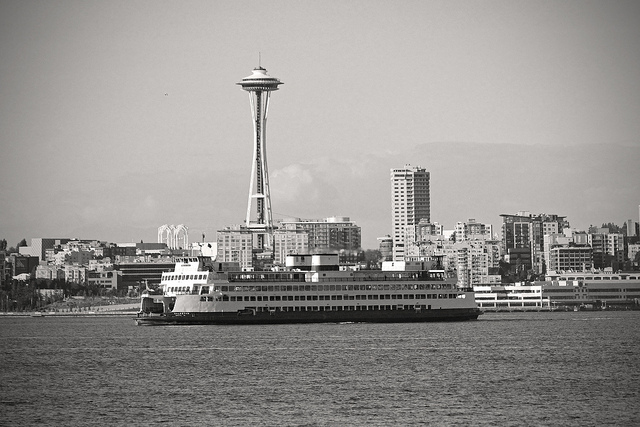
Fifty years ago this summer my family visited the World’s Fair in Seattle. We camped on Bainbridge Island and took the ferry to Seattle.  The Space Needle was brand new and there were many world exhibits. The crowds were large so my father had cautioned my brothers and sisters to stay close as we walked the fair grounds. If they did get separated, our rendezvous place was a magnificent fountain in the center of the fair.

I knew that I would not get lost. I prided myself on being able to read the fair map and to direct our family to each stop along the way. Everything went smoothly until one afternoon. As our family walked toward the Science Pavilion, I looked to my left to see may family walking along beside me. “Yep, still where they should be.”

Then it happened. I looked up to my left and my parents were gone! My brothers were gone.  Even my sisters were gone. They all were not where they should be. My family was LOST! Before I had a chance to rescue them, a vendor saw my confusion and whisked me away. How was I going to find my family with a big security guard taking me to some hidden place?

As he pulled me along, I came to the stark realization that I would never see my family again. Among the millions of people at the World’s Fair, how could we find each other? I was now an orphan. My family was probably already on the ferry to Bainbridge Island. The security guard took me to a room for “lost children.” I gave up all hope and began to wail. I was certain that I would never see my family again.

I don’t know how long I remained in the room, but I was both surprised and relieved when my father walked into the room. I was found.  I later learned that my father had first gone to the fountain, but then discovered that the fair had a video feed into the “lost children” room.  He spot his wayward son and quickly came to my rescue.

Jesus said, “Which one of you, having a hundred sheep and losing one of them, does not leave the ninety-nine in the wilderness and go after the one that is lost until he finds it? When he has found it, he lays it on his shoulders and rejoices. And when he comes home, he calls together his friends and neighbors, saying to them, “Rejoice with me, for I have found my sheep that was lost.” Luke 15.

Lord Jesus, seek and save me once again.

Canoe Journey Begins

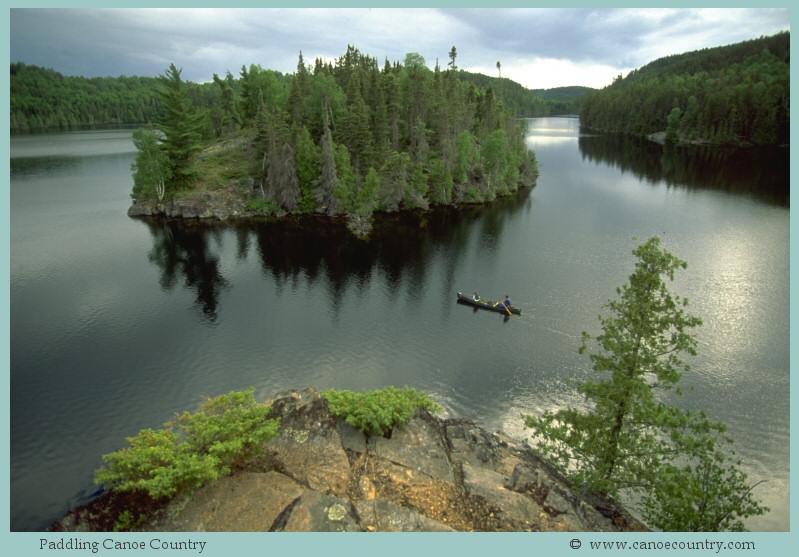
This morning I start a four-day canoe trip in the Boundary Water Canoe Area Wilderness with my son and nine other men from Resurrection Lutheran Church. It will be journey not only through the beautiful wilderness of northern Minnesota, but also a spiritual journey into the wonder of God’s grace.

The image of journey or pilgrimage has deep roots in the Christian tradition. A person starts in one place, travels to another, and then returns to the starting point. The person make look the same, but the journey has transformed him or her.

The Biblical narrative is filled with journey stories from Abraham and Sarah to the Exile in Babylon. The life of Jesus is primarily a journey. Each Gospel records how Jesus’ ministry begins in northern Galilee but eventually he heads south to Jerusalem to the cross and empty tomb.

The Gospel of Luke perhaps takes this image most seriously. Mary travels through the hill country to visit her cousin Elizabeth after the angel Gabriel’s visit (Luke 1:39). Mary and Joseph go to Bethlehem for Jesus’ birth and then to the temple in Jerusalem for his dedication (Luke 2). As a boy Jesus makes the pilgrimage to the Passover Festival in Jerusalem where he is lost for three days. (An excellent post on this story here).

As an adult Jesus’ ministry is a journey from town to town and across the Sea of Galilee. Two of my favorite parables from Luke focus on people who travel—the Good Samaritan (Luke 10) and the Prodigal Son (Luke 15). Jesus sends his disciples on not one, but two training missions (Luke 9, 10). After his resurrection Jesus meets two disciples on the road to Emmaus (Luke 24). The final scene in Luke is Jesus leading his disciples out as far as Bethany for his ascension. (I will only mention that the Book of Acts, written also by Luke, contains more journey stories.)

I do not know how or where God will encounter our two canoe groups, but I am confident that through the journey, the Spirit of God will be working to transform us into his glorious image. I’ll let you know when we return.

Lord Jesus, may we walk, canoe, run, move, dance, play, work, serve with you today.

Marathon Dreams and Christian Hope

This summer I am training for the Twin Cities Marathon. After taking a couple of years off from such focused training due to injuries and my new call to Resurrection Lutheran Church, I will attempt to complete my eleventh marathon on October 7. Finishing is not some vague wish that I am hoping to accomplish. It is an honest assessment of my fitness, training and experience.

Like almost any physical endeavor, patient, persistent training leads to success. From past experience I know that if I am able to run consistently 35-45 miles per week, complete several long runs of 16+ miles and stay injury free, I have a better than 90% chance of finishing the 26.2 mile course. Factors that may contribute to not finishing are an unforeseen injury or illness. I have had some poor race performances (Des Moines Marathon in 2009 and Grandmas in 2007) but even in my poor races I finished.

In recent years my marathon goal has been more ambitious than simply finishing the race. I  aspire to qualify and run the historic Boston Marathon. To qualify for Boston, a runner needs to run a marathon under a certain time based on their age and gender. I qualified once in 2005, but a running injury kept me from running Boston in 2006 and the qualifying time is only valid for about eighteen months. This fall I am hoping to run under 3:55 so that I can qualify for the 2014 Boston.

Now that hope is not outrageous, but it will be a true test of my abilities. It will require proper training and rest. (Overtraining can be as detrimental in marathon preparation as under-training.) It will require focused nutrition and stress management. It will also require some good luck on factors I cannot control (like race day weather).

Still I have the hope and dream of qualifying.

What distinguishes this aspiration from my Christian hope is that my marathon dreams primarily rests in myself and my abilities. My Christian hope rests totally in Jesus Christ and what he has accomplished through his death and resurrection. To quote a famous hymn, my hope is built on nothing less than Jesus’ blood and righteousness. I am a fallible human being who may twist an ankle tomorrow, ending my marathon dreams. But my hope in Jesus remains steadfast because of the promise of God’s Word.

We have our hope set on the living God, who is the Savior of all people, especially of those who believe. I Timothy 4:10.

Lord Jesus, thank you for being my rock and my hope.

American Optimism And Christian Hope

ImageAs I mentioned in my sermon yesterday, title Abounding in Hope, our American culture promotes optimism for a better future. To use an old proverb, we tend to promote the idea that the glass is half-full, not half-empty. To quote President Ronald Reagan, “Well I’ve said it before and I’ll say it again — America’s best days are yet to come. Our proudest moments are yet to be. Our most glorious achievements are just ahead.”

Part of our American optimism comes from our predominant Christian heritage. Hope is a central virtue of our faith in Jesus Christ. But there is at least one key distinction between American optimism and Christian hope. American optimism places our basic trust in ourselves and our ability to solve our common problems. We see a challenge, roll up our sleeves and get to work, whether it is placing a man on the moon, fighting terrorism or recovering from natural disasters. As Americans we believe in the possibility of creating a “better life” for ourselves, by overcoming obstacles and challenges.

Christian hope has a different focus. Our Christian hope is not in ourselves, but in our God who loves us and saves us from ourselves. We believe God is at work in the world, calling all people to God’s rule of justice and peace. We know that there will be struggles and difficulties. Jesus calls us to take up our cross and follow him (Mark 8:34). The cross is hardly a symbol of optimism.   Paul goes so far as to say that he boasts in his struggles.

we also boast in our sufferings, knowing that suffering produces endurance, and endurance produces character, and character produces hope, and hope does not disappoint us, because God’s love has been poured into our hearts through the Holy Spirit that has been given to us (Romans 5:3-5).

As an American Christian I do not reject an optimistic glass-half-full attitude. There are many problems in our world that need a positive can-do attitude — poverty, hunger, and racism to name a few. However I also know that as follower of Jesus Christ, there will be times and situations that I cannot overcome. The primary ones are my sin and my death. No amount of optimism and self-encouragement will help me here. My only hope is Jesus Christ; his death and resurrection are my source of hope today and forever.

How do you connect or distinguish American Optimism and Christian Hope?

Lord Jesus, continue to fill my heart with hope in you.

Work, Play and Worship

This week starts a new ministry at Resurrection called Four Square, named after the popular playground game. The four squares of the ministry are explore, play, serve and grow. The children will explore the Bible, serve various needs in the community, play games like four square, and grow in their faith and relationship. Today they actually painted a Nine-Square court in the church parking lot for all to use.

The “play” part of Four Square made me think of a comment that I explored somewhat last year. The idea is that in our American culture we confuse worship, work and play. We worship our work, work at play and play at worship. I know that I can be guilt of each attribute at times.

First we tend to worship our work. Especially men in our society can make their careers the center of their lives. Our whole identity can revolve around our careers and how successful we are within it. Careers often have a clear hierarchy of who is moving up the ladder and who is not. Though God calls us to work in God’s creation, God does not call us to place our career success at the center of our lives. I confess that I can place MY pastoral status ahead of my faithfulness to God’s mission and calling. “Seek first the Kingdom of God and his righteousness and all these things shall be yours as well” (Matthew 6:33).

Second we can work at our play. In our American culture, we can turn our leisure into a new work obsession. Whether it is fishing, hunting, golf, running, tennis, gardening, woodworking or biking, we can turn what is meant to be restful and renewing into competitive, stressful work. I know that I have at times turned my love of running into an obsession when I am training for a marathon and my whole life begins to revolved around a rigorous training schedule. I have this elusive goal of qualifying to run in the Boston Marathon someday, but my fixation can rob me of the joy of simple running. My recent use of the Phil Maffetone training method has helped me slow down and to enjoy the playful act of running.

Finally we can play at worship, or, in other words, turn worship into entertainment. We measure how effective worship is by how popular the worship service is or how people felt during the service. We get confused about the focus of worship. Worship is not about the worshippers, but about God being central to our lives.

God is not my “cosmic therapist” who makes me feel good about myself, but rather my Creator, Savior and Guide before whom I bow in wonder and adoration. God is God, ruler of the universe. True worship helps me remember and live with God at the center. “God is spirit and those who worship him must worship him in spirit and in truth” (John 4:24).

So today, let us live with God at the center, in our work, play and worship.

Lord Jesus, remain Lord of my life in my work, play and worship.

Soaring On Eagle’s Wings

This morning was our final day of Vacation Bible Adventure at Resurrection Lutheran Church. The Bible story was Jesus’ death and resurrection. The children carried the cross through the worship area to our story room so as to remember how Jesus carried the cross out to Golgotha. We heard again how he was nailed to the cross and died for our sins.

But God proved his love for us in that while we were yet sinners Christ died for us (Roman 5:8).

To help dramatize this concept each child placed a black strip of plastic on the cross, a symbol of our sin and brokenness.  Then we prayed our confession of sin and heard again the promise of our forgiveness.  Jesus’ death cleanses us from sin.

We then went outside to celebrate Jesus’ resurrection. We remembered that our church is called Resurrection and every Sunday we celebrate Jesus’ rising from the dead.  We are resurrection people and we demonstrate that Jesus’ lives by our lives of love and service.

The culmination of our celebration was the launching of model rockets, remembering one of our Biblical promise from the week, “Those who wait on the Lord shall renew their strength, they shall soar with wings like eagles” (Isaiah 40:31). What a joy to share this week with the children, youth and adult volunteers.

Lord Jesus, You are the resurrection and the life.  Launch me into your resurrected life, that I soar on wings like eagles.

No Matter What You Feel . . . You Can Trust God

This morning in Vacation Bible Adventure our children experienced John 11 when Jesus raised Lazarus from the dead.  Today’s theme was “No matter what you feel . . . you can trust God.”

John 11 certainly has a roller coaster of emotions along with the challenge to trust God in the midst of the emotions.

Too often when John 11 is read, we want to jump immediately to the end when Jesus shouts at the tomb, “Lazarus, come out.” The dead man walked out, his hands and feet still bound with strips of cloth. The raising of Lazarus verifies trust in Jesus.

But I think most of us live not at the end of the story, but rather the middle. We live with Mary and Martha, the two sisters who cared deeply about their brother Lazarus and worried when he became ill. They knew and trusted Jesus, so they immediately sent word to him, asking for his help. Jesus’ response is puzzling,

Jesus said, “This illness does not lead to death; rather it is for God’s glory.” Accordingly, though Jesus loved Martha and her sister and Lazarus, after having heard that Lazarus was ill, he stayed two days longer in the place where he was (John 11:4-5).

Jesus’ delay puzzled the children at today’s VBA and it puzzles me as well. Jesus cared but delayed. Jesus tells the disciples that it will be beneficial to them and others that he was not there to heal Lazarus (John 11:14).

This story has shaped some of my thinking on emotions.  First, after Mary and Martha sent the message, they would be hopeful that Jesus would respond quickly. Then their emotions would move to disappointment as Lazarus nears death and still no Jesus. When Lazarus died, they would be devastated, shocked, probably angry. Did their friendship with Jesus count for nothing?

Finally, when Jesus showed up four days after Lazarus’ funeral, I sense resentment. Martha said to him, “Lord, if you had been here, my brother would not have died” (John 11:21). A little later, Mary says the exact same words to Jesus. One can hear the disappointment, hurt and anger in their statements. Yet there remains also a note of hope. Even in this most difficult moment, they call Jesus, “Lord.” Even in their pain they see Jesus as the true ruler to be trusted.

Lord Jesus, help me to trust you no matter what I feel.

“No Win in Comparison”

Yesterday I preached on the spiritual emotion/virtue of humility. I borrowed a phrase from Andy Stanley, senior pastor of North Point Community Church, who preached “There is no win in comparison.” The real enemy of humility is not just pride, but envy; we have a constant need to compare ourselves to others to see if we measure up. If our self-worth is based on a comparison model, we never win.  There is always someone who is richer, smarter, faster, fitter, holier than we are.

Then yesterday, Seth Godin wrote in his blog about the danger of comparison in one’s business model.

Compared to magical

The easiest way to sell yourself short is to compare your work to the competition. To say that you are 5% cheaper or have one or two features that stand out–this is a formula for slightly better mediocrity.

The goal ought to be to compare yourself not to the best your peers or the competition has managed to get through a committee or down on paper, but to an unattainable, magical unicorn.

Compared to that, how are you doing?

I don’t know much about magical unicorns (I will need to check with my daughter Suzanne regarding that), but the one place I go for comparison is Jesus Christ. Not that I live a “What-Would-Jesus-Do” life, but rather a life based solely on “What-has-Jesus-created-and-called-me-to-be-and-do?” As a child of God, my value and worth rests totally in God’s Son. When my heart, mind, and soul focus on Jesus, then the comparison model does not have a chance.

I have been crucified with Christ; it is no longer I who live, but Christ who lives within me (Galatians 2:20)

Lord Jesus, keep my focus on you and your call in my life.