Category Archives: Lutheran

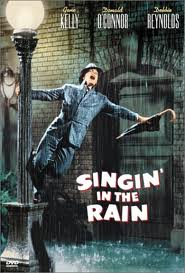
Singin’ in the Rain

To Sing and Dance with Joy? Put down the umbrella!

Su Sorenson, a member of Resurrection, wrote a devotional that I neglected to place in our congregation’s Lenten devotional.  I truly appreciated her image of taking down our umbrellas.

For I am convinced that neither death nor life, neither angels nor demons, neither the present nor the future, nor any powers, neither height nor depth, nor anything else in all creation, will be able to separate us from the love of God that is in Christ Jesus our Lord.”  Roman 8:38-39

These verses have strengthened me and carried me through tragedies, suffering, and loss.  I have been assured that whatever is happening to me, to those I love, or even to this world, God is still present.  God is still showering me and the world with His love. 

However, there are still times when I am separated from the love of God.  Those times when I build a wall around myself and don’t let God in.  Those times when I put up my umbrella and don’t allow the rain of God’s love and grace to shower me.  I might put up my umbrella when I get busy with my own “to-do list” or begin to feel self-important (how will the place run without me?)  I put up the umbrella when I am exhausted, in times of self-pity, in loneliness.  Yet, God’s love is still there. 

To live in God’s grace I need to step out from the umbrella.  I need to stand in the rain, to be washed each and every day with God’s love and power.  Nothing will be able to separate us from the love of God when we take down our umbrellas.  Will you take your’s down too?  Enjoy the shower.

Dear God, continue to tug at my umbrella so I may be fully washed in your love and grace, each and every day.  Amen

Bet the Farm on Jesus

My blog’s name, Trust Live Serve, comes from Resurrection Lutheran Church where I am  pastor.  As a congregation we are called to Trust in Jesus as Savior, Live the call of God’s Word, and Serve the World God loves.   The first phrase, Trust in Jesus as Savior, gives centrality to Jesus Christ.  Without Jesus’ life, death and resurrection there would be no reason for any church to gather.  As we move towards Holy Week and the mystery of the cross and empty tomb, I am mindful of how Jesus trusted the Father throughout the passion.  Jesus is not only the object of our trust, but a model of what trust looks like.

The Oehlke farm house remains on church property

Yesterday, I met another example of trust.  Inez Oehlke was the former owner of the farm on which Resurrection Lutheran is now built. She had been a faithful member of a neighboring Lutheran congregation, Gethsemane, and she wanted to make a contribution to her congregation.  She also knew that her farm, on the corner of Bailey Road and Woodbury Drive, was prime commercial real estate because, in time, it would be adjacent to a major intersection in this growing suburb.   She had been approached by various commercial vendors who wanted to purchase parts of her farm, but she had a different vision.  She wanted and prayed for a church on the corner.  And her prayers were answered twice.

Resurrection Lutheran from the farm buildings

Not only was Resurrection Lutheran able to purchase this prime location at a very reasonable price, but St. Ambrose Catholic church as well (St. Ambrose is across the street from Resurrection).  Inez used the purchase price to benefit her own congregation and Luther Seminary.  She now lives in a modest apartment here in Woodbury and, at the age of 91, continues to give “talks” or testimonials on the value of being generous.   After my visit with her, I came away blessed by her trust in Jesus.  Inez continues to live a vibrant life of faith.   Trust in Jesus is in the very foundation of this congregation, even in the soil itself.

Who has been a model of trust in Jesus for you?

Your Will Be Done RIGHT NOW!

Learning to Pray Anew

On coming to Resurrection Lutheran Church four months ago, I discovered that the congregation had adopted the contemporary translation of the Lord’s Prayer.   I appreciated this because the only time I used “thee” and “thine” in prayer was in the Lord’s Prayer.    Praying “forgive us our sins” makes much more sense than “forgive us our trespasses” as does “save us from the time of trial.”  But I knew that it would be a challenge to change my interior prayer life to the new translation, just as it is for congregations when they embrace the newer version.  The old is deeply imbedded.

I have had little trouble during public worship, since it is projected on the screen to read.   The real challenge is for me to pray it in non-worship settings.  After our annual meeting, I wanted us to close with the Lord’s Prayer.   I started off strong, but after praying “Forgive us our sins as we forgive those who sin against us” I crashed and burned, stumbling over “lead, ah, save us from time,  . . temptation, No,  of trial?”  My voice trailed off.  Fortunately strong prayer leaders picked up the congregation as I fell.  It was a congregational prayer after all.

With this in mind, I decided to practice the prayer through Lent, using it as part of my drive to church.  My intention was not to simply recite the prayer, but to pray it with all my heart and mind. Still I would keep eyes open as I drove.

Am I praying or driving?

So last Saturday morning as I pulled onto the partially plowed freeway,  I began to pray.  Suddenly I saw the car next to me pull to the shoulder,  and at the same instance an ambulance dashed by, its lights blazing.   Also I was surprised to see a police car stopped to assist two cars in the ditch; I touched my brakes and realized that road was more slick than I anticipated.  I was praying the petition, “your will be done,”  and it struck me, “God’s will is for me to be a non-distracted driver RIGHT NOW!”  I stopped praying and immediately gave full attention to driving my car.  Later I could give God full my full attention.

How has prayer impacted your life?

Daily Multigrain

Daily Bread

Okay, yesterday was Ash Wednesday, the beginning of Lent.  Yesterday many of us went to church, confessed our sins, received the promise of forgiveness and went home.  Now what?  How are you going to allow God to work in your life today?

It does not have to be some big spiritual feat or sacrifice.   A simple prayer asking God to start your day with grace and gratitude.  For example, take one petition from the Lord’s Prayer, such as “Give us today our daily bread.”   Reflect on that as you eat your breakfast, drink your morning cup of tea, as you start your car or turn on your computer. All that we have, all that we use each day is a gift from our Creator. 

Martin Luther answered the question, “What does ‘daily bread’ mean?”  in the Small Catechism. 

Everything included in the necessity and nourishment for our bodies, such as food, drink, clothing, shoes, house, farm, fields, livestock, money, property, an upright spouse, upright children, upright members of the household, upright and faithful rulers, good government, good weather, peace, health, decency, honor, good friends, faithful neighbors and the like.

Slow down and see the amazing grace all around us.  Our daily bread is truly multi-grain and nourishing.

 Where was God for you in the second day of Lent?

The Folly of Ashes

"From dust you come, to dust you shall return"

Ash Wednesday brings the strange custom of placing ashes on the forehead of  Christians.  This custom was not so strange in ancient cultures.  People would sit in ashes as a public confession that they had done wrong, that they deserved to be punished and that they seek God’s mercy.  Jesus noted this custom when he cursed two cities that did not receive him, For if the deeds of power were done in you had been done in Tyre and Sidon, they would have repented long ago, sitting in sackcloth and ashes (Luke 10:13).

Ashes are a symbol of our sinful, broken, self-serving character and our desperate need for God’s mercy.  Unless we acknowledge and confess our sin, God’s grace has no power, Christ’s death has no purpose.  But with such confession comes the brilliant healing light of God’s love.

The most powerful (even ridiculous?) image for the use of ashes comes in the book of Jonah.   The King of Nineveh heard of Jonah’s preaching on Nineveh’s impending destruction.  He rose from his throne, removed his rob, covered himself with sackcloth, and sat in ashes.  He even declared all men and animals to be covered in sackcloth, with the hope that God would be merciful.  The king showed his wisdom in this foolish behavior.

 This morning I read something on a blog that took God’s mercy deeper.

With that in mind, I’ve been wrestling the last few days: Isn’t it ironic how casually we are willing to talk about God’s mercy, as if we deserve it? As if it’s owed to us? At the same time, we cringe at the idea that God might be calling us to live on less; to give some stuff up. We pile on excuse after excuse about why God would want us to live cushy, comfortable, safe lives… Yet, the God we follow wasn’t willing to cling to the glory he deserved, because he was so moved by his love for us. We, on the other hand, don’t even deserve the breath in our lungs. It’s a gift. How, then, could we ever justify our security?

via Perfect Choreographed Dance. « The Trees Will Clap.

How does God’s mercy impact you?

Still Light

After posting about Lent the past two days, I had to remind myself that it is still the season of Epiphany, the season of light in the midst of darkness.  Epiphany began on January 6th with the light of the Bethlehem star leading the magi to baby Jesus (Matthew 2) and it ends Sunday, March 6, with the story of  the Transfiguration when the glory of Jesus is revealed to the disciples in a blaze of light.  And I certainly feel the need for light this winter.

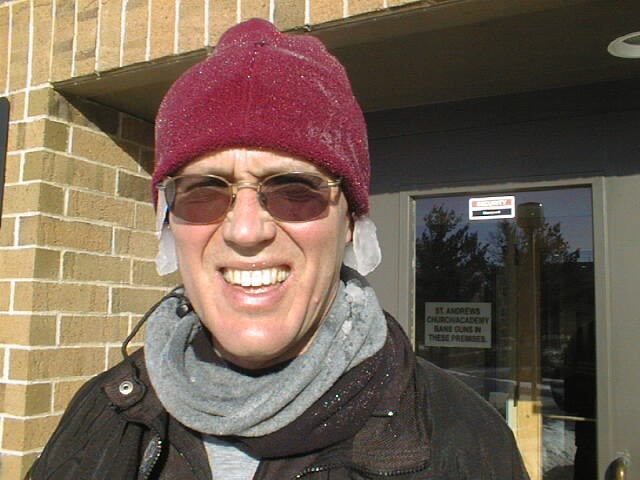
Having grown up in Washington state, I had to learn to adjust to Minnesota winters.  In the learning process, I discovered that for me the severity was not as difficult as the duration.  I could be kind of macho about big storms or severe cold.  I remember running with some friends in -15 below temperature, basically so we could brag to other runners about our devotion (or our foolishness?).  But this winter seems to have started early and just settled

Foolish Runner or "I can't hear you due to the icicles in my ears"

in for a long stay.  And though we had a few days of teasing warmth last week, I know that winter could easily stretch into late March.   I can wish or complain or rant or blog, but the climate will not relinquish its grip based on my reaction to it.

So I come back to the season of light, Epiphany, and the glimpses of God’s glory.  One glimpse is that now, as I drive home, I see the sunset.  And what glorious sunsets I have witnessed. Beauty is one way God reveals God’s self, even in the midst of a long winter.  The sun light on freshly fallen snow has such an intensity that I have to squint or wear sunglasses. Yet not every day has that intensity.  Light can brilliant or muted, just as God’s power and presence can be for us.  I recently heard Bishop Rogness preach that God’s light permeates all of life, even when we think everything is dark.  We tend to seek the spectacular fireworks of glory, yet God is often in the flickering candle.  The light of Jesus shines in every season, even the Minnesota winter.

When or how has God’s light shone for you?

Slow Lent Movement: Part Two

Slow down for Lent

Yesterday I introduced Bishop Payne’s concept of a Slow Lent.   Here are five slow spiritual disciplines that complement traditional Lenten disciplines.

1. Traditional: repentance 
    Slow: speak less, listen more.

In our hurried culture, we often are so quick to speak, to get our words out, that we rarely take the time to listen to what others say, especially those that we disagree with.  We rush to judgment when we need to listen and possibly to change the direction of our thinking, planning, and acting.

2. Traditional: forgiveness
   Slow: let go of one “should.”    

Many of us carry various kinds of “ought’s or should’s” that overload our schedule. We need to “forgive” ourselves.   For example, as a new pastor, I feel I should be involved in different local community activities.  One piece of wisdom I received recently is that a new pastor should not be involved in local community activities during the first year so that he or she can fully enter into the life of the congregation.   So I have given up that “should” even before Lent starts.

3. Traditional: catechesis (teaching)
    Slow: re-learn one basic of the faith

Rather than focusing on the newest spiritual discipline, simply re-focus on some basic spiritual discipline.  This year at Resurrection Lutheran, we will be re-learning the Lord’s Prayer and its meaning for prayer and life.

4. Traditional: fasting
    Slow: choose one way to ‘unplug’

For some Christians, Lent means giving something up so that one can better focus on God.  The usual items are chocolate, desert, alcohol, or meat.   Bishop Payne suggested that perhaps we “unplug” from the internet or turn off our smartphones or television.  We might not be able to do it 24/7, but we might choose to turn it off every evening or every Saturday.  Of course, the purpose is to open our time and our lives in a fresh way to God.

5. Traditional: almsgiving
     Slow: simplify

Certainly we need to be as gracious as our God and give to people in need.   Lent is a great time to practice such giving.  Yet our culture is so focused on the accumulation of things, perhaps we can shift our attention from accumulating to letting go.  My uncle Jerry lived for several years during his retirement in an RV.  Whenever he considered buying something, he had to consider what he would give away to make space for the new.  It made him think twice before buying.

Which discipline might help you slow down this Lent?

The Slow Lent Movement

Slow Lent Movement

This morning I attended a ministerium meeting for Lutheran pastors from the Saint Paul and Minneapolis Area Synods.  After worship, our presenter, Bishop Margaret G. Payne of the New England Synod, spoke on her passion for a Slow Lent Movement.  

Inspired by the Slow Food movement which calls us to step away from fast food and re-learn the values of thoughtful shopping, local foods, time spent in preparation and even more time spent in sharing food slowly with family and friends. The Slow Lent Movement has similar goal. Some of her questions are

  • How does our culture’s addiction to hurry stand in the way of spiritual growth?
  • Do we have too much ‘fast worship?’
  • How could this Lenten season provide an antidote to the weariness of too much to do at the same time that it offers strategies for recovery?

She spoke on how pastors have bought into the seduction of our culture’s three A’s: Accomplishment, Adrenalin, and Affirmation.   As pastors we think our worth is based on how much we accomplish in our congregations and we enjoy the adrenalin rush that comes from having much to do and being needed by many people.   And we relish the public affirmation that often comes from having our hands in many programs and ministries.   I found myself nodding my head several time, recognizing my own self-delusions being exposed by her words. 

But I don’t think her words are limited to pastors.  In spite our  professed trust in God’s grace, so many of us who are Christians still  seek our self-worth based on our accomplishments.  We rush about trying to fulfill the many “shoulds” we carry inside our heads.   We seek public affirmation even as we feign humility.   We have bought into the prevailing culture without seeing our need for a new way of life.

How have you been seduced by the Three A’s: Accomplishment, Adrenalin  and Affirmation?

Tomorrow, I will post on Bishop Payne’s Five Slow Disciplines for Lent.

The Purpose of Scripture

The Bible is Word Power

Have you heard the concept, “The BIBLE stands for Basic Instruction Before Leaving Earth?”   I struggle with that concept.  My fear is that we will turn the Bible into a glorified self-help book that we try to control, rather than the Word of God that comes to recreate us in God’s image.  God’s Word has more than great advice; it has the power to transform us.

N. T. Wright describes this transforming power. “The Bible isn’t there simply to be an accurate reference point for people to look things up and be sure they’ve got them right.  It is there to equip God’s people to carry forward his purposes of new covenant and new creation.  It is there to enable people to work for justice, to sustain their spirituality as they do so, to create and enhance relationships at every level, and to produce that new creation which will have about it something of the beauty of God himself.”   (Simply Christian, p. 182-183)  God’s Word is to actively work at transforming us into the image of Christ.   It calls and empowers us to love God by loving our neighbor in creative, just ways.

Jesus himself had to reinterpret the law because the Pharisees and other religious officials had misused it.   The Pharisee’s loved the Torah (first five books of the Bible), but in their love they tried to control and protect it by building sharp boundaries between holy and unholy.   They tried to avoid all contact with unholy people, so as to remain pure before God.   They used the scripture as their way to stand apart from those in need (lepers, tax collectors, prostitutes, sinners).  Jesus proclaimed a message that engaged the unclean and envisioned a new creation.   Jesus did not come to abolish the law but to fulfill it (Matthew 5:17).

How is God’s Word transforming your life?

Prayer Helps

Bishop N. T. Wright

I am preparing for a talk on prayer this evening and wonder if and when anyone uses the written prayers of others to guide their prayers.  I am convicted by N. T. Wright’s comments that, “we moderns are so anxious to do things our own way, so concerned that if we get help from anyone else our prayer won’t be ‘authentic’ and come from our own heart, that we are instantly suspicious about using anyone else’s prayers. . . . We are hamstrung by the long legacy of the Romantic movement, (which) produced the idea that things are authentic only if they come spontaneously, unbidden, from the depths of our hearts. ” (N. T. Wright, Simply Christian, p. 164-165)

I confess that I have at time been such an advocate of spontaneous prayers of the heart.   Yet I also know the value of written prayers that have guided Christian prayer for centuries.   Jesus, being a first-century Jew, learned memorized prayers such as the Shema (“Hear, O Israel: the Lord is our God, the Lord is one,” found in Deuteronomy 6:4)  and the Psalms.  He taught his own disciples his kingdom prayer, the prayer we call the Lord’s Prayer (Matthew 6 and Luke 11).  The prayer of St. Francis continues to “make us instruments of God’s peace.”   Martin Luther wrote short prayers for the morning and evening to be included in his Catechism.   AA groups use Reinhold Niebuhr’s Serenity Prayer to close their meetings.  Written prayers can give shape and structure to our devotional life.

One of my favorite written prayers I learned from the Lutheran Book of Worship, but it probably has a deeper history.   The prayer is part of the morning prayer service and I have used it at various time in my ministry, especially at the beginning of something new.

Lord God, you have called your servants to ventures of which we cannot see the ending, by paths as yet untrodden, through perils unknown.  Give us faith to go out with good courage, not knowing where we go, but only that your hand is leading us and your love supporting us; through Jesus Christ our Lord.  Amen.

What written prayer(s) have shaped your faith life?  In what ways?