Category Archives: Resurrection Lutheran Church

One Year Reflection

Marmot Lake in Washington Cascade Mountains

One year ago today I started this blog. I wanted a platform by which to communicate some of my passion to trust, live and serve as a follower of Jesus Christ. As a newly called pastor at Resurrection Lutheran Church, I wanted a way to communicate with the congregation and beyond. In my first blog, I wrote about having three foci: the physical, mental, and spiritual components of faith. I also thought that I would be posting three times per week.

It turns out that I have posted an average of 4.5 times per week and my favorite topic has been reflections on scriptures. I like to think this blog as a supplement to my sermons on Sunday, helping prepare people for Sunday worship or giving additional insight afterward (“nuggets” that I could not work into my Sunday sermon).

Also I have done a variety of life posts. One of my most “visited” posts was last April when I wrote about my son’s engagement. I have reflected several times regarding my journey with my aging mother. And whenever I can write about the beauty of wilderness I rejoice.

I have not written as much about running as I first thought, probably because I have been struggling with a number of chronic running injuries. As those seem to be clearing up, I may return to that topic on occasion. Running often clears the mind for writing.

I still think this a valuable tool for communicating with the great people of Resurrection and beyond. Though I often post some short comments on Facebook or Twitter, the longer format of a blog seems to work well for me.  If you have any comments/topics/critique, please leave a comment or send an email. Like most bloggers, I appreciate comments.

(BTW, my e-mail is back at resurrection-woodbury.org)

Iron sharpens iron, and one person sharpens the wits (and the words) of another. Proverbs 27:17.

Lord Jesus, thank you for the communion of saints.
Zeal Gone Too Far?

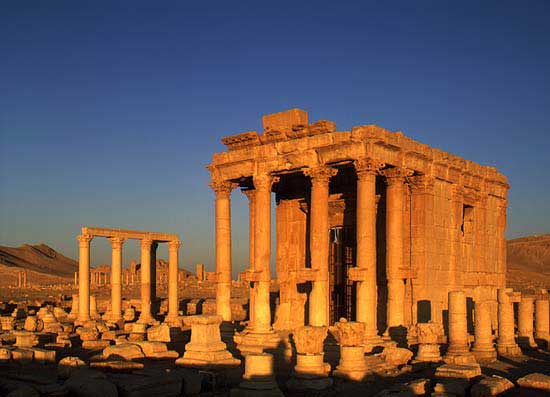
Temple of Baal in Shamin Syria

Having preached Sunday on King Josiah’s renewal of God’s covenant in 2 Kings 22, I am fascinated with his reforms afterwards. According to the book of 2 Kings, Josiah was one of the few kings who followed in the path of God. Despite being raised in a palace where the fertility idols of Asherah and Baal were preferred, Josiah placed his trust in the God of Abraham, Isaac, Jacob and David. And when he heard the Book of the Law for the first time, he became zealous to reform the religion of Jerusalem and surrounding Judah.

First he cleaned out the temple of Solomon, the house of the Lord, removing all the foreign idols (2 Kings 23:4). He burned them outside of Jerusalem and scattered their ashes on public graves, which desecrated these ancient cultic objects. He marched out into the countryside to destroy the “high places” or non-Temple worship sites. He also expelled any foreign priests.

Such “zealous” action may sound excessive to our tolerant ears. Living in our pluralistic culture, we may read such harsh actions as bigotry and intolerance. Yet Josiah and the people of Judah had been given a very specific mission from God: to trust in the Lord God alone. Without this radical obedience their mission could easily be diluted into cultural irrelevance by the neighboring nations. No one would be following God’s covenant. Still, I doubt that we are called to burn or destroy the temples of other religions today. Such a brutal attack would not be honoring Jesus command to love our neighbor (Matt 22:39).

There is a second part to Josiah’s reforms that speaks more directly to our day and culture. It was a revitalization of worship towards the Lord God. He reintroduced the celebration of Passover in Jerusalem, a celebration of God’s victory in releasing the Hebrew slaves in Egypt. (2 Kings 23:21-23). The same holds true today. As Christians we need to more completely understand and celebrate our heritage as God’s people. The narrative lectionary has helped our congregation rediscover some of the Vibrant Life of Faith that can be found in the Old Testament. We don’t need to burn “high places,” but we can certainly burn with the light of faith in God. Our light can beckon our neighbor to a Vibrant Life of Faith in Christ.

How do you bear witness to faith in God in our pluralistic society?

Lord Jesus, may I be faithful as you are faithful.

Honoring Our Elders

I am in the sandwich phase of life. Though my children need me less each day, my mother’s care continues to grow.   I recently wrote a post about her fall and hip surgery: 86 and Laughing.  Her recovery continues and hopefully she will return to her apartment soon.

I sometimes wish my mother had made some long-range decisions before her dementia restricted her choices. She had always wanted to die at home in her own bed, but living alone became less and less an option as her dementia grew. My siblings are scattered from Atlanta to Kodiak, Alaska, and we knew we had to do something but no clear choice arose. We talked to Mom about moving, but she resisted any conversation on the topic. Her local neighbors and friends in Washington State kept telling us she should not be living alone. But anytime we suggested a home health care aide, she adamantly refused. Mom knew she was losing control but did not want some stranger to enter her home. Who can blame her?

My siblings and l wrestled with the fourth commandment: Honor your father and mother. What did honoring meaning in this situation? How do we love mom and make her final years happy, significant ones? There was no simple solution.

Finally in the summer of 2010, my sister  flew with mom to Minnesota for an extended visit. We had Mom visited a gerontologist, lawyer and financial planner. After three months in our home, my wife and I found a memory-care assisted-living apartment in Woodbury, near Resurrection Lutheran Church. With considerable reluctance my mom moved in and began the adjustment. We hung her family pictures on the wall, and made sure she had plenty of crossword puzzles to enjoy. Within a couple of weeks Stonecrest became her home.  Her recent fall and surgery may only be a temporary set-back.

I am still unsure how to honor my mom, other than to visit, pray and remind her that she is loved by all her children, grandchildren, friends relatives and God. Fortunately, she still honors me with a smile and a hug.  And I smile each time I am so honored.

Lord Jesus, thank you for the blessings of family.

86 and Laughing

My blog was interrupted by life. Last Saturday, my 85-year-old mother fell in her apartment and fractured her hip. Since she suffers from dementia I had to make several medical decisions with her, the primary one being whether to have surgery to repair the fracture. Since it was the week-end I could not reach her gerontologist until Monday and then we played phone tag until Tuesday. I wanted her input since she knew both my mother’s dementia and her physical capabilities. After conversation with doctors, family, and friends the decision was made for surgery.

I also prayed a lot during this time, asking God to provide wisdom and guidance. I asked others to pray as well. I don’t see prayer as a magic formula but I trust that God weaves his will into the thoughts and decisions we make. I am thankful for all the prayers that came from family and friends, especially Resurrection Lutheran Church.

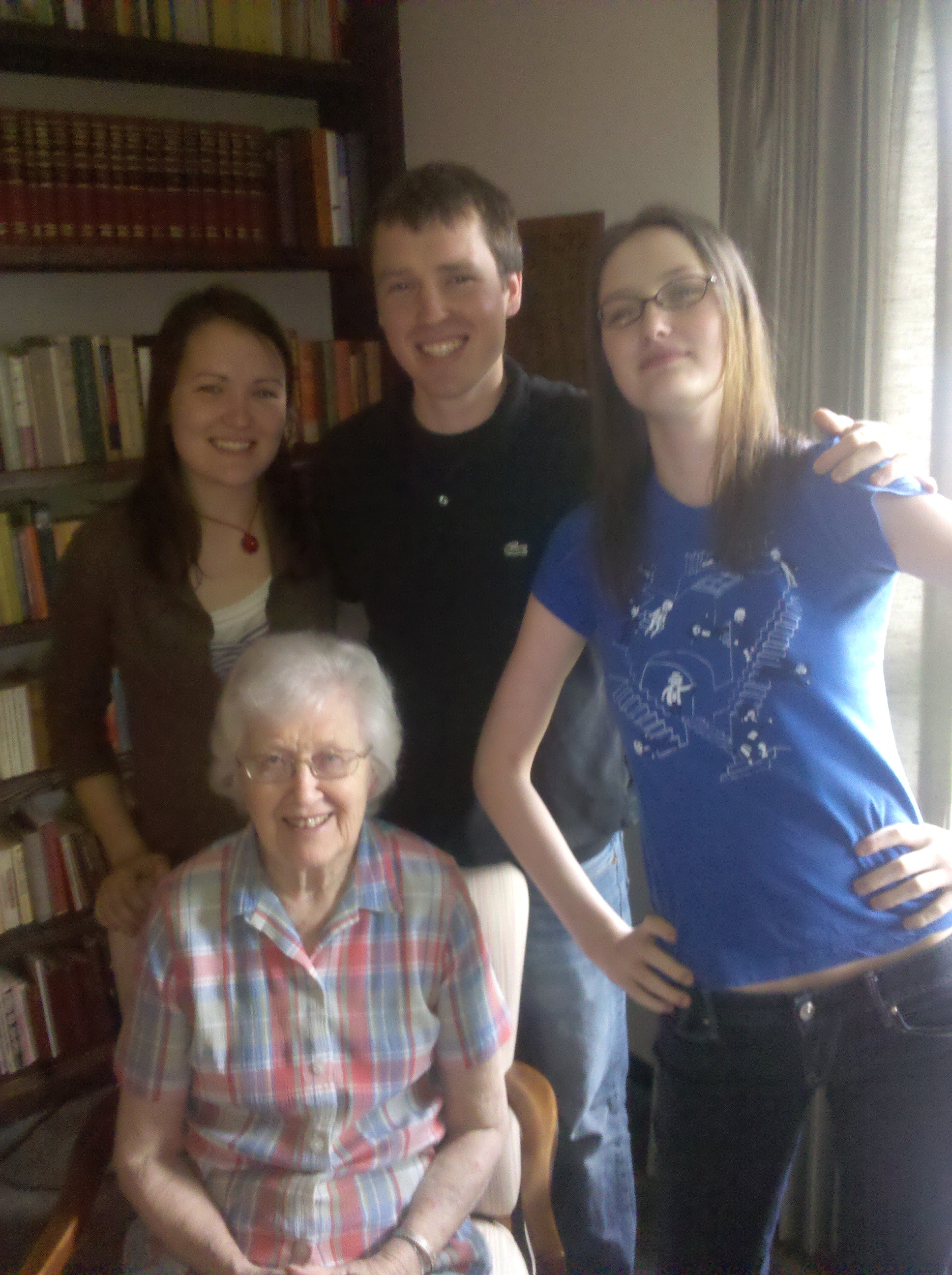
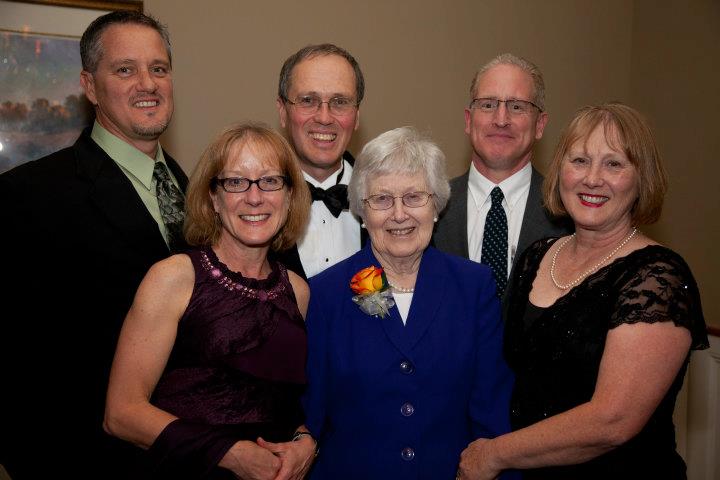
Mom with her children at grandson's wedding.

My mother’s surgery went well at Woodwind’s Hospital and within twenty-four hours she was taking her first steps. Wednesday afternoon she and I watched an old Cosby TV show and we laughed together at his antics. It was her 86th birthday and she had her old smile back, the one she flashed at my son’s wedding a month ago.   Thanks be to God.

The joy of the Lord is our strength. Nehemiah 8:10.

Lord Jesus, we walk by faith and not by sight. Help us to trust you in all things. Amen.

Heavenly Reststop

On Sunday Resurrection Lutheran will engage the story of Elijah the prophet. Elijah lived about seventy-five years after the death of King Solomon or about 850 BC. He spoke against King Ahab and Queen Jezebel and their re-introduction of Baal worship and human sacrifice (I Kings 16:34). Elijah’s story is a roller coaster of spiritual and emotional energy.  I Kings 18 contains the story of Elijah’s victory over the Baal priests, calling down the fire of God on his sacrifice. I posted on it last June after re-telling the story at Vacation Bible Adventure.

Elijah in the Desert by Michael D. O'Brien

After securing this victory, one would think Elijah would be filled with supreme confidence. Instead he sank into depression when he learned that Queen Jezebel wanted him dead. He could face the 450 prophets of Baal, but not an angry queen. The instinct to escape took hold, and he ran away to the edge of the map and beyond. Beersheba is the southern edge of civilization and Elijah pushed beyond it into the wilderness. There he collapsed under a broom tree and prayed for death. Like the prophet Jonah after Nineveh’s repentance, Elijah asked the Lord to take his life. He had hit bottom, emotionally and spiritually. Exhausted he fell asleep.

At this low point, God intervened.

Suddenly an angel touched him and said to him, “Get up and eat.” He looked, and there at his head was a cake baked on hot stones, and a jar of water. He ate and drank, and lay down again. The angel of the Lord came a second time, touched him, and said, “Get up and eat, otherwise the journey will be too much for you.” He got up, and ate and drank; then he went in the strength of that food forty days and forty nights to Horeb the mount of God. (I Kings 19:5-8)

What a comforting moment, with  the angel’s touch, the warm cakes, and the jar of water. And then the cycle is repeated: rest, touch, cakes, water. It was if Elijah needed to slow down, to stop and rest.

Perhaps that is the intent for us as the reader. To stop and rest in this story for a moment. Are you able at this moment to simply rest in God’s grace and love?

You have made us for yourself, oh Lord, and our hearts are restless until we rest in you. Augustine.

Lord Jesus, teach me to rest in you.

Playing during Worship

Yesterday during worship, I pitched my small backpacking tent as part of the children’s sermon. I wanted to communicate the ancient Israelite experience of the tabernacle or tent of meeting as being portable. I had practiced setting it up prior to the message and thought I had it ready to go. But my practice session was outside with plenty of space. Inside on Sunday, it was a different story.

The poles are very long, even for a small tent. I was concerned that none of the children be struck by the poles, but I forgot to warn our musicians. As I whipped one pole around to insert into the tent sleeve, I nearly blinded the pianist. Fortunately she has quick hands and avoided any serious damage. I was sweating bullets until the tent finally popped up. After the tent was up I placed our altar Bible in the tent as a reminder of the ark of the covenant which rested inside Israel’s tabernacle.

Of course I wonder if the children made the connection between the Biblical story and our brief experience with a small backpacking tent. Hard to judge. Yet for a moment I saw in their faces a moment of astonishment or surprise when the tent “popped” up. I remember creating tents as a child out of blankets, chairs and small tables. It was a form of play that I enjoyed. I wonder if we had a brief moment of “play” in worship yesterday as the tent sprang up and later as the children walked through it.

In seminary, I remember reading an essay regarding worship, work and play. The article suggested that we sometime confuse the three: we tend to worship work, to work at play, and to play at worship. People often overstress their careers, become too competitive at their leisure activities, and behave lackadaisical at worship. We forget that worship is entering the holy presence of Almighty God.

Still the “play” moment in worship yesterday had a bit of awe and wonder within it. And I trust that God delighted in the children’s joy. I sure did.

How do you sort out work, play and worship?

Lord Jesus, let me find my purpose, my joy, my life in you.

Tears of Joy and Sorrow

Braedon Hyland

Deep emotions are part of the human experience that Christians embrace. This past Friday I experienced the wondrous joy of celebrating the marriage of my son. I rejoiced with family and friends as God’s blessing was placed upon Jon and Maggie. Yet as I came back to Resurrection Lutheran I learned that many are grieving the death of a high school senior, Braedon Hyland, who was killed in an automobile accident last week. Though not a member of our congregation, he was known and loved by many in our community.  As a community we weep with the Hyland family.

St. Paul wrote, Rejoice with those who rejoice, weep with those who weep” (Romans 12:15). Christians do not ignore or reject such deep emotions as joy or sorrow. Jesus himself wept at the tomb of his friend Lazarus. The psalmist cries out with both celebratory praise and with deep anguish. The ups and downs of life are not eradicated by faith in God, but transformed into opportunities for trust and hope. God is to be found in both the wedding and funeral, in both the birth of a child and the death of a grandpa. All of life belongs to God and He gives us strength for the journey.

But there is more than simply the comfort of God’s presence. There is also the hope of God’s promise. The psalmist writes, “Weeping may linger for the night, but joy comes with the morning” (Psalm 30:6). As Christians we trust in a God who suffered death for us on Good Friday, but rose up from the tomb on Easter Sunday. Sometimes we weep the bitter tears of Friday, but sometimes we taste the sweet joy of Sunday with the dance of Christ’s resurrection. Often we live in between on Saturday, remembering the sorrow, yet anticipating the joy.

Jon dances with his FarMor

Plus being God’s children, we do not experience these emotions alone, but share them in community. That is why Paul encourages us to rejoice with others and weep with others. No one need walk life’s journey alone, but rather join in God’s cosmic dance with other, anticipating the great dance of heaven itself.

You have turned my mourning into dancing, you have taken off my sackcloth and clothed me with joy (Psalm 30:11).

Lord Jesus, guide me in my weeping and rejoicing with others in need.

“That’s Stupid!”

This Sunday I am preaching on Deuteronomy 6:4-9, during which Moses instructed the people, “You shall love the Lord your God with all  your heart and with all your sould and with all your might.”  Moses goes on to say, “Recite these words to your children.”

Like many parents, my wife and I struggled to communicate our faith to our children, especially being the offspring of two pastors.  Being pastor’s kids is rarely easy.   People sometimes carried unhealthy expectations for their behavior.  But we did our best to teach them, sometimes with odd results.

I had read about a family devotional in which the object lesson was “following the crowds can be foolish; following Jesus is wise.”   The devotional instructed me to buy frozen popsicles for my kids and then tell them that there was a new fad that I had just heard about: “microwaved popsicles.”  I showed them the popsicles and how “everyone” was microwaving their popsicles before eating them.  My kids, ages 8, 6, and 3, thought it was a stupid idea from the beginning.  My wife agreed.  Still I placed the popsicle in the microwave and we watched them melt.  When I took the popsicles out, they just stared at me and said, “that’s stupid.”  I tried to explain that they were right, that doing what “everyone” else is doing can be “stupid.”  But my daughter just stared at me and said, “But you just did it, Daddy.  Does that mean you’re stupid?”  I had no good response, except to laugh.

Fortunately, my children had an excellent mother who instructed them well on the love of God.

What are ways that you have taught children the love of God?

Lord Jesus, teach me how to teach my children your Word.

You Are In the Story

A big question for many Bible readers is “Where do I fit in?” The Bible feels like ancient history about long-dead people. In Deuteronomy chapter five, Moses spoke to this concern. The people of Israel were about to enter the Promised Land after wandering in the wilderness for 40 years. The generation that had experienced the exodus of Egypt had died; a new generation had been born during the wilderness journey. The new generation had heard the stories of the Exodus, Mt. Sinai (also called Mt. Horeb), the Ten Commandments, and Moses, but they did not directly experience these events. Or did they?

Moses spoke to the new generation regarding this:

The Lord our God made a covenant with us at Horeb. Not with our ancestors did the Lord make this covenant, but with us, who are all of us here alive today. The Lord spoke with you face to face at the mountain, out of the fire. (At that time I was standing between the Lord and you to declare to you the words of the Lord; for you were afraid because of the fire and did not go up the mountain.) And he said: I am the Lord your God, who brought you out of the land of Egypt, out of the house of slavery; you shall have no other gods before me. (Deut 5:2-7)

Please note that second sentence, Not with our ancestors did the Lord make this covenant, but with us, who are all of us here alive today. Moses made the audacious claim that the covenant at Mt. Horeb (Mt. Sinai) was for us alive today. God’s covenant includes YOU and ME. This is not some ancient story, but an ongoing relationship with God.

This is critical reason for walking through the whole story of scripture. It is our story, our identity, our connection to God, the creator and savior. We are the ones who are in danger of making false gods. We are the ones who forget the gift of Sabbath or dishonor our parents. The Ten Commandments address us today. Do we have ears to hear?

Which stories in the Bible have become YOUR story? Which stories challenge or pull you in?

Lord Jesus, speak your Word that it may become my word of life.

Spying On Our Fears

As Resurrection moves quickly through the Old Testament, many wonderful stories must be skipped. This Sunday we will jump to the book of Deuteronomy which is Moses’ final sermon to the Israelites before they entered the Promised Land (recounted in the book of Joshua).

But this was not Israel’s first attempt to enter Palestine. The book of Numbers recounted a previous attempt to invade the land (chapters 13 and 14). Moses selected twelve spies from the twelve tribes to spy out the land of Canaan. They were selected leaders and instructed to be bold and observant. The spies returned with a huge cluster of grapes suspended on a pole. Their report emphasized a land flowing with milk and honey and with abundant fruit.

However their report also stated that the occupants of the land were many and strong, their towns fortified and very large. Caleb, one of the spies, countered “We can take the land.” The other spies disagreed, saying, “We cannot go up against this people for they are stronger than we.” Their fear overrode their trust in God’s promise. The fear of the leaders/spies also infected the people.

The whole congregation said to Moses, “Would that we had died in the land of Egypt! Or would that we had died in this wilderness! Why is the Lord bringing us into this land to fall by the sword, would it not be better for us to go back to Egypt?” (Exodus 14:2-3)

Fear can destroy a family, a congregation or a nation. We see a potential danger and magnify it beyond reality. We feel threatened and we either seek to fight or flee. The people of Israel wanted to flee.

Caleb spoke again to the people, trying to turn their focus to God.,

The land that we went through as spies is an exceedingly good land. If the Lord is pleased with us, he will bring us into this land and give it to us, a land that flows with milk and honey. Only, do not rebel against the Lord; and do not fear the people of the land, their protection is removed from them, and the Lord is with us; do not fear them.” (Exodus 14:7-9)

The people did not listen to Caleb that day. Their rebellion against God resulted in God’s declaration that this generation which yearned for Egypt must die so that a new generation of hope can arise. The story has a Christian connection: the fearful “old Egyptian” in each of us must die so that the new Christ can rise up within us. Baptism is a reminder of our being joined to Jesus’ death and resurrection.

I have been crucified with Christ, it is no longer I who live, but Christ who lives within me. And the life I now live in the flesh, I live by faith in the Son of God who loved me and gave himself for me. (Galatians 2:19-20

When has fear diverted your trust in God? When has your faith in God overcome fear?

Lord Jesus, today, kill the fear within me and reignite my trust in you.