Category Archives: service

Salt of the Earth?

A Mountain of Salt

In his Sermon on the Mount, Jesus declares, “You are the salt of the earth; but if salt loses it taste, how can its saltiness be restored? It is no longer good for anything, but is thrown out and trampled under foot” (Matthew 5:13).  Such a metaphor raises all kinds of questions for me.  Salt seems so ordinary and mundane, something we take for granted.   Yes, it is necessary for making a fine meal, but it is the exotic spices and herbs that get the attention.  Salt brings out other  flavors, but who wants a dish with too much salt?

Years ago, on April 1st, my older sister pulled a practical joke on my siblings by mixing a large quantity of salt into the sugar bowl.  At breakfast, as they spooned sugar on to their cereal, she watched us carefully, saying nothing.  When they took their first bite and then spit it all out, she burst out laughing.   But my mother was not too pleased with the wasted cereal. My sister had to clean up the mess from too much salt. 

When Jesus spoke, salt was used in Jerusalem for temple sacrifices, “You shall not omit from your grain offering the salt of the covenant with your God; with all your offerings you shall offer salt” (Leviticus 2:13).  Could Jesus be inferring that our lives are to be an offering to God, a gift for God to use?  Could we be part of God’s covenant to renew and restore the earth?  Do I enhance God’s flavor in the world?

And just how does salt lose its saltiness?   Perhaps it means that the salt is polluted with impurities and stray matter.   In Exodus 30:35 God instructs the Israelites to make a prayer incense that includes salt, “seasoned with salt, pure and holy.”  I know that my own life at times becomes polluted in ways not pleasing to God.  How will I know when I have lost my saltiness?  Does the community have a role in helping me stay salty?

Jesus’ last phrase about salt being trample under foot makes me smile. In Minnesota there is plenty of salt being spread on roads, bridges, and sidewalks for us to trample upon.   Jesus did not concern his audience with the ice-melting properties of salt, but it is a critical part of our culture. Road salt covers my car after yesterday’s snowstorm, yet I am thankful for its ability to clear road ice. 

What thoughts comes to your mind when Jesus declares, “You are the salt of the earth“?

Celebration of Vibrant Life

Celebration in the midst of the darkness

What a celebration of talent and joy I experienced  Saturday night at Resurrection’s Variety Show!  I was amazed not only at the wealth of talent displayed, but by the audience participation in the show.   People were clapping, shouting, cheering and affirming all who stood on stage.  It was truly a community celebration of life and joy.  Even the Silent Auction was a  noisy buzz of activity and friendly competition.

It was a creative expression of Epiphany, the light coming in the midst of darkness.  Perhaps I have a touch of Seasonal Affective Disorder (perhaps all Minnesotans have a touch of Seasonal Affective Disorder in January) but I needed a celebration in this snowy winter and the Variety Show provided it.   Joy is a hallmark of Jesus’ followers and I felt that this was a brilliant witness to that joy.  Thank you to all who made the evening vibrate with holy hilarity!

I am also struck that it was a community event in which a large part of the congregation participated.  From children to seniors, from set-up to clean-up,  each person gave to the whole.  As the body of Christ, we each have different gifts and strengths to add to the work of God in the world.   Earlier Saturday morning, a group from Resurrection went to the Disable Veteran Camp on Big Marine Lake to help assemble furniture for new cabins.   Though there was not wild cheering or applause, people experienced God’s joy as they helped others in need.  It was a celebration of service, which is a key part of the vibrant life in Christ.  

 I look forward to seeing how Resurrection Lutheran Church will continue to bear witness to Christ’s power in the world.   Every congregation is called by God to used its gifts, strengths, abilities, and passion to bring God’s light into a dark world.  Every congregation will celebrate and serve in unique ways with its own creative twist.  I am so excited to serve among God’s people here.

What creative ways have you seen congregations live out Christ’s mission?

Stones into Schools Questions

In my last post I wrote about patience.   A true model of patience is Greg Mortenson and his Central Asia Institute.

Greg Mortenson’s Stones into Schools

Greg Mortenson’s second book, Stones into Schools, will be the subject of  the book club that my wife Carolyn and I are hosting next week.   Greg spent time growing up in Roseville, MN and became a mountain climber.   His first book, Three Cups of Tea, describes how he found his calling building schools in isolated mountain villages of Pakistan.  It is a thrilling adventure story.  In the second book, subtitled Promoting Peace with Books, Not Bombs in Afghanistan and Pakistan, Greg continues his incredible story of patience and persistence. 

My wife crafted some discussion questions that I encourage you to use for your own reflection as you read Greg’s book.  The questions cover the first 100 pages (which is what we are discussing next week).  Feel free to leave a comment on any question.

  1. Mortenson says, “If you educate a boy, you educate an individual, but if you educate a girl, you educate a community.”  Do you agree or disagree?  Explain
  2. Were you surprised with Mortenson’s comment that religious scholars of Islam have told him that, “Murder and suicide are two of the most unforgivable sins in Islam?”  Why or why not?
  3. Mortenson says that in order to get things done in Pakistan and Afghanistan, “It is essential to listen with humility to what others have to say.”  Is this something that anyone anywhere can do to work for peace?  Why or why not?
  4. Mortenson says that his work demands patience and that “any wise village elder will tell you, anything truly important is worth doing very, very slowly.”  What could we, in our fast-paced American culture, learn from this philosophy?
  5. Does the quotation, “last place first” philosophy (p. 35) of the Central Asia Institute make sense to you?  Why or why not?
  6. How did Mortenson’s upbringing in Tanzania prepare him for his work today?
  7. Reread Sardhar Kahn’s poem on pages 99-100.  What are your thoughts and response?

Clerical Collars

Clerical Collars

Last night during my class on “What’s a Lutheran?”, someone asked me why I wear a clerical collar on Sunday morning.  For them the clerical collar seemed to be Catholic.   I briefly explained that clerical collars are not necessary for me, but they help me to lead worship on Sunday morning.   I then explained the Lutheran concept of “adiaphora,” which means, “does not matter.”  Things that are adiaphora are not crucial or necessary elements of faith but rather decisions, conduct, habits that one can choose if helpful. 

An example for Lutherans would be whether or not to make the “sign of the cross,” touching their forehead, sternum and shoulders so as to remember Jesus’ death and resurrection.  Some Lutherans find it helpful in worship, others find it awkward or distracting.  I have always preached that if it helps you to focus on Christ, then do it. 

Wearing a clerical collar is adiaphora for me.  It is not essential for worship, but it helps me be mindful of my role as a pastor in the congregation.  I have been called by Resurrection Lutheran to bring the people the ministry of Word and Sacrament.   I also think it makes it very clear to any visitor what my role is.  They can quickly identify who the pastor is.  I do not see it as a status symbol, but rather my service uniform.  The clerical collar is worn by Lutherans, Episcopalian, Methodist and other clergy as well as Roman Catholic priests.

I also know that context makes a big difference.  During my internship in suburban Philadelphia I remember the tremendous respect I received when I wore my clerical collar to the hospital.  The community was predominately Roman Catholic and many assumed that I was a Catholic priest.  Nearly everyone called me “Father” and deferred to me.   But once, after making hospital calls, I went shopping with my wife at the local mall.  I remember the severe looks of disapproval from the sales clerks as I waited for my wife to try on bathing suits.  In their eyes, a priest should not be doing such things!

How do you look upon those who wear clerical collars?   Are there spiritual habits, actions or practices that you wonder if they are adiaphora or not?

A Concert of Joy

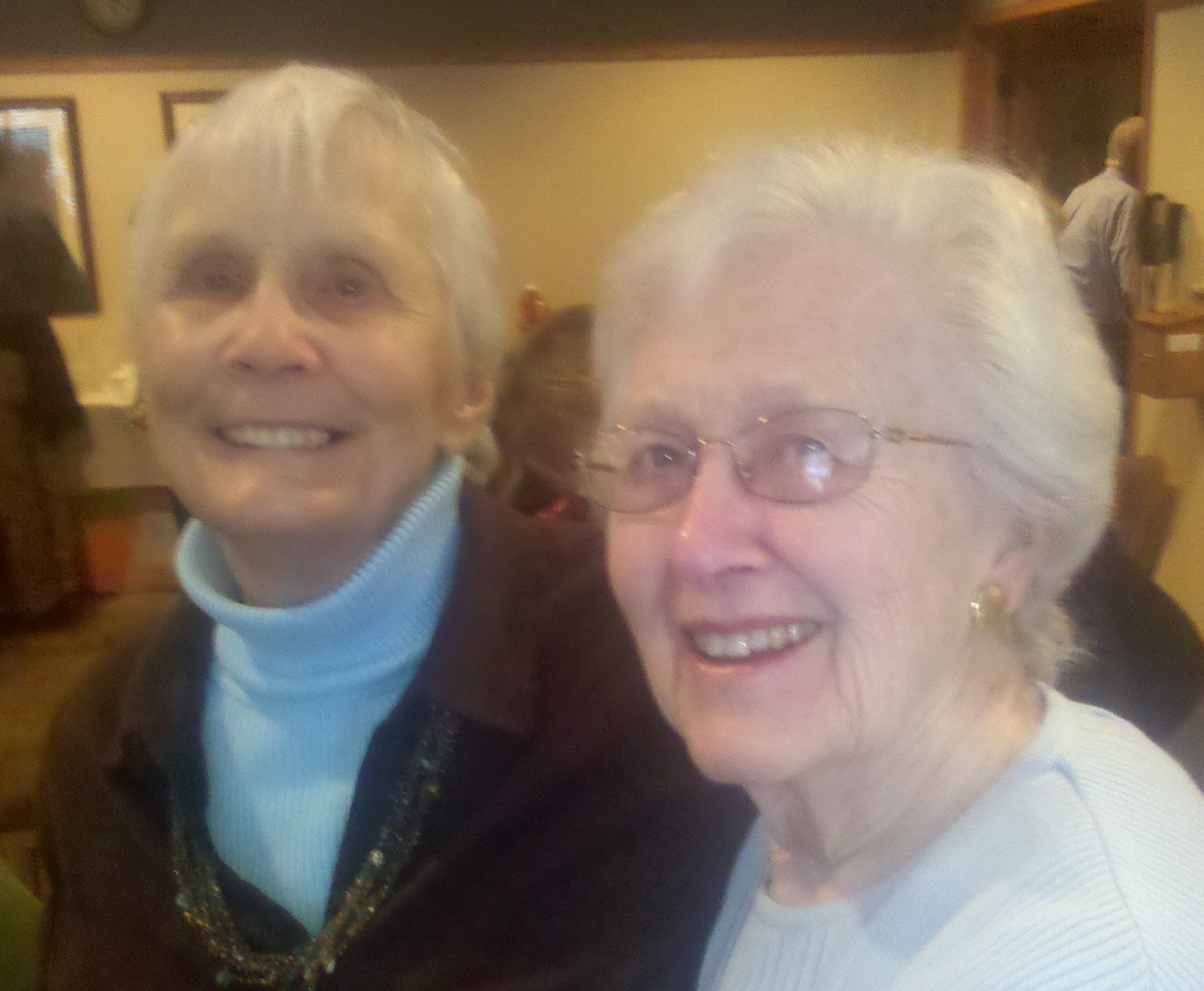
Bev Handy and Sylve Keller at Concert

On Sunday I attended an amazing concert with my mom.   The quality of music, the venue and length were not that unusual, but the performers were.  Lloyd and Maxine Johnson are a married duet who were performing for the 100th time at my mom’s senior residence.   The fact that Lloyd and Maxine are also residents and are over ninety adds to my astonishment and joy.   Lloyd and Maxine started this ministry of song when they lived in Florida for 25 year and continued when they moved back to Minnesota 7 years ago. 

Lloyd and Maxine clearly enjoy what they do as they bring happiness to the audience.  The community room was packed with residents, family and friends.  Applause and cheers came after each number.  I sat with my mom and watched her sing along with tunes from her childhood.   Even though she now lives in a memory care unit, she loves having interaction with others.   Bev Handy, a resident in the independent living apartments, made sure my mom made it to the concert and had a good seat.

Ministry of service does not end with retirement.   The Bible does not dwell on this topic.   Abraham started following God’s call at the age of 75.   Moses served as leader of the Israelites at age 80.   We may stop working a particular job at age 66, but we can still serve our Lord using our unique gifts, strengths and passion in the community around us.   For years after her retirement from JC Penny’s, my mom served as a volunteer at her local hospital and church.   Now she is benefiting from the service of others, like Bev, Lloyd and Maxine.  

 I pray that I might be such a joyful servant when that time comes.  For now, I plan to focus on my current ministry bringing joy, faith, hope and love to God’s people at Resurrection Lutheran Church. 

Where have you experienced joy in service?

Honoring Dr. Martin Luther King Jr. while spinning

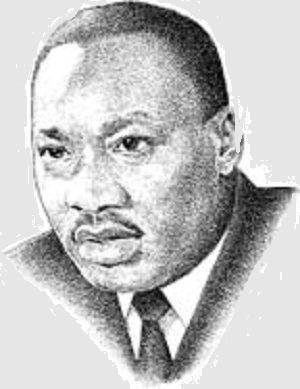
Dr. Martin Luther King, Jr.

Today is Dr. Martin Luther King day and when I woke up, I was not sure how to honor it.  I had planned to go into the church for scheduled meetings, but unsure if the holiday would truly register for me.  Prior to coming into the office, I went to the YMCA to do a group cycling class.  I expected a large crowd due to the holiday, however there were only three of us, including the instructor Sara.  

As she started the class, she told us that she had selected all the music, centered on MLK’s “I Have a Dream” speech.   Some of the songs had only a vague reference to it, but others, like U2’s Pride, were a direct reference to Dr. King’s life of service.   Then, as we neared the end of the workout, she played for us a portion of the speech.   The three of us kept spinning as we listened again to the familiar cadence of Dr. King’s preaching.   One sentence stood out,  “I have a dream that my four little children will one day live in a nation where they will not be judged by the color of their skin but by the content of their character.”  That hope still resonates for me.

What also struck me during this workout was how simple a testimony this instructor gave by her selection of songs and  the speech.  In a simple, caring way she integrated her witness to Dr. King into her daily life as an instructor.  I was impressed and thanked her for that simple act of honor.   I don’t think I cycled any better than usual because of that act, but my heart was a bit lighter and joyful.   The C in YMCA stood out.

Have you found ways to honor the legacy of Dr. Martin Luther King, Jr?