Category Archives: Uncategorized

Praying the Lord’s Prayer (Part One)

Jesus instructed his disciples to pray. He modeled a life of prayer, taking time to pray early in the morning (Mark 1:35). After a time of prayer, his disciples asked him to teach them to pray and he taught them the familiar words of the Lord’s Prayer, “Our Father who art in heaven. . .”

I grew up in a traditional Lutheran home and memorized the familiar words of the prayer at a young age. My confirmation instructor, Pastor Crawford, unpacked the meaning of each petition. I learned about God’s kingdom, daily bread, forgiving trespasses and deliverance from evil. Every Sunday during worship, the congregation would recite the familiar words that seemed to become stronger as we finished, “For thine is the kingdom, and the power, and the glory forever and ever. AMEN!”

The traditional words and phrases stayed with me into adulthood. I found great comfort with it, but I also noticed that I often recited the prayer rather than consciously praying it. I would catch my mind starting to drift and realized that though my lips were saying the sacred words, my heart was not in synch. Partly it was the speed at which we “prayed” it, partly it was my own inattentiveness.

In seminary I was introduced to some of the newer translations of the prayer. The replacement of “thy” and “thine” with “your,” made perfect sense to me. Prayer need not be some formal exercise of old language. Prayer is conversation with God.  At the same time I knew that switching to the new language/translation would be very difficult. The Lord’s Prayer was deeply imprinted in our minds and souls, a kind of rock in the chaotic sea of spirituality.

My first twenty-five years of ministry was in a congregation whose worship stripped away several liturgical practices of traditional Lutheran worship: the Kyrie, the Great Thanksgiving, but we continued to use the traditional wording of the Lord’s Prayer. Intellectually I believed that someday the words would need to change, but emotionally I liked being able to guide a family at a graveside service in praying the familiar words, “Our Father who art in heaven. . .”

When I came to Resurrection I immediately discovered that in worship, the congregation had embraced the new translation, “Our Father in heaven, hallowed be your name.”  I embraced the change intellectually, but found myself stumbling over the new wording as my heart and soul tried to catch up. The deep imprint of memorization would not quickly adapt.

Now two years later, I can recite the words without too much difficulty, but I also discovered something else. I sense that I am more often “praying” the prayer, truly connecting with the words. I am more conscious that I am asking God to save me from the time of trial and to protect me from the evil one. The bumpy transition and the new translation has pushed me out of my rut into a deeper appreciation of what Jesus is teaching us.

Lord Jesus, teach us to pray.

Marathon “Heroes”

After running in the Medtronic Twin Cities Marathon on Sunday, my running buddies were throwing around the word “heroes” for those who finished.  Today I read a blog  from someone who was identified as a true Global Hero and her reflections are worth reading whether you run or not.  Thanks, Celine.

Running on carbs: The Making of a Hero

Marathon Challenge Completed (for now)

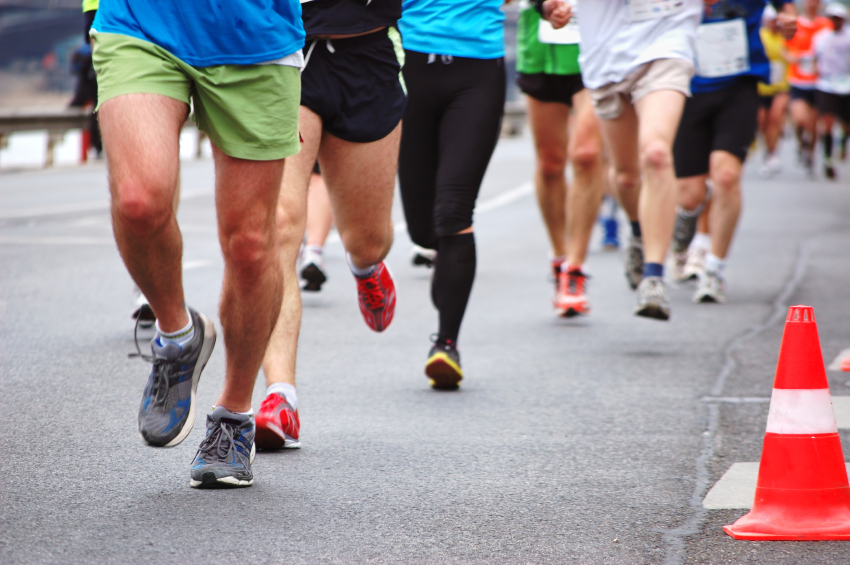
Sunday I finished my eleventh marathon, my first in over two years. As forecasted, the weather was cold at the start. Many runners were shivering in the starting chutes. Fortunately for me my son Jonathan came to support me and took my warm-ups a few minutes prior to the start. I even took one shirt back after tossing it to him. Cold muscles do not function well. Later at mile five I handed him my gloves, ear band and warm-up shirt, finally warm enough to run comfortably in shorts and t-shirt.

The marathon has sometimes been described as a twenty-mile warm-up and a six-mile race. By mile twenty the leg muscles are often depleted of glycogen and overall fatigue sets in. The description is especially appropriate for the Twin Cities Marathon, since after mile twenty the race course climbs out of the Mississippi River Valley towards the hills by Macalester College and St. Paul Cathedral.

Through mile twenty my race had gone well with no big surprises. I did discover that I did not need to drink as much Powerade as I had during hot summer runs. Fortunately there were plenty of porta-potties along the way. I also discovered that I had not practiced enough specific pace workouts, in which I practice running the specific pace I planned for the marathon. I wanted to run 8:46 mile pace, but as I checked my watch at each mile I learned that I did some miles in 8:20 and some at 9:15 (stops at porta-potties did not help). As I have written before, each marathon has something new to teach me.

At mile twenty, the real challenge began. My legs, especially my hamstrings and quadriceps became heavy and sore. My run became more like a fast shuffle.  As I approached the hill at Summit Avenue my pace slowed. My lofty goal of 3:50 had already slipped away and my secondary goal of 3:55 (my Boston Qualifier) was in doubt.

Jonathan supported me in 2003 TCM

But that is when helped arrived. My son Jonathan met me at mile 21 to run the last 5.2 miles with me. He has done this in my past two marathons when I had really struggled at the end and had to walk a lot. This time his strong words of encouragement and support kept me moving forward at a 9:20 pace. He reminded me that “This is the day the Lord has made, let us rejoice and be glad in it” (Psalm 118:25) and “The joy of the Lord is our strength” (Nehemiah 8:10). Though I felt this overwhelming urge to walk I knew that my goal of 3:55 was in doubt and any walking breaks would kill it. We powered on.

At mile 22 I heard above the many cheering spectators the loud strong voice of Tim Torgerson as he bicycled the course, shouting encouragement to me and others. “Relax your jaw, keep your arms pumping, stay strong.” He would not let me stop, but pushed me to do my best.

I am reminded of Hebrews 12:1-2 where the writer reminds us of “we are surrounded by so great a cloud of witnesses and let us run with perseverance the race that is set before us.” In the preceding chapter the writers highlighted the heroes of faith in the Old Testament that now cheer for us in our race to Jesus. I felt like Jonathan and Tim were my own unique witnesses who gave me the specific words I needed to accomplish my task.

As I pushed the final mile to the finish line, I knew it would be close to 3:55. As I stopped my watch, it read 3:53:53. I had finished with 1:07 to spare.* I had my BQ!  A decade-old dream of running the oldest, perhaps most prestigious marathon is now possible.

My next challenge will be to prepare well and to stay injury free for the Boston Marathon in April, 2014. I just hope I have a similar cloud of witnesses that day.

Lord Jesus, thank you for being with me in the challenges of life.

*My official chip-time was 3:53:54.  I must have been a little fast with my watch.

The Marathon Challenge

My first marathon was Twin Cities in 1999. Like this year, the forecast was for a cold start, around 35-40 degrees. Having run mostly in warm weather, I panicked and rushed out to buy my first pair of running tights a couple of days before the race. I used them and never felt very comfortable the whole race. I also made other rookie mistakes, like surging ahead at mile 15 when I was feeling great, only to hit the wall at mile 22. I finished in just over four hours, thinking “that was TOUGH.”

 
What if the Marathon was in January?

Many runners finish their first marathon and think, “Okay, I’ve done that. Don’t need to go through the pain, struggle and adversity again. Once is enough.” For me, the race had the opposite effect. I saw it as a great puzzle or challenge that I still have not figured out. Not that I think I will ever “solve” the marathon puzzle, but the combination of physical, mental and spiritual challenges continues to intrigue me. The challenge pushed me to run year round, even in Minnesota winters.  Plus I still have that elusive goal of qualifying to run the Boston Marathon.

This Sunday, I may be a bit cold when I approach the start line in Minneapolis, wearing shorts and t-shirt, hat and gloves. I will also have an old long-sleeve t-shirt that I will toss aside after warming up during the first couple of miles. After finishing ten marathons, I will know not to surge at mile 15, but wait for the real challenge at mile 21 and beyond. My marathon mantra, “The joy of the Lord is my strength” (Neh. 8:10) will be on my lips and the encouraging words of my friends and family will be in my ears. The chill of marathon morning will quickly pass as my body, mind and spirit rise to the challenge.  The finish is only 26.2 miles away.

Lord Jesus, let me meet the challenges of this day with your strength and joy.

Jacob’s Ladder

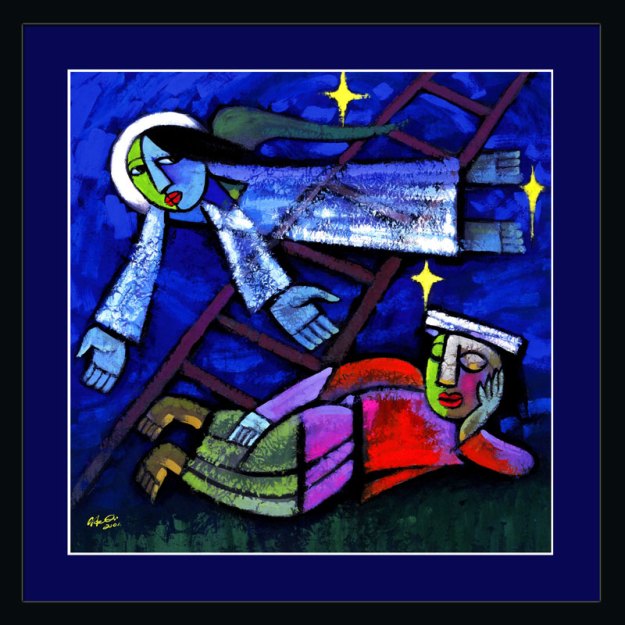
The Dream of Jacob by artist He Qi

One of my favorite stories in Genesis is Jacob’s dream at Bethel in chapter 28.  Jacob, the grandson of Abraham, is running away from his brother Esau.  Twice he had tricked his elder twin.  First Jacob had taken Esau’s birthright for a hot lunch.  Then with the help of his mother, Rebekah, he stole his father’s blessing from Esau.   Esau had reason to threaten Jacob’s life and so Jacob fled.

When he stopped for the night, Jacob dreamed of a ladder reaching up to the heaven with angels ascending and descending on it.  The Lord God stood at the top and speaks to Jacob.  One might expect God to chastise Jacob, to demand his repentance.  After all, Jacob has tricked not only his brother, but his father, Isaac, as well.   Surely God would demand justice.

Instead, God speaks only of the promise and blessing.  God promises Jacob shall return to the promise land and will become the father of a great nation, a blessing to all nations.

Know that I am with you and will keep you wherever you go, and will bring you back to this land (Genesis 28:15).

Some Christians think that the God of the Old Testament is a wrathful, angry God and that grace and love only appears in the New.   Yet the story of Abraham, Isaac and Jacob is filled with moments of grace and blessing.  God has always been a God of grace and love who will always keep His promises.  Jacob had to taste some of his own medicine when he reached his Uncle Laban’s home in Haran, but eventually he returned.  God kept the covenant.

The other strong image from the dream is that God’s angelic hosts go up and down the ladder.  God comes to humanity, not humanity climbing up to God.  God initiates the dream and the covenant.  Jacob can only respond in faith.

After Jacob awoke from the dream, he recognized that he was on sacred ground.  He named it “Bethel” or House (Beth) of God (El).   Later in Israel’s history Bethel would become one of the holy places for worship. (Judges 20).

Lord Jesus, make me ever mindful of your promise and grace.

Root Beer Float

Every Tuesday I drive to a neighboring Lutheran Church for a Bible study with local pastors.  Together we study the scripture text for Sunday so that we can be better prepared to preach God’s Word.

Today, as I drove up to Amazing Grace Lutheran Church I noticed this “float” in their parking lot.  The congregation had used it in the local community parade, where they handed out both root beer candy and “church information on a stick.”  It was a creative way of inviting new comers to their congregation.

A couple weeks before, Resurrection Lutheran Church had participated in our local Woodbury days parade with our worship band playing  for the crowd.  It was a delight to see and hear them that day as they praised God and invite all to come for worship.

As I left Amazing Grace and took this picture, I rejoiced that congregations seek to find creative ways to proclaim the Good News of Jesus Christ.  Churches too often are seen as dry, boring places.   Resurrection and Amazing Grace both seek to express the Vibrant Life of Faith.

I also realized that Amazing Grace had quench my thirst by hosting the study of God’s Word.  What a treat!

Lord Jesus, let me drink again from the fountain of living water.

Rebellion and Love

Why do we do the stupid things we do? Why would Adam and Eve eat from the forbidden tree in the Garden of Eden? Why do I continue to trust in my own abilities and not God’s direction and commands?

“Woman gives her man to eat” by Lucile Butel, 1989

I ask those questions whenever I read Genesis 3, the story of Adam’s and Eve’s choice to disobey God. The story is often called “The Fall” since it describes humanity’s fall from God’s loving, eternal presence, yet I prefer the title “The Rebellion” since it is our human tendency to rebel against God’s commands. We rebel when we place ourselves in the center of our lives, and not God. We listen to the crafty voice of the serpent that says “you will not die, but will find pleasure, riches, knowledge, significance, or fame” if we yield to our own temptations. The story of Adam and Eve’s rebellion is our story of rebellion; our human choice to sin. And if we try to blame anyone or anything else, we are only echoing their response when God confronted them afterwards. Adam blamed Eve, Eve blamed the serpent (Genesis 3:11-13).

The Bible introduces sin and brokenness as an essential piece of our humanity. Though the biblical story begins with humanity created in the image of God (Genesis 1:26), the image is quickly twist and stained by our rebellion. The next eight chapters of Genesis highlights how the infection of sin penetrates all of life: Cain murders Able, The Flood, and the Tower of Babel. Each story hammering home the sinful quality of humanity.

You Will Be A Blessing by David Hetland

Yet each story also shows elements of God’s mercy and grace. After Adam and Eve rebel, God provides them with animal skins for clothing. After Cain murders his brother, God provides a place of sanctuary for him. As God contemplates destroying the sinful world with a flood (Genesis 6), God provides a new beginning through Noah and his family. And after God scatters the people when they build the idolatrous Tower of Babel, God selects Abraham to become a blessing to all people (Genesis 12).

Even our rebellion will not stop God from loving us.

Lord Jesus, have mercy upon us.

Garden of Eden

This Sunday I am preaching on the first story in the Bible, Genesis 2 and 3. The story begins with God creating man from the mud of the earth and breathing into adam/man the breath of life. The story has word-play because the Hebrew word for man ‘adam’ sounds like the Hebrew word for ground or dirt is ‘adamah.’ Then the Lord God places the man in a garden in Eden that has “every tree that is pleasant to the sight and good for food” (Genesis 2:8).

The Garden of Eden has fascinated humanity. My initial impression was of a small compact garden, sort of like a resort on the edge of a river. At the center of the garden is the tree of the knowledge of good and evil, with the crafty serpent nearby. I tend to push the story forward to the temptation scene in chapter three, where both the woman and the man disobey and rebel against God.

But that tight image has been challenged by the painter Thomas Cole and his painting called “The Garden of Eden” (1828).

Philip Tallon, a Methodist seminary professor, writes about the painting,

As painted by Cole, the garden seems to encompass the whole earth. It is an infinite playground in which Adam and Eve are dwarfed by rivers, mountains, trees, and even sparkling gems that erupt from the earth. As Cole himself wrote in an 1828 letter about the painting, “I have endeavored to conceive a happy spot where all the beautiful objects of nature were concentered.” This conveys first to me the magnificent, plurality of creation: a Christmas stocking so overflowing with treats that we will never get to the bottom.

The abundance and wonder of the God’s creation can be seen in the scripture. It is essential for understanding the story to rest a moment in the awesome beauty of God’s gift to humanity before moving to the fateful confrontation with the serpent. The wonder of that creation remains all around us, if we have eyes to see.

Lord Jesus, thank you for the beauty of your creation.

Middle Laps

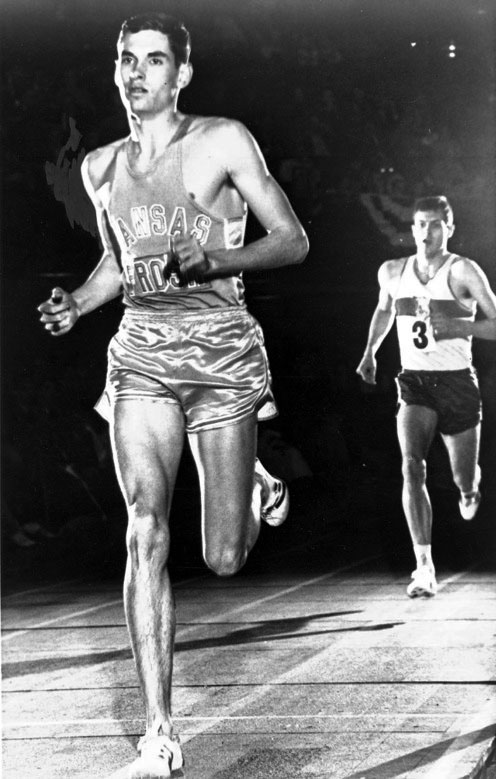
Jim Ryun Running at Kansas

Jim Ryun Running at Kansas

In college, I ran track. I was not very fast, but I grew up watching Jim Ryun run a sub-4 minute mile while in high school. I dreamed of being such a miler, clicking off each of the four laps on the track in 60 seconds. In reality, I rarely could run one lap under 70 seconds, let alone four in a row. Still I competed each year, yearning to improve.

One thing track taught me was the value of persistence, especially in the middle laps. The first and last laps of a mile race have their own magic which can pull the runner along. The first lap has the quick start and the pack jockeying for position. The gun lap has the pull of the finish line and the knowledge that the race will soon be completed.

It is the second and especially the third lap that always challenged me mentally and physically. The pain of running at race pace had become reality, but the finish seemed too far away to contemplate. If I focused on the pain, I rarely did well. If I focused on staying calm, relaxed, and fluid, I could maintain my semi-fast pace. By my senior year I knew the challenge I faced each time I approached the start line.

I think of this as I prepare to run Twin Cities Marathon on October 7. My training is now in the middle laps; my last long run of 16 miles is still ten days away and I have a few more track sessions to complete. Nearly every day I am up early to run so as to beat the late summer heat. My mind and spirit has begun to tire from the long training cycle and many miles. Still I have been here before and I recognize that I must be patient and persevere. After my last long training run, I will begin a three-week taper of reduced miles so that my body can adequately rest and recover for the race.

The Christian life also requires persistence and perseverance. The joy of the Lord is our strength (Nehemiah 8:10), yet not every day will be happy. Life can be difficult and challenging; it can feel like we are in the middle laps of a very long race. Our prayers may seem to circle around our heads, never reaching God’s heavenly ear. Saint Paul reminds us that we are to keep on praying, keep on believing and trusting, even when the days seem long.

Rejoice in hope, be patient in suffering, persevere in prayer (Romans 12:12)

My fall marathon will soon come and then be over. Yet our life in Christ will carry on for many more laps. Christ is not simply at the start or the finish, but running beside us each lap of the race, helping us to stay patient and calm. Thanks be to God.

Lord Jesus, open the eyes of my heart to see you each day.

Wilderness Journey – Day Four

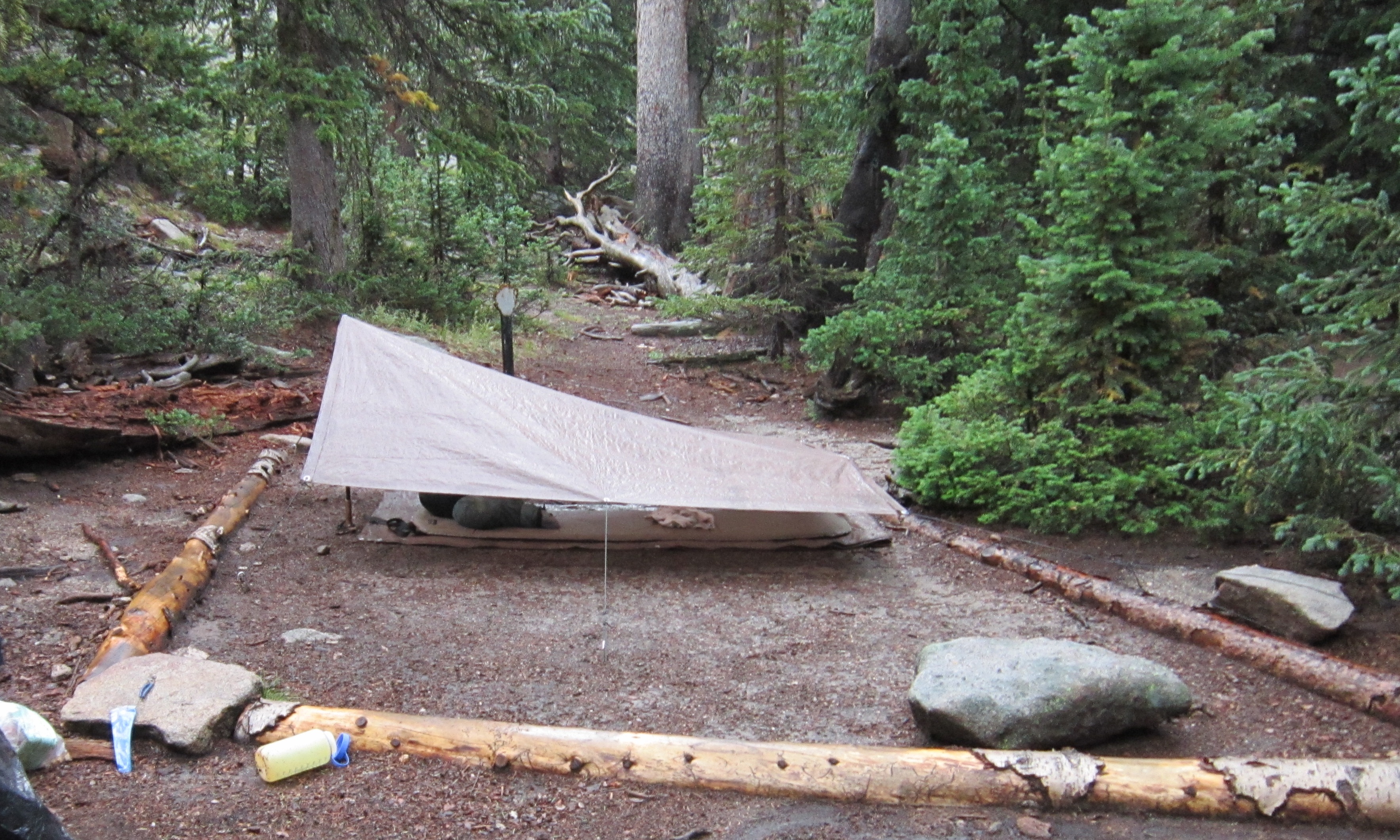
Last Night at Tileston Meadow Campsite

My last night on the trail involved one more thunderstorm. This time it was not the lightning that disturbed me, but the rain itself. In the alpine meadow on Mummy Mountain, the vegetation there absorbed most of the water. Here at the designated campsite, the tent pad was simply flat dirt. The rain splattered from the tarp to the ground to my ground cloth and sleeping pad. After a few minutes my ground tarp was splattered with muddy water and debris. I had pitched my tarp too high with too much space between the edge of the tarp and the ground. After the evening storm passed, I lowered the tarp.

I also questioned the wisdom of concentrating all backpackers to a few locations. I realize that many backpackers do not practice “leave-no-trace” camping, and that the national parks are trying to keep the back country as wild and pristine as possible. But the designated campsites create sites devoid of vegetation and wonder.

I prefer to seek my own stealth campsite off the beaten trail where I can create a wonderful sleep space for one night. In the morning I work hard to clear any trace of my having been there. Fortunately a hiker can use such techniques on the Pacific Crest Trail where I plan to hike a section next summer.

My last morning on the trail was uneventful. The sky was partly sunny and my body and mind were ready to leave. It was not that I was tired of the trail, but that I had set my expectations for four days and was ready to go.

My path on the Black Canyon trail was consistently downhill and I gobbled up the miles. My feet and legs were stronger now and I was thankful for my decision to use trail running shoes instead of my heavier backpacking boots. Only in the boulder fields on Mummy Mountain did I have any doubts regarding this decision. My feet seemed light and quick as I strode down the trail and I reflected on a sermon I once heard from Richard Mouw, president of Fuller Seminary. He preached on Isaiah 52:7.

How beautiful upon the mountains are the feet of the messenger who announces peace, who brings good news, who announces salvation, who says to Zion, “Your God reigns.”

He observed that most people would focus on the words or mouth of the messenger, but the text reflects on the feet. His observation is that the words or mouth of the messenger have no significance unless the messenger first arrives at his or her destination. Messengers need to use their feet and go.

As I hiked out, I was thankful for the opportunity to be on trail, but also thankful for the opportunity to go, live and serve among the people of Resurrection Lutheran Church. My feet and I were ready to continue the mission of announcing, “Your God reigns!”

Lord Jesus, show me how to announce that your kingdom comes.