Category Archives: Uncategorized

Climb the Highest Mountain

Mount Everest

In the first chapter the prophet Isaiah attacked Temple worship in Jerusalem as a burden and abomination to God (see last post). Yet a chapter later Isaiah made a completely different declaration about temple worship.

In days to come, the mountain of the Lord’s house shall be established as the highest of the mountain and shall be raised above the hills; all the nations shall stream to it. Many people shall come and say, “Come, let us go up to the mountain of the Lord, to the house of the God of Jacob; that he may teach us his way. (Isaiah 2:2-3)

Isaiah is not saying that Mount Zion (where the temple sat) would suddenly become a volcano and literally become a new Mt. Everest for mountain climbers.  Rather, using metaphor, Isaiah declared that the Temple would become a magnate drawing all people into relationship with God and the esteem given to Mount Zion in Jerusalem would be sky-high. The temple would be a great blessing to all nations, just as Abraham had been promised in Genesis 12.

The shift from attack to blessing and promise may seem abrupt to our ears, but Isaiah believed the people’s hearts would be changed. No longer would they go through the empty motions of sacrifice and prayer, but rather their worship would be the avenue by which they renewed their covenant relationship with God. Worship would become real and heart-felt. Prayer would be honest and transforming.

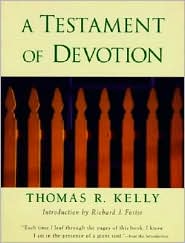
Perhaps too often we approach worship as a kind of therapy session to fix our life problems. We want to consult God like Google: to type in our worries and have him list out possible solutions. Thomas Kelly proposed a deeper, more intensive view of worship similar to Isaiah.

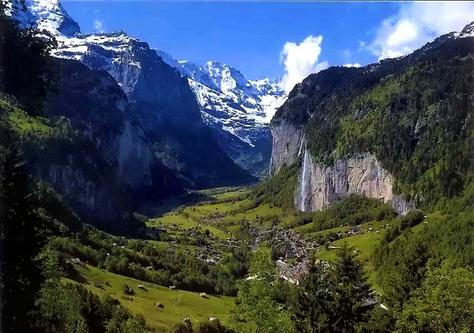
Swiss Valley

It begins first of all in a mass revision of our total reaction to the world. Worshipping in the light we become new creatures, making wholly new and astonishing responses to the entire outer setting of life. These responses are not reasoned out. They are, in large measure, spontaneous reactions of felt incompatibility between the world’s judgment of value and the Supreme Value we adore deep in the Center. (A Testament of Devotion, p. 47)
Lord Jesus, you are the true temple which draws all people to yourself.

Dead Worship or Vibrant Life?

Worship created a controversy for the prophets of the Old Testament. The Lord God had instituted temple worship during the reign of King Solomon. The temple in Jerusalem had various rituals like animal sacrifices and pray incense which had roots from the time of Moses and the Exodus. The Israelites were expected to worship God in the temple on a regular basis and many did.

However the prophets spotted a major problem in worship. It had become empty rituals that did not transform the lives of the worshippers. The prophet Isaiah spoke against such abuses,

What to me is the multitude of your sacrifices? says the Lord;
I have had enough of burnt offerings of rams
and the fat of fed beasts.
Trample my courts no more; bringing offerings is futile;
your appointed festivals my soul hates;
they have become a burden to me,
even though you make many prayers, I will not listen;
your hands are full of blood. (Isaiah 1:11-15 abridged)

Worship had not transformed God’s people into agents of God’s peace and healing for the world. The prophet’s words can be a critique of us today. Has our worship service turned us into servants of God? Do we expect to encounter the living God at worship and be changed?

I have been using Thomas Kelly’s book, A Testament of Devotion, in my personal devotions. He speaks to the transforming power of prayer, but sees it as not our work, but God’s great work within us.

We may suppose these depths of prayer are our achievement. But this humanistic account misses the autonomy of the life of prayer. This inner life has a life of its own, invigorated not by us but by a divine Source. . . . Our prayers are mingled with a vaster Word, a Word that at one time was made flesh. We pray, and yet it not we who pray, but a Greater who prays in us. In a holy hush we bow in Eternity, and know the Divine Concern tenderly enwrapping us and all things within His persuading love. Here all human initiative has passed into acquiescence, and He works and prayer and seeks His own through us in exquisite, energizing life. (p. 45, abridged)

Now that is a description of the Vibrant Life of Faith in Christ.

Lord Jesus, turn my tired, routine prayers and worship into a joyous dance with your Spirit.

Words of Death and Life

The Old Testament prophets were poets and strong words were their tools. The prophet Hosea used offensive language to stir up the people and to call them back to God. The graphic words were to be a shock to the community in hope that they would repent.

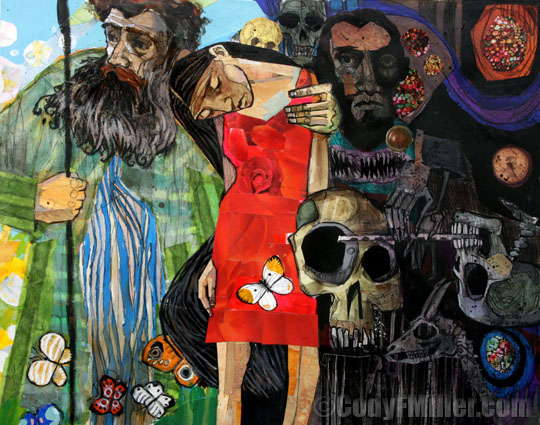
Hosea and Gomer by Artist Cody F. Miller

In the first chapter, Hosea was directed by God to marry an unconventional wife.

The Lord said to Hosea, “Go, take for yourself a wife of whoredom and have children of whoredom, for the land commits great whoredom by forsaking the Lord.” (Hosea 1:2)

His chosen wife, Gomer, may have been a temple prostitute from one of the fertility cults or a simple street prostitute of the city. She bore children to Hosea to whom Hosea gave symbolic names, No-Pity and Not-My-Children, demonstrating God’s strong disfavor with the fickle people of Israel. Afterwards Hosea spoke an extremely harsh word to the people.

Plead with your mother, plead— for she is not my wife, and I am not her husband— that she put away her whoring from her face, and her adultery from between her breasts, or I will strip her naked and expose her as in the day she was born, and make her like a wilderness, and turn her into a parched land, and kill her with thirst. Upon her children also I will have no pity, because they are children of whoredom.

God was angry with Israel’s infatuation with other religions. Instead of being a shining beacon of the Lord God for other nations, they had embraced the gods of other nations, forsaking their unique covenant with God. They had become like a spouse caught in adultery.

The harsh violent language of Hosea can be a shock to our spiritual sensibilities. How can God speak in such cruel severe words?

Perhaps the words are so harsh, because the people’s hearts were so hard. Or perhaps they are so cruel because our hearts are so hard. The words of the prophet “killed” the people (including us the reader), so that God can create a new heart, a new life: a kind of resurrection.

Therefore I will now allure her and speak tenderly to her, . . . I will take you for my wife forever; I will take you for my wife in righteousness and in justice, in steadfast love and in mercy. (Hosea 2:14,19)

Finally the Lord declared, “I will have pity on No-Pity, and I will say to Not-My-Children, ‘You are my people’” (Hosea 2:23). I cling to these words of hope and restoration.

Lord Jesus, the Word of God, you absorbed our sin in your death on the cross. Speak to us again the Word of Life.

Mountain Voices

Elijah, in a spiritual funk, ran away from Queen Jezebel to the mountain of God. Called Horeb by the northern tribes of Israel, it is the same mountain where Moses received the 10 commandments and saw the back side of God (Exodus 33). Moses had hid in a cleft in the rock when God passed by and scholars think it was this cleft or cave to which Elijah ran.  In this high place God was sure to meet him (I Kings 19).

Israel is a hilly country, with deep valley and high craggy peaks. The high places were often used for worship, whether for idols or for the Lord. Solomon’s Temple was built on Mt. Zion. Elijah confronted the priest of Baal on Mt. Carmel. Jesus preached his sermon on the mount (Matthew 5).  The most significant high place was a hill outside Jerusalem when Jesus was crucified.

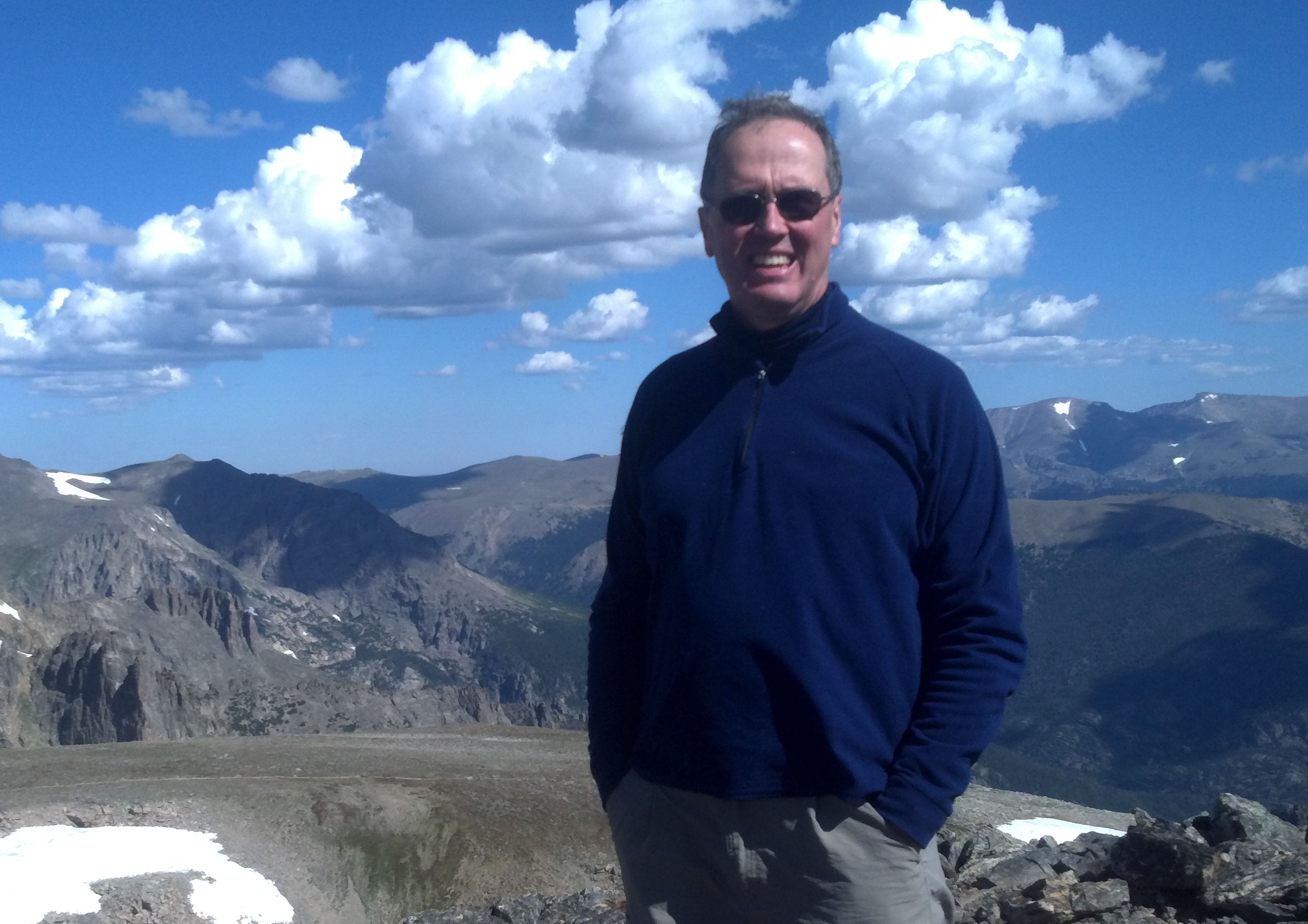
Atop Hallett Peak in RMNP

Mountains have always been associated with holiness and transcendence. They reach towards the heavens and can give a person a unique perspective on the world. I have been drawn to mountain peaks since boyhood, looking up at either Mt. Angeles or Mt. Rainier. Last summer I climbed Hallett Peak in Colorado as a kind of spiritual exercise in prayer.

But as Elijah discovered, God is not restricted to mountain peaks. Though Elijah experienced a dramatic sequence of wind, earthquake and fire, God was not in the dramatic. It was in the sheer silence that followed where Elijah heard God speak. This silence can be found anywhere, in the deepest valley as well as the loftiest peak. We seek a holy space where the ears of our souls yearn for simple assuring voice of God. And “voice” may not be the right word, more like presence, peace, hope, like a mother’s calm shush that ease’s a baby cries. As a child of God, I still yearn for that quiet, assuring voice of God’s grace.

God’s “voice” gives us the assurance to carry on the journey. Elijah did not stay on the mountain, but turned around and went back to face Queen Jezebel. More on that tomorrow.

Lord Jesus, quiet my noisy life that I may hear your loving voice.

Heavenly Reststop

On Sunday Resurrection Lutheran will engage the story of Elijah the prophet. Elijah lived about seventy-five years after the death of King Solomon or about 850 BC. He spoke against King Ahab and Queen Jezebel and their re-introduction of Baal worship and human sacrifice (I Kings 16:34). Elijah’s story is a roller coaster of spiritual and emotional energy.  I Kings 18 contains the story of Elijah’s victory over the Baal priests, calling down the fire of God on his sacrifice. I posted on it last June after re-telling the story at Vacation Bible Adventure.

Elijah in the Desert by Michael D. O'Brien

After securing this victory, one would think Elijah would be filled with supreme confidence. Instead he sank into depression when he learned that Queen Jezebel wanted him dead. He could face the 450 prophets of Baal, but not an angry queen. The instinct to escape took hold, and he ran away to the edge of the map and beyond. Beersheba is the southern edge of civilization and Elijah pushed beyond it into the wilderness. There he collapsed under a broom tree and prayed for death. Like the prophet Jonah after Nineveh’s repentance, Elijah asked the Lord to take his life. He had hit bottom, emotionally and spiritually. Exhausted he fell asleep.

At this low point, God intervened.

Suddenly an angel touched him and said to him, “Get up and eat.” He looked, and there at his head was a cake baked on hot stones, and a jar of water. He ate and drank, and lay down again. The angel of the Lord came a second time, touched him, and said, “Get up and eat, otherwise the journey will be too much for you.” He got up, and ate and drank; then he went in the strength of that food forty days and forty nights to Horeb the mount of God. (I Kings 19:5-8)

What a comforting moment, with  the angel’s touch, the warm cakes, and the jar of water. And then the cycle is repeated: rest, touch, cakes, water. It was if Elijah needed to slow down, to stop and rest.

Perhaps that is the intent for us as the reader. To stop and rest in this story for a moment. Are you able at this moment to simply rest in God’s grace and love?

You have made us for yourself, oh Lord, and our hearts are restless until we rest in you. Augustine.

Lord Jesus, teach me to rest in you.

Playing during Worship

Yesterday during worship, I pitched my small backpacking tent as part of the children’s sermon. I wanted to communicate the ancient Israelite experience of the tabernacle or tent of meeting as being portable. I had practiced setting it up prior to the message and thought I had it ready to go. But my practice session was outside with plenty of space. Inside on Sunday, it was a different story.

The poles are very long, even for a small tent. I was concerned that none of the children be struck by the poles, but I forgot to warn our musicians. As I whipped one pole around to insert into the tent sleeve, I nearly blinded the pianist. Fortunately she has quick hands and avoided any serious damage. I was sweating bullets until the tent finally popped up. After the tent was up I placed our altar Bible in the tent as a reminder of the ark of the covenant which rested inside Israel’s tabernacle.

Of course I wonder if the children made the connection between the Biblical story and our brief experience with a small backpacking tent. Hard to judge. Yet for a moment I saw in their faces a moment of astonishment or surprise when the tent “popped” up. I remember creating tents as a child out of blankets, chairs and small tables. It was a form of play that I enjoyed. I wonder if we had a brief moment of “play” in worship yesterday as the tent sprang up and later as the children walked through it.

In seminary, I remember reading an essay regarding worship, work and play. The article suggested that we sometime confuse the three: we tend to worship work, to work at play, and to play at worship. People often overstress their careers, become too competitive at their leisure activities, and behave lackadaisical at worship. We forget that worship is entering the holy presence of Almighty God.

Still the “play” moment in worship yesterday had a bit of awe and wonder within it. And I trust that God delighted in the children’s joy. I sure did.

How do you sort out work, play and worship?

Lord Jesus, let me find my purpose, my joy, my life in you.

Sanctuary Light

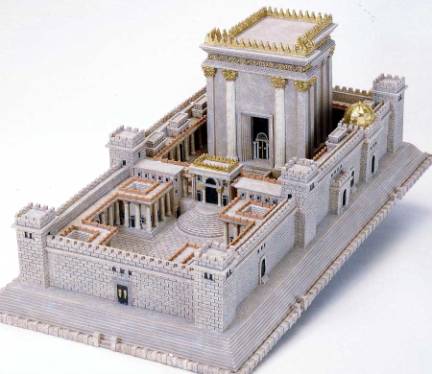
On Sunday, our Biblical focus will be King Solomon’s building and dedicating the temple in Jerusalem. His father, King David, had wanted to build a temple, but through the prophet Nathan, God instructed him to wait.

Thus says the Lord: Are you the one to build me a house to live in?  I have not lived in a house since the day I brought up the people of Israel from Egypt to this day, but I have been moving about in a tent and a tabernacle.  Wherever I have moved about among all the people of Israel, did I ever speak a word  saying, “Why have you not built me a house of cedar?” (2 Samuel 7:5-7)

The temple was a mixed blessing to Israel. Like many beautiful cathedrals it provided a place for the worship of God to flourish. Awe and wonder could be expressed in multiple ways within its walls. The book of Psalms captures some of the beauty of that magnificent structure.

One thing I asked of the Lord, that will I seek after: to live in the house of the Lord all the days of my life, to behold the beauty of the Lord, and to inquire in his temple. Psalm 27:4

But as I mentioned in yesterday’s post, the danger of a fixed structure is that we compartmentalize God’s activity and restrict God’s presence to the “box on the hill.” A temple, church or cathedral should draw us into the wondrous presence of God yet also send us out renewed and refreshed to be God’s people in the world. The light of Christ is to shine both inside and outside the sanctuary.

I have been rereading Thomas Kelly’s A Testament of Devotion.  A Quaker, Kelly testifies to how the light of prayer is to be transformative wherever we are:

A practicing Christian must above all be one who practices the perpetual return of the soul into it inner sanctuary, who brings the world into its Light and rejudges it, who brings the Light into the world with all its turmoil and it fitfulness and recreates it (p. 35).

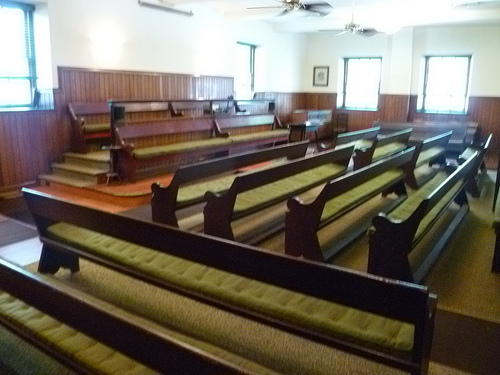
Having worshipped in a simple Friend’s Meeting House, I know that it was not the magnificent space that inspired Kelly’s deep conviction, but rather the Light in the people who gathered to listen and be in the Light. The Light calls us together where we amplify its wavelength in community but then the Light directs us back into the world. Our meeting places are to be launch pads.

Lord Jesus, let your light shine in me.

Tears of Joy and Sorrow

Braedon Hyland

Deep emotions are part of the human experience that Christians embrace. This past Friday I experienced the wondrous joy of celebrating the marriage of my son. I rejoiced with family and friends as God’s blessing was placed upon Jon and Maggie. Yet as I came back to Resurrection Lutheran I learned that many are grieving the death of a high school senior, Braedon Hyland, who was killed in an automobile accident last week. Though not a member of our congregation, he was known and loved by many in our community.  As a community we weep with the Hyland family.

St. Paul wrote, Rejoice with those who rejoice, weep with those who weep” (Romans 12:15). Christians do not ignore or reject such deep emotions as joy or sorrow. Jesus himself wept at the tomb of his friend Lazarus. The psalmist cries out with both celebratory praise and with deep anguish. The ups and downs of life are not eradicated by faith in God, but transformed into opportunities for trust and hope. God is to be found in both the wedding and funeral, in both the birth of a child and the death of a grandpa. All of life belongs to God and He gives us strength for the journey.

But there is more than simply the comfort of God’s presence. There is also the hope of God’s promise. The psalmist writes, “Weeping may linger for the night, but joy comes with the morning” (Psalm 30:6). As Christians we trust in a God who suffered death for us on Good Friday, but rose up from the tomb on Easter Sunday. Sometimes we weep the bitter tears of Friday, but sometimes we taste the sweet joy of Sunday with the dance of Christ’s resurrection. Often we live in between on Saturday, remembering the sorrow, yet anticipating the joy.

Jon dances with his FarMor

Plus being God’s children, we do not experience these emotions alone, but share them in community. That is why Paul encourages us to rejoice with others and weep with others. No one need walk life’s journey alone, but rather join in God’s cosmic dance with other, anticipating the great dance of heaven itself.

You have turned my mourning into dancing, you have taken off my sackcloth and clothed me with joy (Psalm 30:11).

Lord Jesus, guide me in my weeping and rejoicing with others in need.

A Wedding Song and Holy Apples

Wedding Rehearsal

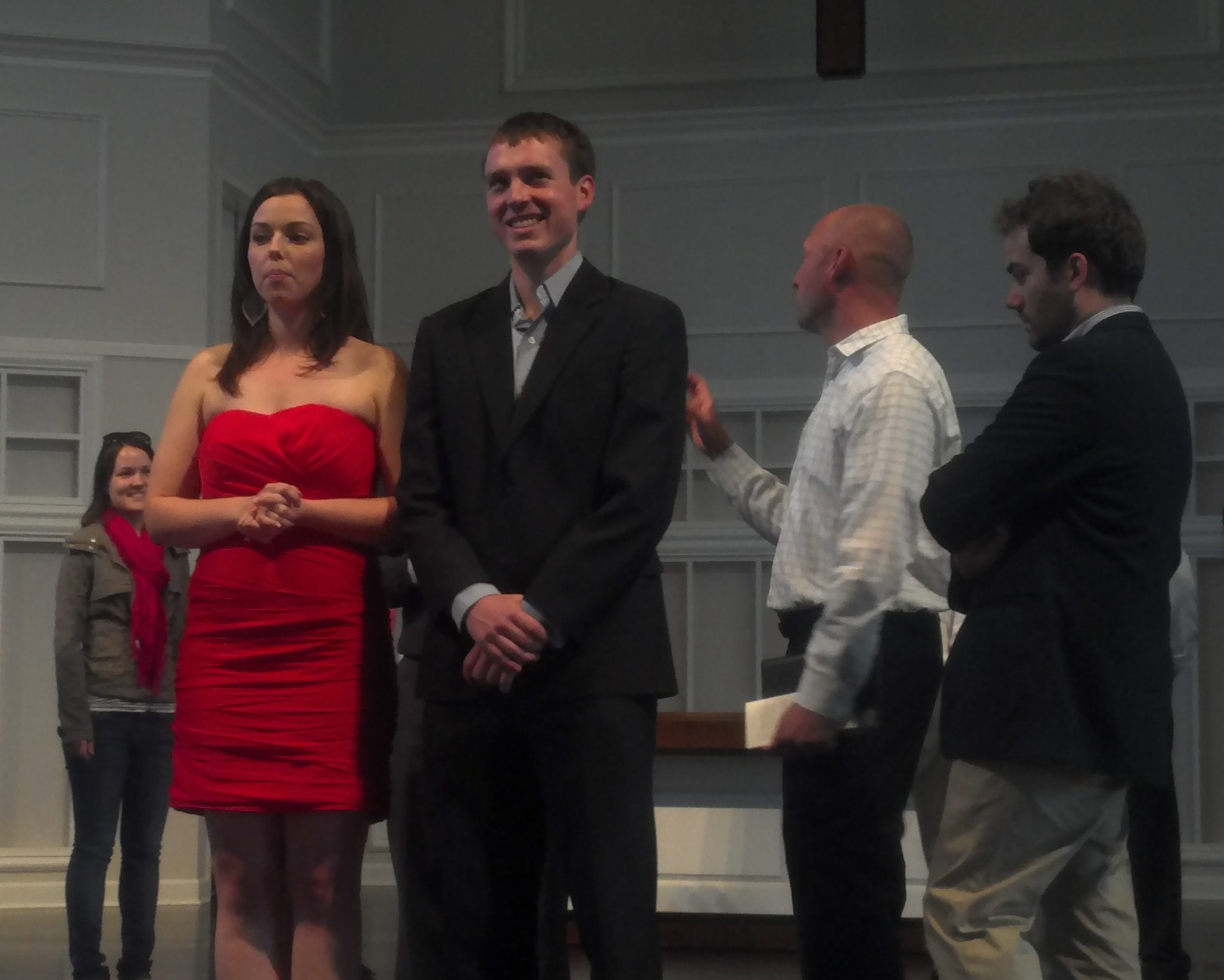
Yes, it really happened.  My son Jonathan is now a married man, wedded to Maggie Thomas.  I am glad that I chose to be a proud papa instead of presiding pastor, since it allowed my wife and myself to simple rejoice in the moment.  And it was a joyous celebration of song and word, in which I was able to shout “Amen!” during a few choice moments.   The couple selected  Colossians 3 which includes,

Let the Word of Christ dwell in you richly; teach and admonish one another in all wisdom; and with gratitude in your hearts sing psalms, hymns, and spiritual songs to God. (Col 3:16)

Kyle Jackson, on of two pastors, admonished them to actually practice this verse, singing to one another in the kitchen or the shower.  And during communion they sang with the congregation, while the wedding party distributed the elements.   It was a holy time.

At the reception, I had the opportunity to bless the meal, but first I told the story that when Jonathan was born, I gave out “Jonathan” apples to friends and staff.  Now that I have new daughter-in-law, I want to give out the new Sweet Tango apples for it takes the two of them to tango.  Finally, after reminding everyone about Pastor Kyle’s admonition,  I invited the whole wedding reception to sing as table grace, Jonny Appleseed.

O the Lord is good to me, and so I thank the Lord, for giving me the things I need, the sun and the rain and the apple seed.

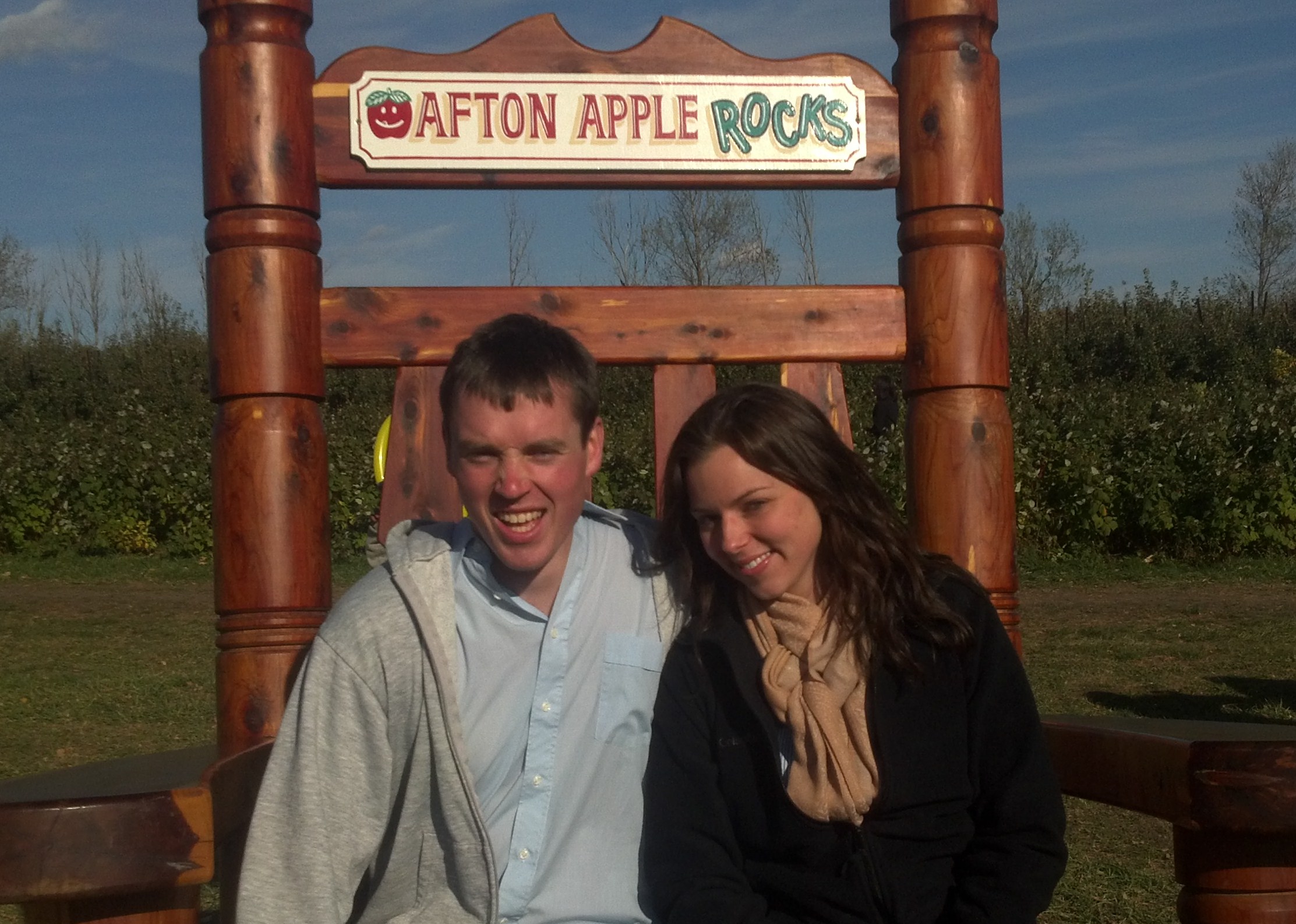
Jon and Maggie at Afton Apple Orchard

So what did Jon and Maggie choose to do on their first day as a married couple?  To gather many of their friends and family for an apple picking outing at Afton Apple Orchard.  Made me think of Psalm 17:8

Guard me as the apple of the eye; hide me in the shadow of your wings.

I am pretty sure one of the twelve heavenly  fruits in Revelation 22 must be the apple.

Lord Jesus, bless all married couples that they might delight in each other as the apple of your eye.

Jonathan Grows Up

I certainly am a proud papa as I prepare to celebrate my son’s wedding on Friday.  Carolyn and I thought we had the perfect name for our first-born, Jonathan, since he was “a gift of God” and his name, Jonathan, would distinguish him from his father, John.   And for years he was always Jonathan.   At church he learned to roam the hallways at a young age and delighted in being in the church nursery.

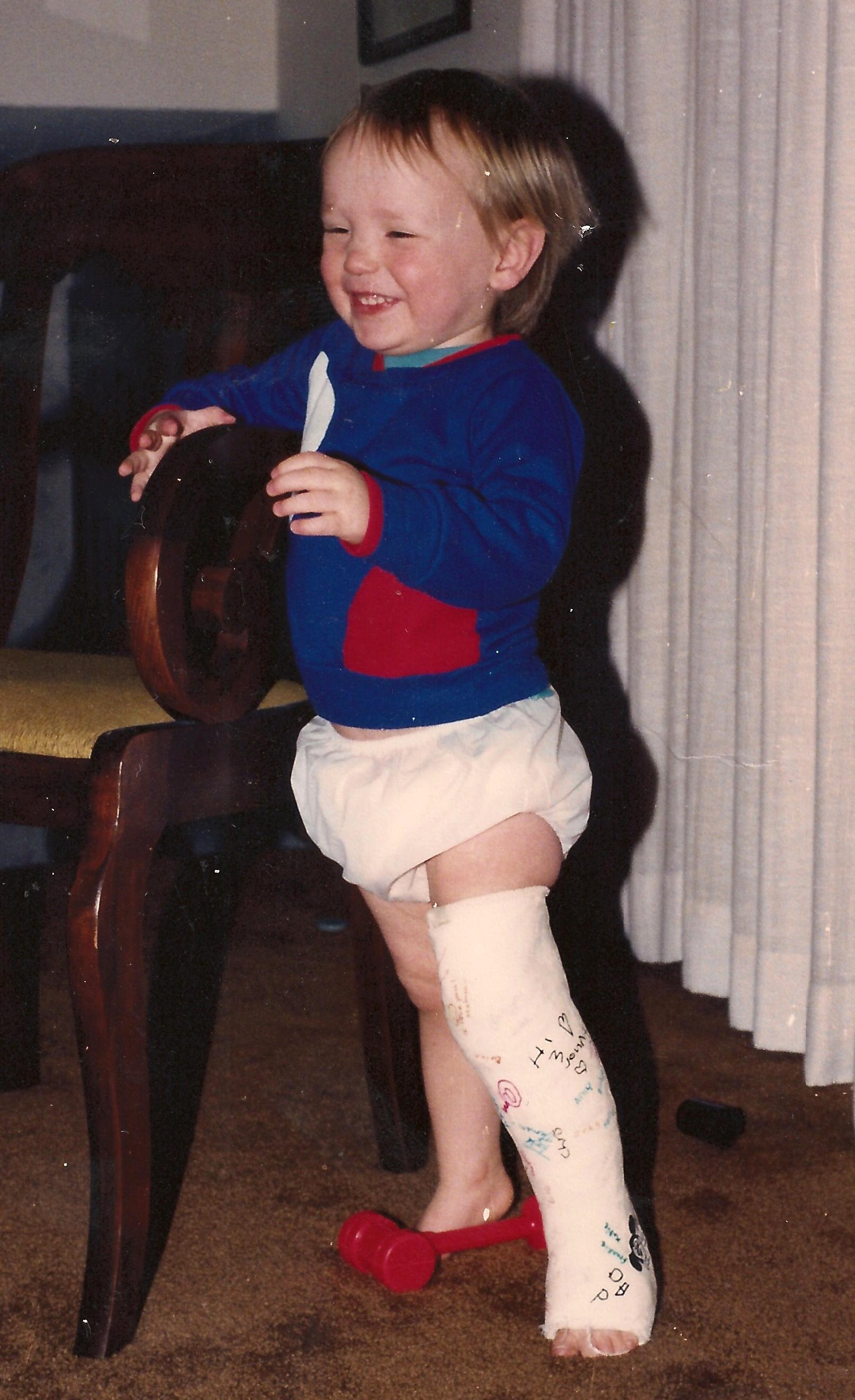
Jonathan with leg cast

However, one Sunday morning, a nursery attendant pulled me out of worship because my two-year-old son would not stand up on his left leg.  He had been jumping over things and somehow broke his leg.  I took him to the hospital where he received a leg cast.  At first he would not leave my lap.  But within a week he re-learned to walk and then run.  The next Sunday he was back at church, scooting through the narthex traffic in search of a cookie.   He has always been on the move, seeking new adventures, challenges and relationships.  Later at confirmation camp, he broke his collar bone, playing football.  Within a few hours, he figured out he could still throw the football and he became the designated quarterback with a no-tackle rule.  As he grew, his friends started calling him Jon instead of Jonathan.  It was quicker; you had to be fast to get his attention.

Jon runs for Minnehaha Academy

I also rejoice that he has chosen to run and live with passion.   He always been a competitor, working hard to achieve his goals, whether it was being the best cross-country runner or academic scholar.  That passion has led him to start his own company with some friends: MNY group.  His passion pushed him to seek the best spouse: Maggie Thomas.  She already brings incredible joy and laughter to Jon and our family.  I am praying that they find a good pace together.

And most importantly Jon continues to run with Jesus Christ as his Lord.  Though many will be calling him Jon this week-end and I will be confused, he will continue to my Jonathan, “a gift of God.”