Category Archives: worship

Playing during Worship

Yesterday during worship, I pitched my small backpacking tent as part of the children’s sermon. I wanted to communicate the ancient Israelite experience of the tabernacle or tent of meeting as being portable. I had practiced setting it up prior to the message and thought I had it ready to go. But my practice session was outside with plenty of space. Inside on Sunday, it was a different story.

The poles are very long, even for a small tent. I was concerned that none of the children be struck by the poles, but I forgot to warn our musicians. As I whipped one pole around to insert into the tent sleeve, I nearly blinded the pianist. Fortunately she has quick hands and avoided any serious damage. I was sweating bullets until the tent finally popped up. After the tent was up I placed our altar Bible in the tent as a reminder of the ark of the covenant which rested inside Israel’s tabernacle.

Of course I wonder if the children made the connection between the Biblical story and our brief experience with a small backpacking tent. Hard to judge. Yet for a moment I saw in their faces a moment of astonishment or surprise when the tent “popped” up. I remember creating tents as a child out of blankets, chairs and small tables. It was a form of play that I enjoyed. I wonder if we had a brief moment of “play” in worship yesterday as the tent sprang up and later as the children walked through it.

In seminary, I remember reading an essay regarding worship, work and play. The article suggested that we sometime confuse the three: we tend to worship work, to work at play, and to play at worship. People often overstress their careers, become too competitive at their leisure activities, and behave lackadaisical at worship. We forget that worship is entering the holy presence of Almighty God.

Still the “play” moment in worship yesterday had a bit of awe and wonder within it. And I trust that God delighted in the children’s joy. I sure did.

How do you sort out work, play and worship?

Lord Jesus, let me find my purpose, my joy, my life in you.
Sanctuary Light

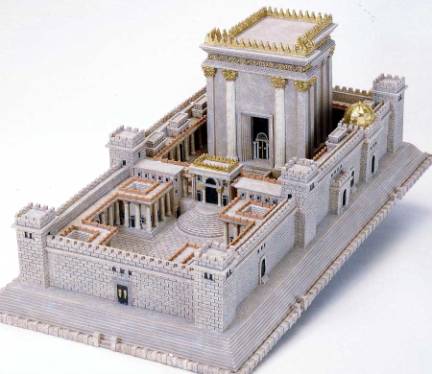
On Sunday, our Biblical focus will be King Solomon’s building and dedicating the temple in Jerusalem. His father, King David, had wanted to build a temple, but through the prophet Nathan, God instructed him to wait.

Thus says the Lord: Are you the one to build me a house to live in?  I have not lived in a house since the day I brought up the people of Israel from Egypt to this day, but I have been moving about in a tent and a tabernacle.  Wherever I have moved about among all the people of Israel, did I ever speak a word  saying, “Why have you not built me a house of cedar?” (2 Samuel 7:5-7)

The temple was a mixed blessing to Israel. Like many beautiful cathedrals it provided a place for the worship of God to flourish. Awe and wonder could be expressed in multiple ways within its walls. The book of Psalms captures some of the beauty of that magnificent structure.

One thing I asked of the Lord, that will I seek after: to live in the house of the Lord all the days of my life, to behold the beauty of the Lord, and to inquire in his temple. Psalm 27:4

But as I mentioned in yesterday’s post, the danger of a fixed structure is that we compartmentalize God’s activity and restrict God’s presence to the “box on the hill.” A temple, church or cathedral should draw us into the wondrous presence of God yet also send us out renewed and refreshed to be God’s people in the world. The light of Christ is to shine both inside and outside the sanctuary.

I have been rereading Thomas Kelly’s A Testament of Devotion.  A Quaker, Kelly testifies to how the light of prayer is to be transformative wherever we are:

A practicing Christian must above all be one who practices the perpetual return of the soul into it inner sanctuary, who brings the world into its Light and rejudges it, who brings the Light into the world with all its turmoil and it fitfulness and recreates it (p. 35).

Having worshipped in a simple Friend’s Meeting House, I know that it was not the magnificent space that inspired Kelly’s deep conviction, but rather the Light in the people who gathered to listen and be in the Light. The Light calls us together where we amplify its wavelength in community but then the Light directs us back into the world. Our meeting places are to be launch pads.

Lord Jesus, let your light shine in me.

Port-a-Temple

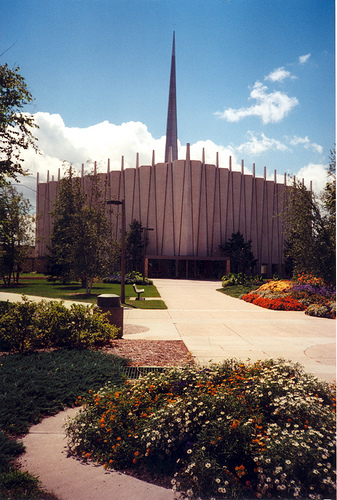
Thirty years ago, I completed an internship at Gustavus Adolphus College. Though my office was in a neighboring building, I walked by or through Christ’s Chapel several time a day. The chapel’s simple, yet provocative architecture often stimulated spiritual reflection.

For example, the chapel is situated in the center of the campus where its high steeple bears witness to God’s central place in the mission of the college. It has clear windows on all four sides, so that worshippers can visually interact with the other college functions. You could see the science center, the library, or the dining hall from your pew. Some saw this as a distraction but also it reminded me that God does not cut me off from the world, but rather prepares me to re-enter it as God’s servant.

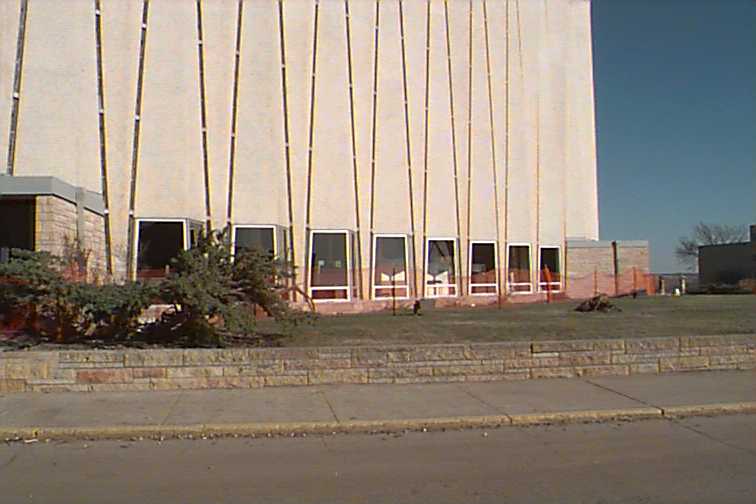
Christ’s Chapel also had a unique outer “shell” or wall. The wall panels are long triangular pieces with stain glass separating each panel. The “wavy walls” shimmered in the sunlight. One day after worship Professor Robert Esbjornson explained that the shimmering walls served as a representation of the ancient Israelites’ tabernacle or tent of meeting. When the Israelites left Egypt, they needed a symbolic reminder of God’s presence in their midst. So they were instructed to build a fabric tent of meeting. God said to Moses, “And have them make me a sanctuary so that I may dwell among them” (Exodus 25:8). Christ Chapel was a re-imagined tabernacle in a contemporary setting, .

The tabernacle became  a visual reminder of God’s presence and power in Israel’s midst. “Then the cloud covered the tent of meeting and the glory of the Lord filled the tabernacle” (Exodus 40:34).  In the time of King Solomon the portable tabernacle was replaced with a permanent stone temple.

The portability of the tabernacle continues to challenge me. Too often we want to restrict God to church building or temples. We compartmentalize our space and time. Perhaps we need tabernacles today that can be placed on Wall Street or in front of the Capital, in our homes and our workplaces, to remind us that God travels with us. Of course, at Pentecost God’s Spirit filled the people of God creating a portable sanctuary in each of us. “Do you not know that you are God’s temple and that God’s Spirit dwells in you?” (I Corinthian 3:16).  How are you carrying God?

Lord Jesus, make me mindful of your presence in my life.

David Danced

With the current remake of the movie Footloose, I am reminded of Kevin Bacon’s speech in the original movie.  He comes before the city council to argue for the abolition of law that prohibited dancing in the town.  He  pulls out a Bible and reads from 2 Samuel 6:14 and 16, “David dancing and leaping before the Lord.”

With our current cultures focus on dance and movement, from Zumba fitness classes to “Dancing with the Stars,”  I wonder if dance will have a revival in worship?  I know that in certain Pentecostal or Charismatic churches, “dancing before the Lord” is not unheard of.  I just wonder if Lutherans, the frozen chosen, would ever thaw enough to tap their toes or to sing their praise with dance.  Can one keep the Joy of the Lord bottled up forever?

Lord Jesus, you are the Lord of the Dance.  May I follow your lead.

A Wedding Song and Holy Apples

Wedding Rehearsal

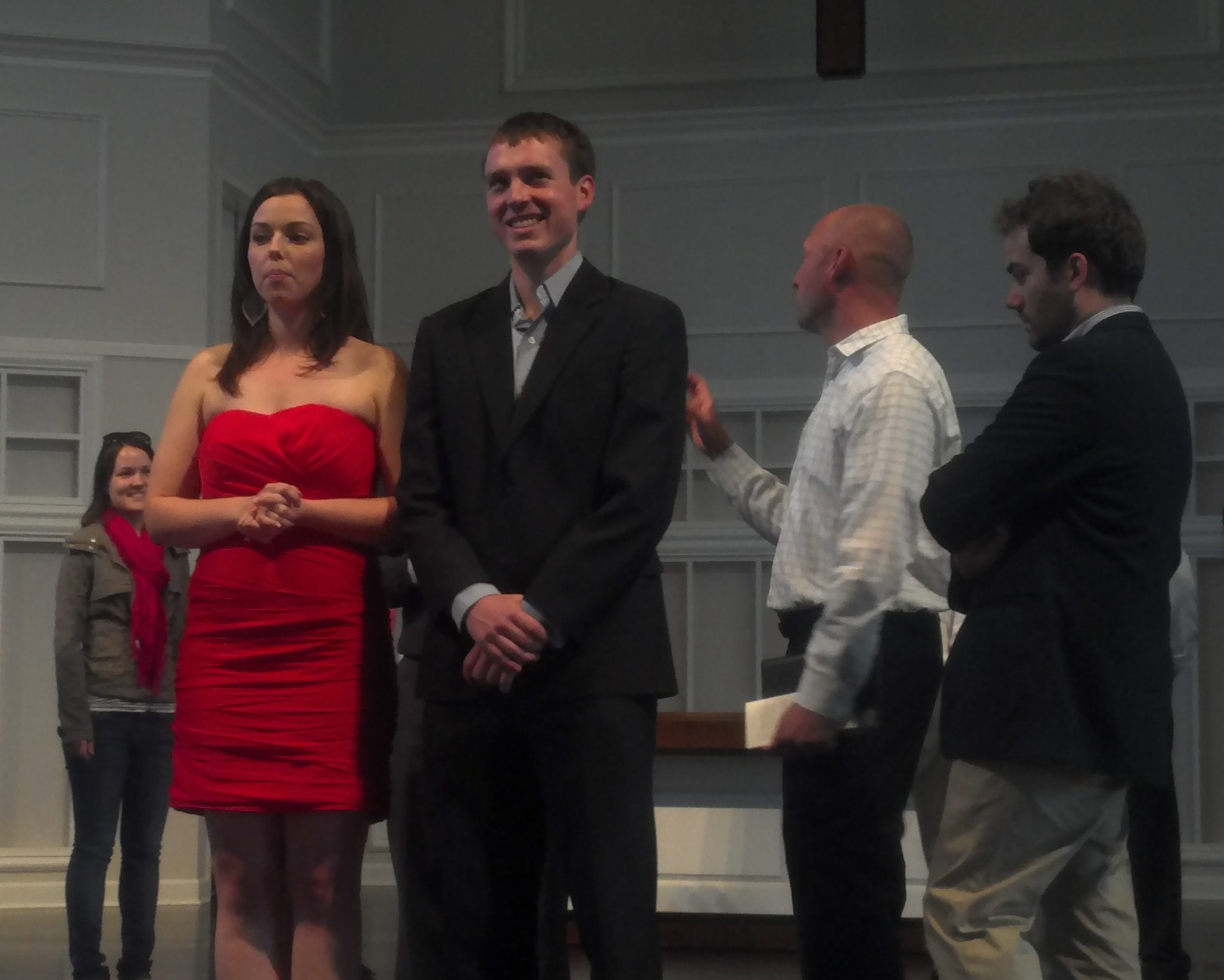
Yes, it really happened.  My son Jonathan is now a married man, wedded to Maggie Thomas.  I am glad that I chose to be a proud papa instead of presiding pastor, since it allowed my wife and myself to simple rejoice in the moment.  And it was a joyous celebration of song and word, in which I was able to shout “Amen!” during a few choice moments.   The couple selected  Colossians 3 which includes,

Let the Word of Christ dwell in you richly; teach and admonish one another in all wisdom; and with gratitude in your hearts sing psalms, hymns, and spiritual songs to God. (Col 3:16)

Kyle Jackson, on of two pastors, admonished them to actually practice this verse, singing to one another in the kitchen or the shower.  And during communion they sang with the congregation, while the wedding party distributed the elements.   It was a holy time.

At the reception, I had the opportunity to bless the meal, but first I told the story that when Jonathan was born, I gave out “Jonathan” apples to friends and staff.  Now that I have new daughter-in-law, I want to give out the new Sweet Tango apples for it takes the two of them to tango.  Finally, after reminding everyone about Pastor Kyle’s admonition,  I invited the whole wedding reception to sing as table grace, Jonny Appleseed.

O the Lord is good to me, and so I thank the Lord, for giving me the things I need, the sun and the rain and the apple seed.

Jon and Maggie at Afton Apple Orchard

So what did Jon and Maggie choose to do on their first day as a married couple?  To gather many of their friends and family for an apple picking outing at Afton Apple Orchard.  Made me think of Psalm 17:8

Guard me as the apple of the eye; hide me in the shadow of your wings.

I am pretty sure one of the twelve heavenly  fruits in Revelation 22 must be the apple.

Lord Jesus, bless all married couples that they might delight in each other as the apple of your eye.

Mountain Man Moses

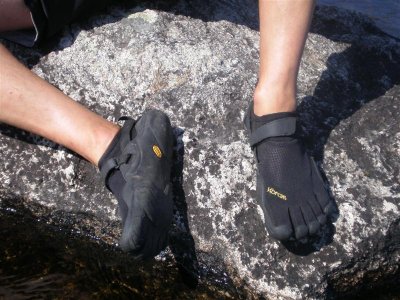
I am convinced Moses must have been a trained mountain runner. Though raised on the plains of Egypt, he was constantly moving up and down mountains as if they had escalators. First he had to approach the burning bush on Mt. Sinai where he was commanded to take off his sandals because it was holy ground. God never commanded him to put them back on, so he was probably the first barefoot trail runner as well.

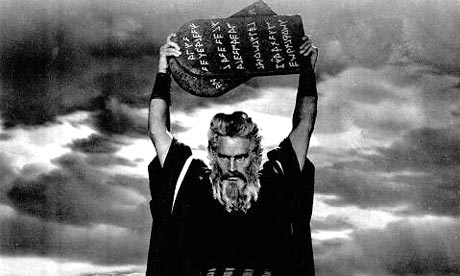
Then at the age of 80, he was commanded to clean his clothes and then to climb Mt. Sinai. (Exodus 19:18-20). Of course Moses’ clean clothes were immediately covered in soot and smoke from the mountain’s eruption, but I am sure Moses brought a dry-cleaning receipt in case God asked. As soon as he reached the top, even before he caught his breath or posed for pictures, the Lord said to Moses, “Go down and warn the people not to break through and sneek a peak at ME.” As if the volcanic eruptions, smoke and lightening were not a sufficient barrier.  Moses, between deep panting breaths, reminded God, “God, you already told them that before I started up here.” God responded, “Yes, but you forgot to bring Aaron and remind the people not to try and peek under the curtain.” Somehow, when Moses reached the bottom he forgot about Aaron or even a chisel, since God had to write on two tablets of stone with his own finger when Moses climbed back up (Exodus 31:18).  Maybe Aaron carried the family chisel.

Meanwhile the Israelites got bored (like middle schoolers in worship) and built a golden calf to worship. A golden calf was so much more manageable than a ferocious storm cloud hovering over your head. God sent Moses down to break up the party (Exodus 32:7).  Moses, hot and tired, broke the tablets; repeated change of altitude can do strange things to a person. Afterwards, Moses climbed back up to apologize (not sure if he had time to clean clothes before this climb).

Finally Moses biggest mountaineering challenge arrived. He was commanded to cut two tablets of stone and to bring them up to the top of Mt. Sinai. There is no mention of a North Face rucksack or REI backpack. This time Moses had to write on the tablets; he must have remembered his chisel (Exodus 34: 1, 28).

The stories of the Bible are filled with such strange, wonderful examples of exaggerated humor and insight. Sometime in our serious study, we miss the humor that also challenges us. Moses was the mediator, negotiating the God’s covenant with the people, a very difficult task yet that covenant is still in effect. I rejoice that Moses could climb the mountain and make it back down.

What stories in the Bible challenge your sense of humor as well as your life?

Lord Jesus, teach me to laugh as well as to learn.

Cornfields, Pumpkins and Worship

Cross and Corn

My daughter, Christina, is home from her college in Pennsylvania and worshipped at our outside service on Sunday.  She commented afterwards, “It is so amazing having worship beside a cornfield.”  She went on to say that many of her eastern classmates think Minnesota is covered with cornfields, so our worship reinforced that stereotype. I reminded her that just north of Bailey Road is a golf course and thousands of suburban homes.  Still the cornfield stands out.

Perhaps the cornfield can serve as a symbol of the vibrant life in Christ.  Jesus often used the image of seeds to communicate the growing aspect of our life in him

Very truly, I tell you, unless a grain of wheat (or corn?) falls into the earth and dies, it remains just a single grain; but if it dies, it bears much fruit. John 12:24

The cornfield also reminds us that we are called to grow together.  The cornstalks are stronger and more resist to wind if they grow in a field together.  Yet each cornstalk is unique in it height, breadth and yield.  We are all unique creations of God, wired with our own dependable strengths, passions and callings.

The cornfield also connects us to a key petition of the Lord’s Prayer, “Give us today our daily bread.”  God uses the farmer, millers, bakers, merchants, and financiers to move the corn in the field to the food on our table.   We can be thankful not only for the food but for all the people who work to feed us.

Scott H tilling the soil

Near the cornfield is the pumpkin patch that our church is  utilizing to grow pumpkins for our harvest festival in October.  Scott Hanson is working the field, trying to keep the weeds down and the vines growing.  It is truly amazing to watch how the vines in such a short time have covered the field.   Pumpkins are rapidly growing into ripe fruit.  I am reminded that God first put Adam in the garden of Eden to till and keep it (Genesis 2:15).   Our patch may not be Eden, but it is direct descendent.

How do you celebrate the wonder of summer growth?

Early Pumpkin

God of the harvest,
I celebrate the earthiness of potatoes just dug up, 
the sweetness of corn,
the
 beads of dew on tiny gourds,
the orange glow of ripe pumpkins,
green cucumbers and zucchini,
the garden full of life, health and bounty.

Joyful Noise Sounds Great

 O come, let us sing to the LORD;
let us make a joyful noise to the rock of our salvation!
Let us come into his presence with thanksgiving;
let us make a joyful noise to him with songs of praise!
Psalm 95:1-2

Worship Team from Resurrection Lutheran Church

Music has such a joyful, liberating power.  When we sing in worship it starts deep within us and then spreads and fills the whole room.  Many of us love to sing; I see it on faces as worshippers sing praise to God.  That is what draws many of people to Sunday worship–the joyous worship of our God.  I am so thankful for Resurrection’s worship team who faithfully and joyous lead us in song each week.

But joyous worship is not limited to contemporary Christian music. Singing praises to God is as ancient as the Bible.  One of the oldest pieces of song is from the exodus, when the Israelites escaped the Egyptian chariot army as they fled across the Red Sea.

Then Moses and the Israelites sang this song to the Lord, “I will sing to the Lord, for he has triumphed gloriously; horse and rider he has thrown into the sea.” Exodus 15:1

The earliest church continued the Hebrew practice of singing praise to God.  Paul encouraged the church at Ephesus, “but be filled with the Spirit, as you sing psalms and hymns and spiritual songs among yourselves, singing and making melody to the Lord in your hearts” (Ephesians 3:19).  Throughout the centuries, the church has used song as a primary means of worship.  Singing praises to God unites our heart with God’s heart.

Music has a way of touching and stirring our emotions that words cannot do alone.  You can experience it at a concert, whether it is U2 or the Vienna Boys’ Choir.  The power of song is a gift God gives us to express ourselves, whether we can carry a tune or not.  After all, the psalmist commands us to make a joyful NOISE to God.   Let us make some NOISE today!

What is one of your favorite hymns or spiritual songs?

Lord Jesus, help me make a joyful noise of praise to you this day.

Witnessing to God’s Power

Clif Christopher’s book “Whose Offer Plate is It?” offers challenging insight into what motivates people to give to their local congregation.  In the chapter titled, “Do we really have to compete?”  Clif examines how churches need to consider the competition for people’s charitable giving.   People no longer give automatically to the church.  We are all inundated with opportunities to give to good, meaningful charities and nonprofits.  Clif argues that church member and friends need a convincing case that their money will affect lives in and through their congregation.  He writes,


People need to hear our life-changing stories and be helped to understand how their dollars are creating positive change in the lives of people in ways that other institutions could not do.  If we want to argue that we are a great place for people to feed the hungry, then World Vision or Oxfam will beat us every day because they are experts at feeding the underprivileged.  We, however, are the one place whose mission it is to bring people into the life-changing relationships with Jesus Christ. Share with people how this place helps bring the power of the Holy Spirit into broken and grief-stricken lives.  Point out how those who were without direction came to find direction and a new life through the church.  Compete on that field and you will be chosen.  

WE ARE THE ONE PLACE
whose mission is to bring people
into life-changing relationships with
Jesus Christ.
 

The people in our pew (or chair) are asking “Why should I choose the church over World Vision or Oxfam or Boy Scouts or the university or the hospital?”  We must be prepared on a daily basis to boldly answer the question, and if we cannot easily do it, then we must get busy changing our church. 

I am thankful that Resurrection has such stories of personal transformation.  We need to discover ways to share these stories with the wider community.

Jesus said, “You shall be my witnesses” Acts 1:8.

Do you have a story that bears witness to Jesus’ power and love

Lord Jesus, thank you for my congregation that bears witness to your grace and mercy. 

The Contest at Vacation Bible Adventure

Singing out "God is wild about us!"

This week my blogging is down but energy is up as Resurrection hosts Vacation Bible Adventure.  I am so excited with all the volunteers who add their passion, gifts and strengths to transform Resurrection into a Pandamania Jungle as together we learn about God’s creation, Elijah’s contest, Jonah’s trip, and Peter’s denial.  I am working with a talented seventh grader Adam Behnken and creative Micki Fredin to tell the Bible stories each day. 

This morning we retold Elijah’s contest with the 450 prophets of Baal (see I Kings 18). The people of Israel were waffling in their allegiance to the God of Abraham, Isaac, Jacob and Elijah.  So Elijah challenges the prophets of Baal to a contest. Each would prepare an altar with sacrifice, but neither would bring fire.  They would each call upon their god to light the sacrificial fire. 

First the prophets of Baal tried to coax their god to send fire upon their altar.  Like those ancient prophets, the children and I shouted, danced and called for the fire, but nothing happened. Then the children imitated Elijah and prepared an altar with stones, wood and a sacrifice of “chocolate.”  They even doused the altar three times with water, just like Elijah.  But just before they called down God’s fire, a firefighter (with the initials JVK) entered to stop any fire from happening.  We did not want to burn the church down with it.  Instead we retold  the ending of I Kings 18.

Elijah cried out, “O LORD, God of Abraham, Isaac and Israel, let it be known this day that your are God in Israel, that I am your servant, and that I have done all these things at your bidding.” Then the fire of the Lord fell and consumed the burnt offering, the wood, the stones and the dust, and even licked up the water that was in the trench.  When all the people saw it, they fell on their faces and said, “The LORD indeed is God; the LORD indeed is God.” (I Kings 18:36,38,39)

Where or when have you experienced God’s power?

Almighty God, send the power and fire of your Holy Spirit into our lives.