Author Archives: John Keller

Unknown's avatar

About John Keller

I am a retired Lutheran pastor whose intention is to consent to God's gracious presence and actions within.

A Journey Begins

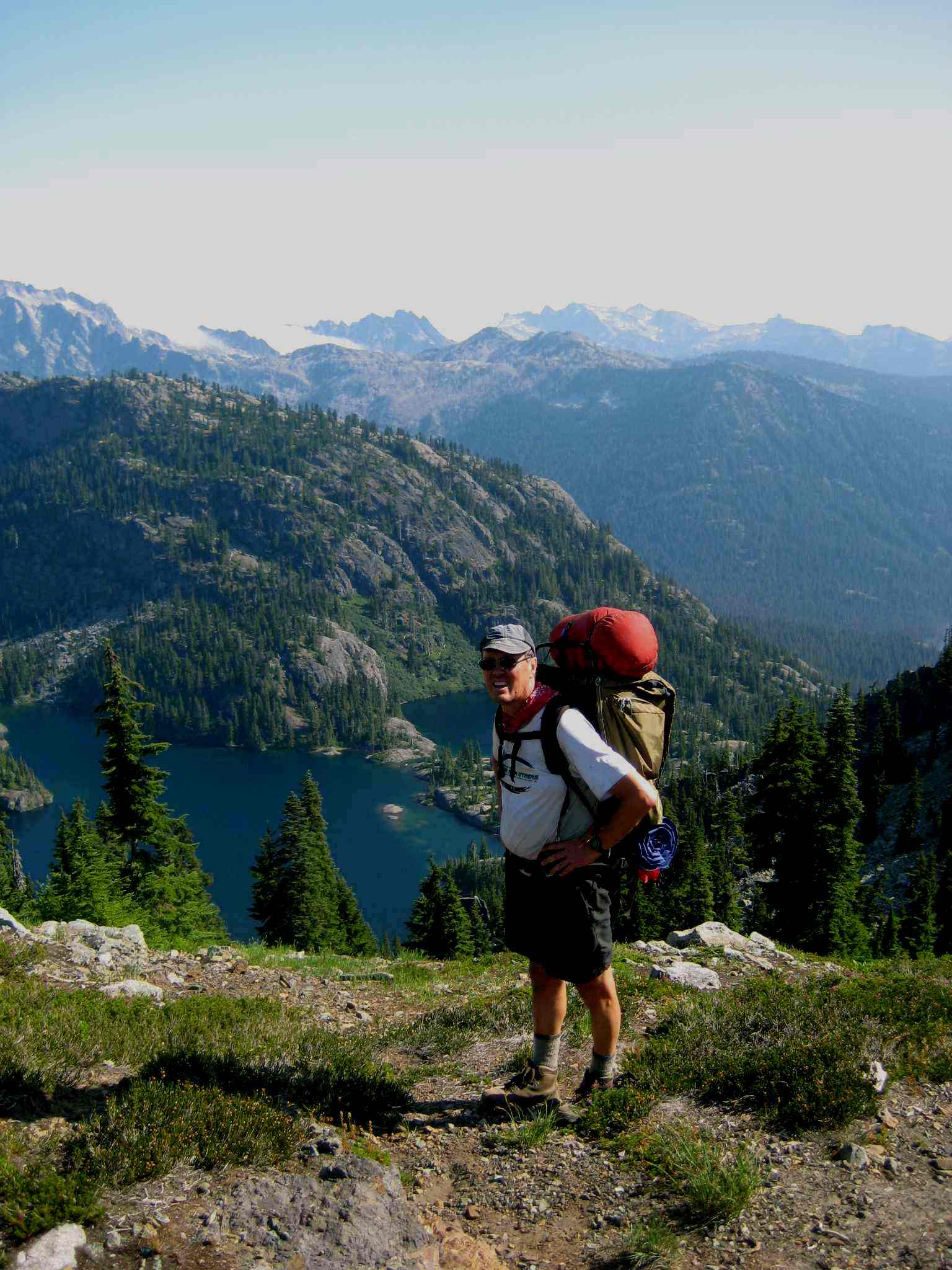
48 JVK at Spectacle Lake Aug 6I am posting this the day I start a planned seven night backpack in the North Cascades of Washington state. My brother is driving me to Chelan, WA where I will take a 2.5 hour boat ride up Lake Chelan to Stehekin. From there I will take a ten-mile bus ride to the High Bridge on Agnes Creek and begin hiking a section of the Pacific Crest Trail (PCT), heading south to Steven’s Pass, approximately 104 miles.

My son and I did a section of trail in the summer of 2009 when I was on sabbatical. We hiked from Steven Pass to Snoqualmie Pass and had a grand adventure. This year I am going solo but expect to see lots of hikers on trail, including thru-hikers who started the PCT at Mexican border last May.
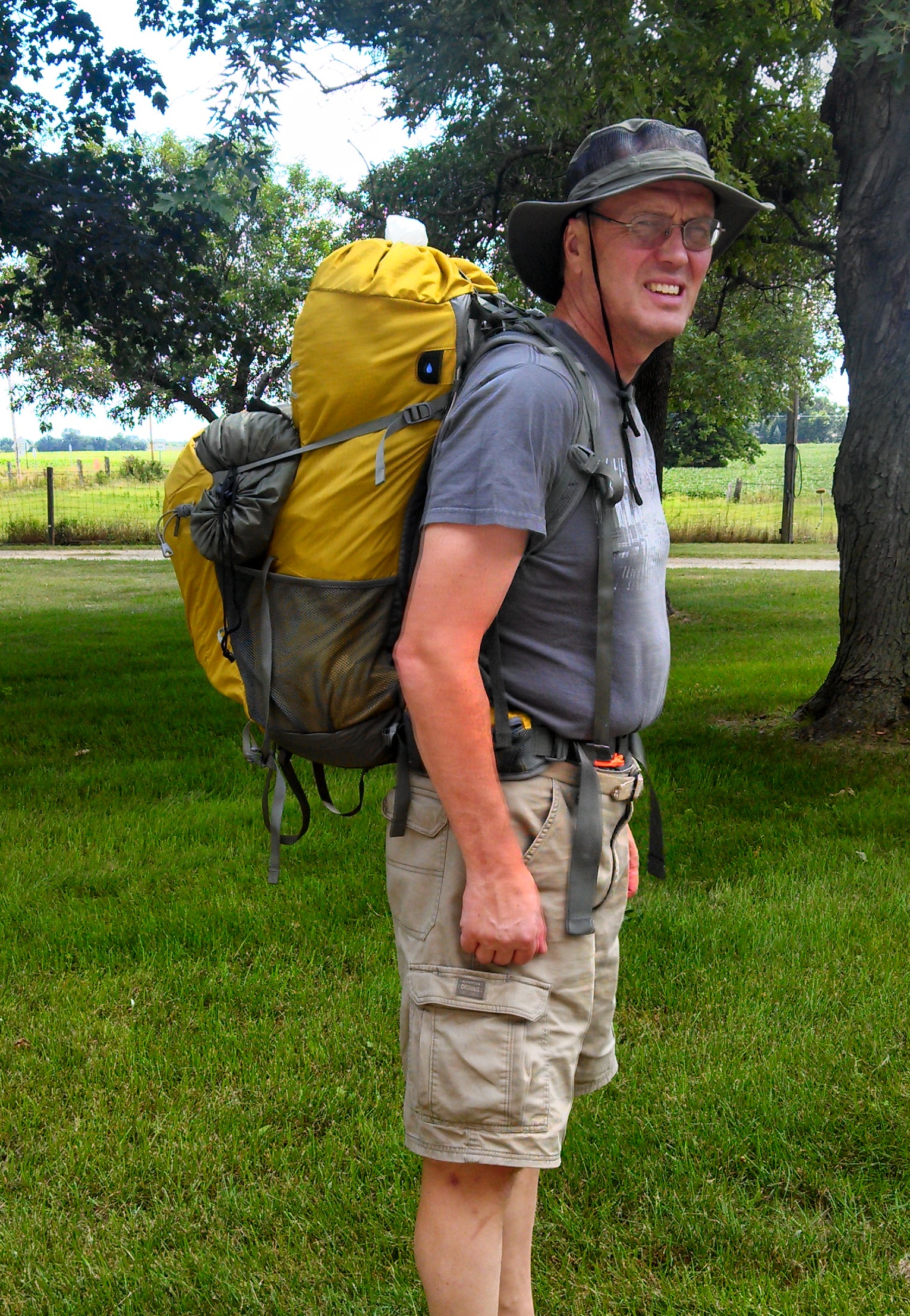
backpack readyI have gotten my pack weight to under 30 pounds, including food for eight days. Since my last trip on the Superior hiking trail I have purchase a lighter sleeping bag and pad. I have also tweaked the amount of food. I may experience a few hunger pains, but I wouldn’t starve.

As I mentioned in my last post, I have been reading John Muir. Here is a quote that I might memorize.

Walk away quietly in any direction and taste the freedom of the mountaineer. Camp out among the grass and gentians of glacier meadows, in craggy garden nooks full of Nature’s darlings. Climb the mountains and get their good tidings. Nature’s peace will flow into you as sunshine flows into trees. The winds will blow their own freshness into you, and the storms their energy, while cares will drop off like autumn leaves. As age comes on, one source of enjoyment after another is closed, but Nature’s sources never fail. … The petty discomforts that beset the awkward guest, the unskilled camper, are quickly forgotten, while all that is precious remains. Fears vanish as soon as one is fairly free in the wilderness. (John Muir, Our National Parks)

Though I may argue some with John Muir’s theology, I certainly resonate to his love of creation. All creation sings of God’s glory.

Let the heavens be glad, and let the earth rejoice; let the sea roar, and all that fills it; let the field exult, and everything in it.  Then shall all the trees of the forest sing for joy before the Lord; for he is coming, for he is coming to judge the earth.  He will judge the world with righteousness, and the peoples with his truth.   Psalm 96:1-13

I will post my reflections upon my return.

Seething White-fire Enthusiasm

Monday I am headed to Washington state on vacation to visit family and to backpack.  I am looking forward to spending about a week on the Pacific Crest Trail, hiking north of Steven’s Pass.

I feel in love with the mountains as teen-ager. My first backpacking trip was at age 15 with some friends to Lena Lake in Olympic National Park. I continued to hike as often as I can. Recent hikes on the Superior Hiking Trail and in Rocky Mountain National Park have become posts on my blog.

I find spiritual renewal in being on trail. I have been reading selections of John Muir’s writings from Richard Cartwright’s book Baptized in Wilderness: A Christian Perspective on John Muir.  Muir’s travels in the wilderness of the American west evoked spiritual rapture. Writing about his first summer in Yosemite Valley,

John Muir, American conservationist.

John Muir, American conservationist. (Photo credit: Wikipedia)

Now we are fairly high into the mountains, and they are into us. We are fairly living now. What bright seething white-fire enthusiasm is bred into us–without our help or knowledge. A perfect influx into every pore and cell of us, fusing, vaporizing by its heat until the boundary walls of our heavy flesh tabernacle seem taken down and we flow and diffuse into the very air and trees and streams and rocks , thrilling with them to the touch of the vital sunbeams. Responsive, we are part of nature now … How glorious the conversion. (p 11)

When I read Muir I am reminded of the psalmist who writes that all creation can give glory to God.

Praise the Lord from the earth, you sea monsters and all deeps,
fire and hail, snow and frost,
stormy wind fulfilling his command!
Mountains and all hills, fruit trees and all cedars!  (Psalm 148:7)

Though I do not worship the creation, the beauty and glory of God’s creation can fill my soul with “seething white-fire enthusiasm” and wonder.

How does the wonder of creation touch your soul? Are there special places where you find God’s Spirit present?

Lord Jesus, renew me through the wonder of your creation.

Family Mission Trip

This week I have a guest blogger, Tonya Bushard. Tonya is a friend and member of Resurrection Lutheran Church and she writes about her recent experience on a family mission trip.

Tonya writes,
We took our family service journey a little more local this year. Last year, the Bushard family went to Eagle Butte, SD to join about 40 others on a Youthworks multi-generational mission trip. We stayed on an Indian reservation. After a great first experience, two other families joined us for another. This time, we did a family mission trip in Superior, WI.

Mission Trip Bushard 13 3  The overall concept of these pre-planned mission trips is to spend ample time as a family and serve a broader community through various service projects. We stay overnight in a host church where we worship, eat and play with several other families from around the Midwest. This year, we assisted a nursing home with some outdoor landscaping chores, joined residents indoors at a nursing home to play games, helped our host church with their large monthly public food pantry and did a little painting at another church.

The daily service projects inspired us to brainstorm how we could go home and continue to serve in our own community. We have decided to build relationships 1 mile from our home at the local nursing home. We plan to attend their activity time to play cribbage or just stick around to chat with the residence. And we are also hoping to bring our lapdog, Coco, to help us serve.

Mission Trip Bushard 13 1The most rewarding piece of the trip for us is the combination of appreciation from those we served and watching the spirit of service grow in our children. Each of my children had a great experience of love and service.

Zoe, “The people at nursing home smiled when they saw us. They had fun playing trivia with us. I am excited to get to know some of the people at our nursing home.”

Alex, “I love playing games so going to the nursing home to play cribbage with the guys was fun. They were competitive like me.”

Zack, “I felt God sent me to play with the boys who lost their mom and had a sick dad. I made their week go by faster and they had fun.”

Mission Trip Bushard 13 2It is a great reminder of our blessings and Jesus’ call to help those in need. Our ability to immerse ourselves in service and fellowship by serving out-of-town is very unique and augments the overall experience; really brings it home. The youth and multi-generational trips are each four days. Our family mission trip was two days of service.

We were really happy to have two other families with us this year. We have such a great experience each year that we hope more and more families from Resurrection join in the opportunity in the coming years.

Bible Camps still needed?

campwapo_bannerThis week I have invested my time and energy with the children and youth of Resurrection Lutheran Church. I have been at Camp Wapogassett near Amery, Wisconsin. The children and youth here love to  play large group games, sing and dance at campfire, hang with friends and be in an intentional, intensive Christian community.

Part of each day is devoted t0 studying the Bible as a cabin group. Though this may not be a child’s favorite part of the week, it is still a crucial part. After all, Wapo is a Lutheran BIBLE camp. There is a purpose to having our children and youth grounded in the stories and teachings of this ancient book.

When I was in college, I served as a camp counselor at a Lutheran Bible camp in Washington State. The program director one summer was a psychologist who was skeptical of the value in spending time each day in studying God’s Word. He thought we would be better off simply focusing on human relationships and how we love and care for one another in meaningful ways. He was a persuasive individual and he did help us see the value in building healthy relationships with the campers and each other.

Yet some of us challenged his assumption that spending time in the Bible was unproductive. We reminded him that our Christian love for one another is shaped and nurtured by God’s love for us. Without the grace and mercy of Jesus Christ, our love can become sentimental and weak. Most of us were camp counselors because we had experienced God’s love in a powerful way through God’s Word. The Bible had touched our lives and so in turn, we want to share that “good news” with the children and youth who came to camp. I continue to see that same enthusiasm among the many counselors at Camp Wapo.

I recognize that taking time to study God’s word can seem boring to a child when there are nine-square games, swimming beaches and gaga pits just beyond the cabin walls. Still the very act of studying and discussing the stories of Bible plants the seeds of faithful living. I rejoice that we still have Lutheran BIBLE camps.

In what ways has Bible Camp touched your life?

Lord Jesus, bless and guide our Lutheran Bible Camps and their staff.

Toxic Charity?

Saturday I returned from a short-term mission trip to Denver with our youth. I was pumped by the diverse and intense experiences we had together serving the urban poor. I preached on how the week gave me a new perspective on prayer in yesterday’s sermon and how excited I am to see future mission trips.

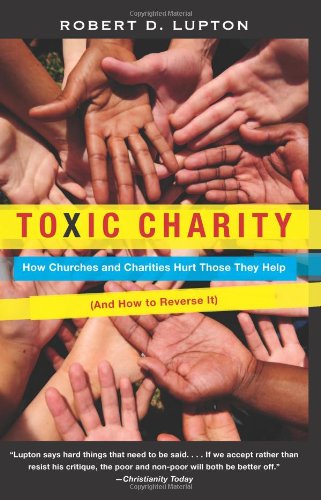
Then this morning I read a short article in L Magazine titled: Toxic Charity. It is an excerpt from the book, Toxic Charity: How Churches and Charities Hurt Those They Help (and How to Reverse It). In the article, Robert Lupton argues that many of the service projects that churches and nonprofits perform with good intentions are not really helping the needy. Americans work hard at serving others, but do rarely consider the outcomes of such service.

What is so surprising is that its outcomes are almost entirely unexamined. The food shipped to Haiti, the well we dig in Sudan, the clothes we distribute in inner-city Detroit — all seem like such worthy efforts. Yet those closest to the ground — on the receiving end of this outpouring of generosity — quietly admit that it may be hurting more than helping. How? Dependency. Destroying personal initiative. When we do for those in need what they have the capacity to do for themselves, we disempower them.

The article started me wondering about some of the service projects we assisted in Denver. One was the David Clifton Carpenter’s Cupboard, a food shelf in Wheat Ridge, CO. David Clifton was homeless for a time early in his life and had gone to churches for help. Afterwards he started a food shelf to help others like himself. But in my one day of service at his food shelf, I wondered if it was helping people transitioning out of poverty or was simply a “band-aid” that continued a cycle of dependency. From my limited observation it appeared that many families came every week for the free food.

Robert Lupton writes,

To be sure, not all charitable response is toxic . . .  But our compassionate instinct has a serious shortcoming. Our memory is short when our recovery is long. We respond with immediacy to desperate circumstances but often are unable to shift from crisis relief to the more complex work of long-term development. Consequently, aid agencies tend to prolong the “emergency” status of a crisis when a rebuilding strategy should be underway.

NewHabitatLogoOne agency that I believe has long-term development in mind is Habitat for Humanity. It seeks to transition people out of poverty by helping them move into home ownership. One of their mottos is “Not a handout, but a hand up.” Habitat home recipients must first complete 500 hours of “sweat equity” working on Habitat homes, complete a course on homeownership and sign a mortgage agreement that is not more than 1/3 of their income before receiving their home. Habitat is not toxic charity but transitional charity.

What do you think about charity and service for other?

Lord Jesus, teach us to love our neighbor in ways that honor you.

Sidewalk Sunday School

image

In college I went to an evening service for healing. I went with a friend expecting to pray for her health. But while I was there, I went forward for prayer myself. I asked the pastor to pray for my critical, skeptical thinking that often blocked my faith experience.

I remember his prayer. He asked for “the wings of my intellect to be folded, so that the Holy Spirit might soar within me.”

I have prayed that prayer frequently this week as five youth and I  serve at the Denver Metro Ministries.  Pastor John Gallegos and his team take their puppet ministry, songs and games, called
Sidewalk Sunday school, to various urban projects in Denver.  My team has helped working puppets and leading games.

My skeptical mind finds many parts of the ministry uncomfortable.  For example, competitive games and prizes are not my specific vision of Christian children’s ministry. The focus on “making a decision for Christ” runs counter to my focus on responding to  God’ s grace. Yet I have folded the wings of my intellect so that the Holy Spirit can soar.

The Spirit is soaring because Pastor John Gallegos and his team are there to share the love of Jesus. His team are dedicated to loving children who are forgotten by many in our society. They share the love of Jesus in song, puppets, food and word.  Week after week –spring, summer, and fall –they go to the very neighborhoods that many of us avoid.  The youth and I are blessed to serve with them.

Sidewalk Sunday School’s Bible verse this week is Proverbs 14:21, “Being kind to the needy brings happiness.”   Their kindness has brought each member of Resurrection’s team happiness.

Lord Jesus, thank you for your soaring Spirit.

Which are you?

This morning I worship with our youth group at Highland Lutheran Church in Denver Colorado. We heard a perfect sermon for the beginning of our mission trip on the parable of the Good Samaritan. Pastor Dena Williams asked us who we are in the story.

Are we the lawyer, the priest, the Levite, the Samaritan or possibly the innkeeper?  Many of us like to think that we are a Samaritan willing to help others. She reminded us that Samaritans were marginalized, foreign, mostly hated people.  Is that really how we see ourselves?

Yes sometimes we are people who give help but we can just as easily be the broken person, beaten up and left for dead on the side of the road. We can be beaten up in so many ways: job loss, broken relationships, mental illness, chronic pain. We can give aid but we also at times need to receive aid.

As the youth of Resurrection prepare to serve in Denver I pray that we may be as open to receiving aid and love as to giving comfort and care. We seek to trust Jesus, the storyteller, to give us our proper role.

Getting Off the Rails.

This month during worship at Resurrection we have used Psalm 95 as our call to worship. Verse seven states, “For he is our God, we are the people of his pasture and the sheep of his hand.”

Thus the picture above sparked my imagination. As God’s sheep, we sometimes wish that we had a clear direct path to our lives.   The railroad track is a set path that will not be moved easily. We want God to lay down our life’s tracks and make the path smooth without steep hills or broken rails. However rarely is our life so clearly defined and directed. And even when the rails are clear we may not be sure in which of the two directions to travel.

Upon further reflection, I am glad that my life is not set on such rails. Trains are great, but they are so limited in where they can go. They must follow the rails. As the sheep of God’s hand, we have a greater flexibility. After all Jesus told us that the Spirit of God (like the wind) blows where it will (John 3:8).

This week I am in the midst of experiencing how the wind of God blows. Last spring I planned to be heading north this week-end for a canoe trip in the BWCA. I scheduled a guest preacher and kept my calendar cleared. But last month the canoe trip was cancelled but I kept the guest preacher. Then two days ago I learned that the male chaperone for our youth mission trip had to cancel and the trip needed a replacement. So Thursday I am leaving, not for the BWCA, but for Denver to serve with our youth in a YouthWorks mission trip next week.

I will be writing more about the trip in coming posts. Right now I am thankful that my life in Christ is not set on some static rails, but has the flexibility to discover new paths. Like the sheep in the picture, I need to step away from the common track and set off on a new path of adventure.

Otherwise, I just might be smacked down by the oncoming freight train of routine.

Lord Jesus, guide me by your Spirit.

Remembering Our Freedom

I recently finished reading the Civil War history Battle Cry of Freedom by James McPherson. McPherson writes a powerful narrative in which he highlights some of the most significant turning points in the American Civil War. Though the North had the preponderance of economic and social factors that contributed to the victory, McPherson argues persuasively that there were several points in the war where the Confederacy might have won its independence.

One such moment was the battle of Gettysburg, fought 150 years ago this week. A three-day battle fought on the fields and woods around Gettysburg Lutheran Seminary, the battle had several turning points. On the first day, the Union calvary general, John Buford, made the decision to engage General Robert E. Lee’s Army of Northern Virginia near the seminary so that the Union forces would have time to concentrate along Cemetery Ridge, a good defensible position. Without that choice, Lee’s troop might have taken the high ground.

On the second day, when Lee sent his troops to the south to attack the left flank of the Union line, his troops nearly achieved victory. The Union troops were still marching towards the battlefield and did not have time to prepare a solid line. At one point a hole developed in the Union line and the Confederate troops were advancing to exploit it. The Union general Hancock saw a Union disaster in the making and needed time to reinforce the line. The only available unit to plug the hole and buy time was the small 1st Minnesota regiment, 262 men. Hancock ordered them to attack and they immediately obeyed.

I once walked the battlefield and near this spot is a most impressive monument dedicated to the 1st Minnesota. An inscription on the monument reads,

The order was instantly repeated by Col Wm Colvill. And the charge as instantly made down the slope at full speed through the concentrated fire of the two brigades breaking with the bayonet the enemy’s front line as it was crossing the small brook in the low ground there the remnant of the eight companies, nearly surrounded by the enemy held its entire force at bay for a considerable time & till it retired on the approach of the reserve the charge successfully accomplished its object. It saved this position & probably the battlefield. The loss of the eight companies in the charge was 215 killed & wounded. More than 83% percent. (Wikipedia)

The 83% casualty rate is one of the highest recorded in an American battle unit.

As Americans pause to remember our nation’s birthday, we also remember the tremendous cost in human life that freedom at times demands. The young boys from Minnesota did not know that they were making history or saving the Union. They simply answered the call to serve, to fight and to possibly die.

President Abraham Lincoln later spoke at the dedication of the battle’s cemetery. His final words still ring true today,

The brave men, living and dead, who struggled here, have consecrated it, far above our poor power to add or detract. The world will little note, nor long remember what we say here, but it can never forget what they did here. It is for us the living, rather, to be dedicated here to the unfinished work which they who fought here have thus far so nobly advanced. It is rather for us to be here dedicated to the great task remaining before us—that from these honored dead we take increased devotion to that cause for which they gave the last full measure of devotion—that we here highly resolve that these dead shall not have died in vain—that this nation, under God, shall have a new birth of freedom—and that government of the people, by the people, for the people, shall not perish from the earth.

Lord Jesus, we pray for the freedom of all people.

Forgiveness and Reconciliation

Forgiveness is sometimes confused with reconciliation. When I forgive someone then that means I must also be reconciled with that person. And there is truth in that statement, but perhaps not the truth I first envisioned.

Reconciliation is a word rooted in the Bible. Reconciliation means to cease the hostility and animosity between two people or parties. Paul uses it particularly to describe how Jesus has restored the broken relationship between God and humanity through his death on the cross. “All this is from God, who reconciled us to himself through Christ, and has given us the ministry of reconciliation” (2 Corinthians 5:18).

Jesus also used the term to describe how as Christians we are to be reconciled one to another whenever we have grievances or conflict with one another. “So when you are offering your gift at the altar, if you remember that your brother or sister has something against you, leave your gift there before the altar and go; first be reconciled to your brother or sister, and then come and offer your gift” (Matthew 5:22-23).

Now the problem for me with reconciliation is that I have romanticized it and added an additional layer. Whereas the Bible speaks of ending the conflict and restoring clear, healthy relationship boundaries, I added a new layer. I added the layer of becoming bosom buddies that agree on all things. I romanticized it into a tight bond of friendship created or renewed. I thought in black and white categories, “you are either enemies or friends.” Reconciliation might mean friendship or it might mean going separate, peaceful ways.

add_toon_infoAn example of this is seen in Genesis 13. Abraham and his nephew Lot have traveled together to Bethel and both have extensive flocks and herds. Conflict had arisen between the herders of Abraham’s livestock and the herders of Lot’s livestock. Abraham proposed a reconciliation.

Then Abram said to Lot, “Let there be no strife between you and me, and between your herders and my herders; for we are kindred. Is not the whole land before you? Separate yourself from me. If you take the left hand, then I will go to the right; or if you take the right hand, then I will go to the left” (Genesis 13:8-9).

Separation keeps the peace for Abraham and Lot.

Paul and Barnabas separated during their second missionary journey when they disagreed on whether to restore John Mark as one of their traveling companions (Acts 15:36-41). Though the text does not say they are reconciled, neither does it say that they remained hostile towards one another. God’s ministry continued even as they separated.

Reconciliation in a relationship does not always mean a new friendship restored. It may mean that the hostility ceases between the two parties as they establish healthy new boundaries of civility and respect.

How do you understand reconciliation?

Lord Jesus, guide me as an ambassador of reconciliation.