Author Archives: John Keller

Unknown's avatar

About John Keller

I am a retired Lutheran pastor whose intention is to consent to God's gracious presence and actions within.

Root Beer Float

Every Tuesday I drive to a neighboring Lutheran Church for a Bible study with local pastors.  Together we study the scripture text for Sunday so that we can be better prepared to preach God’s Word.

Today, as I drove up to Amazing Grace Lutheran Church I noticed this “float” in their parking lot.  The congregation had used it in the local community parade, where they handed out both root beer candy and “church information on a stick.”  It was a creative way of inviting new comers to their congregation.

A couple weeks before, Resurrection Lutheran Church had participated in our local Woodbury days parade with our worship band playing  for the crowd.  It was a delight to see and hear them that day as they praised God and invite all to come for worship.

As I left Amazing Grace and took this picture, I rejoiced that congregations seek to find creative ways to proclaim the Good News of Jesus Christ.  Churches too often are seen as dry, boring places.   Resurrection and Amazing Grace both seek to express the Vibrant Life of Faith.

I also realized that Amazing Grace had quench my thirst by hosting the study of God’s Word.  What a treat!

Lord Jesus, let me drink again from the fountain of living water.

Rebellion and Love

Why do we do the stupid things we do? Why would Adam and Eve eat from the forbidden tree in the Garden of Eden? Why do I continue to trust in my own abilities and not God’s direction and commands?

“Woman gives her man to eat” by Lucile Butel, 1989

I ask those questions whenever I read Genesis 3, the story of Adam’s and Eve’s choice to disobey God. The story is often called “The Fall” since it describes humanity’s fall from God’s loving, eternal presence, yet I prefer the title “The Rebellion” since it is our human tendency to rebel against God’s commands. We rebel when we place ourselves in the center of our lives, and not God. We listen to the crafty voice of the serpent that says “you will not die, but will find pleasure, riches, knowledge, significance, or fame” if we yield to our own temptations. The story of Adam and Eve’s rebellion is our story of rebellion; our human choice to sin. And if we try to blame anyone or anything else, we are only echoing their response when God confronted them afterwards. Adam blamed Eve, Eve blamed the serpent (Genesis 3:11-13).

The Bible introduces sin and brokenness as an essential piece of our humanity. Though the biblical story begins with humanity created in the image of God (Genesis 1:26), the image is quickly twist and stained by our rebellion. The next eight chapters of Genesis highlights how the infection of sin penetrates all of life: Cain murders Able, The Flood, and the Tower of Babel. Each story hammering home the sinful quality of humanity.

You Will Be A Blessing by David Hetland

Yet each story also shows elements of God’s mercy and grace. After Adam and Eve rebel, God provides them with animal skins for clothing. After Cain murders his brother, God provides a place of sanctuary for him. As God contemplates destroying the sinful world with a flood (Genesis 6), God provides a new beginning through Noah and his family. And after God scatters the people when they build the idolatrous Tower of Babel, God selects Abraham to become a blessing to all people (Genesis 12).

Even our rebellion will not stop God from loving us.

Lord Jesus, have mercy upon us.

Garden of Eden

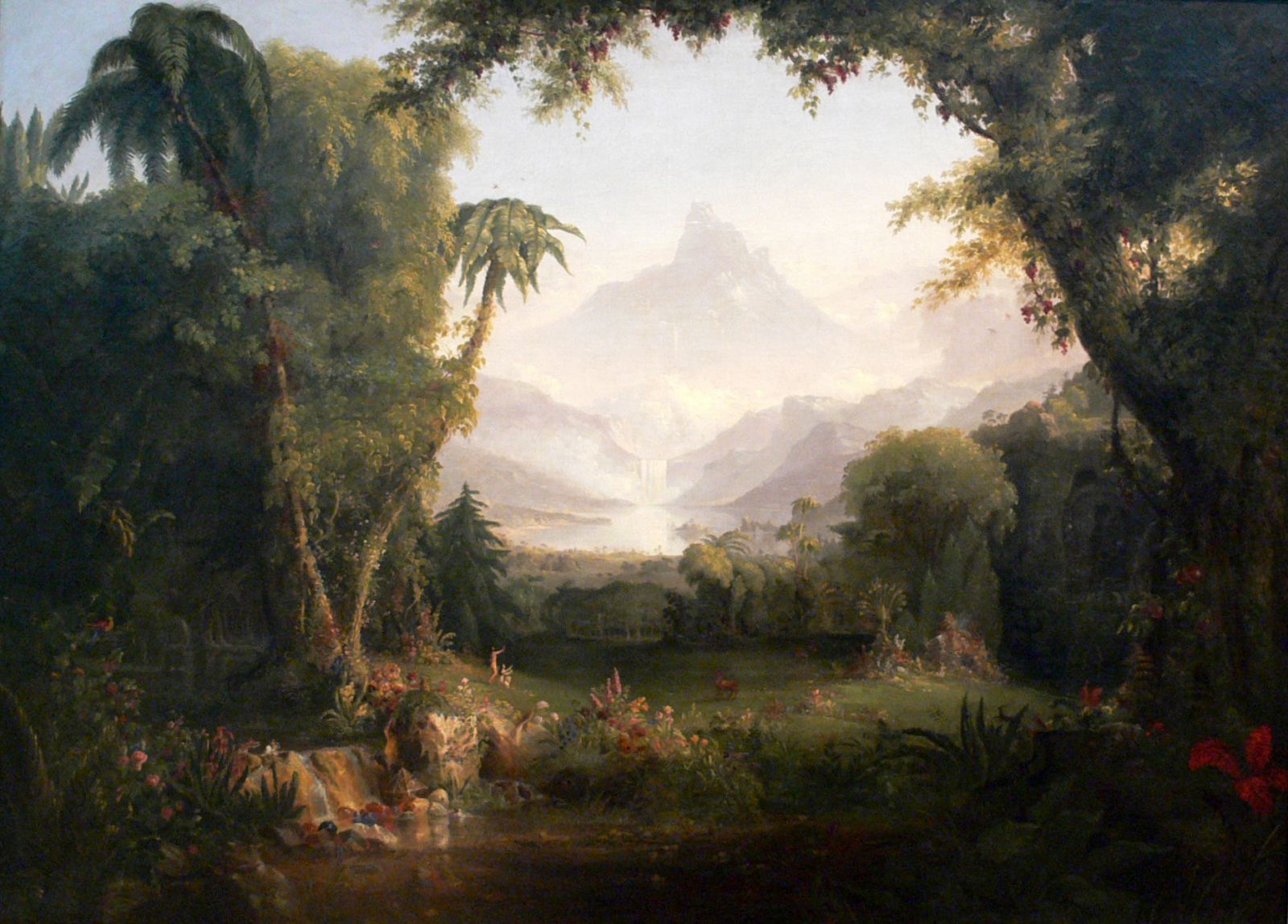
This Sunday I am preaching on the first story in the Bible, Genesis 2 and 3. The story begins with God creating man from the mud of the earth and breathing into adam/man the breath of life. The story has word-play because the Hebrew word for man ‘adam’ sounds like the Hebrew word for ground or dirt is ‘adamah.’ Then the Lord God places the man in a garden in Eden that has “every tree that is pleasant to the sight and good for food” (Genesis 2:8).

The Garden of Eden has fascinated humanity. My initial impression was of a small compact garden, sort of like a resort on the edge of a river. At the center of the garden is the tree of the knowledge of good and evil, with the crafty serpent nearby. I tend to push the story forward to the temptation scene in chapter three, where both the woman and the man disobey and rebel against God.

But that tight image has been challenged by the painter Thomas Cole and his painting called “The Garden of Eden” (1828).

Philip Tallon, a Methodist seminary professor, writes about the painting,

As painted by Cole, the garden seems to encompass the whole earth. It is an infinite playground in which Adam and Eve are dwarfed by rivers, mountains, trees, and even sparkling gems that erupt from the earth. As Cole himself wrote in an 1828 letter about the painting, “I have endeavored to conceive a happy spot where all the beautiful objects of nature were concentered.” This conveys first to me the magnificent, plurality of creation: a Christmas stocking so overflowing with treats that we will never get to the bottom.

The abundance and wonder of the God’s creation can be seen in the scripture. It is essential for understanding the story to rest a moment in the awesome beauty of God’s gift to humanity before moving to the fateful confrontation with the serpent. The wonder of that creation remains all around us, if we have eyes to see.

Lord Jesus, thank you for the beauty of your creation.

Middle Laps

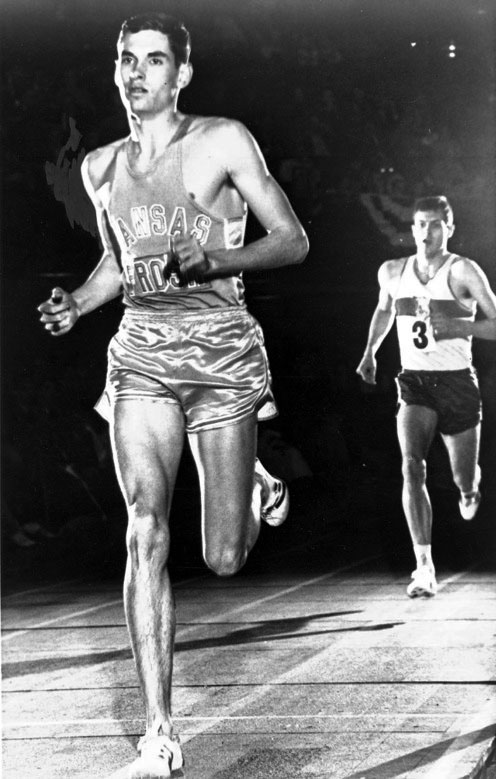
Jim Ryun Running at Kansas

Jim Ryun Running at Kansas

In college, I ran track. I was not very fast, but I grew up watching Jim Ryun run a sub-4 minute mile while in high school. I dreamed of being such a miler, clicking off each of the four laps on the track in 60 seconds. In reality, I rarely could run one lap under 70 seconds, let alone four in a row. Still I competed each year, yearning to improve.

One thing track taught me was the value of persistence, especially in the middle laps. The first and last laps of a mile race have their own magic which can pull the runner along. The first lap has the quick start and the pack jockeying for position. The gun lap has the pull of the finish line and the knowledge that the race will soon be completed.

It is the second and especially the third lap that always challenged me mentally and physically. The pain of running at race pace had become reality, but the finish seemed too far away to contemplate. If I focused on the pain, I rarely did well. If I focused on staying calm, relaxed, and fluid, I could maintain my semi-fast pace. By my senior year I knew the challenge I faced each time I approached the start line.

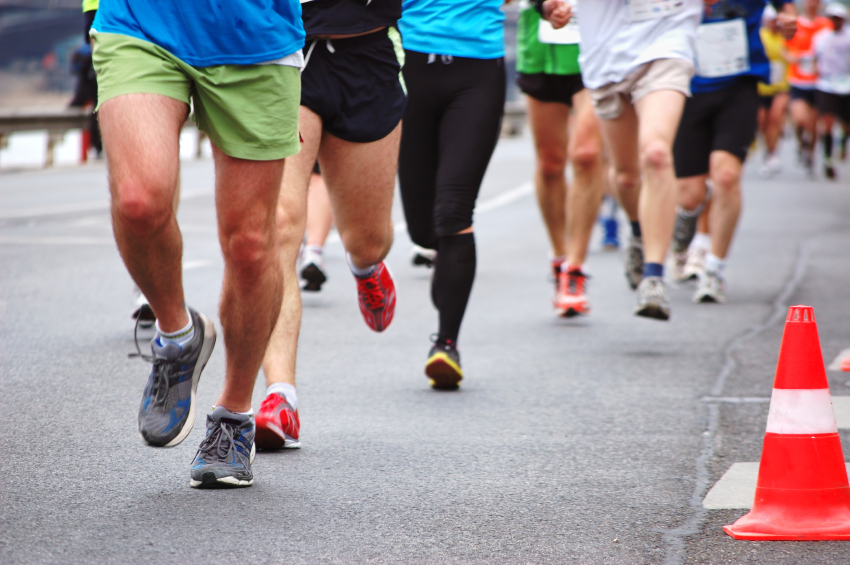
I think of this as I prepare to run Twin Cities Marathon on October 7. My training is now in the middle laps; my last long run of 16 miles is still ten days away and I have a few more track sessions to complete. Nearly every day I am up early to run so as to beat the late summer heat. My mind and spirit has begun to tire from the long training cycle and many miles. Still I have been here before and I recognize that I must be patient and persevere. After my last long training run, I will begin a three-week taper of reduced miles so that my body can adequately rest and recover for the race.

The Christian life also requires persistence and perseverance. The joy of the Lord is our strength (Nehemiah 8:10), yet not every day will be happy. Life can be difficult and challenging; it can feel like we are in the middle laps of a very long race. Our prayers may seem to circle around our heads, never reaching God’s heavenly ear. Saint Paul reminds us that we are to keep on praying, keep on believing and trusting, even when the days seem long.

Rejoice in hope, be patient in suffering, persevere in prayer (Romans 12:12)

My fall marathon will soon come and then be over. Yet our life in Christ will carry on for many more laps. Christ is not simply at the start or the finish, but running beside us each lap of the race, helping us to stay patient and calm. Thanks be to God.

Lord Jesus, open the eyes of my heart to see you each day.

Doing Something New

One of my favorite quotes is from Ken Blanchard, a business consultant. “Unless you feel awkward doing something new, you are NOT doing something new.”

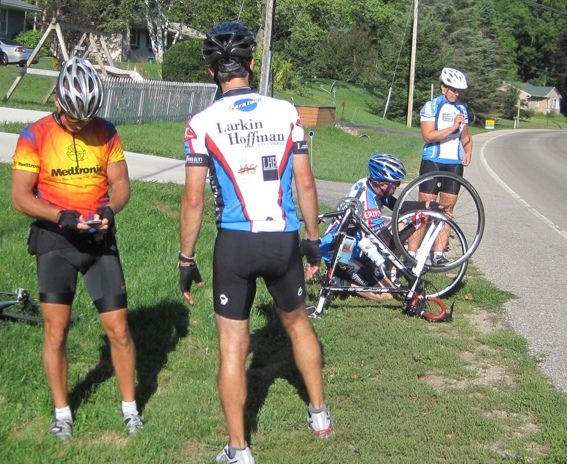
Awkward Second Change

I remembered it as I joined six friends in August on a long bike ride near La Crosse WI and learned that I was one of the least experienced cyclists in the group. In the first seven miles I had a flat and I felt awkward as I tried to change the tire as quickly as possible.  In my haste I only pinched or damaged two new tubes and so felt a triple embarrassment as I changed each new flat.  I seriously thought about dropping out and riding/walking back to the motel.

Yet the marvelous thing about my cycling buddies is that they graciously responded to my awkwardness with understanding and care. No one abandoned me. No one spurned me. The helped me in part because they each had been in the same awkward position on other rides. They had experienced flat tires and awkward changes.

This fall I want to encourage you to try something new. It might be a new volunteer opportunity or new social group.  It might be a small group Bible Study or worship experience.  You may feel a bit awkward starting out, but unless you try something new you will never fully appreciate the wonder of discovery.

At the same time, if you are in an established group and someone new arrives, practice  hospitality and be attentive to their needs.   Jesus taught this simple rule, “In everything, do to others as you would have them do to you” (Matt. 7:12). This is our encouragement to see the newcomer as someone to welcome and to guide as we remember our own first arrival in the group.  The newcomer may feel awkward the first time they run with a group or open a Bible or serve on a task force or change a flat.   Yet we can help them move out of the awkward, beginning stage.

I am so glad I was able to swallow my pride and continued the ride.  We saw some spectacular scenery and shared some major climbs.   As we finished our sixty-plus miles, we all marveled at what a wonderful day it was.  And no one mentioned flat tires.

Lord Jesus, challenge me again to discover something new in life.

Wilderness Journey – Day Four

Last Night at Tileston Meadow Campsite

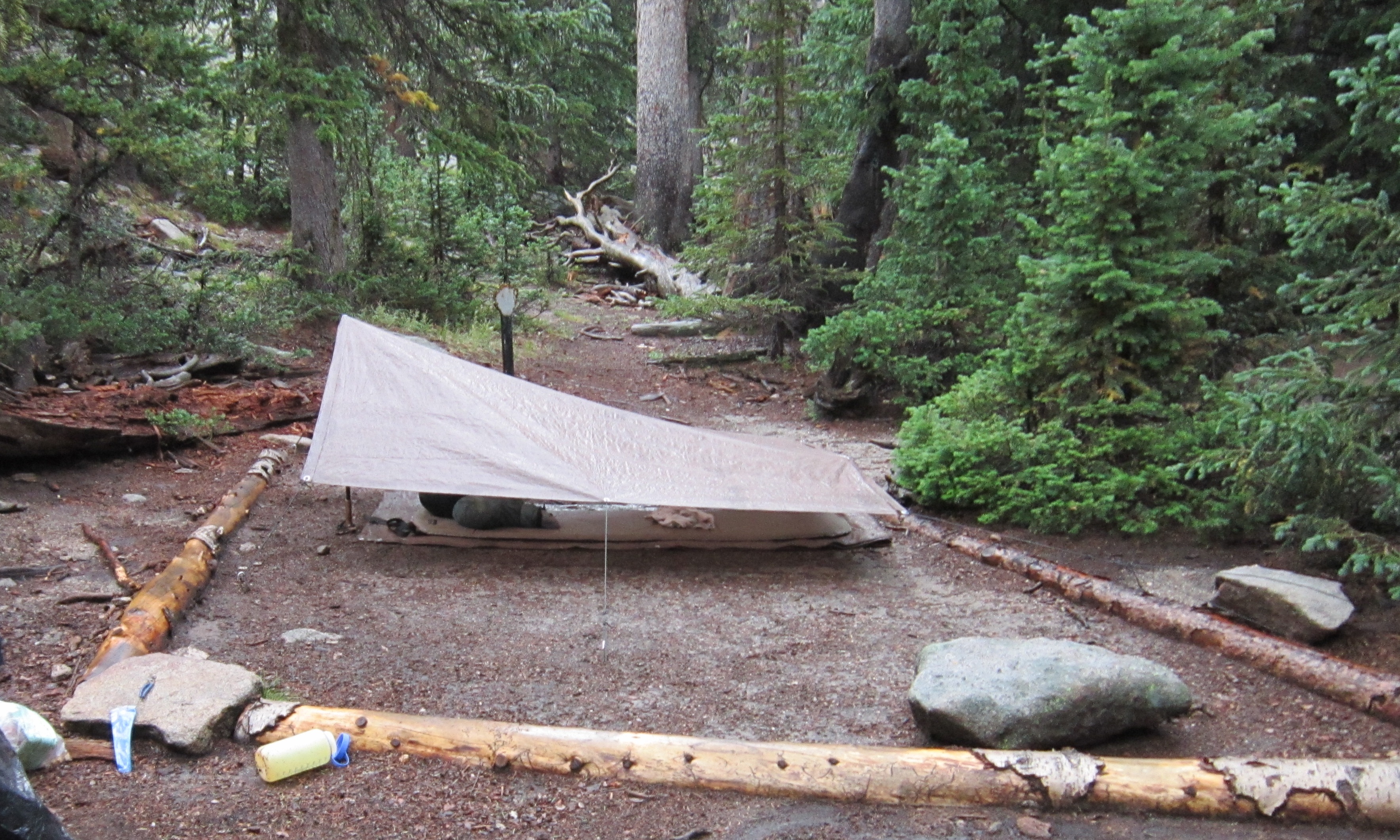
My last night on the trail involved one more thunderstorm. This time it was not the lightning that disturbed me, but the rain itself. In the alpine meadow on Mummy Mountain, the vegetation there absorbed most of the water. Here at the designated campsite, the tent pad was simply flat dirt. The rain splattered from the tarp to the ground to my ground cloth and sleeping pad. After a few minutes my ground tarp was splattered with muddy water and debris. I had pitched my tarp too high with too much space between the edge of the tarp and the ground. After the evening storm passed, I lowered the tarp.

I also questioned the wisdom of concentrating all backpackers to a few locations. I realize that many backpackers do not practice “leave-no-trace” camping, and that the national parks are trying to keep the back country as wild and pristine as possible. But the designated campsites create sites devoid of vegetation and wonder.

I prefer to seek my own stealth campsite off the beaten trail where I can create a wonderful sleep space for one night. In the morning I work hard to clear any trace of my having been there. Fortunately a hiker can use such techniques on the Pacific Crest Trail where I plan to hike a section next summer.

My last morning on the trail was uneventful. The sky was partly sunny and my body and mind were ready to leave. It was not that I was tired of the trail, but that I had set my expectations for four days and was ready to go.

My path on the Black Canyon trail was consistently downhill and I gobbled up the miles. My feet and legs were stronger now and I was thankful for my decision to use trail running shoes instead of my heavier backpacking boots. Only in the boulder fields on Mummy Mountain did I have any doubts regarding this decision. My feet seemed light and quick as I strode down the trail and I reflected on a sermon I once heard from Richard Mouw, president of Fuller Seminary. He preached on Isaiah 52:7.

How beautiful upon the mountains are the feet of the messenger who announces peace, who brings good news, who announces salvation, who says to Zion, “Your God reigns.”

He observed that most people would focus on the words or mouth of the messenger, but the text reflects on the feet. His observation is that the words or mouth of the messenger have no significance unless the messenger first arrives at his or her destination. Messengers need to use their feet and go.

As I hiked out, I was thankful for the opportunity to be on trail, but also thankful for the opportunity to go, live and serve among the people of Resurrection Lutheran Church. My feet and I were ready to continue the mission of announcing, “Your God reigns!”

Lord Jesus, show me how to announce that your kingdom comes.

Wilderness Journey – Day Three – Afternoon

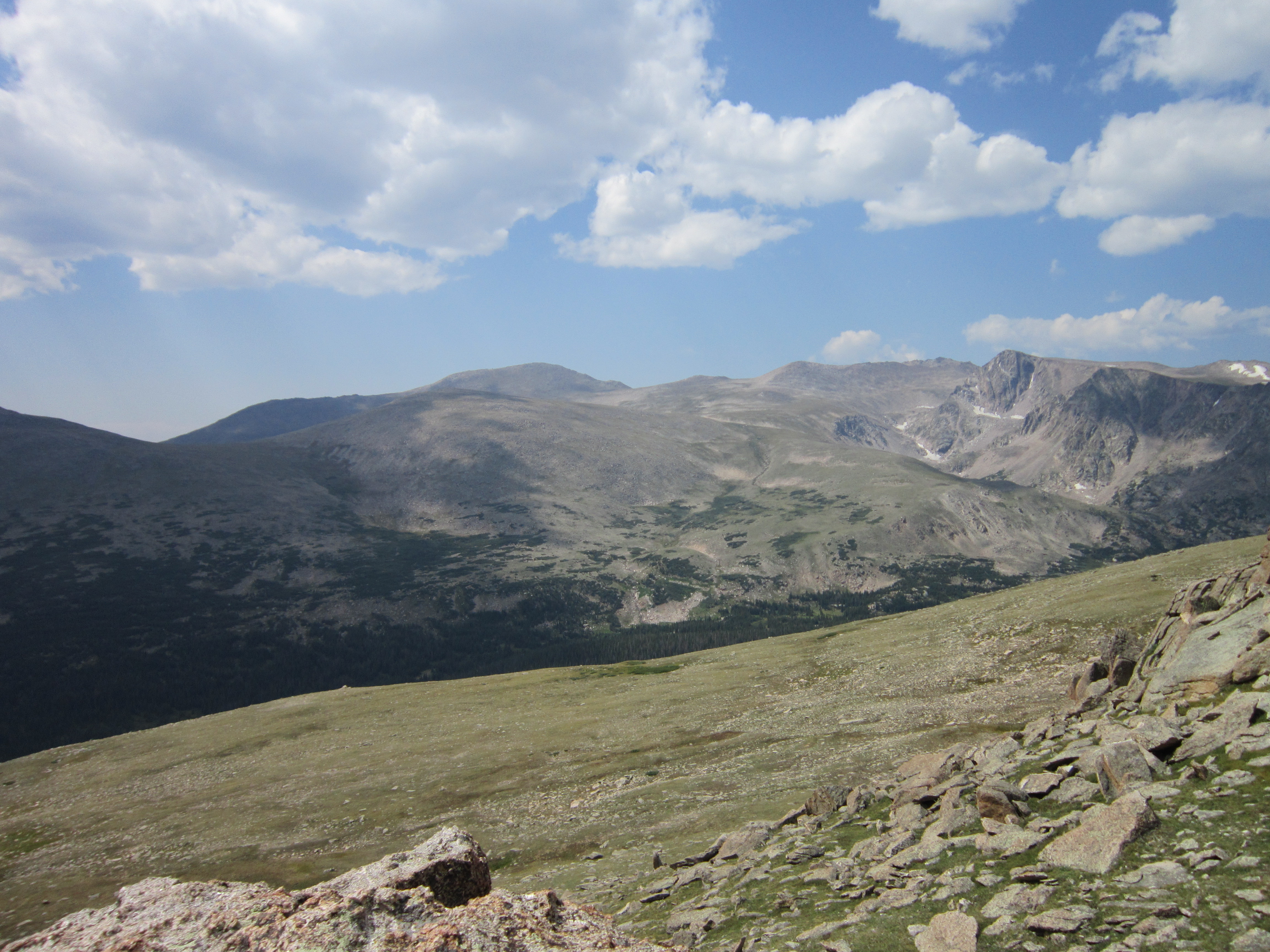
As I continued my journey around Mummy Mountain I remained well above timberline.  I could see far down the West Creek basin, even spotting the place on a distant ridge where I had lunched two days before.
Gathering Storm Clouds

I also spotted a gathering thunderstorm to the west and I hurried my pace.

About 1:00 pm I ran into my first real challenge. The slope transitioned from a meadow to gigantic boulder field. I scrambled between boulders, always seeking a safe, secure route. This took time and energy. I slipped a few times. I also heard cracks of thunder in the distant and  felt a few  raindrops. I dropped lower on the slope, hoping to find fewer boulders. Dark clouds moved closer.  I started looking for a place to wait out the approaching storm.
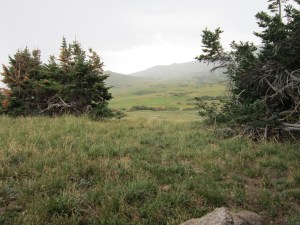
Krummholz in West Creek Basin

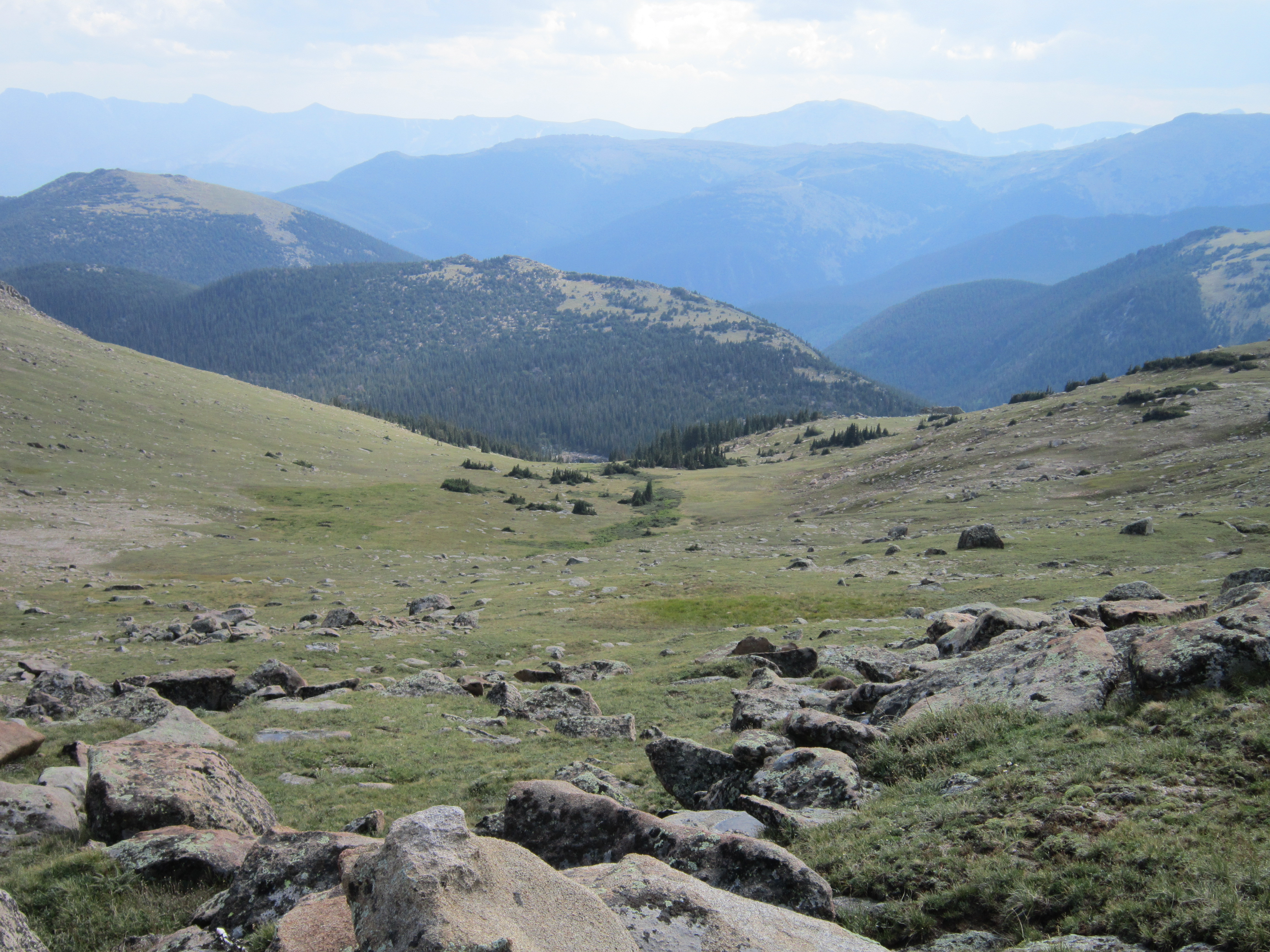
I finally reached the open valley below the final ridge. It was free of boulder fields and had several small krummholz of alpine trees. These small dense stands of trees could give me some protection. As I looked over this isolated valley, I reveled at how beautiful it was, especially in the storm’s twilight.

My revelry was broken by the first splattering of large rain drops. I had to find shelter fast.

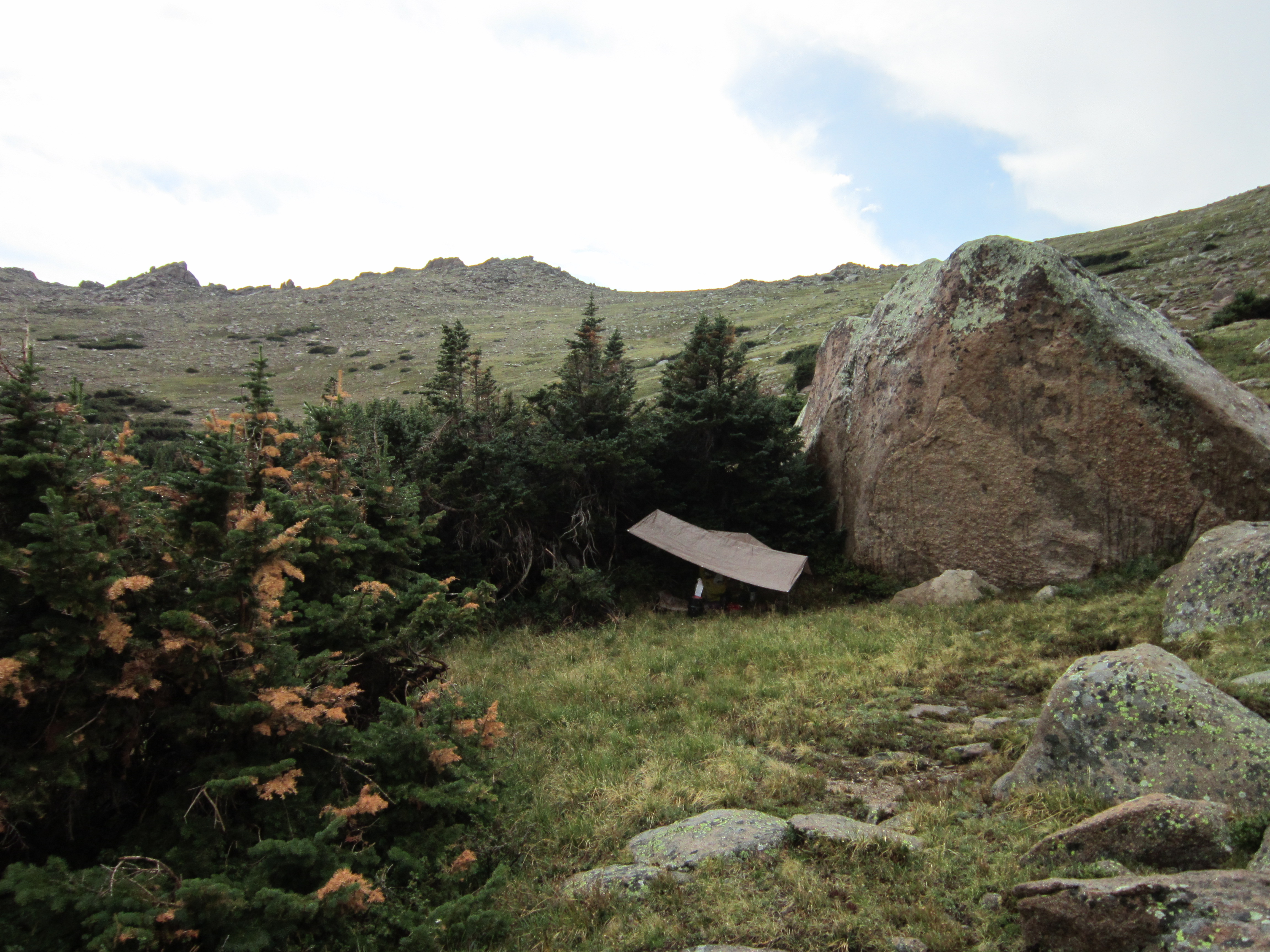
The thunder was louder and closer now. I headed toward a large boulder in the valley, close to a krummholz. Even though the boulder offered some protection, I realize the storm may last awhile and I needed better shelter. My problem was that I had not packed my backpack with such a need in mine. My trusty rain-tarp was at the bottom of my bag. I had to pull everything out into the rain to reach it. However, my experience of pitching a rain-tarp in wet Washington state proved helpful. In less than five minutes the rain tarp was set and my gear and I safely under it.
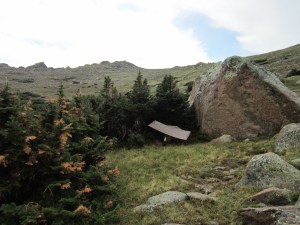
Shelter from the Storm

For the next two hours it rained, hailed, thundered and boomed. Counting the seconds between flash and thunder, the closest strike was less than a mile away. Fortunately, I was off the exposed ridge line, and away from the largest trees and boulders. I changed out of my wet clothes, fixed a cup of hot chocolate and waited. As the storm continued I wondered if I might have to spend the night here.

Just as suddenly as it started, the storm ended. The sun broke through the clouds and I again marveled at the beauty of this rain-splashed alpine meadow. I repacked my gear, this time keeping my wet rain-tarp tied to the outside of my pack for quick access.
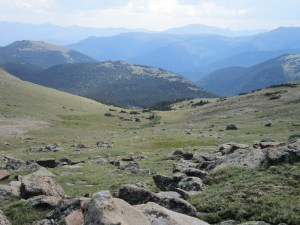
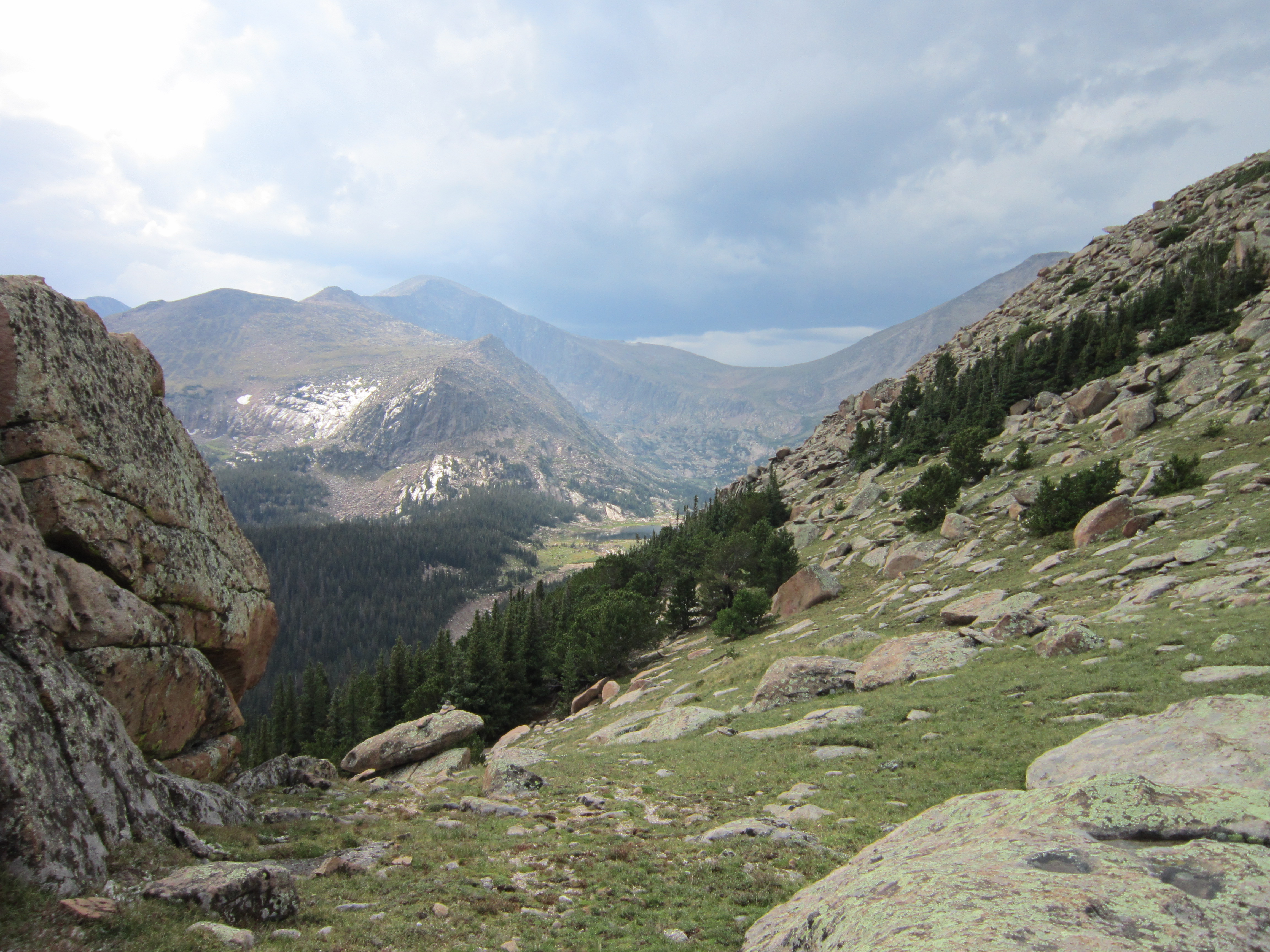
Looking south from the last Mummy Mountain ridgeI reached the final ridge shortly after 4:00 pm and crossed from the West Creek Basin into the Black Canyon. I quickly worked my way off the ridge and towards the forest below.

As I climbed down the ridge, I kept thinking about the thunder-storm and how it had humbled me.   I was not the master of this domain, but a simple wilderness wanderer.  The Israelites at Mount Sinai encountered God in a thunderstorm.

    On the third day at daybreak, there were loud claps of thunder, flashes of lightning, a thick cloud covering the mountain, and an ear-piercing trumpet blast. Everyone in the camp shuddered in fear. Moses led the people out of the camp to meet God. They stood at attention at the base of the mountain. Exodus 19:16-17

I reflected, “God is reminding me once again who is LORD!”

About halfway down, I spotted two rock cairns (small piles of stones) used to mark a way trail. Finally I had reached the improvised trail that leads directly from Black Canyon trail to Mummy Mountain. I followed it down, losing it a couple of times due to poor markings and tired legs and mind. Eventually I connected to the main Black Canyon trail and reached my campsite at Tileston Meadows about 5:15 pm, tired, but safe.

Lord Jesus, Let me never forget that you are LORD.

Wilderness Journey – Day Three – Morning

North Fork of the Big Thompson River

At dawn’s first light, I was up and on the last portion of National Park trail. I passed Lost Lake and quickly found a place to wade the North Fork of Big Thompson River (more like little Thompson creek at this altitude).

From here on, I would be off-trail, but I was above timberline and the slope was not too steep. I took my time, enjoying the unfolding view and relishing the challenge of finding my own route (which was no challenge at this point.)

By 10:00 I was on the wet plateau between Mt Dunraven and Mummy Mountain and I stopped for an early lunch.

Looking south towards Mummy Mountain

At this point I debated whether to climb Mummy Mountain, 13425 feet in elevation. It would delay me from climbing off the ridge and thus expose me to possible storms. However I figured I may never again have the opportunity to climb the peak and, like John Muir, I hungered for some mountain adventure. Just below the peak, at about 12,300 elevation, I dropped my pack near a large boulder and started hiking straight up.

Can you spot my pack?

As I climbed, I kept looking back to see where my pack was. I was glad I did, since after a while every boulder looked like another and I could have easily lost my pack.

I took my time, stopping to rest several times. The climb was challenging and I began to wonder if I might be one of the first people to climb Mummy Mountain this summer because of its isolation. Perhaps there would be climber’s log at the summit that would answer my question.

Looking West from Mummy Peak at Crystal Lake and Fairchild Mountain

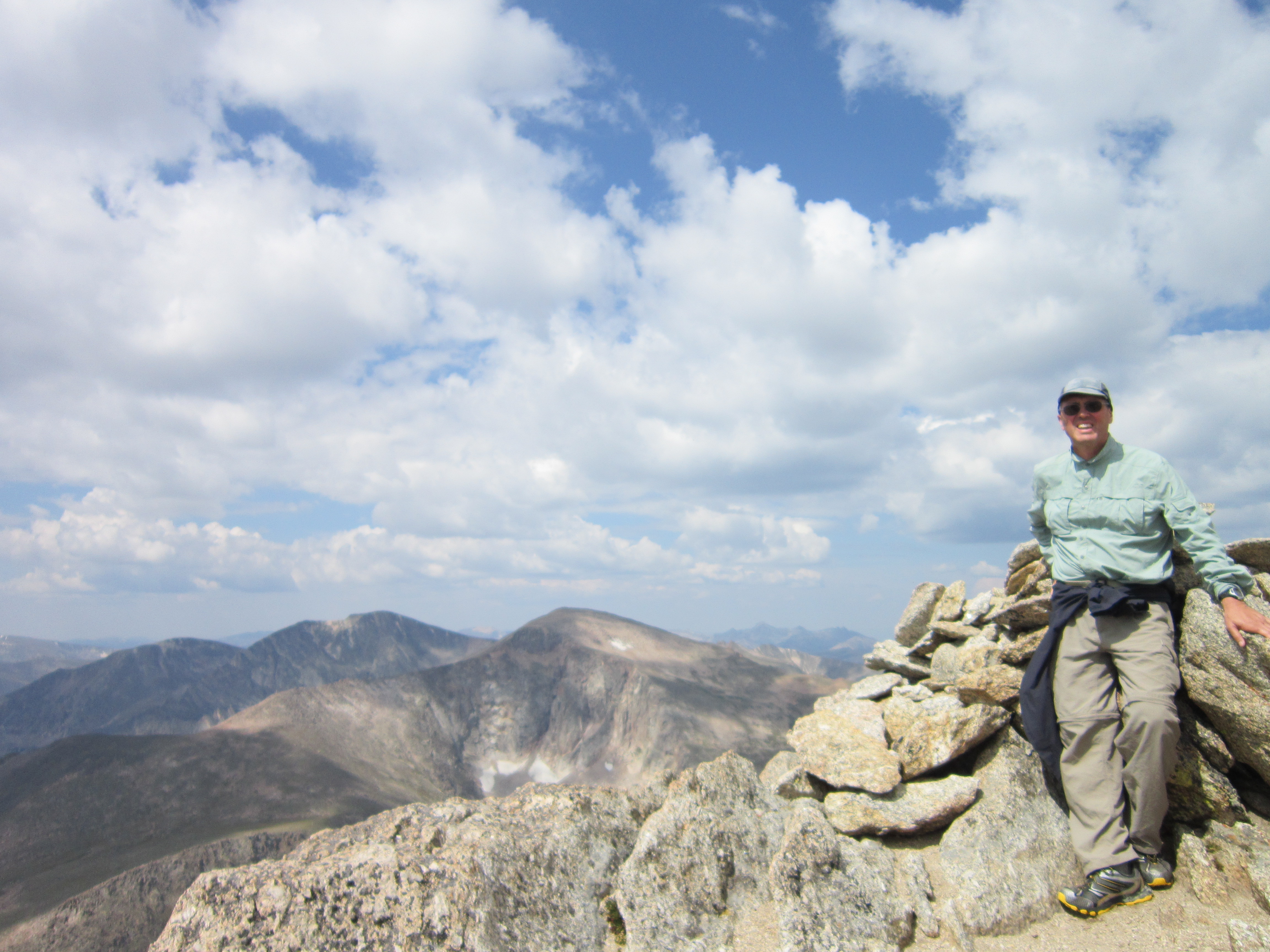
At 11:10 I reached the summit. The peak has a spectacular view to the south and west. I could see Lawn Lake, Crystal Lake, the Saddle, Fairchild Mountain and even Ypsilon Mountain. I found the climber’s log in a plastic plumber’s pipe and discovered that I was the fourth climber that week! I realized that there must be an established route (directly up the ridgeline from the southeast?) and that I might be able to use a portion of it later on.

My pack remained a thousand feet below me so I decided to continue my original plan: to contour around Mummy Mountain, remaining in the West Creek basin until I came to the ridge above Tileston Meadow’s. The ridge was at 11,750 feet so I figured I could gradually lose some elevation as I hiked around the mountain side. I scrambled back to my pack and continued on.

The terrain remained mostly meadow with many large boulders. Occasionally I encountered large clumps of boulders that I had to go over or around. I generally chose to go around, dropping to a lower elevation.

Contemplating which path to take

As I picked my way along the slope, I reflected on what a seminary professor once regarding Psalm 119:105, Your word is a lamp to my feet and a light to my path.   He said, “Remember that the lamps of ancient Israel where not blazing maglite flashlights by which you can see the path for hundreds of feet.  Rather they were flickering oil lamps which gave you visibility of only a few feet.  But that is all you need.  The text reminds us that God does not reveal the whole path at once, but just enough to show us the way.”

As I worked my way around Mummy Mountain, I thanked the Lord for each small section of path that I could see.

Lord Jesus, show us our path for today.

Next: a stormy afternoon.

Wilderness Journey – Day Two

I awoke early, packed my backpack and headed up the trail. The trail climbed steadily as it followed the North Fork of the Big Thompson River. Breaks in the forest gave me opportunity to scout the high country near Mt. Dunraven.

I anticipated an easy day of backpacking to my next campsite, Lost Meadows. This was only a mile below Lost Lake, a high alpine tarn that is the end of the maintained trail. It was only five miles between campsites so I decided to take a side trip.

Looking toward Mummy Mountain from Stormy Peaks South campsite.

About halfway between Silvanmere Campsite and Lost Meadow was a spur trail that climbed the north side of the canyon to Stormy Peaks Pass. I left my backpack at the trail junction and started the 2000 foot climb to the pass with just lunch and water. The trail started out a series of switchbacks that quickly climbed above timberline. Here I encountered a flat shelf in the ridge where the National Park located the Stormy Peaks South backcountry campsite. It certainly had a spectacular view of the upper Big Thompson canyon, Rowe Peak and Mt. Dunraven.

The trail continued an additional 1.5 miles to pass. As I climbed towards the ridge line, I had to stop several times to scout how the trail proceeded. There was some thick growth of evergreen bushes and small trees where the trail seemed to disappear. I would be merrily hiking along and suddenly there was no trail beneath my feet, just alpine meadow. Now the meadow was fine for walking and I could find my own way, but the trail used the most efficient means to climb the ridge. It became a sort of game to find the trail in the midst of meadow and brush.

I was reminded of a conversation Jesus had with his disciples. In John 14, Jesus is preparing them for his coming crucifixion. He says to them, “I go to prepare a place for you. . ., that where I am you may be also. And you know the way to the place where I am going.”

Thomas responded, “Lord, we do not know where you are going. How can we know the way?”

Jesus said, “I am the way, the truth and life.”

Jesus is the way, the trail, that we seek to guide us through life. But it can be so easy to slip “off trail”, to think that I know the way on my own and don’t need Jesus. As I searched for the trail that morning, I reflected on who is my true trail guide.

Looking south towards Mummy Mountain from Stormy Peaks Pass

I finally reached a small peak just south of the pass. I knew that the next day, I would face the most difficult part of my backpack, climbing up over Mummy Mountain Ridge and down into the Black Canyon Trail. From the overlook near Stormy Peaks Pass, I could see the first half of my next day’s climb. It looked challenging but doable, so I hiked back down to my backpack and continued on to Lost Meadow campsite.

As I settled in for the night, I knew that the next morning I would be off trail for about eight miles, a serious challenge for me.  But I also knew that besides my map and compass, I had a good trail guide walking beside me, giving me encouragement, hope and wisdom. My simple prayer was, “Jesus, stay close and keep me on your path.”

Lord Jesus, you are the way.  Keep me close to your path for my life.

Wilderness Journey – Day One

As a young boy, my favorite playground was the large tract of woods behind my house. Port Angeles was a lumber town, with five mills busy turning Douglas fir into paper and lumber. My neighbors were loggers who cut the tress or drivers who transported the huge logs to the mills. The huge forests of the Olympic Peninsula were a magnet for my imagination. Only later did I see the devastation that clear-cut logging created.

North Boundary Trail in Rocky Mountain National Park

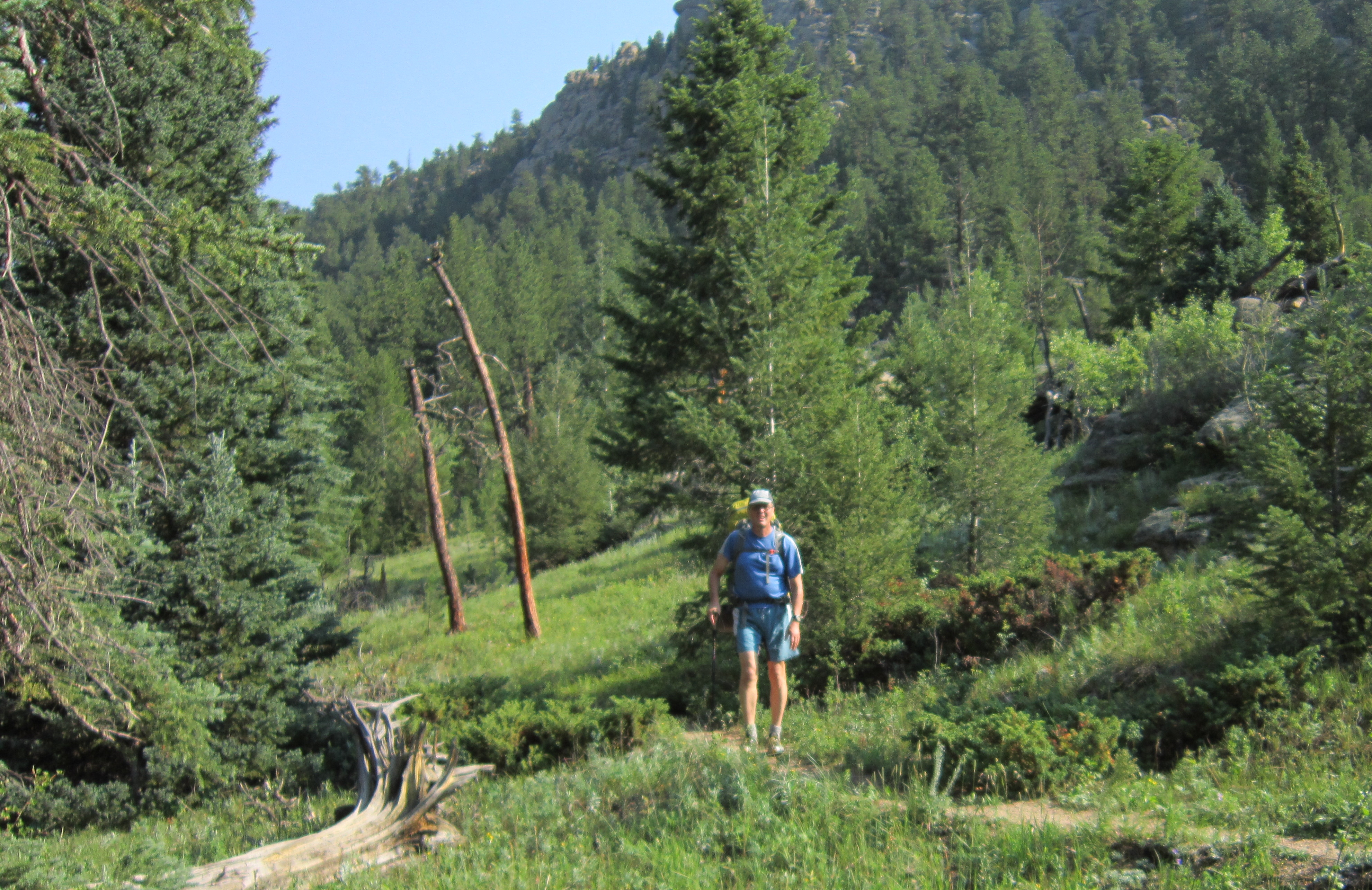
I remembered my childhood fascination with the forest as I started my four-day solo backpacking trip in Rocky Mountain National Park last week. Since I wanted to do a loop route, I started from Cow Creek trailhead and headed north along the North Boundary Trail. I normally see the mountain forests as a transition zone that I quickly want to ascend so as to reach the open alpine areas with their vast vistas. For me, the forest was only a prelude to the main event.

Yet I knew that my first day would remain in the forest. The North Boundary Trail ascends three ridges, each time descending to a mountain stream. The constant up and down challenged both my legs and my lungs. There were a few open meadows where one could see the higher peaks to the west, but mostly it was the forest that surround me. I yearned for the high alpine country ahead.

Crossing West Creek along North Boundary Trail

During my trip I was reading Baptized into Wilderness: A Christian Perspective on John Muir by Richard Cartwright Austin. In the book, Austin emphasizes Muir sensuous emersion into the wilderness. Muir became present to the trees, birds, insects, life of American wilderness, experiencing God in the midst of all of it.

Muir suggested that the path to the Spirit is not away from the world, but deeper into the world, deeper into communion with nature and with the primary forces where is Spirit is lightly clothed. Probing the simplest elements to discover their full character and vitality, he developed an incarnational understanding of God’s personality incarnate in Jesus (p. 25).

God’s presence was all around me, in the beauty of the tall lodge pines and the tiniest of mushrooms. Could I simply open my heart and mind to experience the wonder and beauty of God’s creation?

Let the heavens be glad, and let the earth rejoice; let the sea roar, and all that fills it; 12 let the field exult, and everything in it. Then shall all the trees of the forest sing for joy before the Lord; for he is coming, for he is coming to judge the earth. He will judge the world with righteousness, and the peoples with his truth. Psalm 96:11-13

Lord Jesus, open my heart to see your beauty all around me.