Category Archives: Body Mind Spirit

Papa in Heaven

Brother David and Grandnephew Troy

I saw this picture of my brother with his first grandchild and proud PAPA jumped to mind.  It seemed to fit with last night’s confirmation class on the Lord’s Prayer.   The prayer’s introduction, Our Father in heaven, became special when I learned that Jesus used the word “abba” for father.  It was a term of endearment, more like “daddy” or “papa.”  “Father” seems a bit stiff.  

The power of the Abba prayer came home to me in a strange way when I was in college.  I was home for Christmas break and wanted to get a Christmas gift for the family.  I had recently been introduced to C. S. Lewis and thought that a box set of The Chronicles of Narnia would be a good gift, but I had no money.   I decided to pray about it and ask God to help.  As I entered the Christian bookstore, I was asking God to provide me the money so that I could buy the books.  I picked out the books, got in line for the cash register, waiting, hoping for some miracle.  How was God going to intervene?  A stranger noticing my need, cash on the floor?   But as I waited in line, nothing seemed to happen.  When I finally reached the register, I stepped out of line and put the books back.   I was deeply disappointed that God had not helped me.

The Christian bookstore was directly across from the offices were my dad worked for a local newspaper.   I walked across the street to see if he was there.   He was and he asked me how I was doing.  I am not sure now exactly how the conversation went, but somehow I asked for a few dollars and he gave me enough to buy the books.   Abba had provided after all, just not the way I expected.

The lesson I learned that day was that prayer is not magic, but a relationship.  There are Christians who have their prayers answered in miraculous, amazing ways.  I tend not to be one of them.  Instead, God uses the means around me to provide for my daily bread and to save me from the time of trial.  Papa in Heaven is at work through my brothers and sister who live here on earth.  And that also means that at times I may be God’s answer to someone else’s prayer.  And I thank God that I am one of His beloved children who can call him Papa.

How have you experienced Papa‘s answer to prayer?

Bible Favorites

What are you?

Recently I asked members of Resurrection Lutheran to write brief devotionals based on their favorite Bible verse.  These devotionals will be assembled into a booklet to used during Lent by members and friends of the congregation.  I am excited with how the writers have engaged Scripture and its interplay with their lives.  Each person has a unique perspective, reflection, or idea that opens up a verse or story in a new way.

When I was growing up, the Bible was a storybook filled with fascinating characters and plots.  It was exciting, lively and challenging.  As a teenager I sometimes went down strange tangents, looking for new interpretations that would catch my fancy.  I remember reading the “wheel within a wheel” passage in Ezekiel 1 and wondering if it was describing a spaceship!    The wonder and mystery of the Bible was alluring to me.   

 Then I went off to college and I was challenged to see the historical context of the authors, to learn the Biblical languages of Hebrew and Greek, and to understand the literary motifs and forms within the Bible.  At times I was fascinated with this knowledge, gaining tremendous insight into this ancient collection of books, poems and laws. To read Genesis 1 and 2 in light of the Babylonian creation myths brought me new wisdom and excitement.   But I also was disturbed by this avenue of learning because it seemed to make the Bible into an artifact to be dissected and classified.  The Bible lost some of it awe and wonder.

I know that some of my classmates lost their faith during this time of critical examination.  I waffled from time-to-time in my own grasp of  truth and faith.   Yet the sheer power of God’s glorious grace continued to shine through to me.  God’s love was evident in the midst of the history, language and myth of the scripture.   I remember hearing a quote from the great Swiss theologian, Karl Barth.   When asked how one could best summarize the Bible, he said, “Jesus loves me, this I know, for the Bible tells me so.”   

I am excited to see how the Lenten devotional will touch and influence the culture of Resurrection.  We are all called to engage scripture, to listen for God’s voice in God’s Word.  

How or when has a Bible story or verse impacted your life?

Still Light

After posting about Lent the past two days, I had to remind myself that it is still the season of Epiphany, the season of light in the midst of darkness.  Epiphany began on January 6th with the light of the Bethlehem star leading the magi to baby Jesus (Matthew 2) and it ends Sunday, March 6, with the story of  the Transfiguration when the glory of Jesus is revealed to the disciples in a blaze of light.  And I certainly feel the need for light this winter.

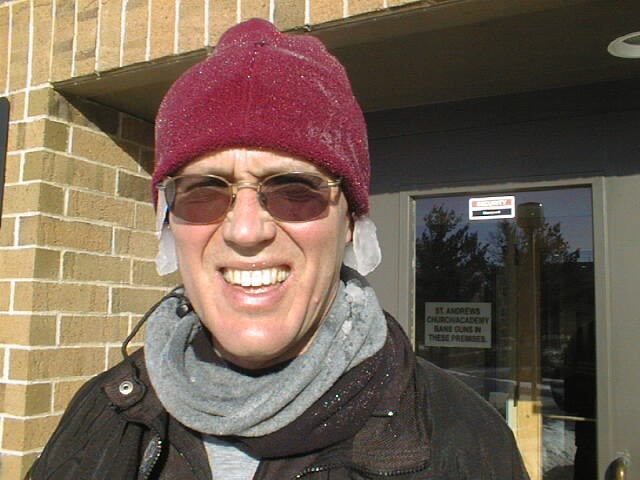
Having grown up in Washington state, I had to learn to adjust to Minnesota winters.  In the learning process, I discovered that for me the severity was not as difficult as the duration.  I could be kind of macho about big storms or severe cold.  I remember running with some friends in -15 below temperature, basically so we could brag to other runners about our devotion (or our foolishness?).  But this winter seems to have started early and just settled

Foolish Runner or "I can't hear you due to the icicles in my ears"

in for a long stay.  And though we had a few days of teasing warmth last week, I know that winter could easily stretch into late March.   I can wish or complain or rant or blog, but the climate will not relinquish its grip based on my reaction to it.

So I come back to the season of light, Epiphany, and the glimpses of God’s glory.  One glimpse is that now, as I drive home, I see the sunset.  And what glorious sunsets I have witnessed. Beauty is one way God reveals God’s self, even in the midst of a long winter.  The sun light on freshly fallen snow has such an intensity that I have to squint or wear sunglasses. Yet not every day has that intensity.  Light can brilliant or muted, just as God’s power and presence can be for us.  I recently heard Bishop Rogness preach that God’s light permeates all of life, even when we think everything is dark.  We tend to seek the spectacular fireworks of glory, yet God is often in the flickering candle.  The light of Jesus shines in every season, even the Minnesota winter.

When or how has God’s light shone for you?

Slow Lent Movement: Part Two

Slow down for Lent

Yesterday I introduced Bishop Payne’s concept of a Slow Lent.   Here are five slow spiritual disciplines that complement traditional Lenten disciplines.

1. Traditional: repentance 
    Slow: speak less, listen more.

In our hurried culture, we often are so quick to speak, to get our words out, that we rarely take the time to listen to what others say, especially those that we disagree with.  We rush to judgment when we need to listen and possibly to change the direction of our thinking, planning, and acting.

2. Traditional: forgiveness
   Slow: let go of one “should.”    

Many of us carry various kinds of “ought’s or should’s” that overload our schedule. We need to “forgive” ourselves.   For example, as a new pastor, I feel I should be involved in different local community activities.  One piece of wisdom I received recently is that a new pastor should not be involved in local community activities during the first year so that he or she can fully enter into the life of the congregation.   So I have given up that “should” even before Lent starts.

3. Traditional: catechesis (teaching)
    Slow: re-learn one basic of the faith

Rather than focusing on the newest spiritual discipline, simply re-focus on some basic spiritual discipline.  This year at Resurrection Lutheran, we will be re-learning the Lord’s Prayer and its meaning for prayer and life.

4. Traditional: fasting
    Slow: choose one way to ‘unplug’

For some Christians, Lent means giving something up so that one can better focus on God.  The usual items are chocolate, desert, alcohol, or meat.   Bishop Payne suggested that perhaps we “unplug” from the internet or turn off our smartphones or television.  We might not be able to do it 24/7, but we might choose to turn it off every evening or every Saturday.  Of course, the purpose is to open our time and our lives in a fresh way to God.

5. Traditional: almsgiving
     Slow: simplify

Certainly we need to be as gracious as our God and give to people in need.   Lent is a great time to practice such giving.  Yet our culture is so focused on the accumulation of things, perhaps we can shift our attention from accumulating to letting go.  My uncle Jerry lived for several years during his retirement in an RV.  Whenever he considered buying something, he had to consider what he would give away to make space for the new.  It made him think twice before buying.

Which discipline might help you slow down this Lent?

The Slow Lent Movement

Slow Lent Movement

This morning I attended a ministerium meeting for Lutheran pastors from the Saint Paul and Minneapolis Area Synods.  After worship, our presenter, Bishop Margaret G. Payne of the New England Synod, spoke on her passion for a Slow Lent Movement.  

Inspired by the Slow Food movement which calls us to step away from fast food and re-learn the values of thoughtful shopping, local foods, time spent in preparation and even more time spent in sharing food slowly with family and friends. The Slow Lent Movement has similar goal. Some of her questions are

  • How does our culture’s addiction to hurry stand in the way of spiritual growth?
  • Do we have too much ‘fast worship?’
  • How could this Lenten season provide an antidote to the weariness of too much to do at the same time that it offers strategies for recovery?

She spoke on how pastors have bought into the seduction of our culture’s three A’s: Accomplishment, Adrenalin, and Affirmation.   As pastors we think our worth is based on how much we accomplish in our congregations and we enjoy the adrenalin rush that comes from having much to do and being needed by many people.   And we relish the public affirmation that often comes from having our hands in many programs and ministries.   I found myself nodding my head several time, recognizing my own self-delusions being exposed by her words. 

But I don’t think her words are limited to pastors.  In spite our  professed trust in God’s grace, so many of us who are Christians still  seek our self-worth based on our accomplishments.  We rush about trying to fulfill the many “shoulds” we carry inside our heads.   We seek public affirmation even as we feign humility.   We have bought into the prevailing culture without seeing our need for a new way of life.

How have you been seduced by the Three A’s: Accomplishment, Adrenalin  and Affirmation?

Tomorrow, I will post on Bishop Payne’s Five Slow Disciplines for Lent.

Running and Prayer Update

Running with son

A couple of weeks ago I wrote that I have been unable to run pain-free since last spring and that I started a new round of physical therapy at Focus Fitness. (see MAT to PAT http://wp.me/p1e1iu-6A ).  Their staff is helping me to address the muscle imbalances I have developed by a series of exercises that activate weak or inhibited muscles.  Every day I attempt to do these awkward exercises, concentrating to keep the right form and to activate the appropriate muscles.  It is a definite mind-body exercise and I feel very foolish as I do them. 

Of course, last week, I had to try a short run to see if these exercises were having any desirable effect.  I hopped on to a treadmill and started first with a brisk walking pace and then pushed the pace higher to a slow jog.   I quickly discovered that my left IT band and right hamstring continued to complain.   I backed off the pace and stepped off the treadmill, disappointment hanging from my shoulders.   I had hoped for some instant relief.  But instead of running, I am back to the awkward exercises every morning and evening.

I continue to think there is a spiritual lesson for me to learn.  How often do I treat prayer as an instant relief button, hoping that God will magically answer my wish?  How often do I trust the process of praying patiently for God’s will to be done as I keep my focus on Jesus?  How often am I disappointed when things do not turn as quickly as I envisioned?

Also I know that many people feel awkward when they try to begin a spiritual discipline of prayer or scripture reading.   They are unsure whether their prayers are having the desired effect in their life or if they understand what they are reading.  Just like I needed a therapist to help me identify and work the weak muscles, a small group or spiritual mentor can help us begin a new spiritual journey. 

Is your spiritual journey flourishing, struggling or maintaining?  Where do you discover Jesus?

Everything Glorious

When I was in college, one of my Christian mentors was a German professor.  He provided rides each Sunday to his Episcopal church and breakfast afterwards.  The worship was quite liturgical and mysterious to my simple tastes.  I often felt overwhelmed by the ancient language, the various postures of prayer, and the classical music.  My mentor gave me one piece of advice to which I still cling.  He said, “Be open to one moment of clarity, of revelation, of God’s presence.  You can’t control when or how, just be open.”  Ever since I have tried to worship with that open, expectant attitude.  It does not happen every week, or even every month.  But, on occasion, the Holy Spirit hits me with  AWE.

This past Sunday I was surprised by awe.   It was just for a moment while our worship team lead us in singing “Everything Glorious” by David Crowder. (You can listen to it on YouTube here http://youtu.be/81dK2Vu1IUs )

The lyrics that struck me are:
You make everything glorious

You make everything glorious
And I am Yours,
So what does that make me?

Somehow the words broke through my insecurities and masks and I sensed the Holy Spirit being rather direct with me.  I am a participant in glory, not because of my role or behavior or morals or status or accomplishments.   I am a participant in glory simple because God made me so.   And it is the glory of God’s love, revealed in the cross.  It is the glory of God’s grace to makes me so.  

For a moment, as we sang, I FELT the power of that truth. It was surprising how through that simple song God gave me light, hope and joy.  I am thankful that the Holy Spirit, David Crowder and the Resurrection’s worship team gave me that moment of glory and AWE.

When or how has God’s glory touched your life?

Are You Listening?

To Listen Is To Focus.

When I was about ten years old, I was pulled from my class room and given a hearing test by the school nurse.  I was surprised, since no other student was given the test that day.  I listened carefully to the instructions and dutifully raised my hand whenever I heard the special ping come through the earphones.  I was certain that I had done extremely well, and said so to my mother that afternoon.   Then I told her how strange it was being the only one tested.  

My mom then gave me the second surprise of the day.  She said, “John, I asked for that test, because you don’t seem to listen very well at home.  I was wondering if you had a hearing problem.”  After the test, my mom talked with the school nurse and they agreed that I did not have a hearing problem, but that I did have a listening problem.  I would selectively hear what I wanted to hear, ignoring those sound/voices/instructions that I did not want to hear.  

In a congregation there is always some selective listening.  We tend to pay attention to those activities and ministries that excite or appeal to us.  A busy mother of young children may tune out the invitation to a men’s retreat (or she may tune in if she thinks her husband should go!)  We all have filters that select what to hear, see, or feel.   In our media culture, we are all surrounded by so much “communication noise” in so many forms (music, internet, television, video games, cell phones) that it can be difficult to listen to one another.   Yet each of us can work to improve.

Here are six of my communication rules.  

  1. I never read letters or notes that are not signed. 
  2. Important information deserves face-to-face conversation.
  3. To over communicate is much better than to under communicate.
  4. Never write in an e-mail what you would not say face-to-face.
  5. To over communicate is much better than to under communicate.
  6. God communicates his love to me every day.  Am I listening?

How are your listening for God?  for others?

Walking with Jesus in Jamaica

Someone once asked me , “Do you enjoy running every time you go?”   I had to stop and reflect for a moment.  My answer was, “No, not every time.  In fact there are many runs that I don’t enjoy at all.  But there are enough moments of joy and peace that I continue to lace up my running shoes and head out.”  And now, as I struggle to complete my physical therapy and watch the snow melt, I especially miss the joy of heavy breathing and quickly moving feet.

I believe the same is true for our walk with Jesus Christ.  Not every moment is filled with love, joy and peace.  In fact our connection to Jesus will also connect us to the suffering and pain in the world.  I don’t think God calls us out of the world, but to deeper life in the world, the world he created and redeemed.

Learning to be patient with my Jamaican friends

For the past ten springs I led a mission trip to Jamaica.  Yes, I would spend some time on the beach soaking up the sun and enjoying the surf.  But Jamaica is a very poor country and I invested more time in parts of Jamaica that the tourist rarely see, helping to build  Habitat for Humanity homes.  The work certainly had moments of frustration and discouragement.  “What is one house among so many needy people?”  Still I knew from years of experience that one house, one life, one testimony can bear witness to the transforming love and power of Jesus.  As I listened to Jamaicans, I discovered their patient faith and joy. And those moments of joy keep me going through the tougher times.

Even as I struggle in the present with my lack of running, I am hopeful for the future.  I am confident that I will run again with Jesus.  I am confident that new international mission trips lie ahead for Resurrection Lutheran Church.  Patient trust in God’s mercy will provide the way. “You show me the path of life. In your presence there is fullness of joy; in your right hand are pleasures forevermore.” Psalm 16:11 

 What has struggle taught you in your relationship with Jesus?

Persevering on Valentine’s Day

Holding on to the love you share

I confess that I am not a great fan of Valentine’s Day.  I sense that it is more about momentary commerce (cards, candy, gifts) than lasting love.  I do believe in love and romance and want to share a mental/spiritual exercise that might enhance it for yourself.  It comes from a small book that continues to shape my spirituality, The Strengths of a Christian, by Robert C. Roberts.   It’s an exercise that helps build perseverance and attachment in a marriage.  Roberts writes to a wife about her husband named Henry.

Take a memory that endears Henry to you, a memory of happy common life or of some special affection shown you, and use it as the grid through which to contemplate that aging person across the table.  See him in the eyes of that pleasant memory.  Do not do anything yet, or say anything, but just take some time to look at your partner in this complimentary light. . . .  You may have to shed some grudges (as Christians say, “die to yourself”) just to admit to yourself that this is the person of whom those happy memories are memories.  But if you succeed in seeing him this way, you will find that some affection will come over you. You will love Henry because he looks more lovable to you.  . .  I think you will find that when you explicitly share with each other the happy memories of your past love, those memories will have an even stronger tendency to arouse present affection in you both.  

This technique for persevering in love is just the reversal of what happens in grudge bearing. The grudge bearer also dwells on memories of a relationship with another person and sees the other person through those memories.  But instead of dwelling on happy experiences . . . he or she dwells on offenses (many imaginary, no doubt).   Thus the grudge bearer descends into a confirmed disposition of seeing the other in an uncomplimentary light, which we call hostility.  When we become aware of the dynamic of grudge bearing, we can turn it to the service of love by practicing the contemplation of happy memories of our relationship and the praiseworthy actions of our partner.  When this practice becomes an ingrained habit and skill of self-management, then we have one of the powers of perseverance in marriage. (p. 95-96)

What habits of the heart keeps your love alive?