Category Archives: spiritual exercise

Serenity Prayer

Serenity in Winter

I have always been a great fan of the Serenity Prayer:

“God grant us the serenity to accept the things we cannot change,
courage to change the things we can,
and wisdom to know the difference.”
 

It is used not only at AA meeting, but throughout the church.  The author of the prayer was Reinhold Niebuhr, an American pastor and theologian of the last century.  His original prayer continued

Living one day at a time;
Enjoying one moment at a time;
Accepting hardships as the pathway to peace;
Taking, as He did, this sinful world
as it is, not as I would have it;
Trusting that He will make all things right
if I surrender to His Will;
That I may be reasonably happy in this life
and supremely happy with Him
Forever in the next.

Amen.”

I am one who believes in the power of prayer, but that prayer is not some magic bullet that offers instant results.  Prayer is always based on the ongoing relationship we have with God, and God’s expectations for us.  There are things we are meant to change and we need to discern what they are and our role in the change. Whether at home, at work, or in our congregation, there are attitudes and behaviors that we can change.  Asking for God’s guidance in our relationships and daily life is critical to healthy change.

 Which brings us to those things that we can not change, like the weather.   This winter started early and will probably be around at least two more months.  I know that I can complain about it, but I am asking for serenity to enjoy this day as a gift from God.   I believe there might be some wisdom in that.

How has prayer shaped your life this winter?

Clerical Collars

Clerical Collars

Last night during my class on “What’s a Lutheran?”, someone asked me why I wear a clerical collar on Sunday morning.  For them the clerical collar seemed to be Catholic.   I briefly explained that clerical collars are not necessary for me, but they help me to lead worship on Sunday morning.   I then explained the Lutheran concept of “adiaphora,” which means, “does not matter.”  Things that are adiaphora are not crucial or necessary elements of faith but rather decisions, conduct, habits that one can choose if helpful. 

An example for Lutherans would be whether or not to make the “sign of the cross,” touching their forehead, sternum and shoulders so as to remember Jesus’ death and resurrection.  Some Lutherans find it helpful in worship, others find it awkward or distracting.  I have always preached that if it helps you to focus on Christ, then do it. 

Wearing a clerical collar is adiaphora for me.  It is not essential for worship, but it helps me be mindful of my role as a pastor in the congregation.  I have been called by Resurrection Lutheran to bring the people the ministry of Word and Sacrament.   I also think it makes it very clear to any visitor what my role is.  They can quickly identify who the pastor is.  I do not see it as a status symbol, but rather my service uniform.  The clerical collar is worn by Lutherans, Episcopalian, Methodist and other clergy as well as Roman Catholic priests.

I also know that context makes a big difference.  During my internship in suburban Philadelphia I remember the tremendous respect I received when I wore my clerical collar to the hospital.  The community was predominately Roman Catholic and many assumed that I was a Catholic priest.  Nearly everyone called me “Father” and deferred to me.   But once, after making hospital calls, I went shopping with my wife at the local mall.  I remember the severe looks of disapproval from the sales clerks as I waited for my wife to try on bathing suits.  In their eyes, a priest should not be doing such things!

How do you look upon those who wear clerical collars?   Are there spiritual habits, actions or practices that you wonder if they are adiaphora or not?

Seek or Wait?

Pastor John hiking in Cascade Mountains of Washington

Tomorrow Psalm 27 will be read in worship.    Psalm 27 begins with a powerful insight, “The Lord is my light and my salvation; whom shall I fear? The Lord is the stronghold of my life; of whom shall I be afraid?”  God is a light to our path, but the path can be difficult, strenuous, challenging.  We fear what is ahead so we try to make our own way.   Our fear leads us a way from God, like a backpacker who leaves the trail for what he thinks is a short-cut, only to discover that he is lost and alone. 

That lost, alone person needs to get back on God’s path, but how?  The psalmist gives us two hints in how to retrace our steps.  In Psalm 27:8 the psalmist writes,  “Come,” my heart says, “seek his face!” Your face, Lord, do I seek.  When we have gotten off trail and are lost, we need to admit that we are lost and we need God’s direction.   To seek God’s face is to seek intimacy with God, to have a direct face-to-face conversation with our creator and savior.  This is an action of the heart, more than the mind.

But then the psalmist gives wisdom on how to seek God’s face.  In verse 14,  Wait for the Lord; be strong, and let your heart take courage; wait for the Lord!  This can be difficult in our instant response world.   We expect God to immediately answer our requests.   Waiting can be so difficult.  Lost backpackers are instructed to find a safe place and wait for the rescue team to find them.  Their inclination is to go thrashing about in the woods, but that only makes rescue more difficult. 

Seek the Lord’s face.  Wait on the Lord.  Still wise words for us to heed in our daily walk with God. 

How do you seek or wait on the Lord?

Honoring Dr. Martin Luther King Jr. while spinning

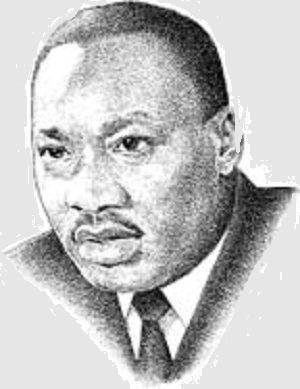
Dr. Martin Luther King, Jr.

Today is Dr. Martin Luther King day and when I woke up, I was not sure how to honor it.  I had planned to go into the church for scheduled meetings, but unsure if the holiday would truly register for me.  Prior to coming into the office, I went to the YMCA to do a group cycling class.  I expected a large crowd due to the holiday, however there were only three of us, including the instructor Sara.  

As she started the class, she told us that she had selected all the music, centered on MLK’s “I Have a Dream” speech.   Some of the songs had only a vague reference to it, but others, like U2’s Pride, were a direct reference to Dr. King’s life of service.   Then, as we neared the end of the workout, she played for us a portion of the speech.   The three of us kept spinning as we listened again to the familiar cadence of Dr. King’s preaching.   One sentence stood out,  “I have a dream that my four little children will one day live in a nation where they will not be judged by the color of their skin but by the content of their character.”  That hope still resonates for me.

What also struck me during this workout was how simple a testimony this instructor gave by her selection of songs and  the speech.  In a simple, caring way she integrated her witness to Dr. King into her daily life as an instructor.  I was impressed and thanked her for that simple act of honor.   I don’t think I cycled any better than usual because of that act, but my heart was a bit lighter and joyful.   The C in YMCA stood out.

Have you found ways to honor the legacy of Dr. Martin Luther King, Jr?

Newcomer or Old-Timer?

Snow shoes and Sauna mix well

This morning I visited my old running group for their annual mid-winter sauna run and brunch at a runner’s home.  It was my first time back since coming to Resurrection.  After our brief Bible study, most went for a six-mile run, while my friend Tim and I tried some snowshoe jogging on a nearby lake.  Gary, the host, loaned me his new shoe shows to try.  Tim and I weren’t fast, but we had a blast staying upright.   When we got back it was time for sauna, brunch and conversation. 

It was great fun seeing old friends, swapping stories and telling some tall tales.  Many of us have run together for more than eight years, so the stories have gained some embellishment over time.  Who amazed me this morning was a newcomer named Joe.   Tim had invited him after working out together at the Y.  Joe had never run with the group, only knew Tim (who did not run this morning) and had only a vague idea what would happen.   I like to think the running club provides great hospitality, but it always takes courage to walk into an established group, especially on such a social occasion.  Joe ran the six miles, enjoyed the sauna and brunch and smiled as we told our stories.  He plans to be back.

 As a new pastor in a young congregation, I sort of feel like Joe each Sunday morning.  I seek to fully participate, to learn names, and to listen to the stories.  People at Resurrection Lutheran Church have warmly welcomed me, that’s for sure.   I am excited to be with them.   Yet I am still the newcomer, without the history, the mileage that comes with time.  I want to race ahead, but right now it’s learning to be patient and consistently present.    

 I sort of wonder how the disciples felt after their first days with Jesus.  They knew exciting days were ahead, but each day held something of a surprise.  What was coming?   

Are you a newcomer, an old-timer, or somewhere-in-between in your faith community?  How does that affect your attitude and actions?

“Come and See” Invitation or Command?

Jesus said, "Come and See"

After Jesus’ baptism, two of JB’s disciples began to tag after Jesus (John 1:35-39).  Jesus spotted these secretive observers and asked a deep question, “What are you looking for?”  I could write my whole Sunday sermon on Jesus’ question. What are we looking for when we come to prayer, Bible study, or worship? 

The two responded with their own question, “Rabbi, where are you staying?”  Again, one could dwell with that question for a long time; where is Jesus staying today?  Where do we find him?  Is he in the obvious or in the hidden? 

Then came Jesus’ response, “Come and see.”   I have often thought of these words as a gracious invitation to explore a relationship with Jesus Christ.  As if Jesus were giving the two followers the choice on whether to stay with him or go someplace else.  In our American culture, we like to have choices, options, possiblities.  We want to decide what we do or don’t do.   And so we see this word of Jesus as a choice.  A choice that seems to ebb and flow in our lives among the many choices.  Some days we respond with joy; some days with hesitation or fear. 

But could “come and see” be more like a command or declaration?   Like when Jesus commands the sea to be calm or when Lazarus is raised from the dead (John 11)?   Later Jesus declared, “No one can come to me unless drawn by the Father who sent me” (John 6:44).  The two disciples responded as if it was a command. “They came and saw where he was staying” (John 1:39).  

Could it be that our faith is more a gift of God than a heroic choice by us?  I find comfort and hope in the promise that the Father draws me to Jesus.  Some called it “irrestible grace.” Jesus pulls me along, rather than me running to catch up.  The more I think about it the more I am looking forward to preaching on Sunday!

How have you experienced the pull of God in your spiritual life?

Microwave or Crockpot?

This Sunday the gospel text will center on Jesus’ call of his first disciples (John 1:35-42). I am amazed at how quickly the first disciples responded to the call to follow Jesus.  They expressed no hesitation or reluctance.  In all four gospel  they immediately dropped everything and followed Jesus.  Their instant faith surprises me.

Are you like a microwave?

Several  years ago Pastor John Hogenson introduced me to the concept that some people are like microwaves, others are like crock pots.   He was not referring to their taste in foods, but to their speed in making decisions.   Some people are quick to process information and make decisions.  They see the opportunity and take it right away.   People may see the microwavers as courageous and decisive while others see them as brash and reckless.  I think many of Jesus’ disciples were like microwaves.  The best example may be Peter when later he asked to join Jesus in walking on the water (Matt 14:28-29).

Or like a crock pot?

Other people may be more like a crock pot.  They need time to process information before they make a decision. They want to “sleep on it” before they discern the proper couse of action. They may appear methodical or sluggish to others.  Over the years, I have learned that I am more like a crock pot (not to be confused with crackpot!) than a microwave.   I do eventually decide, just not immediately.  I struggle with the quickness of the disciple’s embrace.   I identify more with Moses and his hesitation at the burning bush (Exodus 3).  

Whether you are a microwaver or a crockpotter, all of us are called to respond to Jesus’ call eventually.   To push the analogy, we need to “get plugged in” to the true source of power so that we can “serve the meal.”  We need to trust in Jesus and discover our specific call in God’s kingdom.   All of us have a role to play, whether in a hurry or in time.

What image or analogy would you use to creatively describe your spirituality?

Is Baptism Required?

Yesterday, after preaching on Jesus’ baptism, a confirmation student asked, “Do you need to be baptized to go to heaven?”   My quick response is that baptism is a gift from God for us.  God’s grace is not limited or restricted to baptism. It is not required. Rather baptism is a way for God to show us his love for us so why not be baptized?  

In college I was active in a multi-denominational Christian fellowship with Roman Catholics, Baptists, Presbyterians and others.  We all shared a love of Jesus and God’s Word.  We studied, prayed and shared life together without rancour until my senior year when a new student arrived with a different message.   She believed that the only true Christians were those who followed a set pattern of conversion and baptism.   A person needed to confess Jesus as Lord, be taught certain doctrines and then baptised in a special way to be a true Christian.   Her teaching pulled people out of our collaborative fellowship group and caused painful conflict within our Christian community.   I believe she took what was the gift of baptism and turned it into legalistic ritual.  She took the gospel and turned it into law. 

Still, even as a gift, baptism has a harsh quality to it.  The reluctance of cats to be baptized is a metaphor for our reluctance to die to our old self and live for Christ (Romans 6:6).   My old self does not want to die, but rather control life, religion, family, even God.  Yet that rebellious part of me, the old Adam, needs to die and be reborn: today, tomorrow and into eternity.  As Martin Luther says in the catechism,  our baptism is a daily reminder to repent of our sins and rise up to live before God.   I rejoice in that promise of God’s grace at work in us.

Does your baptism still hold meaning for you today?

Water Thoughts

Elwah River in Olympic National Park

Water images have dominated my thoughts this week.  Gary Bailey’s funeral (see 1/5 post), the Life of Pi,  and my Sunday sermon all have strong water themes.   The Life of Pi centers on a sea survival story; my sermon will be on Jesus’ baptism.   Water evokes both fear and hope, death and life.

Growing up in the Pacific Northwest, I saw a lot of water.  On a clear day my family home had a view of the Puget Sound, but I also experienced plenty of clouds and rain.   The abundant rain kept everything green and alive, but when I had to deliver the afternoon newspaper, rain could make the load and route miserable.  While backpacking in the  mountains I would marvel at how glaciers of ice carved such spectacular landscape.   Yet when it became necessary to cross glacier-fed rivers, I realized that with one wrong step I could easily become one of boulders tumbling towards the sea.

In the Bible water is a symbol of the chaos and destruction as well as life.  In Genesis 1:2, the water is part of the dark void before God’s creative Word is spoken.  In Exodus the Red Sea destroys the Egyptian army while providing a means of escape for the Israelites.   In I Kings  17-18, a drought is a sign of God’s displeasure with King Ahab, but later Elijah demonstrates God’s power to bring healing rain.  Jesus calms the stormy sea that threatens life in Mark 4 while in John 4 Jesus offers the Samaritan woman living water.  Water can destroy or give life.

What water image brings you life or hope?

River Prayer

St. Croix River

Yesterday I preached at Gary Bailey’s memorial service and I was struck with his love of rivers.  He grew up on the Mississippi River, went to school in Winona, MN and often recreated  on the St. Croix.  His daughter remembered a shared St. Croix canoe trip in the rain.   A friend told a story about camping on a St. Croix Island and how Gary tried to share a sleeping bag with him (by mistake!).  Rivers flowed through Gary’s life.

The psalmist writes, there is a river whose streams make glad the city of God, the holy habitation of the Most High (Psalm 46:4).  God delights in rivers and the scripture is full of river images, from the Garden of Eden in Genesis to the river of life in Revelation 22.  I often visualize God’s grace and love as a river that flows all around us.  As a result rivers have flowed into my prayer life.

 My prayer has become, “Lord, lead me in your river of life.  Teach me to trust in your stream of grace and to work towards what you are doing.  I don’t want to fight your current, but rather flow with you.”  The Lord’s Prayer states, “your kingdom come, your will be done,” which means that I want to align my will and my activities with God’s will and activities.  Prayer is getting into God’s flow.  

Have you ever experience God’s grace flowing in your prayers?  Or had times of drought?