Category Archives: Jesus

Seeing and Believing

Are Your Eyes Open to See?

In the Gospel of John one central thread is “Seeing.”  In chapter one, two disciples begin to follow Jesus and he asks, “What are you looking for?”   They ask where are he is staying. He responds, “Come and See.”   It is as if Jesus is also addressing you and me, the readers of the Gospel, “Come and See.”  As we read the Gospel we begin to “see” Jesus.

In Chapter four, after her encounter at the well of Jacob, the woman runs and invites the town (and the reader as well), “Come and see a man who told me everything I have ever done!”  In chapter nine, Jesus heals a blind man and later Jesus asks him, “Do you believe in the Son of Man.”  When the blind man responds, “Tell me, so I may believe in him,” to which Jesus says, You have seen him, the one speaking with you. ” In chapter twelve some Greeks approach one of Jesus’ disciples and ask, “we wish to see Jesus.”  In chapter fourteen, Jesus tells the disciples that they will know the Father, “From now on you do know him and have seen him.” Jesus is the tangible, visible expression of God, the Father.

The theme of seeing culminates in chapter twenty, when Thomas makes his fateful comment about Jesus’ resurrection, “Unless I see the mark of nails in his hands, I will not believe.”  When Jesus reveals himself to Thomas and says, “Put your fingers here and see my hands. Do not doubt but believe,” Thomas confesses his faith, “My Lord and My God.”   Jesus then speaks as if to you and me, the readers, “Have you believed because you have seen me.  Blessed are those who have not seen and yet have come to believe.”

We may not have visions of Jesus, but we see him in the story of the Gospel and in the lives of God’s children.   Thomas was not the first skeptic nor the last.  At times, I have similar doubts.  Yet as I study God’s word with God’s people, I see Jesus.  We bear witness to one another.

How have you seen Jesus today?

Prayer: Open the eyes of my heart, Lord, that I might see and believe.

Easter – The Morning After

Jesus Resurrected

Easter is not celebrated the same as Christmas.  Our culture embraces the Christmas story and the pageantry around it.  The story of the Mary, Joseph,  shepherd, angels, stable and baby Jesus is one that many understand and embrace.  Easter morning with the empty tomb and the various accounts in the Gospel as to who was where when can be most confusing.  A humble birth makes sense; a resurrection does not.

Frederick Buechner has written a helpful word on Easter in his book Beyond Words.

Easter is not a major production at all and the minor attractions we have created around it — the bunnies and baskets and bonnets, the dyed eggs — have so little to do with what it’s all about that they neither add to it nor subtract from it.  It’s not really even much of a story when you come right down to it, and that is of course the power of it. It doesn’t have the ring of great drama. It has the ring of truth. If the Gospel writers had wanted to tell it in a way to convince the world that Jesus indeed rose from the dead, they would presumably have done it with all the skill and fanfare they could muster.  Here there is no skill, no fanfare. They seem to be telling it simply the way it was. The narrative is as fragmented, shadowy, incomplete as life itself.  When it comes to just what happened, there can be no certainty.  That something unimaginable happened, there can be no doubt. (p. 91)

The unimaginable has happened.  Jesus has risen from the dead.  We may never fully comprehend all that this means, but we can be messengers of this truth for the world.  Like the women at the tomb, we may be confused, unsure, even afraid.   Yet we continue to have the same task, to go and tell, even on the morning after. 

How has the message of Easter changed your perspective or life?  How do you life in the light of the empty tomb?

Prayer: Lord God, though my mind may never fully comprehend the depth and height of the resurrection, continue to fill my heart with the joy and power of Easter.

Easter Sunday

Our Name Celebrates Easter Every Sunday

The story of Easter seem unbelievable, yet it shakes the world.  The video link below is from Luther Seminary’s workingpreacher.org and bears witness in a creative way to how our perspective can change with Jesus’ Resurrection.  He has risen!

Easter is coming

The Holy Week Story – Saturday

Women at the Tomb by sculptor Peter Lupori

Holy Saturday Reflections

Read Matthew 27:57-66

So Joseph took the body and wrapped it in a clean linen cloth and laid it in his own new tomb, which he had hewn in the rock. He then rolled a great stone to the door of the tomb and went away.  Mary Magdalene and the other Mary were there, sitting opposite the tomb.  Matt. 27:59-61

Up through the death of Jesus, males have dominated the story of Holy Week: Judas, Peter, Caiaphas, and Pilate.  It is what one would expect in a male-dominate society.  However, at the cross, the focus shifts to women.  Mary, the mother of Jesus, is at the cross. Mary Magdalene and the other Mary watch from a distance.  Though Jesus’ inner circle has fled, some of the women followers stay close by.  They watch not only the crucifixion, but also where he is buried.  After the sabbath is over, women will be the first to go to the tomb.

Earlier in the gospel Jesus had instructed the disciples to “Stay awake and pray that you may not come into the time of trial; the spirit indeed is willing, but the flesh is weak. (Matthew 26:41).  At the risk of sounding sexist, for whatever reason, women seem better able to fulfill this task than men.   Perhaps men feel the need to act, to perform, to do something.  Perhaps women know that sometime you simply wait, trusting in God, a kind of pregnant waiting, knowing that change is happening beneath the surface. 

Holy Saturday is a day of pregnant waiting.  God is at work, beneath the surface, behind the tombstone.  Soon, very soon, everyone, male and female, will see the hand of God at work.

How is waiting difficult or challenging for you?  What practices helps in waiting for God?

Prayer: Lord, teach me to be patient, to wait for your good work, to trust in your timing.

Ministry Matters™ | Articles | The Logic of Hell

Adam Hamilton


Adam Hamilton has written a thoughtful article on the necessity yet limits of Hell.   Adam is a United Methodist pastor in Kansas City that I have appreciated for many years.   His treatment of Jesus’ statements on hell was particularly helpful to me.

Ministry Matters™ | Articles | The Logic of Hell.

The Holy Week Story – Friday

Crucifixion by Mexican Artist Octavio Ocampo

Holy Week Reflections for Friday

Read Matthew 27:32-56

Those who passed by derided Jesus, shaking their heads, and saying, “You who would destroy the temple and build it in three days, save yourself! If you are the son of God, come down from the cross.”  Matthew 27:39-40


Crucifixion was always done in public spaces so that Rome could demonstrate its power.  Thus Jesus was crucified out in the open, naked and humiliated, for all the world to see.  This was no private affair, like John the Baptist’s beheading inside King Herod’s palace.  Anyone and everyone mocked Jesus: the religious elite from the temple, those who passed by, even those hanging on the cross next to Jesus. (In Luke’s gospel, one thief repents, Luke 23:42-43.)  The public humiliation added to the pain and suffering. 

An amazing aspect of the taunts was that they held truth.   Jesus could have saved himself and stepped down off the cross, but instead chose to save us and stayed nailed to the cross.  The sign above his head mocked him as ‘King of the Jews;” yet the cross becomes Jesus’ throne of mercy, his royal decree of forgiveness and hope. He was “the temple of God,” where God’s Spirit resided.  

When I was in confirmation, I remember taking a test that asked for the name of the day on which Jesus died.   The answer had two blanks.  I knew that the second blank was Friday, but I could not remember what word filled the first blank.  I racked by brain, “blank Friday, blank Friday.”  Finally I filled in the blank with the word: Bad, Bad Friday.   My thinking was that it was certainly a bad day for Jesus with his suffering and death.

Of course I was wrong.  We know the day as Good Friday, because it was good for us.  God turned humanity’s total rejection of his love into the final victory for us. 

How does Jesus’ death tell the truth about our lives and world?  How does it give us hope? Where do you see God at work to redeem creation?

Prayer: Lord God, on the cross you suffered the very depths of our human brokenness and sin. Your humiliation on the cross became our path to You.  Help us to remember the depth of your love and the powerful hope you give.

Holy Week Story – Thursday

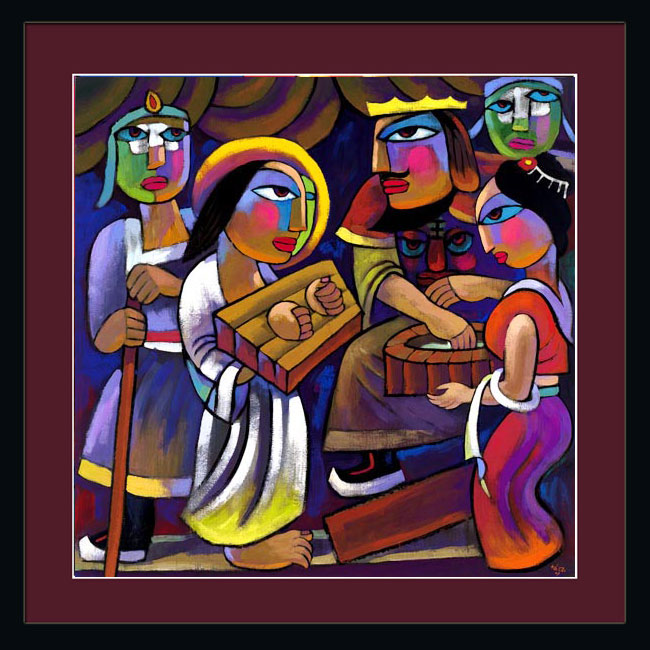
Pilate Washing His Hands by artist He Qi

Reflections on Jesus’ Trial with Pilate.

Read Matthew 27:1-31

So when Pilate saw that he could do nothing, but rather a riot was beginning, he took some water and washed his hands before the crowd, saying, “I am innocent of this man’s blood; see to it yourselves.” Matt 27:24

Jesus’ trial before Governor Pilate changes the tenor of the story.  It is no longer a  religious squabble between Jewish sects.  Jesus claims are extended beyond international boundaries, into the very halls of the political power and authority. Rome was known for its power and system of justice.  Who is the real King or Ruler of this world?  Jesus exposes the self-serving character of Pilate and the Roman system.   Though he tries to wash away his connection, Pilate remains complicit in Jesus’ crucifixion.

It is easy to paint Pilate as a self-serving bureaucrat who was either corrupt to begin with or was easily manipulated by the crowd.  Yet I can see the Pilate in me, the part of me unwilling to take a stand against the mob and stand by someone who is innocent.   Are there not people in our community who need someone to be their advocate?

In his book, Tattoos of the Heart, the Jesuit priest, Gregory Boyle, describes his ministry with the gangs of LA.  One day he takes two gang members, Chepe and Richie, on a road trip.   They stop at a Coco’s restaurant for dinner.  Their welcome by the receptionist and other diners is ice-cold.  They stare at Chepe and Richie’s shaved heads, tattoos, and all their baggy clothes gangster garb.

Richie whispers, “We don’t belong here, we should go somewhere else.”

“What are you talkin’ about?” said Greg.

“There’s just pure, rich white people here.” Richie pleaded.

Then the waitress came.

Our waitress is an entirely different story from the frozen and awkward reception we seem to be getting from everybody else. She puts her arms around the “fellas,” calling Chepe and Richie ‘Sweetie” and “Honey” and bringing them refills (“and we didn’t even have to ask”) with extra this and more of that, and supplying Tapatio on demand. She is Jesus in an apron. (p. 136)

When have you experienced either abuse of power or an advocate for justice?

Prayer: Use us, Lord God, as instruments of peace in a world broken by violence, hatred and fear.

Holy Week Story – Wednesday

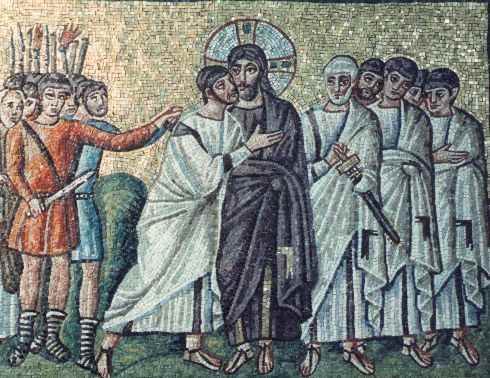
Jesus Arrested by the Crowd

 Holy Week Reflections for Wednesday

Read Matthew 26:47-75

At that hour Jesus said to the crowds, “Have you come out with swords and clubs to arrest me as though I were a bandit?  Day after Day I sat in the temple teaching, and you did not arrest me.  But all this has taken place, so that the scriptures of the prophets may be fulfilled.”

Then all the disciples deserted him and fled.  Matthew 26:55f

The Garden of Gethsemane has always fascinated  me.  After the last supper, Jesus and his disciples retreated to the Garden where Jesus prayed for a way out from the suffering to come.  He prayed, “Father, not my will, but your will be done.” Jesus found clarity, strength and courage in prayer.  Meanwhile, the disciples slept.

Then the crowd arrived and Judas betrayed him with a kiss.  At first the disciples tried to resist with a sword, but Jesus stopped the violence and reminded them that he could ask for an army of angels to fight if he wished, but that was not the plot of Christ’s story.  He would go to the cross.  Calvary was the chosen battlefield with Satan and death.

So the disciples fled.

I have tried to remember a time when I was so abandoned but all seem trivial in relation to this story.  There have been times when I felt very much alone. Once late at night I walked the deserted streets of west Philadelphia back to my college, thirteen miles, but that was my own foolishness.  To experience abandonment means others choose to leave you.  People have experienced being abandoned by their spouse, or family, or friends. I can only imagine their depth of pain and grief.  Jesus experienced such rejection in the Garden.

Still Jesus stayed the course.  He endured the ridicule, mockery, and humiliation of a religious trial.  He stayed the course because he would not, does not, will not abandon us.

The disciples fled.

He stayed.

He stayed the course towards the cross for us.  

What strengthens you to keep the faith in God and others?  What tempts you to abandon them? Where have you felt abandon?   Where is God for you right now?

Prayer: Almighty God, protect and preserve us in this world that we might keep faith in your promises and our call to serve you and one another.

Saint and Sinner – Stoning Greg Mortenson

How do you use stones?

This is a rare second posting, but I want to respond to all the recent accusations surrounding Greg Mortenson, the author of Three Cups of Tea and Stones into Schools.   The mission of his foundation, Central Asia Institute, is to build and support schools in the isolated mountain villages of Afghanistan and Pakistan.   Mortenson has received incredible publicity and significant donations for this work.  No one denies that he and his foundation have done incredible work for the children of the region.

However the TV show 60 minutes and the author Jon Krakauer have made substantial and credible accusations that Mortenson partially fabricated some of the stories in his books and that he has mismanaged funds.  Mortenson has not totally denied these accusations, but continues to stand by the work he has done. 

I cannot discern who has the total truth in this tempest.  I suspect the truth is somewhere in middle.  

What disturbs me is how quick I was “to judge” Greg Mortenson.   I felt this incredible disappointment as I read the Jon Krakauer’s report and saw some of the major blemishes on the “saintly” portrait I made of Mortenson.  I discovered that my hero has feet of clay.  But this should not surprise me.

Greg, like I, grew up a Lutheran and one of Martin Luther’s contributions to our spiritual heritage is the concept of saint and sinner: simul Justus et Pecator or simultaneously saint and sinner.   We are all sinners by our actions.  We all have self-serving hearts that seeks only our interests.  Greg Mortenson is a sinner just like me.  When Jesus was confronted with the woman caught in adultery he responded by asking the person without sin to cast the first stone.  Her accusers all slipped away one by one, leaving her alone with Jesus.  He did not condemn her, but sent her away to sin no more.  (John 8:1-11)

Greg Mortenson will need to be held accountable for any mismanagement he has done.  His foundation will need to take drastic steps to rebuild the trust that is being eroded by these reports.  I am praying that such steps will be taken wisely and courageously.

But I also want to state that Greg is still a saint in my eyes.   Our sainthood is not based on our reputation, but on the grace of God.   I am praying that Greg will find his faith and mission strengthened and renewed by God’s Spirit, just as I am praying that prayer for myself and my congregation.  After all I prefer stones to be used in building schools, not attacking reputations.

Holy Week Story – Tuesday

Continued Reflections on the Holy Week Story

Readings for today: Matthew 26:17-46

And while they were eating, he said, “Truly I tell you, one of you will betray me. Matt 26:21

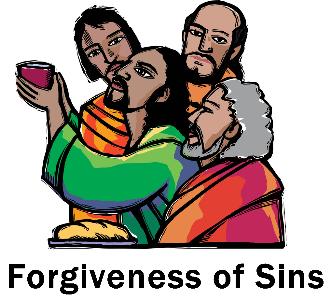
And he gave (the cup) to them saying, “Drink from it all of you, for this is my blood of the covenant, which is poured out for many for the forgiveness of sins.” Matt 26:27-28

What a sharp contrast of emotions in today’s text!  We are again reminded that one of Jesus’ own disciples will betray him.   Jesus, who loved each disciple deeply, was wounded by Judas’ act.  Judas was not an outside official who simply wanted to keep the status quo.  Judas was a friend, who had seen, heard, and experienced Jesus’ ministry of healing and hope.  Scholars speculate what motivated Judas to do this.   Was it greed?  Or disillusionment that Jesus was not the Messiah Judas wanted?

I think the motivation is left unclear so that we can have identification with Judas.  At some time each of us has betrayed God or God’s children either in thought, word or deed.  We profess that we love Jesus with our lips, but our actions towards his children betray our fickle hearts.  We betray Jesus, when we do not love our neighbor as ourselves.

Yet on that night of betrayal, Jesus gave us the gracious gift of communion, the promise of forgiveness.  In Luke’s gospel, it is clear that Judas was still present when the cup of the new covenant was passed among the disciples.  God’s forgiveness was offered to Judas, even as he prepared to turn Jesus over to the high priest.   God’s forgiveness knows no boundaries, and here is a clear example of his gracious, forgiving love.  No matter who we are or what we have done, the promise of God’s forgiveness is declared for us.  We are forgiven people.    

When have you seen or visited someone who needed a tangible expression of God’s love?  How can you help that person realize how precious they are to God?

Prayer: Lord God, thank you for the gift of your own body and blood.  Let that gift strengthen me in the knowledge that you love me more than anything.  Amen