Category Archives: Uncategorized

Holy Spirit Business

Holy Spirit comes to work

I am preparing for my first annual congregational meeting at Resurrection Lutheran which will be this Sunday.  Annual meetings among pastors often have the reputation either of being boring, business-as-usual constitutional necessities or of being highly emotional and conflicted debates on peripheral or personality issues.   As a pastor, I don’t want either extreme to happen, but I do pray that the Holy Spirit comes to work: to coax, push, pull and move the congregation towards God’s future.  Discussion regarding a congregation’s priorities can be passionate and yet loving, for we share a common mission to trust, live and serve God.

The book of Acts has a lengthy account of a large church meeting in Jerusalem.  Paul and Barnabas brought a major concern to the whole church for discussion and debate.   Their concern was whether new Gentile members to the church had to fully convert to Judaism before they could embrace Jesus.  Since most of the early members of the church were Jewish and since Jesus was a Jew, many believed that Jewish laws should be upheld.  Paul felt otherwise and a strong debate developed among the leadership of the church.  What rules and regulations, if any, were needed?  After a lengthy debate, the leadership wrote a letter to the many new Gentile believers,  “It seems good to the Holy Spirit and to us to impose on you no further burden than these essentials: that you abstain from what has been sacrificed to idols and from fornication” (Acts 15:28-29).  What stands out is that they trusted the Holy Spirit to be part of the discussion.  This was a matter of faith, since the Holy Spirit did not fly into the meeting like a dove and deliver a telegram from heaven.  It was in the discussion itself that God’s Spirit worked.

I think every pastor hopes and prays that the Holy Spirit would be the key partner in any congregational meeting. The Holy Spirit is neither boring, nor highly emotional, but is trustworthy.   The Spirit calls us to trust God in all things.   That seems good to me!

How has the Spirit worked in guiding you and your life with other Christians?

Top Ten Children Prayers

Child Praying

Yesterday I ran across an internet listing of children’s prayers which I have reduced to my top 10.  These prayers you can pray with exceeding joy!

10.  Dear God,
please put another holiday between Christmas and Easter. There is nothing good in there now.
Amanda

9.  Dear God,
Thank you for the baby brother but what I asked for was a puppy. I never asked for anything before. You can look it up.
Joyce

8.  Dear God,
how did you know you were God? Who told you?
Charlene

7.  Dear God,
do you draw the lines around the countries? If you don’t, who does?
Nathan

6.  Dear God,
I keep waiting for spring, but it never did come yet. What’s up?  Don’t forget.
Mark

5.  Dear God,
Is Pastor Keller a friend of yours, or do you just know him through the business?
Donny

4.  Dear God,
I bet it’s very hard for you to love all of everybody in the whole world. There are only 4 people in our family and I can never do it.
Nancy

3.  Dear God,
I do not think anybody could be a better God than you. Well, I just want you to know that. I am not just saying that because you are already God.
Charles

2.  Dear God,
I am doing the best I can. Really !!!!
Frank

And, saving the best for last   .

1.  Dear God,
I didn’t think orange went with purple until I saw the sunset you made on Tuesday night. That was really cool.
Thomas

I think #2 captures our tremendous need for confession and God’s promise of forgiveness while #1 describes the joy of praising God for the wonder and beauty of creation.   Sometime the simplest prayers are the best.  Romans 8:26 The Spirit helps us in our weakness; for we do not know how to pray as we ought, but that very Spirit intercedes for us with sighs too deep for words.

What prayers give you joy?

Salt of the Earth?

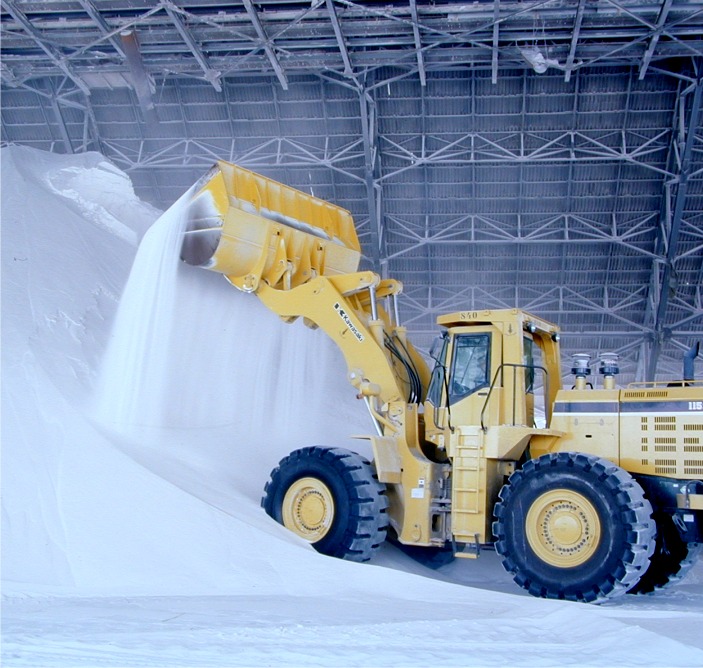
A Mountain of Salt

In his Sermon on the Mount, Jesus declares, “You are the salt of the earth; but if salt loses it taste, how can its saltiness be restored? It is no longer good for anything, but is thrown out and trampled under foot” (Matthew 5:13).  Such a metaphor raises all kinds of questions for me.  Salt seems so ordinary and mundane, something we take for granted.   Yes, it is necessary for making a fine meal, but it is the exotic spices and herbs that get the attention.  Salt brings out other  flavors, but who wants a dish with too much salt?

Years ago, on April 1st, my older sister pulled a practical joke on my siblings by mixing a large quantity of salt into the sugar bowl.  At breakfast, as they spooned sugar on to their cereal, she watched us carefully, saying nothing.  When they took their first bite and then spit it all out, she burst out laughing.   But my mother was not too pleased with the wasted cereal. My sister had to clean up the mess from too much salt. 

When Jesus spoke, salt was used in Jerusalem for temple sacrifices, “You shall not omit from your grain offering the salt of the covenant with your God; with all your offerings you shall offer salt” (Leviticus 2:13).  Could Jesus be inferring that our lives are to be an offering to God, a gift for God to use?  Could we be part of God’s covenant to renew and restore the earth?  Do I enhance God’s flavor in the world?

And just how does salt lose its saltiness?   Perhaps it means that the salt is polluted with impurities and stray matter.   In Exodus 30:35 God instructs the Israelites to make a prayer incense that includes salt, “seasoned with salt, pure and holy.”  I know that my own life at times becomes polluted in ways not pleasing to God.  How will I know when I have lost my saltiness?  Does the community have a role in helping me stay salty?

Jesus’ last phrase about salt being trample under foot makes me smile. In Minnesota there is plenty of salt being spread on roads, bridges, and sidewalks for us to trample upon.   Jesus did not concern his audience with the ice-melting properties of salt, but it is a critical part of our culture. Road salt covers my car after yesterday’s snowstorm, yet I am thankful for its ability to clear road ice. 

What thoughts comes to your mind when Jesus declares, “You are the salt of the earth“?

Stones into Schools Questions

In my last post I wrote about patience.   A true model of patience is Greg Mortenson and his Central Asia Institute.

Greg Mortenson’s Stones into Schools

Greg Mortenson’s second book, Stones into Schools, will be the subject of  the book club that my wife Carolyn and I are hosting next week.   Greg spent time growing up in Roseville, MN and became a mountain climber.   His first book, Three Cups of Tea, describes how he found his calling building schools in isolated mountain villages of Pakistan.  It is a thrilling adventure story.  In the second book, subtitled Promoting Peace with Books, Not Bombs in Afghanistan and Pakistan, Greg continues his incredible story of patience and persistence. 

My wife crafted some discussion questions that I encourage you to use for your own reflection as you read Greg’s book.  The questions cover the first 100 pages (which is what we are discussing next week).  Feel free to leave a comment on any question.

  1. Mortenson says, “If you educate a boy, you educate an individual, but if you educate a girl, you educate a community.”  Do you agree or disagree?  Explain
  2. Were you surprised with Mortenson’s comment that religious scholars of Islam have told him that, “Murder and suicide are two of the most unforgivable sins in Islam?”  Why or why not?
  3. Mortenson says that in order to get things done in Pakistan and Afghanistan, “It is essential to listen with humility to what others have to say.”  Is this something that anyone anywhere can do to work for peace?  Why or why not?
  4. Mortenson says that his work demands patience and that “any wise village elder will tell you, anything truly important is worth doing very, very slowly.”  What could we, in our fast-paced American culture, learn from this philosophy?
  5. Does the quotation, “last place first” philosophy (p. 35) of the Central Asia Institute make sense to you?  Why or why not?
  6. How did Mortenson’s upbringing in Tanzania prepare him for his work today?
  7. Reread Sardhar Kahn’s poem on pages 99-100.  What are your thoughts and response?

An Ocean of Blessings

Playing In the Tide Pools of Blessings

This Sunday begins a five-week series of readings from the Sermon on the Mount in Matthew 5 and 6.  Jesus begins the teaching with the beatitudes, “Blessed are the __________ for they will _______.”   I wrestle with these blessings since they are rarely ones I seek.  

For example: Blessed are the poor in spirit, for theirs is the kingdom of heaven. I prefer to be filled with the Spirit, overflowing with passion and energy.  To be empty sounds like a curse to me. Like many, I feel “blessed” when things are going my way and I am content.

Yet perhaps Jesus is calling us to realize that our blessings are not dependant on our circumstances, but always on God’s grace.  I need to recognize my total reliance on God to allow room for the Holy Spirit to work.  If I think I have the power on my own, based on my goodness or performance, then I am lost in my folly. 

As a child I often played in the tide pools along the Pacific Ocean where my family would go camping.  I would carve canals in the sand and manipulate how the water flowed from pool to pool.   I thought I was in charge of the beach, until a real ocean wave crashed down on my construction.   The the Lord of the beach and all creation showed me how poor I was. 

I think we all play on the edge of God’s ocean of blessings.  At times we need to stop thinking that we are in control and allow God’s power, grace and love to overwhelm us.  That can be frightening at first, but healing and joy comes with the blessing.  

How have you felt God’s blessing in your life?

Clerical Collars

Clerical Collars

Last night during my class on “What’s a Lutheran?”, someone asked me why I wear a clerical collar on Sunday morning.  For them the clerical collar seemed to be Catholic.   I briefly explained that clerical collars are not necessary for me, but they help me to lead worship on Sunday morning.   I then explained the Lutheran concept of “adiaphora,” which means, “does not matter.”  Things that are adiaphora are not crucial or necessary elements of faith but rather decisions, conduct, habits that one can choose if helpful. 

An example for Lutherans would be whether or not to make the “sign of the cross,” touching their forehead, sternum and shoulders so as to remember Jesus’ death and resurrection.  Some Lutherans find it helpful in worship, others find it awkward or distracting.  I have always preached that if it helps you to focus on Christ, then do it. 

Wearing a clerical collar is adiaphora for me.  It is not essential for worship, but it helps me be mindful of my role as a pastor in the congregation.  I have been called by Resurrection Lutheran to bring the people the ministry of Word and Sacrament.   I also think it makes it very clear to any visitor what my role is.  They can quickly identify who the pastor is.  I do not see it as a status symbol, but rather my service uniform.  The clerical collar is worn by Lutherans, Episcopalian, Methodist and other clergy as well as Roman Catholic priests.

I also know that context makes a big difference.  During my internship in suburban Philadelphia I remember the tremendous respect I received when I wore my clerical collar to the hospital.  The community was predominately Roman Catholic and many assumed that I was a Catholic priest.  Nearly everyone called me “Father” and deferred to me.   But once, after making hospital calls, I went shopping with my wife at the local mall.  I remember the severe looks of disapproval from the sales clerks as I waited for my wife to try on bathing suits.  In their eyes, a priest should not be doing such things!

How do you look upon those who wear clerical collars?   Are there spiritual habits, actions or practices that you wonder if they are adiaphora or not?

Seek or Wait?

Pastor John hiking in Cascade Mountains of Washington

Tomorrow Psalm 27 will be read in worship.    Psalm 27 begins with a powerful insight, “The Lord is my light and my salvation; whom shall I fear? The Lord is the stronghold of my life; of whom shall I be afraid?”  God is a light to our path, but the path can be difficult, strenuous, challenging.  We fear what is ahead so we try to make our own way.   Our fear leads us a way from God, like a backpacker who leaves the trail for what he thinks is a short-cut, only to discover that he is lost and alone. 

That lost, alone person needs to get back on God’s path, but how?  The psalmist gives us two hints in how to retrace our steps.  In Psalm 27:8 the psalmist writes,  “Come,” my heart says, “seek his face!” Your face, Lord, do I seek.  When we have gotten off trail and are lost, we need to admit that we are lost and we need God’s direction.   To seek God’s face is to seek intimacy with God, to have a direct face-to-face conversation with our creator and savior.  This is an action of the heart, more than the mind.

But then the psalmist gives wisdom on how to seek God’s face.  In verse 14,  Wait for the Lord; be strong, and let your heart take courage; wait for the Lord!  This can be difficult in our instant response world.   We expect God to immediately answer our requests.   Waiting can be so difficult.  Lost backpackers are instructed to find a safe place and wait for the rescue team to find them.  Their inclination is to go thrashing about in the woods, but that only makes rescue more difficult. 

Seek the Lord’s face.  Wait on the Lord.  Still wise words for us to heed in our daily walk with God. 

How do you seek or wait on the Lord?

Microwave or Crockpot?

This Sunday the gospel text will center on Jesus’ call of his first disciples (John 1:35-42). I am amazed at how quickly the first disciples responded to the call to follow Jesus.  They expressed no hesitation or reluctance.  In all four gospel  they immediately dropped everything and followed Jesus.  Their instant faith surprises me.

Are you like a microwave?

Several  years ago Pastor John Hogenson introduced me to the concept that some people are like microwaves, others are like crock pots.   He was not referring to their taste in foods, but to their speed in making decisions.   Some people are quick to process information and make decisions.  They see the opportunity and take it right away.   People may see the microwavers as courageous and decisive while others see them as brash and reckless.  I think many of Jesus’ disciples were like microwaves.  The best example may be Peter when later he asked to join Jesus in walking on the water (Matt 14:28-29).

Or like a crock pot?

Other people may be more like a crock pot.  They need time to process information before they make a decision. They want to “sleep on it” before they discern the proper couse of action. They may appear methodical or sluggish to others.  Over the years, I have learned that I am more like a crock pot (not to be confused with crackpot!) than a microwave.   I do eventually decide, just not immediately.  I struggle with the quickness of the disciple’s embrace.   I identify more with Moses and his hesitation at the burning bush (Exodus 3).  

Whether you are a microwaver or a crockpotter, all of us are called to respond to Jesus’ call eventually.   To push the analogy, we need to “get plugged in” to the true source of power so that we can “serve the meal.”  We need to trust in Jesus and discover our specific call in God’s kingdom.   All of us have a role to play, whether in a hurry or in time.

What image or analogy would you use to creatively describe your spirituality?

River Prayer

St. Croix River

Yesterday I preached at Gary Bailey’s memorial service and I was struck with his love of rivers.  He grew up on the Mississippi River, went to school in Winona, MN and often recreated  on the St. Croix.  His daughter remembered a shared St. Croix canoe trip in the rain.   A friend told a story about camping on a St. Croix Island and how Gary tried to share a sleeping bag with him (by mistake!).  Rivers flowed through Gary’s life.

The psalmist writes, there is a river whose streams make glad the city of God, the holy habitation of the Most High (Psalm 46:4).  God delights in rivers and the scripture is full of river images, from the Garden of Eden in Genesis to the river of life in Revelation 22.  I often visualize God’s grace and love as a river that flows all around us.  As a result rivers have flowed into my prayer life.

 My prayer has become, “Lord, lead me in your river of life.  Teach me to trust in your stream of grace and to work towards what you are doing.  I don’t want to fight your current, but rather flow with you.”  The Lord’s Prayer states, “your kingdom come, your will be done,” which means that I want to align my will and my activities with God’s will and activities.  Prayer is getting into God’s flow.  

Have you ever experience God’s grace flowing in your prayers?  Or had times of drought?

Getting Into It — Part III

The rain today drove me inside.  My friend Tim and I have been trying to get together all week, so finally I suggested that we meet for a spinning class this morning at the Woodbury YMCA.  I had attended only two previous classes, each time with Tim as my guide.   Naturally I was late getting out of the house, but I still minded the speed-limit as I drove to Woodbury.  I rushed into the locker room expecting to see Tim ready to go.  But there was no Tim, not in the locker room or the hallway or Studio 1.  

Tim's bike during the workout

As people pulled out cycles for the class, I pulled out two, expecting Tim to show any moment.  I tried to remember the instructions Tim gave me on how to set up my cycle for the best workout.  I kept looking at the door, expecting Tim to show.  But as the instructor began to start the class, I shifted my attention from Tim’s absence to my participation.  Soon I was “getting into it,” pushing my heart rate into my aerobic workout zone.  It was a good class.

As I reflected after the class, I think my experience is similar to newcomers at a church or Bible Study or prayer group.   We have an interest or curiosity, but we often need an invitation or guide to help us enter the new experience.   A friend, co-worker or neighbor invites us to worship and we sit with them during our first visit.  We closely watch their behavior, not wanting to do something embarrassing or upsetting.   If we enjoy it, then we are open to going back, perhaps with our guide.   Eventually we go on our own, comfortable in our knowledge that we can fully engage in the workout or the worship without our guide.  

As I walked out from the spinning class, I felt energized and also thankful that I can do the class by myself.  I called Tim to find out what had happened.  He misread the e-mail and thought the class was this afternoon.  We still need to get together for our weekly conversation.

Romans 14:1 Welcome those who are weak in faith, but not for the purpose of quarreling over opinions.

Have you ever been a guide for someone’s new experience?