Teach Your Children Well

I am amazed that God’s first act of his Creation Recovery Plan is the birth of a child. (Genesis 12:1-3). God will rescue humanity through humanity. There is something humorous, laughable even, to think that a child could save the world. It was a good thing that Isaac name was linked to laughter (Genesis 18:12-15). Yet the birth of Isaac to Abraham and Sarah will eventually lead to the birth of Jesus to Mary and Joseph.

Children continue to be a prime focus of God’s plan of redeeming the world. Resurrection Lutheran Church has made the faith formation of children a central component of our mission. We will continue that in the years and decades to come. Each generation needs to inspire and educate the next.

Centuries after Abraham and Isaac’s death, Moses was instructed by God to teach God’s word to the Abraham’s descendants.

You shall put these words of mine in your heart and soul, and you shall bind them as a sign on your hand, and fix them as an emblem on your forehead. Teach them to your children, talking about them when you are at home and when you are away, when you lie down and when you rise. Write them on the doorposts of your house and on your gates, so that your days and the days of your children may be multiplied in the land that the Lord swore to your ancestors to give them, as long as the heavens are above the earth. Deuteronomy 11:18-21

Crosby, Stills, Nash and Young sing a song about teaching our children,

Teach your children well, their father’s hell did slowly go by,
And feed them on your dreams,
the one they picked, the one you’re known by.
Don’t you ever ask them why, if they told you you would cry,
So just look at them and sigh and know they love you.

In my own experience, my parent’s “dream” was to follow Jesus. They brought me to church, taught me to pray and to trust in Jesus. And for this I love them.  And my wife and I are called to do the same. Children deeply matter to God.

How are you passing the faith to the next generation?

Lord Jesus, help me to teach our children well.

Blessed or Blessing?

Abraham and Sarah celebrate Isaac's birth

What an incredibly simple start.  After the mess of Genesis 3-11, God finds the best solution: an elderly childless couple! Abraham and Sarah become the start of God’s rescue plan for creation. They are blessed in order to be a blessing to others.

God said, “I will make you a great nation, and I will bless you and make your name great, so that you will be a blessing.” Genesis 12:2

God promised a son to Abraham and Sarah. They wait, and wait, and wait, and wait. They try their own shortcut and fail. But eventually their son Isaac is born. Eventually after centuries of waiting his offspring will be Jesus, the truest blessing for all.

We so often seek blessing only for ourselves. But God showers us with generous blessings, so that we can be blessings to others.

How have you been a blessing to others?

Lord Jesus, make me into a blessing for others today.

The Rebellion

When I read the first few chapters of the Bible, I am always struck as to how quickly everything slides from being GOOD to being BAD.  Declaring all creation to be “very  good” in chapter one and creating beautiful garden of paradise for Man and Woman in chapter two, the Bible provides us a glimpse into creation as God intended it to be: beautiful, balanced, and harmonious.

But the creation (and especially the human creatures) do not remain in harmony.  Man and Woman, Adam and Eve, choose to disobey God. The story in Genesis 3 is often called “The Fall”, because humanity “fell” out of God’s favor, but I prefer to call it “The Rebellion” because they rebelled against God’s order and design.  The Fall sounds accidental or unintended.  Their rebellion is not an isolated historical oddity.  It is a deliberate act., a rebellion in which we all participate.

We have all decided to go our own way and leave God’s chosen path.  We each do it in unique ways, but at the root of it all, we rebel against God being God.

For all have sinned and fallen short of the glory of God. Romans 3:23

Our rebellion is our sinful desire to be little gods.  Genesis 3-11 show how the human rebellion grow as Cain kills Abel (Genesis 4) and wickedness permeates all humankind (Genesis 6:5).

Yet there is good news in these chapters as God always provided for God’s children even during the rebellion.  God provided animal skins to clothe Adam and Eve (Genesis 3:21).  God provided protection for Cain (Genesis 4:15) and an ark for Noah (Genesis 6:13-14).  Ultimately God chose Abraham to be the pioneer in God’s restoration (Genesis 12:3).  Through Abraham, a savior would come to save us from our Rebellion.

How do you rebel against God?  How has God continued to reach out to you?

Lord Jesus, forgive me of my sin and restore me to the Vibrant Life of faith in you.

On the seventh day they had a picnic

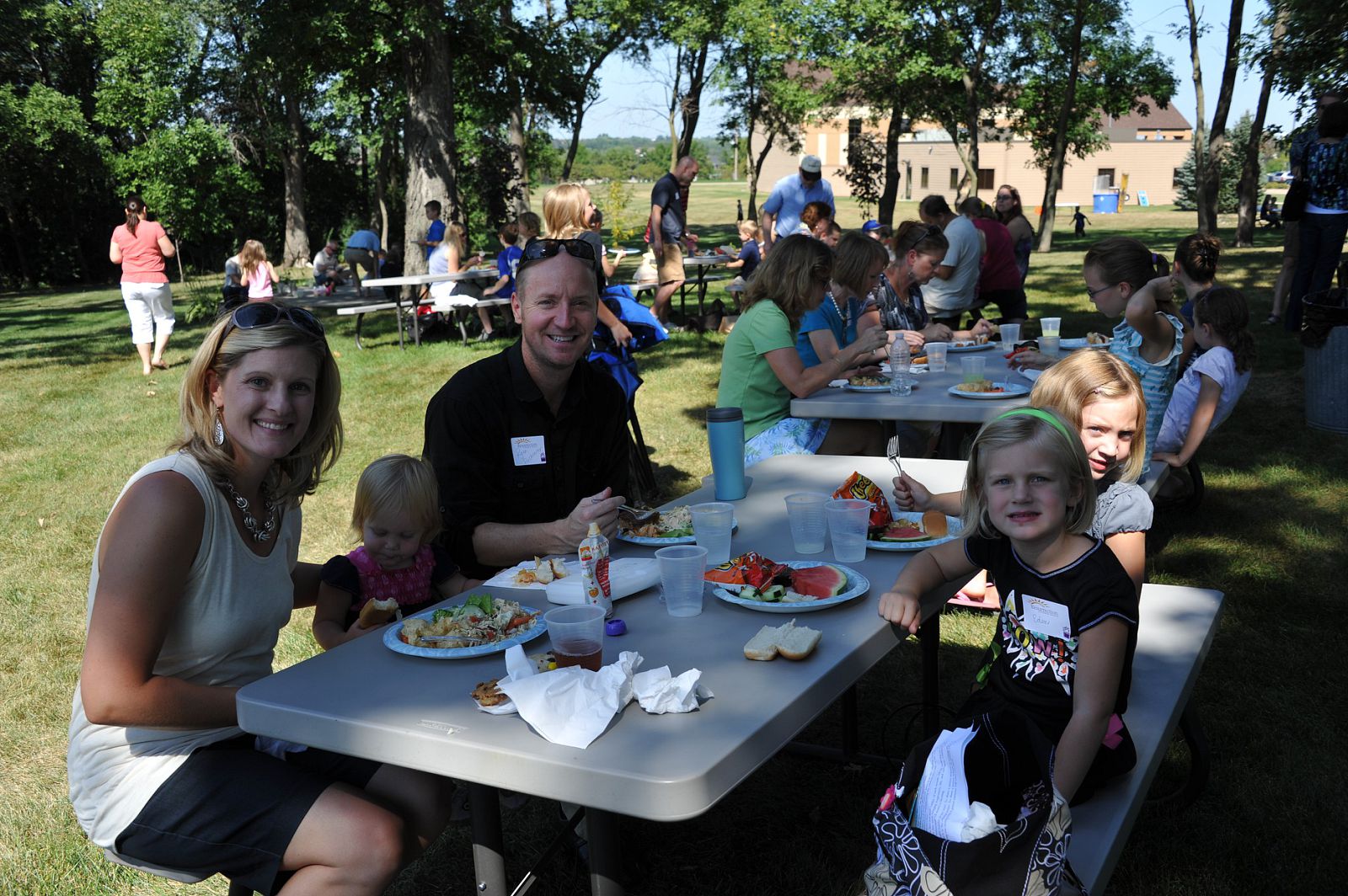
Yesterday was the kick-off to the fall season for Resurrection Lutheran. Under bright beautiful sky we had our church picnic after worship. The tempting smell of grilled brats, the energetic conversation of friends and neighbors and the loud squeal of dunk-tank participants permeated our church grounds. In the morning worship I joked that for one afternoon we would be Resurrection “Baptist” Church as people were fully submerged in the dunk tank. When my turn came, I was thankful for the cool water on a very warm afternoon.

Two thoughts popped in and out of my head as we celebrated our Vibrant Life in Christ. They both arose from our worship text in the morning: Genesis 1 where God creates the heavens and the earth. Throughout the chapter there is the constant refrain: “And God saw that it was good.” The goodness of God’s creation was being experienced by picnic participants; the joy and wonder on their faces reflected that goodness.

A second thought followed the first. The thought came from part of the Genesis story that I had skipped over in my morning sermon.

So God blessed the seventh day and hallowed it because on it God rested from all the work he had done in creation. Genesis 2:3.

God’s rest on the seventh day is a powerful reminder that as God’s creatures we need rest as well. The third commandment flows from this: Remember the Sabbath day to keep it holy. I sensed that many of us were “resting” at our church picnic, even as we scurried around. Much of my normal week is spent sitting indoors/the opportunity to be outdoors, enjoying a beautiful fall afternoon was restful. And when I engage in meaning conversation with other saints it is holy. The morning worship and the afternoon picnic provided me with a healthy dose of rest and remembrance.

Pastor John becomes John the Baptized

And, to top it off, I had the opportunity to remember my baptism as I went into the tank!

How do you find ways to remember the day of rest?

Lord Jesus, help me to remember the gift of the Sabbath each week.

9/11 and Genesis 1

9 11 Tribute in Lights

As we approach Sunday and the tenth anniversary of 9/11, I have a mixture of emotions. Like many Americans I have strong memories of that tragic day, first hearing the initial reports on my car radio and then watching the TV news feeds through the day. That evening I led an impromptu worship as people gathered to pray and to grieve. The prayer service had a raw anguished energy as people grappled with their fear and anger that came with the impact of the planes.

The following Sunday churches were packed as people continued to wrestle with the meaning and purpose of such a man-made disaster. Yet that spiritual fervor quickly passed as daily life for most Americans did not change. Many local churches marked the one-year anniversary, but I have not seen or heard of a local church memorial service since 2002.

This Sunday I have chosen not to center our worship around 9/11 but rather on the beginning of the school year and our sermon series, The Narrative Lectionary: The Story of the Bible. If Resurrection Lutheran was in New York City or Washington DC we would respond differently. I understand the national news media’s focus upon 9/11, but I wonder if so much attention only serves the terrorist’s cause, continue to give al-Qaeda the notoriety that it had been seeking.

The day after 9/11 I wrote some of my running buddies about my decision not to run on 9/11 or the day after so as to honor those who died in the Pentagon and World Trade Towers and the many first responders who made huge sacrifices to help others. But the following Saturday I choose to run with my running group as a statement to myself and to others that the terrorists did not win that day. They had not destroyed our culture or community. I would remember but not relinquish.

As I prepare to preach on Genesis 1, I am struck by the contrast of that text and 9/11. In the text we read that God declared that the creation is GOOD. Both Genesis 1 and 2 shows us the beauty and wonder of God’s creation and the special place humanity has.

Yet we know evil has worked itself into our world.  Genesis 3 introduces us to the concept of sin and evil, when Eve and Adam eat from the forbidden tree. Genesis 4-11 reveals how widespread sin and evil are: Cain murders Able (Genesis 4:8), the wickedness of humanity (Genesis 6:5) and the Tower of Babel (Genesis 11:1-9). 9/11 only reinforces that theme of human sin. But human sin does not negate or destroy the underlying goodness of God’s creation. On Sunday, we will remember the tragedy of 9/11, but we will also go much, much deeper and remember the goodness of God’s creation and his power to restore us.

What do you think is an appropriate way to remember 9/11?

Lord Jesus, help me to trust, live and serve you even on the darkest days.

In the Beginning

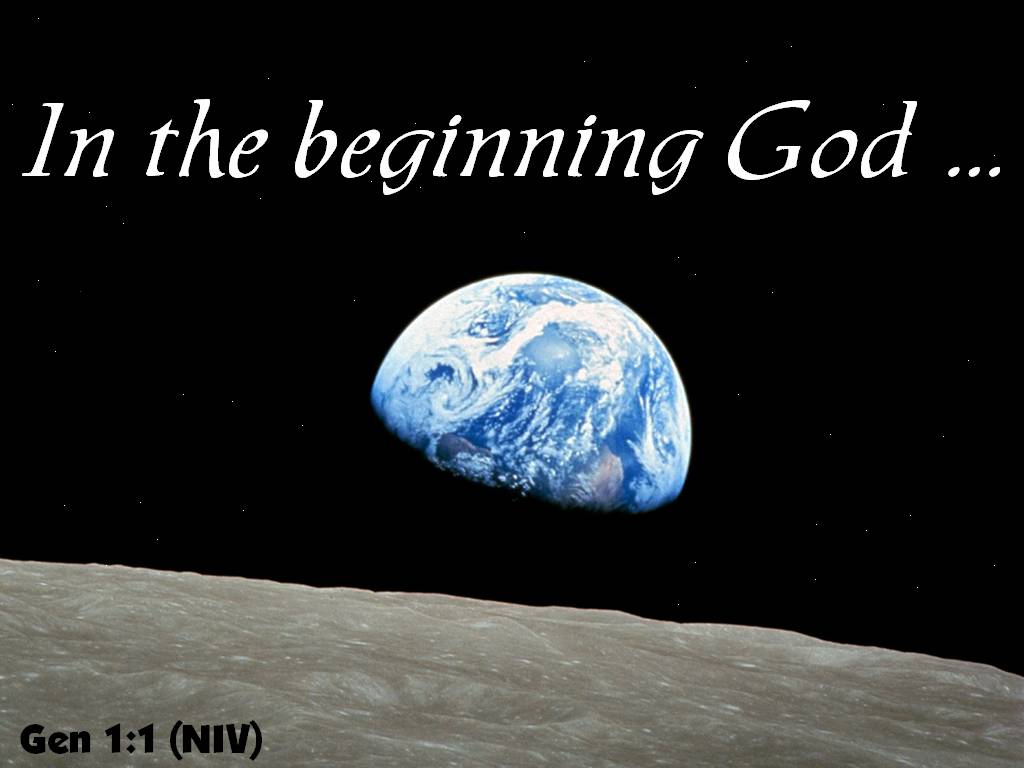
Genesis 1 starts in a conventional way, In the beginning.   Isn’t that where all stories should begin? Occasionally a novel or movie may start in the middle or end and then flashback to the beginning, but we are conditioned to think Beginning/Middle/End. If we were to start near the middle, we would wonder, “How did we get here?” Genesis 1 has no such confusion.

Genesis 1 however pushes, “In the beginning” to the Nth degree. This is not simply the beginning of a story or a life. It is the beginning of time itself. There can be no earlier beginning or start. This is the ultimate starting point and in some ways beyond our comprehension.

Genesis 1 then states that the only thing prior to the beginning is God. God precedes the beginning and is the one who creates all that was, and is, and will be. In confirmation students sometimes ask, “Who created God?” They struggle to comprehend that God is the First Cause, the Eternal One. I often respond to their question with this response: if I said “X” created God, then you would ask “who created X?” And if I said “Y created X,” then who created Y? God is at the very beginning and the first creator. In the beginning God created.

I find this opening phrase of the Bible to be not just a deep theological concept, but also an even deeper source of comfort and hope. The creation is NOT a random act of physical and chemical reactions, but a CREATION that God started for a reason. God wanted a beginning, chose to create. God did not do this in secret, but revealed this creative beginning to us in his Word. God wants us to know that He stands behind the creation we observe and live within.

And if he is the author of this creation story, then he has a purpose for us. God deliberately choose to create each part of creation, giving us significance. God stands at the beginning of creation and at the beginning of each day.

This is the day the Lord has made, let us rejoice and be glad in it. Psalm 118:24

How do you invite God into your beginnings?

Lord Jesus, may my beginnings start with you today.

The Story of the Bible

Pop Bible Quiz: Place these five famous Biblical characters in their correct chronological/ Biblical order: (answer at the bottom of the blog.)

  • Moses
  • Ruth
  • John the Baptist
  • Elijah
  • Abraham

The reason I popped this quiz is to prep for our upcoming sermon series this fall, winter and spring. This year at Resurrection Lutheran we will be using a series of Bible Readings that covers the WHOLE Bible, from Genesis to Revelation.

The series is called the Narrative Lectionary. Narrative means story and Lectionary means series of Bible readings, so our series of Scripture readings will tell the large story of the Bible. We will be racing through the Old and New Testament, touching on the highlights of the God’s interactions with humanity. We will not be reading every chapter or book, but we will be seeking the BIG PICTURE of God’s consistent search to pull humanity back into God’s loving care.

This fall we will be moving through the Old Testament. We will read how humanity rebelled against God and how God chose a special people, the children of Abraham, to be his agents of restoration. This will be a quick survey of major stories and events and will lead us to the birth of Jesus at Christmas.

The Wonder of God's Creation

We will begin this week with the first chapter of the first book, Genesis 1. Many of us know the opening words, “In the beginning, God created the heavens and the earth.” As one reads the chapter, a constant refrain keeps popping up, “And God saw that it was good.” (v. 4, 12, 18, 21, 25, 31). The goodness of creation is especially emphasized with the creation of human being. Humanity is the crowning glory, the best of the very best, in God’s magnificent creation. Humanity is not some fluke of chemistry, but the planned desire of God.

Which means you are not a random act, but a beautiful creation of God, made in God’s image. You are beautifully and wonderfully made (Psalm 139). You have purpose and meaning, given to you by the Creator. Part of that purpose and meaning is to discover your role or place in God’s story. So join us as we discover the unending story of God’s love for God’s people, and specifically for you.

Answers to the Pop Quiz: Abraham, Moses, Ruth, Elijah, John the Baptist

Lord Jesus, thank you for the wonder of your creation.  Help me to discover my place in your ongoing story.

Trail Crew

Trail Crew near Lake Haiyaha in Rocky Mountain National Park

A final thought from Labor Day. While hiking in Rocky Mountain National Park last month, I encountered a trail crew building a new bridge. As a teen-ager I had thought trail crew would be the greatest job. They were paid to hike in the wilderness, surrounded by the wonder and beauty of God’s creation. Their work had tangible results, a path that leads from point x to point y.

Only later did I realize how hard their work truly was. Rocks, streams, trees, even mountains block their route. The crew had limited resources, mostly assorted hand tools, to construct the trail. Earlier that I had seen a crew moving large stones with only shovels and pickaxes so that the path could pass through a large boulder field.  They had to battle rain, heat, cold, mosquitoes and biting flies, while eating only the food they carried in. Watching them work, I realized their job is not as idyllic as I once thought.

The Bridge below Lake Haiyaha

Still as I watched, I gave a silent prayer of appreciation and thanks for the work they were doing. For years I have hike mountain trails, prepared and cleared by others. I realize that a small part of my tax dollars go to pay for this as does part of my user fees. Still I am benefiting from other’s labor. I am thankful for those who planned, surveyed, built and maintain our national parks and wilderness areas.

I am also mindful that Jesus has prepared the way for us to the Father.  He cleared the trail for us.  He lifted the heavy burden of our sin off our souls and buried it in the deepest sea. He continues to maintain the path that leads to eternal life.

You show me the path of life. In your presence is fullness of joy; Psalm 16:11.

What path are you following through life and who constructed it?

Lord Jesus, place me on the path that leads to yourself, that I might become what you created me to be.

Labor Day Ministry

As we enter the Labor Day week-end, I am mindful of the various ways we labor. Our careers or vocations can dominate our lives, though we rarely take time to reflect on their significance. Yesterday I explored my daughter’s vocation; today I will reflect on my son’s. (Part of my vocation as a papa!)

I have written on Luther’s concept of vocation in the past (Light work and Deep Gladness). Luther’s emphasis was that our daily work was where we love our neighbor, where we make the world a more trustworthy place for all, Christians and non-Christians alike.

The prince should think: Christ has served me and made everything to follow him; therefore, I should also serve my neighbor, protect him and everything that belongs to him. That is why God has given me this office, and I have it that I might serve him.. . . When a prince sees his neighbor oppressed, he should think: That concerns me! I must protect and shield my neighbor….The same is true for shoemaker, tailor, scribe, or reader. If he is a Christian tailor, he will say: I make these clothes because God has bidden me do so, so that I can earn a living, so that I can help and serve my neighbor. When a Christian does not serve the other, God is not present; that is not Christian living. “Sermon in the Castle Church at Weimar” (25 October 1522)

Recently I met my son, Jonathan, for lunch. He and friends are starting their own business which will be serving our neighbors by providing safe, non-skid floors for pools and bathrooms. The product is called Life Floor.

Often people think that the Christian ministry needs to be done in or through a church and that it must be tagged with the name of Jesus. That is too narrow. Ministry or service happens in our homes, schools, offices and community centers when we serve others.  Our love of God is reflected in our love for our neighbor.

My son’s work is a form of ministry, of serving and loving our neighbor. He will soon install Life Floor in my mother’s apartment bathroom. This will be a true benefit for her since she recently fell while showering and made a trip to the emergency room. Life Floor will be a benefit to my mom. Seeing and addressing the needs of others in our complex world is Christian ministry.

How is your vocation serving your neighbor?

Lord Jesus, may my daily life become a path to love and serve my neighbor: at home, at school or work, or in my community.

Baker’s Vocation or Vacation

Vocation and vacation sound alike, but rarely overlap in meaning. Vocation means calling and is often used interchangeably with job or career. Vacation means freedom from occupation or time away from job or career. My trip to Coloraod was a vacation from my role as pastor, but it was also a chance to witness my daughter’s vocation.

Suzanne Smiles in Her Domain

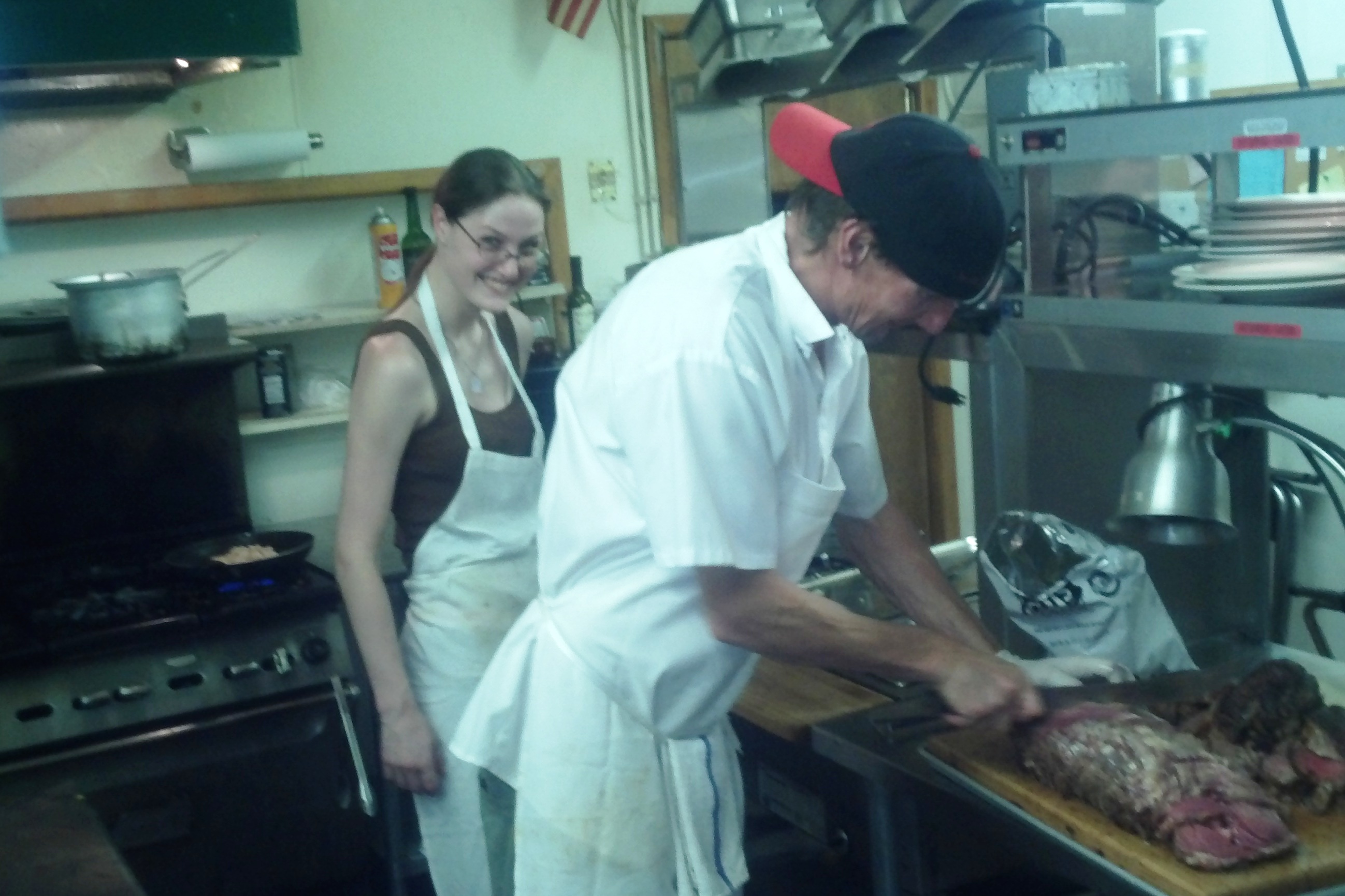
Though she graduated from college with a creative writing degree, Suzanne’s current passion and love is baking. Two years ago she went to Estes Park with a college friend to seek summer employment. I remember the frustration in her voice when she phoned home to tell us, she could find no work in Estes, not even at McDonald’s or Subway. I was preparing to drive out and bring her home, when my friend, Michael Johnson, suggested she look at guest ranches in Colorado. A few phone calls later, she had an interview at Lane’s Guest Ranch. The interview led to a job as pastry chef and my opportunity to enjoy her baking and cooking.

Baking in the mountains was a challenge. The high altitude affected dough and the kitchen was often over 100 degrees. This summer they were short staff most of the season. Still I enjoyed her strawberry shortcake, whole wheat rolls, white chocolate Torte and blueberry pancakes. I also discovered a big secret to making delicious brownies is a cup of brandy in the batter (at least I think it was a cup; Suzanne is very secretive about her recipes).  Suzanne is now back in Minnesota, seeking a winter vocation.

On the drive home Suzanne reminded me of the significance of bread in the Bible. God told Adam that it would be “by the sweat of your face you shall eat bread,” when God removed Adam and Eve from the Garden (Genesis 3:19). Thus the work for bread is part of the curse we endure as rebellious sinners. Yet God provided bread for the Israelites in the wilderness (Exodus 16) and for the prophet Elijah in his journey (I Kings 19).

Jesus transformed bread from Satan’s temptation in the wilderness (where it is a reminder of Adam’s curse) to the miracle of feeding 5,000 with just five loaves. Afterwards Jesus stated, “I am the Bread of Life” (John 6:35). Finally Jesus promised Holy Communion when we eat the bread that is his body (Matthew 26:26). To be a baker is to have a holy vocation.

How is your vocation a place for God to work?

Lord Jesus, thank you for all who sweat and work for my daily bread.